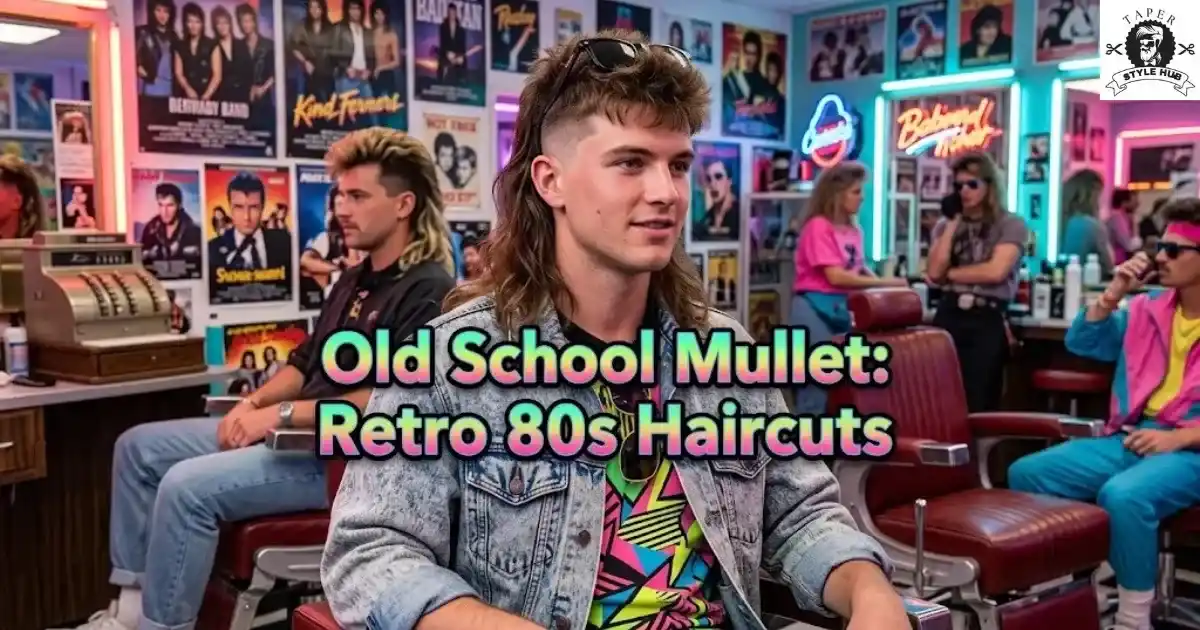
Old School Mullet: Retro 80s Haircuts
The old school mullet is the haircut with short sides, a shorter front, and a long, flowing back that refused to die. It looks bold, a little rebellious, and surprisingly easy to wear once you understand the shape.
Walk into any barbershop today and you will hear the word mullet more often than you might expect. The classic 1980s version is back in conversation, and many people want the retro shape without the messy grow-out stage.
This guide covers history, 30 old school mullet types, hair type advice, barber instructions, styling, products, and maintenance. Everything is explained in plain language so you can walk into the chair with confidence. Take your time and pick what fits your hair.
👉 Also Read: Modern Mullet
Old School Mullet Guide: Everything You Need to Know
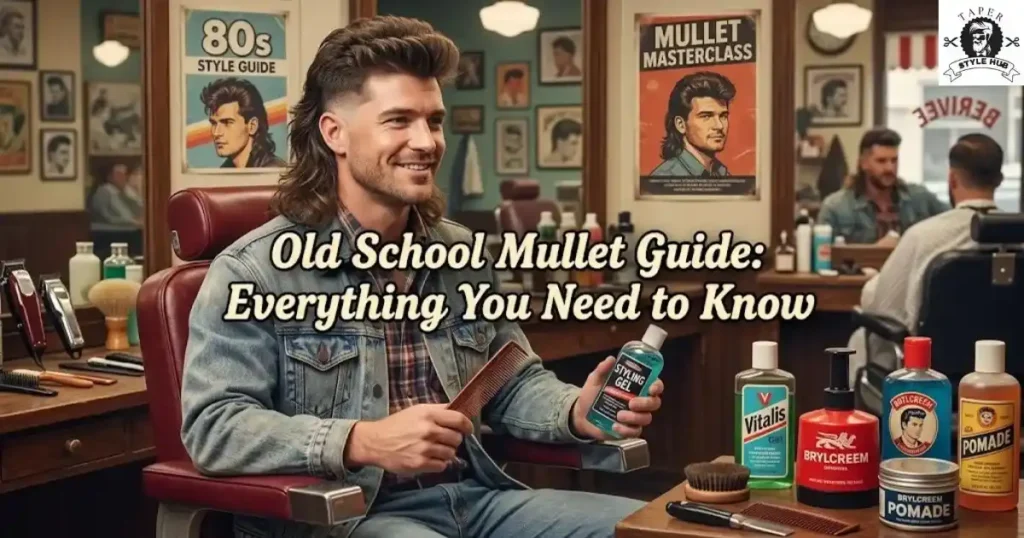
An old school mullet keeps things simple: short sides, a trimmed top, and a long back. There is no heavy fade or dramatic disconnection, only a shape that follows how hair naturally grows and falls. That simplicity is exactly why it lasts.
👉 Also Read: Straight Hair Mullet
What Is an Old School Mullet?
An old school mullet is a haircut with shorter hair at the front and sides and noticeably longer hair at the back. The famous saying, business in the front and party in the back, describes the shape almost perfectly.
The top can stay short, sit at a medium length, or carry plenty of layers and volume. What matters most is the contrast between the front and the back, because that contrast separates a mullet from an ordinary long haircut.
Classic versions rarely look polished. They usually have natural sides, soft layers, and a back that reaches the neckline or beyond, which gives the cut a relaxed and slightly rebellious feel that people still recognize instantly today.
You may also hear it called the traditional mullet, the classic mullet, or the 80s mullet. The names change, but the structure stays the same: short sides, a controlled top, and a long, flowing tail.
It works on straight, wavy, and curly hair, and it suits many ages and styles. The real question is not whether you can wear it, but how retro or modern you want the final result to look.
👉 Also Read: Low Burst Fade Straight Hair
History of the Old School Mullet
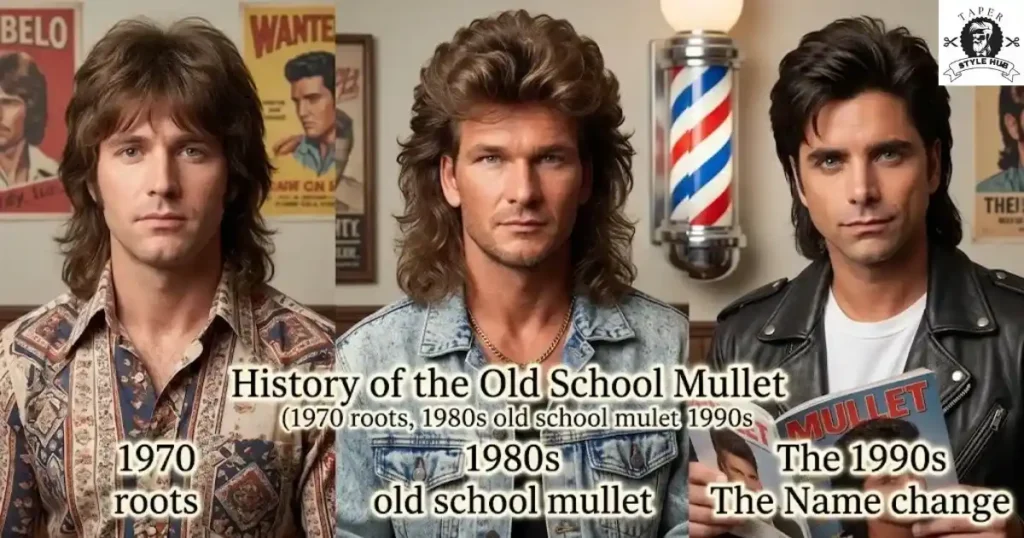
The haircut did not appear overnight. It grew slowly through music, sport, and street fashion before becoming the defining look of an entire decade. Here is how the story unfolded, step by step, from rock stages to everyday streets.
👉 Also Read: Curly Taper Fade Haircut
The 1970s Roots
Rock musicians pushed the shape into public view in the early 1970s. David Bowie and Paul McCartney wore versions with shorter fronts and longer backs, and fans copied the look quickly because it felt fresh and daring.
Glam and punk scenes added more attitude. The haircut became a quiet protest against neat, conservative styles, which made it popular with young people who wanted to look different from their parents and teachers.
👉 Also Read: Long Curly Hair Fade
The 1980s Old School Mullet
By the mid 1980s the mullet was everywhere. Athletes, actors, singers, and ordinary teenagers all wore some version, from short and tidy to big, permed, and heavily layered, and nobody thought twice about it.
Hairspray, mousse, and blow dryers shaped the volume. The result was fuller and less blended than the cleaner cuts we see in modern barbershops, and that fuller shape is exactly what an old school mullet means today.
👉 Also Read: Blowout Taper Textured Fringe Straight Hair
The 1990s Name Change
The word mullet only became popular in the mid 1990s, after the Beastie Boys released the song Mullet Head in 1994. Before that, people simply described the haircut by its shape or called it by a local nickname.
Later nicknames like Kentucky waterfall made fun of the style. Even so, it never fully left, and every new decade finds a fresh way to bring it back, which proves how strong the basic shape really is.
Famous Old School Mullet Wearers
Many well-known faces helped spread the look. Not every hairstyle was a perfect textbook version, since some sat between a shag, a long cut, and a mullet, but each one shaped how people understood the style.
- David Bowie: a 1970s trendsetter whose shorter front and longer back inspired countless fans.
- Paul McCartney: wore an early 1970s version that helped spark the craze.
- Patrick Swayze: known for layered, longer 1980s hair with a softer finish.
- Andre Agassi: brought a bold, longer look into professional tennis.
- Richard Marx: a full-haired example of the softer 1980s side.
- Jean-Claude Van Damme: carried the look onto the big screen.
What these examples share is length at the back, layers, volume, and strong personal styling. That shared pattern is the real blueprint behind every old school mullet you will see in photos.
How the 30 Old School Mullet Types Are Grouped
Instead of throwing thirty haircuts at you at once, this section sorts every old school mullet into six categories. Each category explains what connects the styles inside it, so you can compare them faster and choose with less guesswork.
Read the category that matches your hair first, then check the individual types. Every one of them keeps the same core idea: shorter sides and front with a longer back. That contrast never changes.
Classic Length and Shape Old School Mullet Types
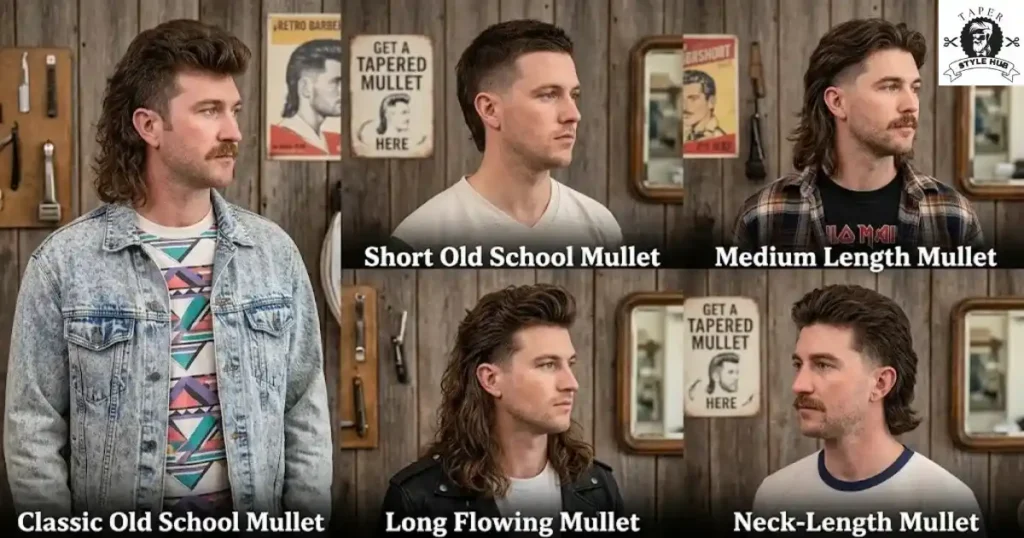
These five types are separated mainly by how long the back grows and how much the top changes. They are the safest starting point if you want the original retro proportions without extra tricks.
“All The Types Shown Below Are Displayed In The Single Image Above☝️”
Classic Old School Mullet
This is the original shape: short top, short sides, and a long back that reaches the neckline. The hair often carries extra volume, which makes the outline bold and easy to recognize from a distance.
Keep the sides natural rather than tightly faded. A little mousse on the top and a blow-dry for lift will give you the authentic vintage look without needing much effort.
Short Old School Mullet
A short version keeps the retro shape but limits the length. The back sits just past the collar, while the top and sides stay tidy and easy to manage during a busy week.
It suits people who like the idea of a mullet but are not ready for a long tail. A light styling cream adds texture without making the hair look stiff or heavy.
Medium Length Mullet
The medium cut sits between the short and long versions. The back reaches the middle of the neck, which gives you enough contrast to look like a mullet while keeping daily styling simple.
This length is very forgiving during grow-out. If you ever decide to change direction, you can shorten the back easily or let it grow into a longer, more dramatic shape.
Long Flowing Mullet
The long version commits fully. The back falls past the shoulders, the sides stay short, and the whole haircut looks like a pure rock-and-roll statement from the golden years of the 1980s.
It needs more care, including regular conditioning and trims to remove split ends. Many people tie the back into a ponytail when they need a neater look for work or events.
Neck-Length Mullet
This type stops right at the base of the neck. It is subtle, tidy, and a good choice for anyone who wants the contrast of a mullet without drawing too much attention.
Ask your barber to keep the back soft and slightly layered. A blunt line looks harsh, while soft layers let the hair move naturally and keep the shape friendly.
Texture-Based Old School Mullet Types
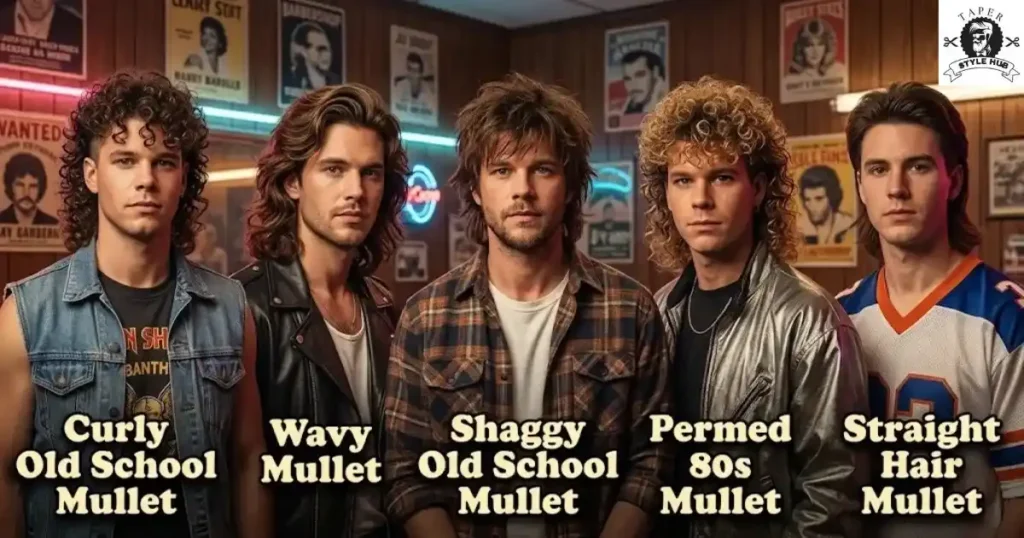
Hair texture changes how a mullet behaves. These five types are built around natural patterns such as curls, waves, and straight strands, and each one asks for slightly different cutting and styling habits.
“All The Types Shown Below Are Displayed In The Single Image Above☝️”
Curly Old School Mullet
Natural curls add width and movement to the top and back with very little work. The barber has to plan for shrinkage, since curly hair often looks shorter once it dries completely.
Leave enough length in the back so the curls can form their natural shape. A lightweight curl cream and a diffuser will define the pattern and keep frizz under control.
Wavy Mullet
Waves give the mullet a soft middle ground between straight and curly. The hair has body and movement without becoming wild, which makes the cut feel relaxed and easy to live with.
Avoid removing too much weight from the back, because overly short layers can make waves puff out. A little cream or mousse will keep the pattern neat from morning to night.
Shaggy Old School Mullet
The shaggy version uses loose, uneven layers and a deliberately undone finish. Instead of sharp lines, the hair moves freely around the top and back, which gives a laid-back, artistic feeling.
It grows out gracefully, so you can wait longer between trims. A texturizing spray adds separation and keeps the layers visible without making the hair feel crunchy.
Permed 80s Mullet
A perm turns straight or wavy hair into tight curls, which recreates the big, bouncy shapes that defined many 1980s photographs. The sides stay short while the curls spill over the top and back.
This is a dramatic change, so talk through the plan with a stylist first. Curl-friendly conditioner and gentle brushing will protect the new texture and keep it looking healthy.
Straight Hair Mullet
Straight hair shows the shape most clearly. The back hangs in a clean line, and layers through the top create movement that stops the style from falling flat or looking too heavy.
If your hair is fine, ask for texture instead of heavy thinning. Mousse at the roots and a quick blow-dry will add the lift that straight strands often lack.
Fade and Taper Old School Mullet Types
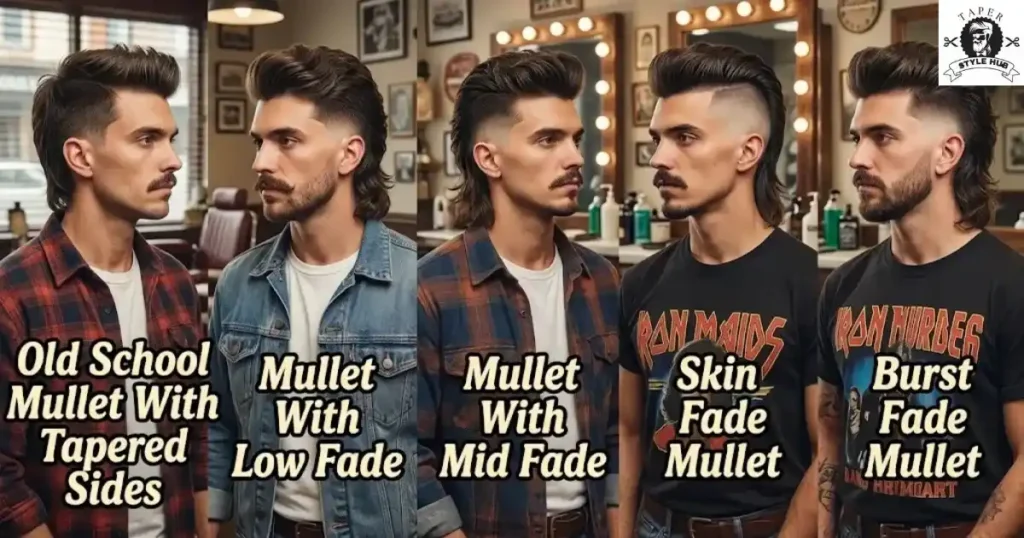
Fades and tapers blend the sides into the back. A true 1980s cut used very little of this, but modern barbers often add it for a cleaner finish, and these five types show the main options.
“All The Types Shown Below Are Displayed In The Single Image Above☝️”
Old School Mullet With Tapered Sides
A taper shortens the hair gradually around the sideburns and temples rather than cutting it to one short length. This keeps the overall shape soft while giving the edges a more refined look.
It is not an exact 1980s copy, but it is a practical update. Tell your barber to keep the taper subtle so the haircut does not lose its retro character.
Mullet With Low Fade
A low fade starts just above the ear and keeps most of the side hair intact. It adds a neat edge without taking away the fuller, natural feeling that a mullet depends on.
This option works well for people who want a cleaner outline for work. It also grows out smoothly, so you will not need to rush back to the barber every few weeks.
Mullet With Mid Fade
A mid fade sits around the middle of the sides, which creates a sharper contrast with the long back. The result feels more current while still showing the classic short-and-long structure.
Keep enough length on top so the cut does not look like a different haircut. A reference photo helps your barber understand how strong the fade should be.
Skin Fade Mullet
The skin fade takes the sides down to the scalp for a bold, high-contrast look. It makes the long back stand out even more, which suits people who love sharp, defined lines.
Be ready for more upkeep, because a skin fade grows out quickly. Expect trims every three to four weeks if you want the edges to stay crisp and clean.
Burst Fade Mullet
A burst fade curves around the ear in a half-circle shape and leaves the back untouched. It creates a lot of contrast and is one of the most popular modern mullet looks.
It is far sharper than a true retro cut, so use it only if you want a modern edge. Traditional fans usually prefer a softer taper instead.
Top and Fringe Old School Mullet Types
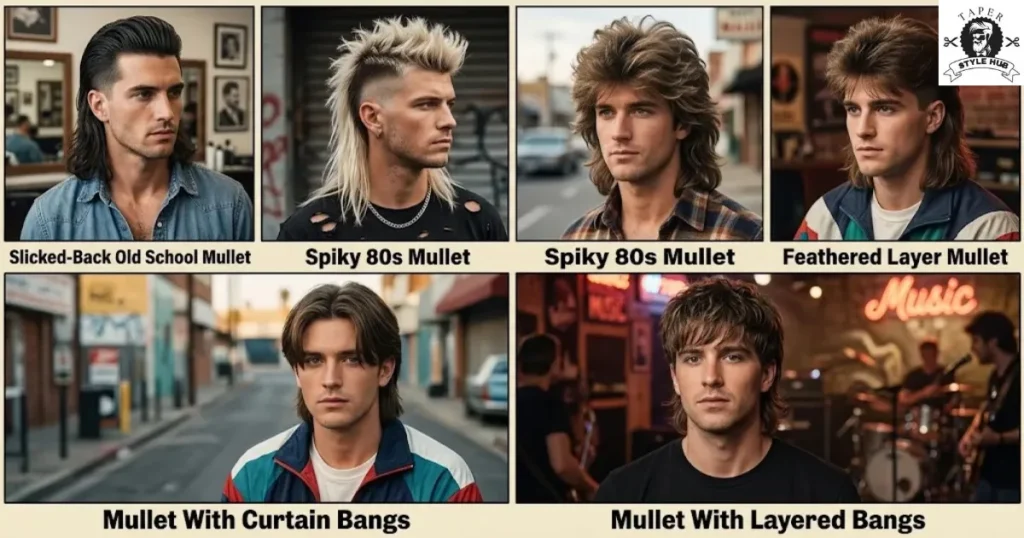
The top and fringe decide how the face is framed. These five types keep the long back but change the front, so you can pick the one that matches your personality and daily routine.
“All The Types Shown Below Are Displayed In The Single Image Above☝️”
Slicked-Back Old School Mullet
The top and front are brushed backward, while the longer back keeps the mullet outline. The result looks sleek and polished, which makes it a good fit for formal events and dressier outfits.
Use a small amount of pomade or gel. Too much product makes the hair heavy and flat, while too little will not keep the top neatly in place.
Spiky 80s Mullet
Spikes were a loud part of 1980s styling. The top is cut into short layers that lift easily, and the long back creates the contrast that turns the look into a mullet.
A small amount of gel or wax separates the spikes. They do not need to be perfectly even, because a slightly uneven finish looks more natural and more rock-inspired.
Feathered Layer Mullet
Feathered layers sweep away from the face and add soft movement across the top and back. This was a signature feature of many 1980s hairstyles and gives the cut a light, airy volume.
A round brush and a blow dryer create the sweep. Ask your barber for long, gentle layers instead of short, choppy ones so the feathers blend smoothly.
Mullet With Curtain Bangs
Curtain bangs part down the middle and fall to each side, framing the face. Combined with short sides and a long back, they create a softer, more approachable mullet.
This style needs a little daily styling to keep the fringe in place. A light cream and a quick blow-dry are usually enough to hold the shape.
Mullet With Layered Bangs
Layered bangs add dimension at the front while the long back keeps the classic spirit alive. The fringe can be short and wispy or longer and heavier, depending on your face shape.
It is a favorite among creative people who like blending retro and modern ideas. A light-hold cream keeps the bangs defined without weighing them down.
Color and Accessory Old School Mullet Types

Color, facial hair, and small details can change the mood of a mullet completely. These five types use extras to push the retro feeling further or to give the haircut a personal twist.
“All The Types Shown Below Are Displayed In The Single Image Above☝️”
Blonde Old School Mullet
Blonde hair brightens the shape and highlights every layer. It was a common look among 1980s rockers and athletes, and it still photographs beautifully in natural light.
Lightening hair can dry it out, so use a deep conditioner regularly. Healthy ends matter even more when the back is long and fully visible.
Mullet With Mustache
Pairing a mullet with a mustache strengthens the vintage feeling. The hairstyle already looks like a throwback, and the mustache completes the picture of classic 1980s fashion.
Balance is the key. The hair does not need to be huge or heavily styled for the combination to work, so keep both elements neat and proportionate.
Mullet With Dyed Tips
Dyed tips add a playful pop of color to the ends of the long back or the top layers. Bright shades channel the bold, rebellious energy that made the decade so memorable.
Choose a color that suits your skin tone and keep the tips healthy with regular trims. Faded color looks better when the hair underneath still feels smooth.
Mohawk Mullet
This punk-inspired hybrid keeps the top tall and the sides very short, while the back stays long. It blends two famous rebellious haircuts into one bold, attention-grabbing shape.
It needs strong-hold gel or wax to keep the center standing. Choose it only if you love standing out and do not mind regular styling.
Rock Star Mullet
The rock star version leans on volume, messy layers, and a long, dramatic back. It looks like it just stepped off a stage in 1985 and has no interest in looking neat.
Mousse and a diffuser or blow dryer build the volume. Add a touch of hairspray at the end if you need the shape to survive a long, busy day.
Modern Takes on the Old School Mullet
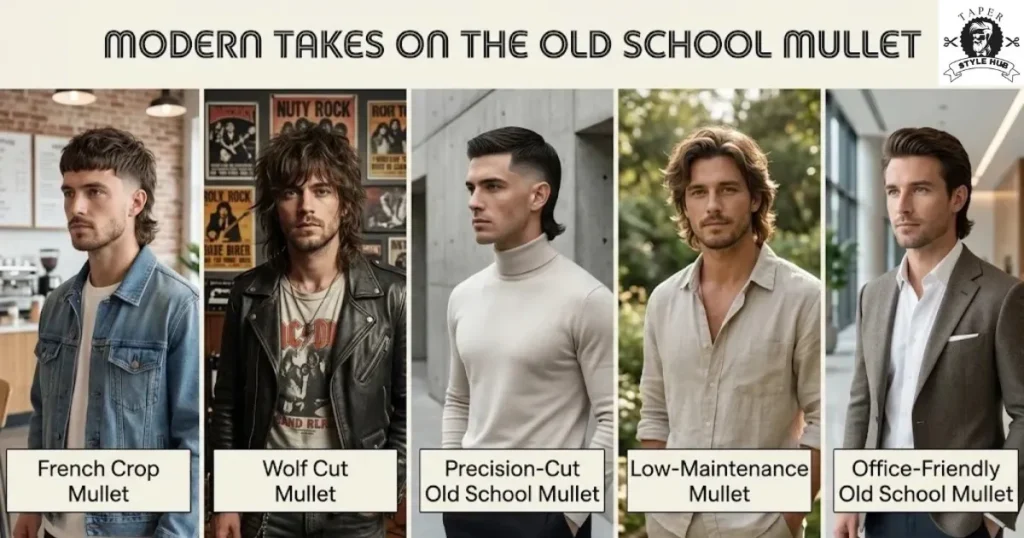
Some people love the retro shape but want a cleaner, more current finish. These five types borrow the long back and short sides, then add modern barbering ideas for a balanced, wearable result.
“All The Types Shown Below Are Displayed In The Single Image Above☝️”
French Crop Mullet
The French crop mullet pairs a short, textured fringe with faded sides and a long back. It looks fresh up front and flowing behind, which makes it very popular right now.
It suits straight, wavy, and curly hair equally well. A little matte clay on the fringe keeps the texture sharp without any shine.
Wolf Cut Mullet
The wolf cut blends mullet and shag ideas with layers throughout the head. The structure is less obvious than a classic mullet, yet the longer back still gives it away.
It is a good middle ground if the full contrast feels too extreme. The layers create plenty of movement and work with many hair types.
Precision-Cut Old School Mullet
This version focuses on crisp lines and exact balance between the different lengths. It keeps the retro idea but delivers it with a tailored, almost architectural finish.
It needs frequent trims, roughly every three weeks, to stay sharp. A sculpting wax helps hold the clean shape between visits.
Low-Maintenance Mullet
If you hate daily styling, this one is for you. The cut follows your natural growth pattern, keeps layers simple, and looks intentional even after a quick towel dry.
Because the sides are only lightly blended, it grows out well. You can often go four to six weeks between barber visits without losing the shape.
Office-Friendly Old School Mullet
A professional version keeps the sides tidy, the top neat, and the back at a moderate length. It looks confident and slightly daring without breaking most dress codes.
Slicking the top back or tying the tail into a low ponytail makes it even more formal. This flexibility is why many people choose it for everyday work life.
Best Old School Mullet for Your Hair Type
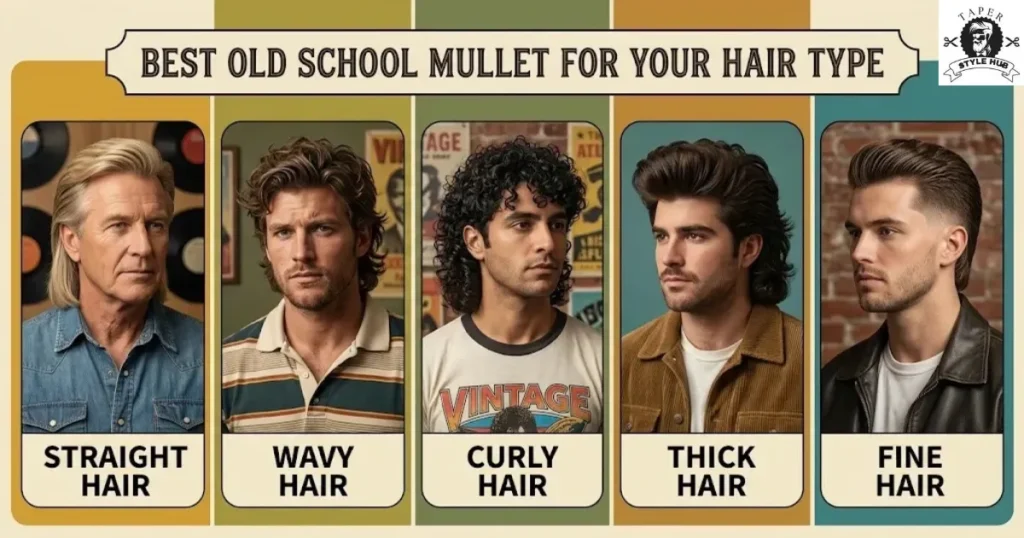
Hair type changes how the same haircut looks and feels. The cut that suits thick, wavy hair may look completely different on fine, straight strands, so use these notes before you book your appointment.
“All The Types Shown Below Are Displayed In The Single Image Above☝️”
Straight Hair
Straight hair gives the mullet a clean, clear outline. The back hangs naturally, while layers through the top create movement that stops the haircut from looking flat.
It is also the easiest type to slick back or style into spikes, so you have plenty of options for different occasions.
Wavy Hair
Wavy hair adds natural body without extra effort. A layered cut lets the waves form around the crown and back, creating a softer version of the classic shape.
Avoid brushing too much once the waves settle, because brushing leads to frizz and weakens the pattern.
Curly Hair
Curly hair creates a bold mullet with very little styling. Your barber should consider the curl pattern before choosing a length, since curls often spring up once they dry.
Keep the back long enough to show off the full curl shape. A leave-in conditioner before styling products keeps the curls soft and defined.
Thick Hair
Thick hair creates impressive volume, but it can look bulky at the sides. The common puffy, mushroom-shaped effect comes from weight, not length, so the fix is texturizing instead of cutting shorter.
Ask your barber to remove bulk while keeping coverage. Thick hair holds shape on its own, so it rarely needs heavy, greasy products.
Fine Hair
Fine hair can still carry a mullet beautifully. Focus on keeping enough length and adding texture rather than thinning, because heavy thinning makes fine hair look even flatter.
Mousse at the roots and a blow-dry create lift. A light hairspray helps the shape last through the whole day.
Old School Mullet and Face Shape
Face shape affects how the front and sides should be cut. It matters less than hair texture and personal taste, but it still helps, so use the table below as a friendly starting guide for your old school mullet.
| Face Shape | Best Approach |
|---|---|
| Oval | Almost any length works, so keep proportions balanced and layers light. |
| Round | Add height on top, keep the sides tighter, and avoid extra volume near the ears. |
| Square | Use soft layers and a textured top to balance strong, angular edges. |
| Long | Keep the sides fuller and the top lower so the face looks more balanced. |
| Diamond | Add a fringe or front layers to soften the cheekbones. |
A good barber will check your face shape during the consultation. If yours skips this step, bring it up yourself and ask which proportions will flatter you most.
How to Ask Your Barber for an Old School Mullet
The word mullet means different things to different people today. One barber may picture a sharp burst fade, while another imagines a long 1980s rock cut, so clear words and a photo save you from disappointment.
Be specific about what you want from each section of the head. These short phrases usually give barbers everything they need to deliver a true old school mullet.
- Short on top and long in the back.
- Keep the sides short, but not too tight.
- Add soft layers through the top and back.
- Leave a natural neckline instead of a sharp block.
- Texturize the sides if my hair is thick.
- Here is a reference photo of the shape I want.
If you want a genuine retro result, say clearly that you do not want a modern fade mullet. Many barbers take the sides too short unless you tell them otherwise.
Watch how the barber reacts. A good one listens, asks about your hair type, and explains how the cut will grow out, while a poor one pushes you toward something trendier than you asked for.
How to Style an Old School Mullet
Styling depends on your hair type and the finish you want. You do not need a shelf of products, because the right technique matters more than the amount you use on any old school mullet.
- Start with slightly damp hair after a gentle wash.
- Apply a small amount of mousse or cream from roots to ends.
- Blow-dry the top while lifting the roots with your fingers or a round brush.
- Shape the back lightly and leave natural movement in place.
- Finish with a light hairspray only if you need extra hold.
Curly and wavy hair need less work. Scrunch in a curl cream, let it air dry or use a diffuser, and then avoid touching it too much while it sets.
Best Products for an Old School Mullet
The best product depends on the finish you want. The goal is to support the haircut, not cover it in product, so start with small amounts and add more only when you really need it.
- Mousse: adds body and lift to straight or wavy hair.
- Styling cream: tames frizz and defines waves and curls.
- Pomade or gel: holds slicked-back and spiky looks.
- Matte clay: gives texture and hold without shine.
- Hairspray: locks in volume for long days.
Cleansing matters too. Harsh sulfate shampoos can strip natural oils, which makes the scalp greasy by afternoon, so a gentler shampoo and a good conditioner keep the long back healthy.
How to Maintain an Old School Mullet
A mullet needs regular shaping if you want it to keep its form. The back can grow longer, but the sides, ears, and neckline need cleaning up more often than most people expect.
Most people do well with a trim every four to six weeks. A cleaner version with tapered sides or a fade needs visits closer to every three or four weeks.
You do not have to shorten the back at every visit. Ask your barber to clean the sides, sideburns, and neckline while keeping the length behind your head exactly as it is.
Condition the long section regularly to avoid split ends and dryness. A natural old school mullet can grow for longer between cuts, which makes it a relaxed haircut for people who dislike frequent appointments.
Old School Mullet vs Modern Mullet
These two terms describe very different haircuts. The retro version is fuller and softer, while the modern one is usually sharper, with fades, tapers, and textured tops. The table shows the main differences.
| Feature | Old School Mullet | Modern Mullet |
|---|---|---|
| Sides | Natural, lightly blended | Tapered or faded |
| Volume | Fuller and softer | Controlled and sharper |
| Layers | Soft and feathered | Textured and precise |
| Back | Long and natural | Length varies |
| Styling | Mousse and blow-dry | Clay, paste, or cream |
| Upkeep | Longer between trims | Frequent barber visits |
You do not have to choose one side completely. Many people keep a long, layered back and add a soft taper at the temples, which blends both worlds nicely.
Common Old School Mullet Mistakes
Getting the basic shape right is important. Most disappointing results come from a handful of avoidable errors, and knowing them in advance can save you months of awkward grow-out.
- Cutting the sides too short, which turns the haircut into a modern fade.
- Cutting the back too short, which removes the mullet identity.
- Removing too much weight, which leaves thin, weak-looking hair.
- Using too much product, which makes the hair heavy and greasy.
- Ignoring hair texture, since curls and straight hair behave differently.
Another quiet mistake is treating the haircut as a joke. People who wear it with confidence and keep it clean almost always look better than those who over-style it into something artificial.
Can Women Wear an Old School Mullet?
Yes, absolutely. The basic shape is not limited to one gender, and many women love the contrast of shorter hair around the face with extra length at the back.
A softer version keeps longer layers around the face, while a stronger retro look adds volume and length behind the head. Choose a shape that works with your texture and your daily routine.
Is the Old School Mullet Still Popular Today?
Yes, and it keeps returning in new forms. Retro trends cycle back every few years, and the mullet has enough character to stay relevant while barbers keep finding fresh ways to update it.
Today’s version does not need to copy the original. Some people keep the long back and add a taper, while others lean on natural curls or a cleaner neckline for a calmer finish.
Final Thoughts on the Old School Mullet
The old school mullet remains one of the most recognizable retro haircuts because of its simple shape and bold contrast. Short sides and a long back never really go out of style.
Your natural hair texture will change the final look, so choose a type from the categories above that matches it. Straight, wavy, curly, thick, and fine hair can all carry the style well.
Bring a reference photo, use clear words with your barber, and keep your routine simple. Do that, and your old school mullet will look intentional, confident, and unmistakably yours.
Old School Mullet FAQs
What is an old school mullet?
It is a haircut with short sides and front and a longer back. Many versions also carry layers, volume, curls, or waves.
How long should the back be?
There is no fixed length. Some stop at the neckline, while others reach the shoulders or even lower.
Does it work with curly hair?
Yes, curly hair works very well. Just ask your barber to account for shrinkage and curl pattern before cutting.
How often should I trim it?
Every four to six weeks suits most people. Faded versions need trims closer to every three to four weeks.
Is it good for thick hair?
Yes, but ask for texturizing so the sides and back do not look bulky or puffy.

I’m M Ahmad Ansari, founder and content creator at Taper Style Hub. With 3+ years of experience researching taper haircuts, hairstyles, grooming, and men’s style, I create practical, accurate, and easy-to-understand content. My goal is to provide readers with trustworthy information, useful tips, and inspiring ideas for choosing and styling the perfect taper haircut.
4 Comments