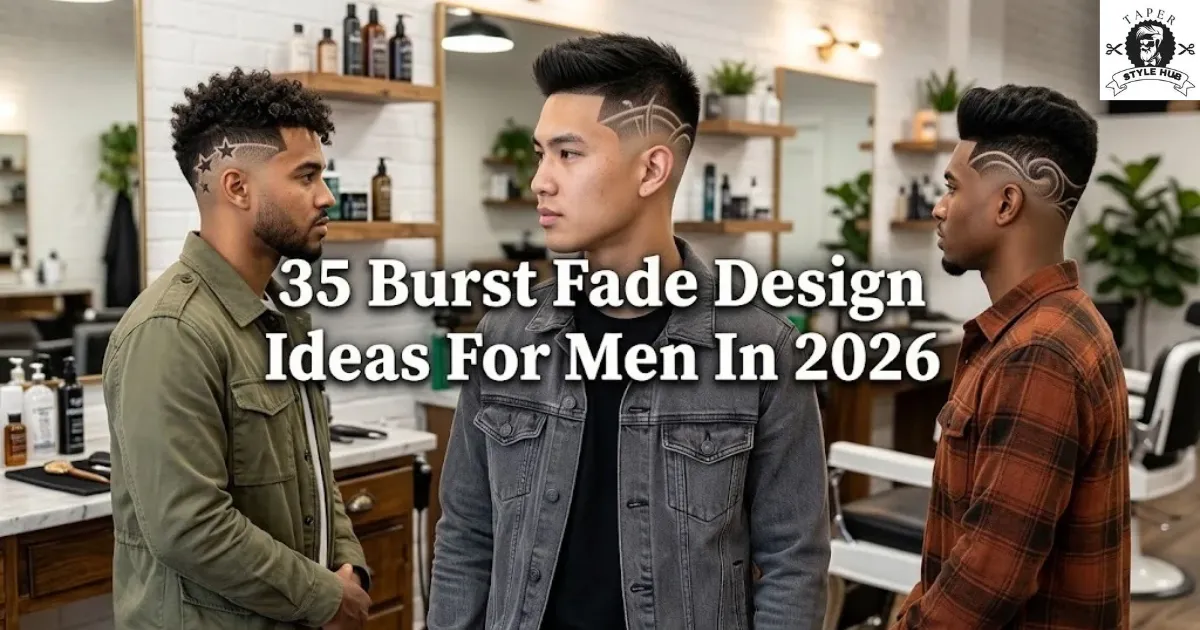
35 Burst Fade Design Ideas For Men In 2026
A burst fade design is the quickest way to make a short haircut look intentional. The fade curves in a rounded arc around the ear, the back keeps its length, and the sides stay sharp. This guide covers 35 types, barber language, styling steps and upkeep tips.
Every style below sits inside a clear category, so you can jump straight to the shape, hair type or top style that fits you. If you already know what you want, go to the types section. If you are starting from zero, read the basics first.
👉 Also Read: Burst Fade Mullet Curly Hair
Burst Fade Design Guide for Men

What Is a Burst Fade Design?
A burst fade design is a fade that curves around the ear in a semi-circular arc instead of running in a straight horizontal line. The hair behind the arc stays longer, which creates the signature rounded silhouette. Some barbers call it a radial fade or a halo taper.
The name comes from the way the faded area seems to burst outward from behind the ear. The effect is strongest on the sides and melts gently into the neckline. That curve is the whole point of the cut.
Because the fade sits around the ear, the crown and back keep their volume. That is why the cut pairs so easily with mullets, mohawks, quiffs and curls. A standard fade removes that length, while this one protects it.
👉 Also Read: Burst Fade Mullet
How a Burst Fade Design Differs From Other Fades
People often mix up the burst fade with the drop fade, taper fade and skin fade. They look alike in photos but behave differently once the hair grows. The table below shows the main differences.
| Fade Type | Shape | Back Length | Contrast | Upkeep |
|---|---|---|---|---|
| Burst Fade | Arcs around the ear | Stays longer | Medium to high | Every 2 to 3 weeks |
| Drop Fade | Drops lower behind the ear | Faded | Medium | Every 2 to 3 weeks |
| Taper Fade | Gradual at neckline and sideburns | Faded | Low to medium | Every 3 to 4 weeks |
| Skin Fade | Cut down to bare skin | Depends on style | Very high | Every 1 to 2 weeks |
In short, ask for a burst fade when you want more hair at the back. Ask for a drop fade when you want the back faded with a curved line. Always say the word burst, because many barbers default to a standard fade.
👉 Also Read: Taper Mullet 40 Modern Types For Men
Burst Fade Design vs Mohawk Fade and Mullet

A burst fade curves around the ears and keeps length in the back. A mohawk fade removes more hair on the sides and leaves a bold strip down the center. The two can be combined, but they are not the same cut.
The mullet is a different idea again. A burst fade describes the technique on the sides, while a mullet describes short front and sides with length behind. Barbers combine them often because the arc keeps the back length a mullet needs.
👉 Also Read: Low Burst Fade Mullet
Why the Burst Fade Design Is Trending in 2026
The curve gives the cut visible shape from every angle. A straight fade looks flat from behind, while this one reads clearly from the front, side and rear. That makes it perfect for photos and short videos.
It also scales up or down. A low version looks almost like a taper, while a high version with a razor pattern is a full statement. One technique covers the first-timer and the style fanatic.
Finally, it works on almost every texture. Straight, wavy, curly and coily hair all take the arc well. Barbers also like it because it protects length for the longer top styles that keep trending.
👉 Also Read: Straight Hair Taper Mullet Fade
Who Suits a Burst Fade Design Best
Curly, wavy and coily hair benefit most, since the arc follows the natural growth pattern around the ear. Round, oval and square faces also gain definition along the jaw and cheek without harsh lines.
Men who want one haircut for the office and the weekend will like it too. A low or mid version looks polished at work and still styles bold at night. Very fine or thinning hair needs a lower fade, which we cover later.
35 Types of Burst Fade Design by Category
Here are all 35 types, split into seven categories so each one is easy to compare. Every entry explains the look, who it suits and one practical tip. Pick a category first, then narrow down your favorite.
Burst Fade Design by Fade Height
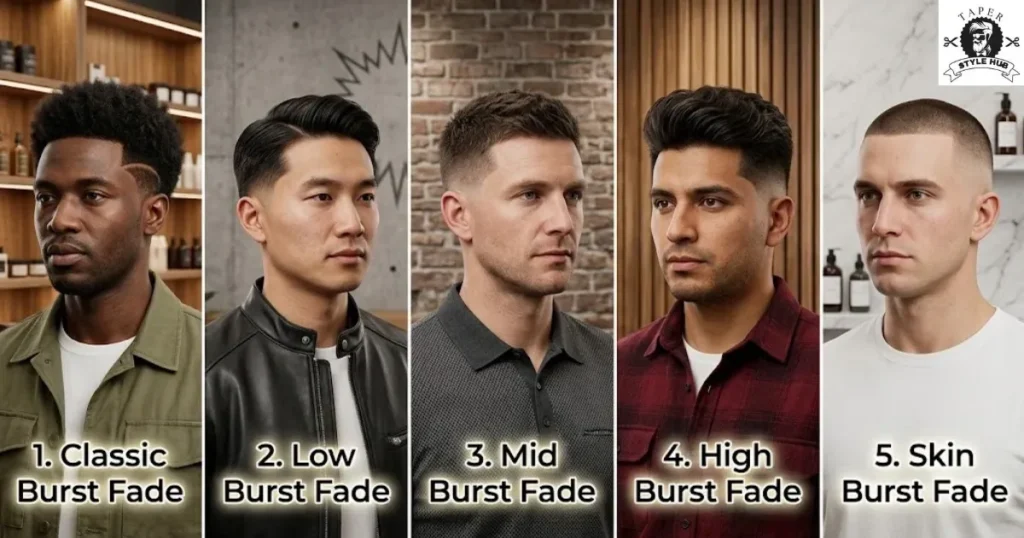
Fade height decides how much contrast you get, so start here. Lower versions look softer and grow out slowly, while higher versions look bolder and need more visits.
1. Classic Burst Fade
A clean semi-circular arc around the ear with the back left longer. It is balanced, easy to style and works on every hair type. Choose this if you want the standard look before experimenting.
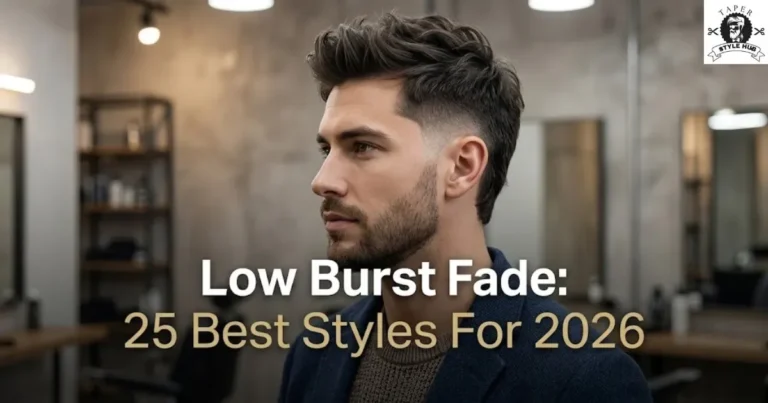
2. Low Burst Fade
The arc starts just above the ear and keeps contrast soft. It is the most office-friendly option and the best first burst fade. It grows out gracefully, so three weeks between trims is realistic.
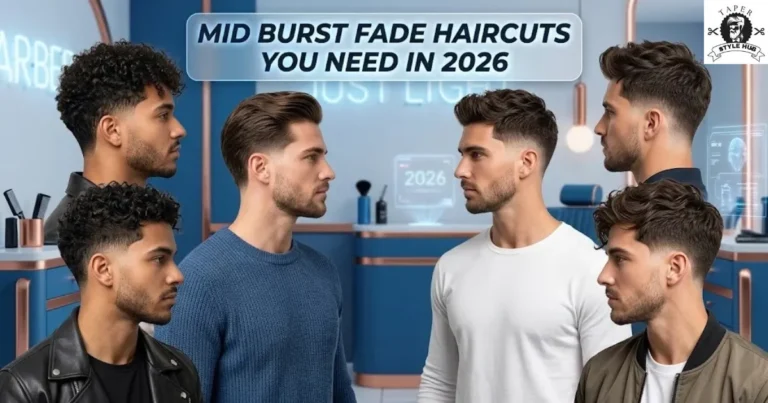
3. Mid Burst Fade
The arc begins around temple level for more shape and contrast than the low version. It suits nearly every face shape and most workplaces. Ask for it when you want something noticeable but manageable.
4. High Burst Fade
The arc starts above the temples, giving the strongest contrast between tight sides and a longer top. It looks excellent with mohawks and faux hawks. Plan a touch-up every two weeks to keep it crisp.
5. Skin Burst Fade
The fade drops all the way to bare skin around the ear. It gives the sharpest possible edge but shows regrowth fast. Book a refresh every one to two weeks if you choose this version.
Burst Fade Design With Mullet and Long Back Styles
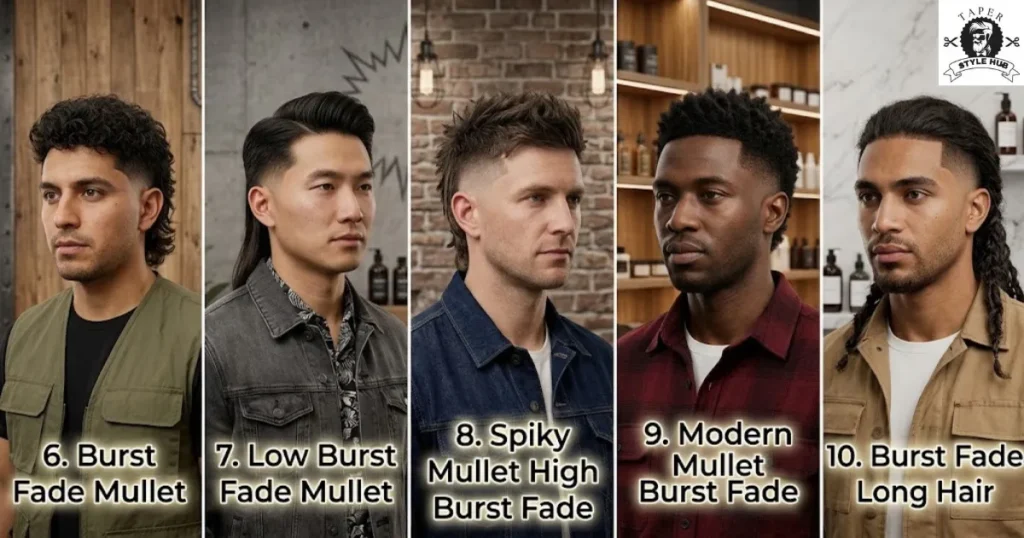
A burst fade protects back length, which is why it became the favorite partner of the mullet. These five styles all rely on that preserved length.
6. Burst Fade Mullet
Tight faded sides meet longer hair at the back, with a clean transition right behind the ear. Ask for three to four inches at the back so the length looks deliberate rather than grown out.
7. Low Burst Fade Mullet
The fade stays close to the ear and neckline for a soft move into the longer back. It suits men who want the mullet shape without loud contrast. Wavy hair looks especially natural here.
8. Spiky Mullet High Burst Fade
A high arc on the sides frames a spiky top and a longer back. It is edgy, energetic and full of attitude. Use strong gel to set the spikes and blow-dry the top for extra lift.
9. Modern Mullet Burst Fade
A shorter, tidier back keeps the mullet shape without dramatic length. It is a smart middle ground for work and casual life. The arc still preserves the volume a straight fade would remove.
10. Burst Fade Long Hair
Longer hair on top flows into the preserved back, while tight sides keep the shape clean. Tie it up for a neat look or wear it loose. Trim the sides every three weeks.
Burst Fade Design With Statement Top Styles

These styles pair the arc with a bold top. The tight sides make any height or texture on top look more intentional.
11. Burst Fade Mohawk
A strip of longer hair runs down the center while the arc fades both sides. The curve looks softer than a hard shaved line. Use wax or gel to keep the strip standing.
12. Burst Fade Faux Hawk
Hair pushes upward along the center without shaving the sides completely. The faded arc gives it the same curved frame as a mohawk, but less aggressive. Pomade holds the flick in place.
13. Burst Fade Quiff
Volume sweeps up and forward at the front, with tight sides below. The result feels relaxed and lifted at the same time. Blow-dry upward, then finish with texture powder.
14. Burst Fade Pompadour
A high swept-back front meets faded sides and a fuller back. It carries vintage roots with a modern edge. Leave three to four inches on top for proper height.
15. Burst Fade Slick Back
Hair combs straight back over a clean burst on the sides. It reads formal enough for weddings or interviews. Apply lightweight gel to damp hair, comb it back, then blow-dry.
Burst Fade Design With Short and Cropped Styles

Short tops mean less daily work. These five suit men who want a sharp haircut without a long styling routine.
16. Burst Fade Buzz Cut
A uniformly short top with a curved fade on the sides is one of the lowest-maintenance options. There is nothing to style. Keep the scalp clean and moisturized.
17. Burst Fade French Crop
A short, blunt fringe sits above the eyebrows with faded sides below. The straight fringe and curved arc create a pleasing contrast. It looks clean on nearly every face shape.
18. Burst Fade Textured Crop
Short choppy layers with a fringe pushed forward sit above a faded arc. The fuller back balances the short top. Point cutting gives the top natural movement.
19. Burst Fade Crew Cut
A short even top, slightly longer at the front, gives a classic professional base. The arc adds a modern back profile without changing the top. It suits athletic and office settings.
20. Burst Fade Edgar
A blunt, straight fringe cuts across the forehead above a tight burst fade. It is sharp and popular with younger clients. The straight line shows grow-out quickly, so book often.
Burst Fade Design by Hair Texture
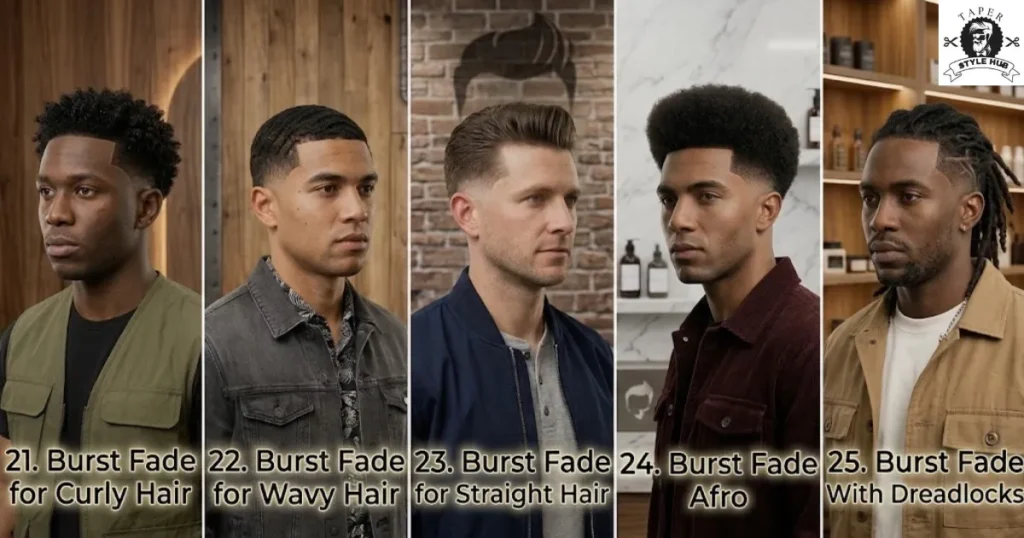
Hair texture changes how the arc looks and how you style it. Match your type here before picking a top style.
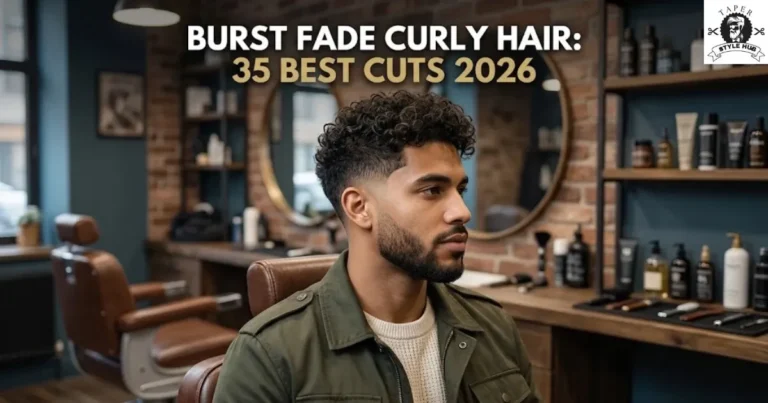
21. Burst Fade for Curly Hair
Curls and a burst fade work together because the arc follows natural growth. Ask the barber to set the arc height on dry hair, since curls shrink once dry. Use curl cream to define them.
22. Burst Fade for Wavy Hair
Waves provide movement on top while the arc keeps the sides structured. A low or mid fade follows wave direction best. Sea salt spray adds texture with almost no effort.
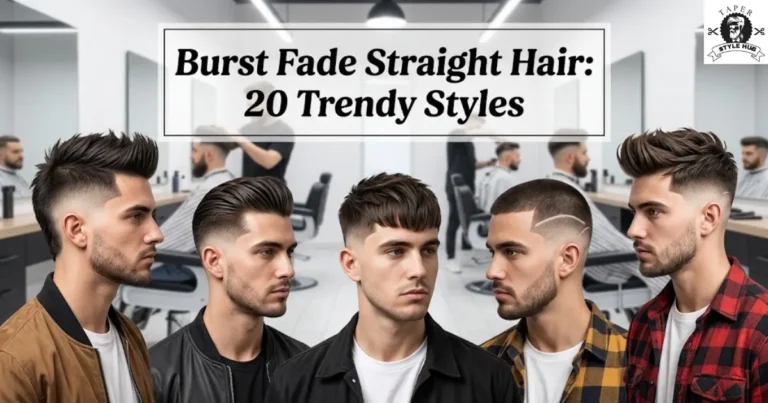
23. Burst Fade for Straight Hair
Straight hair shows the cleanest, sharpest arc, but flaws show too. Point cutting the top prevents a flat finish. Choose an experienced barber for this one.
24. Burst Fade Afro
A full, rounded afro sits above tight faded sides. The arc follows the rounded shape for a natural transition. Use a pick to lift the shape and moisturize daily.
25. Burst Fade With Dreadlocks
Locs on top and a burst fade on the sides create a sharp frame. The contrast feels deliberate and clean. Keep the locs moisturized and refresh the fade every two to three weeks.
Burst Fade Design With Razor Patterns and Details
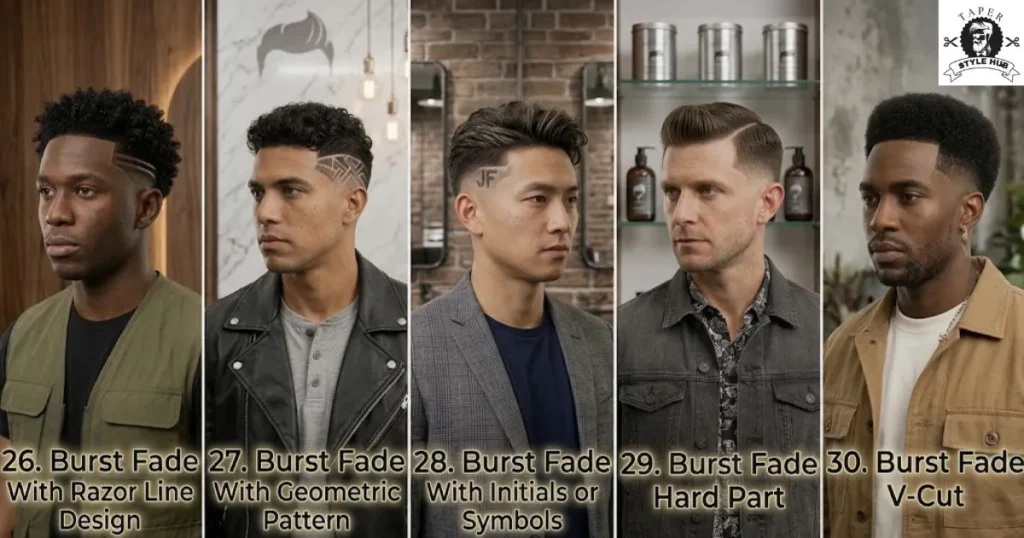
This category is where a burst fade design becomes truly personal. Patterns sit in the fastest-growing zone, so they need more upkeep than a plain fade. Always bring a reference photo.
26. Burst Fade With Razor Line Design
A single razor line is cut into the faded area behind or above the ear. It adds personality without taking over. Expect the line to soften within a week to ten days.
27. Burst Fade With Geometric Pattern
Triangles, zigzags or boxes are shaved into the curved fade. The rounded edge is a natural canvas for sharp shapes. Choose a barber with a steady hand and a portfolio of patterns.
28. Burst Fade With Initials or Symbols
Letters or small symbols sit in the faded area near the ear. It is the most personal option on this list. Keep the shape small so it stays readable as the hair grows.
29. Burst Fade Hard Part
A razor-shaved part line sits above the arc, so a straight line meets a curved fade. It looks crisp and graphic. The part loses sharpness faster than the fade, so touch it up often.
30. Burst Fade V-Cut
The back is shaped into a V at the neckline, matching the curved arc on the sides. It is a strong alternative to a full mullet. Pair it with a clean beard line for extra sharpness.
Burst Fade Design With Popular Combinations
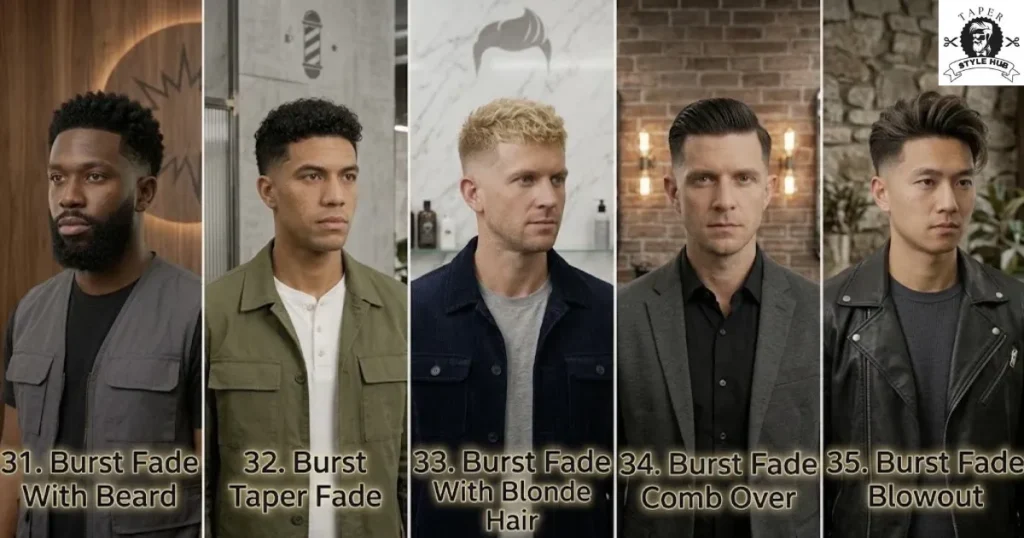
The last category covers combinations with beards, color and classic parts. They show how flexible the technique really is.
31. Burst Fade With Beard
The fade blends into the beard with no hard gap at the sideburn. Ask your barber to blend it on purpose, because many stop at a hard line. It suits full and boxed beards.
32. Burst Taper Fade
The arc ends in a taper at the base, so some hair always remains. It feels softer than a skin finish and suits fine hair. Expect around three weeks between visits.
33. Burst Fade With Blonde Hair
Light color makes the fade stand out because the contrast against the skin is stronger. Use purple shampoo to control brassy tones. A textured top keeps the look youthful.
34. Burst Fade Comb Over
A side-parted comb over sits above faded sides for a polished, structured look. The arc softens what would otherwise feel rigid. Use a side part and a light-hold hairspray.
35. Burst Fade Blowout
A voluminous, airy top stands above clean faded sides. The look is lifted and bouncy. Blow-dry upward with your fingers and finish with volumizing mousse.
How to Choose the Right Burst Fade Design by Face Shape
Face shape affects which height and top style look balanced. Use the table as a starting point, then adjust with your barber based on your hairline and head shape.
| Face Shape | Best Burst Fade | Why It Works |
|---|---|---|
| Oval | Any height | Every fade height suits this balanced shape |
| Round | Mid or high burst fade | Adds height and structure to the sides |
| Square | Mid burst fade | Softens the jawline slightly |
| Oblong | Low burst fade | Keeps proportions balanced without adding height |
| Diamond | Mid burst fade | Keeps width at the sides and highlights cheekbones |
| Heart | Low burst fade | Balances a wider forehead with softer sides |
A flat back of the head is another reason to pick this cut. The longer back adds volume and rounds out the silhouette, while a standard fade cuts that length away.
How to Choose the Right Burst Fade Design by Hair Type
Hair type decides how sharp the arc looks and how much styling you need. The table matches each texture with the variations that behave best.
| Hair Type | Best Variation | Key Tip |
|---|---|---|
| Straight | Any style | Point cut the top so it does not look flat |
| Wavy | Low or mid burst fade | Leave length so the waves can move |
| Curly | Any style | Set arc height on dry hair, not wet |
| Coily or 4C | Mid or high burst fade | The arc follows the natural growth pattern |
| Thick | High burst fade | Dense hair handles maximum contrast |
| Fine or thin | Low burst fade or taper finish | Keep the arc subtle |
How to Ask Your Barber for a Burst Fade Design
Walking in and saying burst fade leaves too much room for guesswork. Be specific about these details, and the result will match what you pictured.
Bring Reference Photos
Bring two or three clear photos showing the front, side and back. Photos remove the confusion that comes from words like sharp or high. Show the arc from behind, since that is where the style lives.
Name the Height, Back Length and Neckline
Say whether you want a low, mid or high arc. Tell the barber to leave length at the back, and pick a natural or sharp neckline. These three details separate a burst from a drop or standard fade.
Use a Clear Phrase
Try this: burst fade, curved arc around the ear, leave length at the back, mid height at temple level. For curly hair, add that the arc should be set on dry hair. For a mullet, add that the back length stays.
Fade Height Quick Reference
- Low burst fade: starts just above the ear, subtle contrast, easiest grow-out.
- Mid burst fade: starts around temple level, balanced for most faces.
- High burst fade: starts above the temples, bold contrast, shorter time between visits.
How to Choose the Right Barber for a Burst Fade Design
Not every barber who cuts a clean taper can cut a clean burst. The curved guideline needs more precision than a straight line, so it is worth screening before you book.
Check Their Portfolio
Look for burst fades specifically, not fades in general. Search their tagged photos on Instagram or TikTok for the exact term. The curved shape is a distinct skill, and recent work tells you the most.
Ask About Your Hair Type
A barber who excels on straight hair is not automatically great on curls or coils. The blending technique changes with texture. If you have curly or coily hair, look for proof of that texture in their work.
Test With a Simple Cut First
If you are trying someone new, start with a mid burst fade and a plain top. That lets you judge the blend before you commit to a pattern. Also ask about their touch-up policy, because many shops fix small issues within a few days.
How a Barber Cuts a Burst Fade Design
Knowing the process helps you spot good work and explain what you want. Most barbers follow the same logic, even if the tools differ slightly.
- Comb the hair in its natural direction so the growth pattern is clear.
- Draw a rounded guideline that starts behind the ear and curves around it.
- Remove bulk with a longer guard so blending is easier.
- Set two guidelines about an inch apart, one at the bottom and one above.
- Blend upward step by step until no visible lines remain.
- Detail the area behind the ear and fix any dark spots.
- Clean the hairline and neckline with a trimmer, then a razor.
- Check symmetry from several angles before styling.
The area behind the ear is the hardest part, because visibility is limited and the curve has to stay consistent. That is why a steady hand matters so much for any burst fade design that includes a pattern.
Tools Behind a Clean Burst Fade Design
Sharp, well-maintained tools make a visibly cleaner line. Dull blades pull hair instead of cutting it, which shows up as an uneven fade no matter how skilled the barber is.
- Clippers with an adjustable lever for smooth blending between lengths.
- Numbered guards, usually starting around a one or one and a half for bulk removal.
- A trimmer for the hairline, neckline and the area around the ear.
- A straight razor for the sharpest edge and for razor patterns.
- Combs and clipper combs to guide length and spot leftover lines.
How to Pick a Burst Fade Design Pattern
A pattern turns a clean fade into a personal signature. A little planning keeps it sharp and avoids regret when the hair grows back.
Start Simple
If this is your first burst fade design, begin with a single razor line. It is easy to fix and easy to grow out. You can always add more detail at the next visit.
Match the Pattern to Your Hair Density
Thick, dense hair holds crisp lines well, so geometric shapes look sharp. Fine hair shows less contrast, so keep the pattern simple and bold. Tell your barber how quickly your hair grows.
Plan for Upkeep
A burst fade design with a pattern needs a visit every one to two weeks. The shaved lines lose definition faster than the fade itself. Budget for that before choosing a complicated shape.
Choose a Skilled Barber
Patterns need steady hands and a good eye. Check the barber’s portfolio for burst fade design work, not just general fades. Ask how they handle the area behind the ear, because that is the hardest part.
How to Style a Burst Fade Design at Home
Good styling makes the arc pop, and it takes about five minutes. Follow these steps for a clean, voluminous finish that lasts all day.
- Wash with a gentle shampoo and towel-dry until the hair is damp.
- Apply a pre-styler such as sea salt spray or light volumizing mousse.
- Blow-dry upward and out with your fingers or a brush to build lift.
- Rub clay, wax or pomade between your palms and finger-style the top.
- Finish with hairspray if you need all-day hold, or leave it natural.
Do not overload the top with product. Heavy styling hides the contrast that makes a burst fade design worth wearing. A small amount, worked through with your fingers, looks more natural.
Best Products for a Burst Fade Design
The right product depends on your texture and your top style. These are the most useful options for keeping the cut fresh.
- Texture clay: strong hold and a matte finish for messy or defined tops.
- Texture powder: instant lift and grip for flat or fine hair.
- Sea salt spray: relaxed texture for wavy and curly hair.
- Molding paste: flexible hold that stays soft and touchable.
- Styling cream: controls frizz and adds light shine.
- Curl cream: defines curls and reduces frizz.
- Pomade: smooth, polished hold for slick back and comb over styles.
Do not forget basic care. Use a shampoo and conditioner suited to your hair type, and add an occasional deep-conditioning treatment for dry or textured hair.
Daily Hair Care for a Burst Fade Design
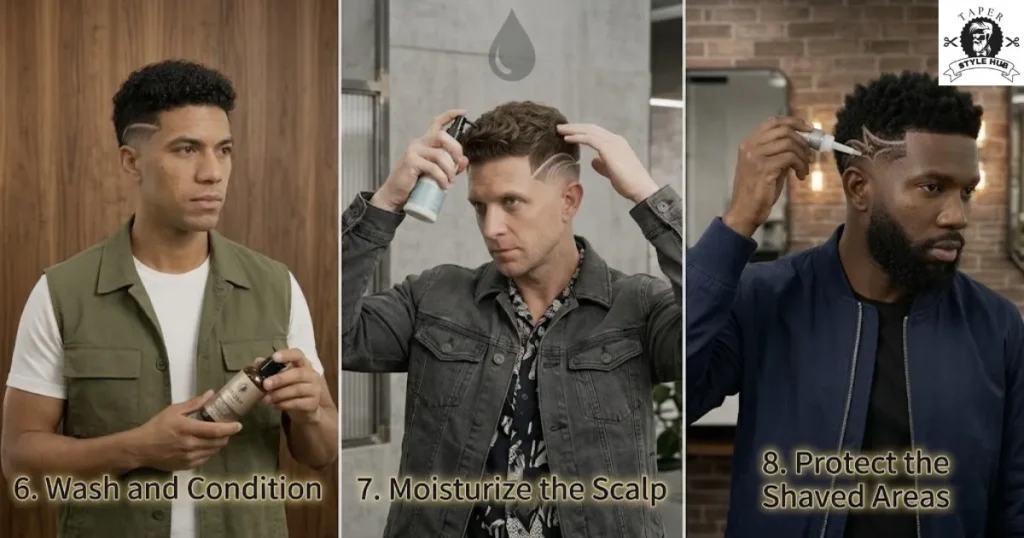
Healthy hair and a clean scalp make any fade look sharper. A simple routine is enough, and it takes only a few minutes each day.
Wash and Condition
Use a shampoo and conditioner made for your hair type. A clarifying shampoo once in a while removes product buildup and helps the style hold better.
Moisturize the Scalp
Dry skin around the faded area can look flaky and dull. A light oil or moisturizer keeps the scalp healthy and supports hair growth around the shaved zones.
Protect the Shaved Areas
Faded skin burns easily in strong sun, so wear a hat or sunscreen. Avoid scratching the area behind the ear, since irritation shows up fast against a fresh fade.
Quick Barber Checklist for Your Next Visit
Save this table on your phone before you sit in the chair. Answering each line removes almost all the guesswork.
| Detail to Decide | Your Options |
|---|---|
| Fade height | Low, mid or high |
| Top style | Mullet, quiff, crop, curls or buzz cut |
| Top length | Short, medium or long |
| Beard blend | Blended or kept separate |
| Neckline | Natural or sharp |
| Pattern | None, razor line or geometric shape |
How Often Should You Maintain a Burst Fade Design
The arc loses definition faster than a straight fade line. A neckline trimmer helps between visits, but the arc itself needs a barber. Use this schedule as a guide.
| Variation | Visit Frequency |
|---|---|
| High burst fade | Every 2 weeks |
| Burst fade with razor pattern | Every 1 to 2 weeks |
| Skin burst fade | Every 1 to 2 weeks |
| Classic or mid burst fade | Every 2 to 3 weeks |
| Low burst fade | Every 3 weeks |
| Burst taper fade or long hair | Every 3 weeks |
How Long Does a Burst Fade Design Take to Grow Out
Most men see the arc lose its shape within two to three weeks. After about six weeks, the fade blends into the rest of the hair and looks like a basic grown-out cut. Low versions and taper finishes grow out more gracefully than skin or high ones.
If you want to stop visiting a barber, ask for a low burst fade first. It gives you the longest window before the shape looks messy. A burst fade design with a pattern is the hardest to grow out cleanly.
Common Burst Fade Design Mistakes to Avoid
Most disappointing results come from a few simple errors. Avoid these, and you will walk out with the cut you wanted.
- Not mentioning back length, which often leads to a standard fade or a drop fade.
- Skipping the back reference photo, even though the burst looks different from every angle.
- Choosing a height that does not suit your face shape or hair density.
- Waiting too long between trims, which blurs the arc and the pattern.
- Using too much product, which weighs the top down and hides the contrast.
Burst Fade Design for Thinning Hair and Receding Hairlines
A burst fade design can work well with thinning hair when you adjust a few details. Keep the fade low, because a high or skin fade draws attention to the hairline. A softer, blended edge looks more natural than a sharp line.
Shorter hair on top often looks fuller than longer hair with visible gaps. A burst fade buzz cut or a short textured crop is a strong choice here. Talk to your barber about crown thinning specifically.
A haircut changes how thinning hair looks, but it does not treat hair loss. If it worries you, a dermatologist can explain the cause and your options.
How Much Does a Burst Fade Design Cost
Prices vary by city and barbershop. A standard cut often runs from about 25 to 45 dollars at a mid-range shop, and 45 to 80 dollars or more at a premium one. Add-ons like a razor pattern or beard blend raise the price.
Remember to count the visits, not just one cut. A burst fade design needs a touch-up every one to four weeks, so the ongoing cost matters more than the first bill.
Hair Color Ideas to Pair With a Burst Fade
Color changes how strongly the arc reads against the skin. A small tweak on top can make the same cut look completely different.
Natural Dark Tones
Dark hair gives the cleanest, most classic contrast with a tight fade. It suits professional settings and looks sharp with a slick back or crop.
Bleached and Platinum Tops
Light strands make the faded sides pop even more. Expect to use purple shampoo and a deep conditioner, because bleach dries the hair quickly.
Fashion Colors
Silver, ash blonde or bold fashion shades work best when the fade stays crisp. Keep the sides natural, let the top carry the color, and refresh your roots before every single visit.
Best Burst Fade Design by Age
Age is not a rule, but it does shape workplace norms, hair density and how much time you want to spend on upkeep. Treat this as a starting point for the chat with your barber.
Kids and Teens
Lower-maintenance versions work best for growing kids. A low or mid burst fade with a simple top holds up between cuts and needs no daily effort. Teens often enjoy a burst fade design with a small razor line for special occasions.
Young Adults
This is where the boldest versions live, including mohawks, mullets and detailed patterns. School and casual jobs give you room to experiment. Higher contrast and longer, more expressive tops are common in this group.
Established Professionals
A low or mid burst fade with a controlled top, like a slick back, comb over or French crop, balances polish and personality. Lower fade heights also stretch the time between visits, which suits a busy schedule.
Mature Men
Hair density and texture often change with age, so talk openly with your barber. A low burst fade tends to be the most flattering and easiest to maintain. A neat beard adds definition without needing a bolder cut.
Best Burst Fade Design for Different Occasions
The same cut can look formal or wild depending on how you finish it. A little styling adjustment is all you need.
- Office and interviews: low or mid burst fade with a slick back or comb over.
- Weddings and events: burst fade slick back with pomade for a polished finish.
- Nights out: textured or messy top with a mid or high burst fade.
- Gym and daily life: burst fade buzz cut or short crop with no product.
Do not be afraid to switch the finish. Sleek for formal events, textured and loose for casual ones. The burst fade design stays the same, and only the top changes.
Celebrities Linked With the Burst Fade Design
Barber guides often point to stars such as Zayn Malik, Usher, Drake and Michael B. Jordan when they talk about curved fades. Whether or not you follow celebrity trends, those looks show how far the cut can stretch. They range from clean and subtle to bold and pattern-heavy.
Final Thoughts on the Burst Fade Design
The burst fade design earns its popularity because it is flexible, sharp and easy to personalize. It suits nearly every hair type, pairs with almost any top style, and scales from subtle to bold.
Pick your category, bring photos, and be clear about height, back length and neckline. Keep up with regular visits, and your burst fade design will look fresh every week.
Whether you choose a subtle low fade or a bold razor pattern, the curve is what makes this cut special. Save your favorite types from this list and show them to your barber at the next appointment, preferably with photos.
Burst Fade Design FAQs
What is a burst fade design?
It is a fade that curves in a semi-circular arc around the ear while the back stays longer. Razor patterns can be added in the faded area.
Is the burst fade the same as a mullet?
No. The burst fade is a side technique, while the mullet is a top and back style. They are often combined because the arc keeps the back length.
How often should I touch up a burst fade design?
Most versions need a visit every two to three weeks. Patterns, skin fades and high arcs need one every one to two weeks.
Can curly hair get a burst fade?
Yes, curly hair suits it very well because the arc follows natural growth. Ask the barber to set the height on dry hair.
How do I ask my barber for a burst fade design?
Say burst fade, curved arc around the ear, leave length at the back, plus your height. Show a front and back reference photo.

I’m M Ahmad Ansari, founder and content creator at Taper Style Hub. With 3+ years of experience researching taper haircuts, hairstyles, grooming, and men’s style, I create practical, accurate, and easy-to-understand content. My goal is to provide readers with trustworthy information, useful tips, and inspiring ideas for choosing and styling the perfect taper haircut.

5 Comments