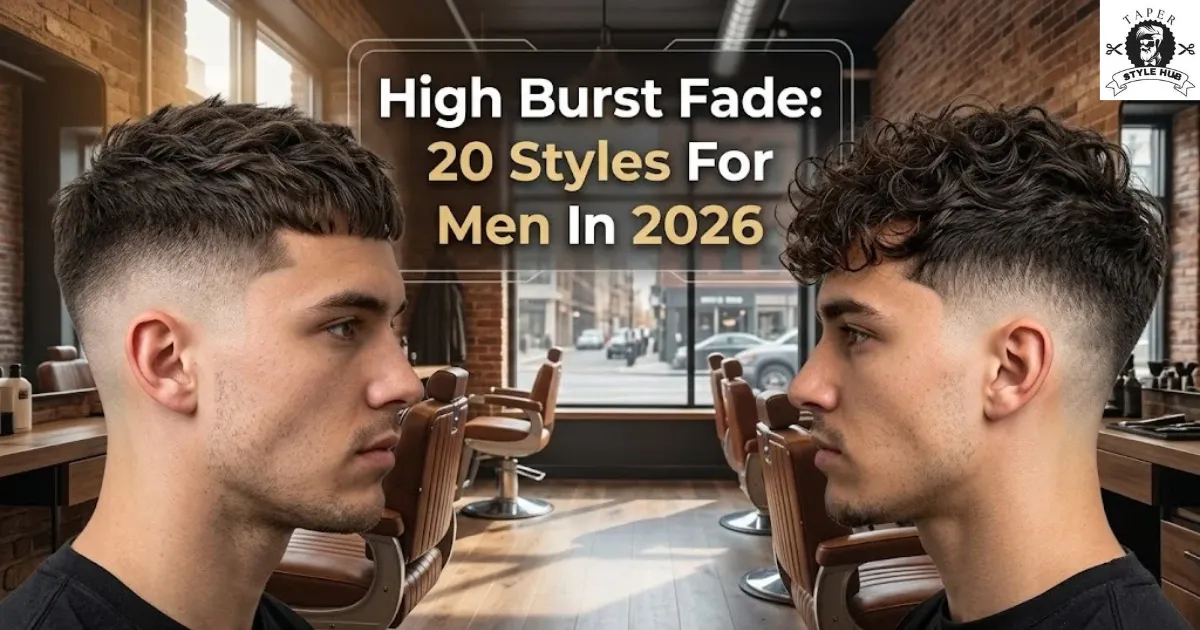
High Burst Fade: 20 Styles For Men In 2026
Men’s grooming trends move quickly, yet the high burst fade keeps earning its place in barbershop chairs. It curves around the ear, climbs high up the side, and delivers sharp contrast without demanding long styling routines. Barbers recommend it, and clients keep asking for it.
This guide explains how the cut works, how it compares with low, mid, drop and taper fades, and which hair types suit it best. You will also find 20 styles grouped into clear categories, plus barber instructions, styling tips and maintenance advice.
👉 Also Read: Mid Burst Fade
Everything You Need to Know About the High Burst Fade Haircut

What Is a High Burst Fade Haircut?
A high burst fade is a fade that starts high on the side of the head and curves in a rounded arc around the ear instead of running straight across. The hair above and behind that arc usually stays longer, which makes the curve easy to see.
The name combines two ideas. Burst describes the path of the blend, while high describes how far up the side that path travels. Neither word tells your barber how short the shortest point should be, so that detail needs its own conversation.
👉 Also Read: Low Burst Fade
Why the Burst Shape Matters
A straight fade runs around the whole head at one level. The burst shape follows the natural round of the ear, which creates a sunburst effect that looks intentional from the side and gives the haircut real character.
Because the curve hugs the ear, the cut frames the face without the hard line a standard fade can leave above it. That is also why the high burst fade works so well with textured tops and longer lengths at the back.
👉 Also Read: Burst Fade Straight Hair
Why the High Placement Matters
There is no official measurement for high. On this cut, the arc peaks well above the ear, so more of the side is faded and less hair sits between the blend and the top. The result is stronger contrast than a low or mid version.
Head shape, hair density and the individual barber all shift where the peak lands. Two barbers can cut a high burst fade a couple of centimeters apart and both be right, which is why reference photos beat vague descriptions.
👉 Also Read: Burst Fade Design
Why the High Burst Fade Is So Popular in 2026
Several things explain its staying power. The curve adds shape without demanding hours of styling, the contrast photographs well, and the cut adapts to curly, straight and thick hair. It also pairs easily with a beard fade for a cleaner finish.
Social media has pushed mullets, textured crops and fringes back into fashion, and the burst shape suits all three. Because the fade line is precise, it also holds its form longer than softer, more gradual blends.
👉 Also Read: Burst Fade Mullet Curly Hair
How the High Burst Fade Compares With Other Fades
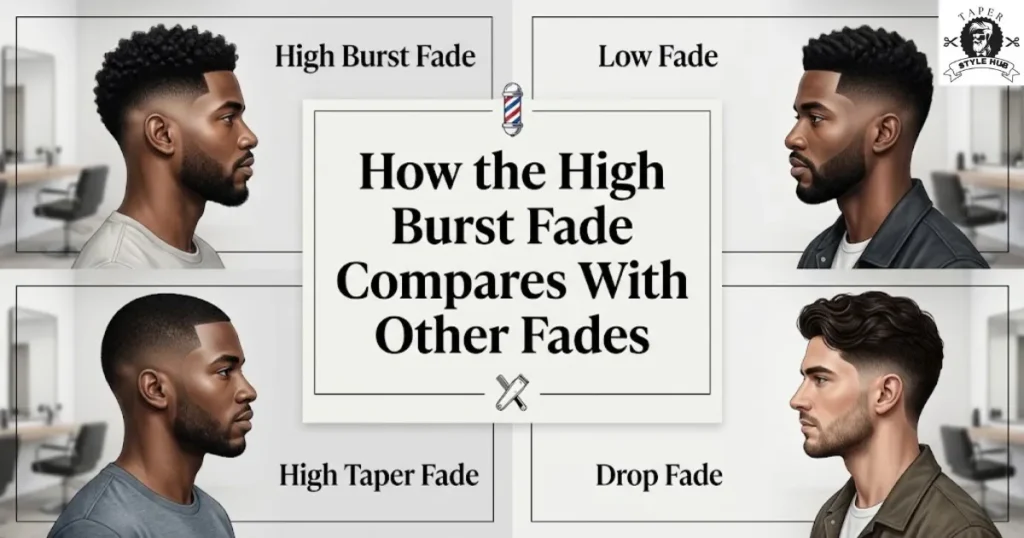
Fade names mix up two separate ideas. Burst, drop and taper describe the path of the blend, while low, mid and high describe how far up it travels. The table below shows where each popular option sits.
👉 Also Read: Burst Fade Mullet
| Fade Type | Path of the Blend | Height | Contrast | Back and Nape |
|---|---|---|---|---|
| High burst fade | Curved arc around the ear | Well above the ear | High | Usually kept longer |
| Mid burst fade | Curved arc around the ear | Slightly above the ear | Medium | Usually kept longer |
| Low burst fade | Curved arc around the ear | Near the top of the ear | Lower | Usually kept longer |
| Conventional high fade | Runs around the whole head | High on sides and back | High | Faded short |
| Drop fade | Arcs from the temple and dips behind the ear | Varies by cut | Medium to high | Faded, lower at the back |
| Taper fade | Short blend at sideburns and neckline | Hairline edges | Low | Tidied, not faded out |
High Burst Fade vs Conventional High Fade
This is the mix-up that causes the most trouble in the barber chair. A conventional high fade takes the sides and back short all the way around, while a high burst fade keeps the arc around the ear and leaves the back longer.
If you ask for one when you mean the other, you can lose the back length you planned to keep. Mention the curve, the back length and the shortest point by name, then show a photo to settle any doubt.
👉 Also Read: Taper Mullet 40 Modern Types For Men
High Burst Fade vs Drop Fade
A drop fade also curves, but it keeps travelling. It arcs from the temple, dips behind the ear and fades out low at the nape. A burst fade circles the ear and stops, which leaves more length at the back.
Burst fades tend to need more frequent upkeep because the area around the ear loses its crisp look quickly. Drop fades usually grow out more subtly, which suits men who prefer fewer barber visits.
👉 Also Read: Low Burst Fade Mullet
High Burst Fade vs Taper Fade
A taper keeps the blend small, usually limited to the sideburns and neckline, which makes it the most conservative choice. If a high burst fade feels too bold, a taper or a mid burst fade is the calmer next step.
👉 Also Read: Straight Hair Taper Mullet Fade
Mid and Low Burst Fade Alternatives
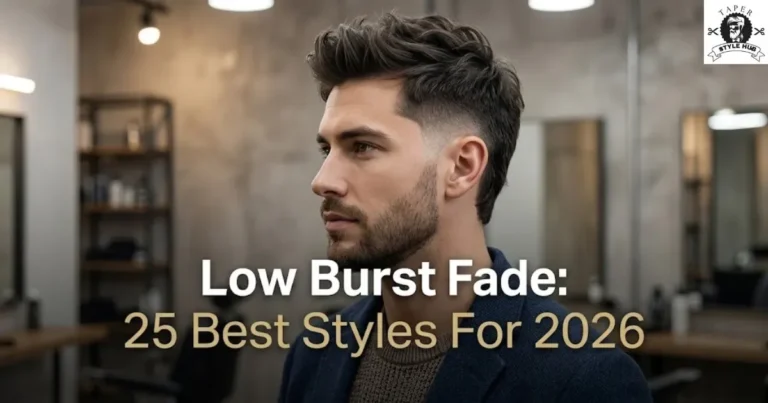
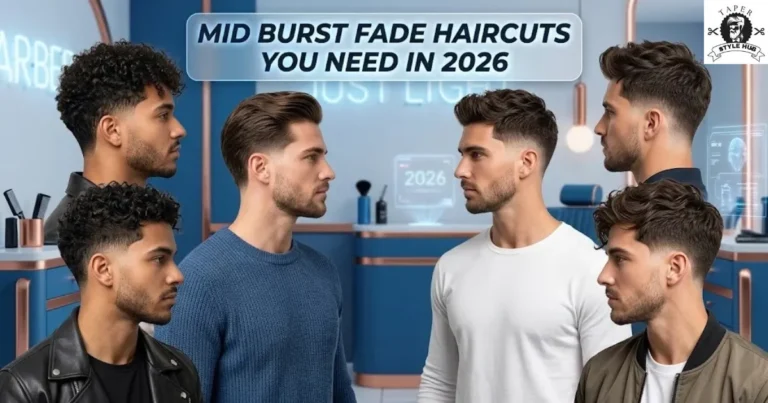
The mid burst fade peaks a little above the ear and keeps more hair on the side. The low burst fade stays close to the top of the ear and grows out softly. Choose the higher version only when you want maximum contrast.
Who Suits a High Burst Fade? Hair Type and Face Shape
A high burst fade can work on straight, wavy, curly and coily hair, but it asks more of the top than a lower burst does. Because the arc removes more of the side, the top and crown need enough density to balance it.
Best Hair Types for This Cut
- Curly and coily hair: dense curls fill the space the high arc creates, so this is the most forgiving texture.
- Wavy hair: works well when the top is long enough to show natural movement.
- Straight hair: shows every transition, so the blend at the top of the arc must be clean.
- Thick hair: the fade removes weight from the sides and keeps the overall shape tidy.
- Fine or thinning hair: use caution, because a high placement shows more scalp.
Best Face Shapes for This Cut
- Round faces: added height on top helps create a longer, more structured look.
- Oval faces: the most versatile shape, so almost any fade height works.
- Square faces: the rounded curve softens a strong jawline.
- Long faces: keep some volume on top, or consider a mid burst instead.
- Heart-shaped faces: texture at the temples balances a wider forehead.
- Diamond faces: the curved blend highlights cheekbones and softens sharp edges.
Hairline and Crown Considerations
Face shape advice is a starting point, not a rule. Two physical features matter more: the crown and the temples. A strong crown whorl can make the join between the faded side and the longer hair look abrupt.
A receding hairline also sits close to where a high arc begins, so the higher placement can draw attention to it. Ask your barber to check your head from the side and back before settling on a height.
20 High Burst Fade Styles Grouped by Category
The fade is only the base. The hair you keep on top and at the back decides how the finished cut looks. To keep things simple, the 20 styles below are grouped into five categories, so you can compare similar options side by side.
Everyday High Burst Fade Styles for Short and Medium Hair

These six options keep styling simple and work for school, work and weekends. Each pairs the curved fade with a manageable top, so you spend less time in front of the mirror each morning.
“All The Types Shown Below Are Displayed In The Single Image Above☝️”
1. Classic Everyday Cut
This is the baseline high burst fade: even length on top, a tight rounded fade around the ear and no exaggerated texture. A light matte pomade keeps the top controlled while the fade stays visible. It is the safest choice for any setting.
2. Modern Choppy Cut
The modern take adds choppy layers and slightly more volume through the crown. It suits straight or wavy hair that holds its shape easily, and it works best with a matte clay that adds separation without any shine.
3. Textured Crop
Short, textured hair on top pairs with the curved fade below for a low-maintenance finish. Quick to style and easy to refresh, it suits nearly every hair type, which is why barbers see it in the chair so often.
4. Messy Textured Top
Layered, choppy cutting adds depth and a lived-in look. Finger-style it with a light wax and leave some asymmetry. The result reads as casual rather than sloppy, and it takes only a minute or two each morning.
5. French Crop
A short, blunt fringe sits forward on the forehead while the sides fade high and tight. Blow-dry the top forward, press it into place and finish with a flexible paste. The style looks sharp without needing much length.
6. Buzz Cut
A short, buzzed top meets the curved fade for one of the lowest-maintenance options here. With so little hair above it, the fade carries the whole cut, so the arc must be precise. Keep some strength on top to avoid a thin look.
High Burst Fade Styles for Curly, Wavy, Straight and Coily Hair

Texture changes how the same fade behaves, so these four styles are grouped by hair type. Pick the one that matches your natural pattern instead of fighting it, and your styling time will drop noticeably.
“All The Types Shown Below Are Displayed In The Single Image Above☝️”
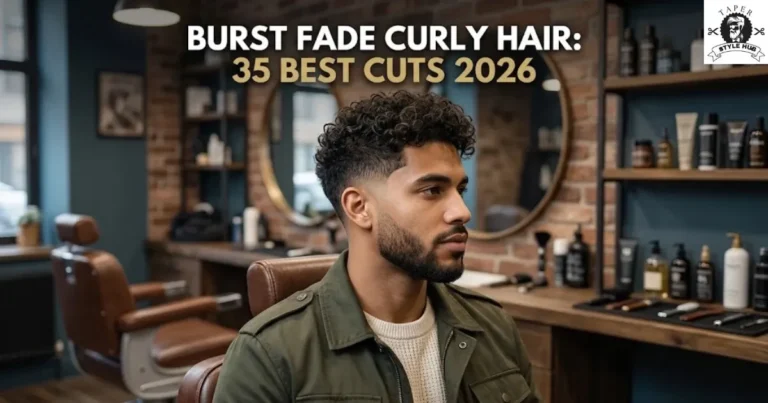
7. Curly Hair Version
Curls stay long enough to keep their bounce while the sides are cut close. The sharp curve makes the curl pattern look fuller by contrast. Use a curl cream on damp hair and diffuse on low heat to control frizz.
8. Wavy Hair Version
A relaxed option that lets the natural wave pattern show instead of forcing a rigid shape. Sea salt spray adds texture without flattening movement. It is a low-effort style that still looks deliberate in everyday wear.
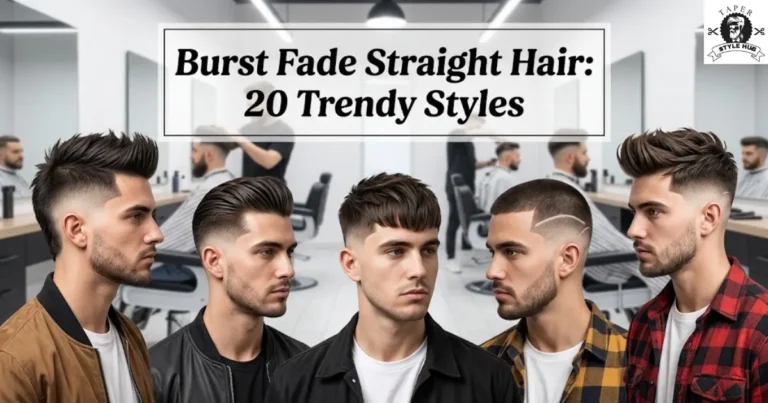
9. Straight Hair Version
Straight hair gives the fade a sleek, almost architectural finish. Because it shows every transition, the blend where the fade meets the top must be clean. A quick blow-dry after washing keeps the surface smooth and polished.
10. Coily and Afro-Textured Version
Tight sides contrast with natural volume on top, and dense coils fill the space the high arc creates. Ask the barber to shape the top instead of cutting it flat, and plan for shrinkage around the crown.
Bold High Burst Fade Styles With Longer Tops

Longer lengths on top or at the back turn the fade into a statement. These five styles ask more of you in styling and barber communication, but they deliver the strongest personality of the whole list.
“All The Types Shown Below Are Displayed In The Single Image Above☝️”
11. Mullet
Short, faded sides meet longer hair left at the back. The curve around the ear keeps the mullet from looking dated and gives it a retro-but-current edge. Say plainly that the back length is intentional so it is not cut short.
12. Textured Fringe
A textured fringe falls forward across the forehead for a younger, trend-driven feel. Keep it slightly uneven so it looks current instead of overly styled. Tell the barber which direction the fringe should fall before the cut begins.
13. Pompadour
Extra height and volume up front, swept back and up. Blow-dry the front section upward before applying product to give the pompadour its lift. This style suits men who already carry a confident, polished look every day.
14. Faux Hawk
A softer cousin of the mohawk. The hair is styled toward the center for shape and lift, but the sides are not shaved down as dramatically. It is more wearable day to day and still looks edgy.
15. Mohawk
A strip of longer hair runs down the center while both sides are faded high and tight. It is the boldest option on this list. A strong-hold gel keeps the center strip standing throughout the day and evening.
Polished High Burst Fade Styles for Work and Events

Professional settings call for neat lines and controlled tops. The curve around the ear keeps these styles from looking formal or dated, which makes them popular for interviews, offices and client-facing jobs.
“All The Types Shown Below Are Displayed In The Single Image Above☝️”
16. Side Part
A defined part cut into the top gives a traditional, office-ready finish. A comb and a light-hold pomade keep the part crisp through the day, while the fade adds a modern edge that keeps the whole look fresh.
17. Comb Over
Hair is combed neatly to one side instead of pushed straight back. It moves easily between business and casual settings. A medium-hold styling cream keeps the shape tidy without looking stiff or overly formal at the end of the day.
18. Slick Back
The top is brushed straight back with a high-shine product for a sleek, streamlined finish. It works best with at least a few inches of length, and it suits formal occasions or anyone who prefers a grown-up look.
Personalized Finishes to Add to Your High Burst Fade
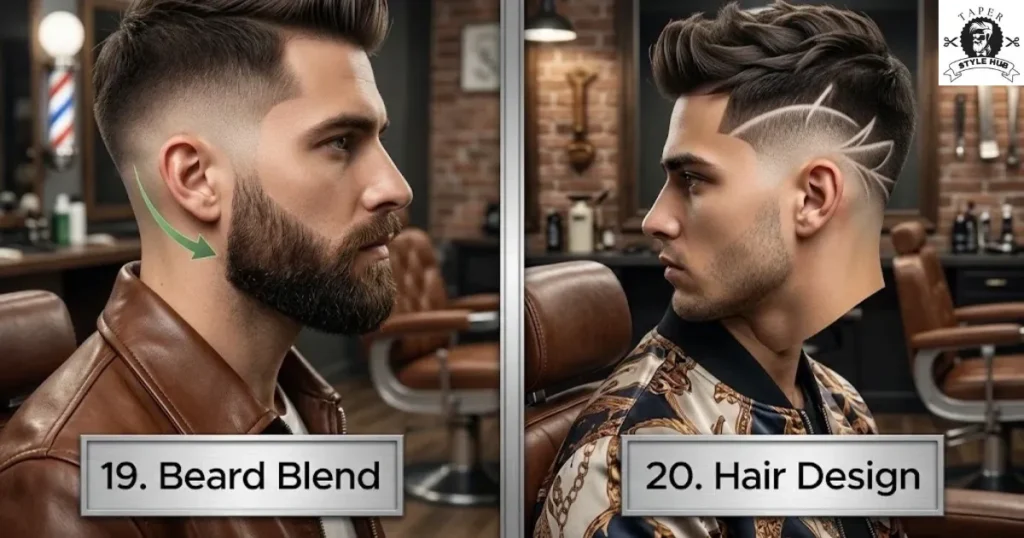
Small additions can change how the whole cut reads. These two finishes personalize the fade, but both need regular upkeep to stay sharp, so factor extra barber visits into your plans before you choose either one.
“All The Types Shown Below Are Displayed In The Single Image Above☝️”
19. Beard Blend
The fade flows straight into the beard line, tying the whole face together. This pairing looks mature and deliberate. Keep the beard trimmed on a regular schedule, because any unevenness stands out next to a sharp fade.
20. Hair Design
Shaved lines or patterns are added into the fade for a personal touch. They need frequent barber touch-ups, but they add real individuality. Designs work best with shorter tops, where the pattern stays visible all day.
Which High Burst Fade Fits Your Goal?
Use the table below as a quick shortcut when you are not sure which direction to take into the barbershop. Match your goal or hair type to the style direction that fits it best.
| Goal or Hair Type | Best Style Direction |
|---|---|
| Curly or coily hair | Curly or coily versions |
| Low-maintenance daily wear | Buzz cut or textured crop |
| Professional office setting | Side part, comb over or slick back |
| Bold, statement-making look | Mohawk, faux hawk or mullet |
| Beard-focused styling | Beard blend |
| Retro-inspired trend | Mullet |
| Personal expression | Hair design |
| Younger, trend-driven look | Textured fringe or French crop |
Pros and Cons of the High Burst Fade
Every haircut involves trade-offs, and this one is no exception. Weigh the benefits against the upkeep before you commit, especially if your schedule leaves little room for regular barber visits.
Advantages
- Strong contrast between the sides and the top.
- Works with many hair textures and top styles.
- Pairs well with beards and shaved designs.
- Looks sharp with very little daily styling.
- Holds its shape longer than softer blends.
Drawbacks
- Needs a touch-up every two to three weeks.
- Leaves little room to fix an uneven line.
- Shows more scalp on fine or thinning hair.
- Can irritate skin when cut very close.
Tips for Choosing the Right Fade Height
If you are unsure about a high burst fade, start lower and move up at your next visit. Hair can always be taken higher, but it cannot be put back, so a gradual approach protects you from regret.
Consider your daily life too. Work dress codes, school rules, sports and hat wearing all influence how bold the contrast can be. A mid placement often balances style and practicality for first-timers.
Finally, think about your hair growth. Fast-growing hair loses the crisp arc sooner, so men with quick growth may prefer a guard over skin to soften the regrowth between visits.
How to Ask Your Barber for a High Burst Fade
Asking for a high burst fade by name leaves too much open. Barbers read height, shortest length and back treatment differently, so agree on the details before the clippers start and back them up with photos.
Five Details to Agree On
- Fade height: where the curve should peak, and whether it wraps around the ear instead of running straight around the head.
- Shortest length: skin or a guard number at the tightest point, which is separate from height.
- Top length and texture: how much to keep, and whether it should be layered, textured or natural.
- Crown and back: whether they blend into the fade or stay longer, which matters most for mullets and mohawks.
- Neckline and line-up: natural, tapered or squared at the nape, plus whether you want a sharp front line-up.
A Simple Request You Can Save on Your Phone
Sample request: a high burst fade with the arc peaking well above the ear, skin at the shortest point, two inches on top with texture, the back and crown left long, a natural neckline and a sharp front line-up.
Reference Photos to Bring
A single front photo misses the defining part of this cut, because the arc sits beside and behind the ear. Bring three angles so your barber sees the full picture.
- Side view: shows the height and curve of the arc.
- Back view: shows how the crown joins the back and how the neckline looks.
- Front view: shows top length, texture and the hairline.
Choose photos of hair similar to yours. A cut on thick coils will not translate directly to fine, straight hair, however good the picture looks.
What to Expect During Your Appointment
A good barber starts with a consultation. Expect questions about height, shortest length and the style you want on top, and expect a close look at your crown, hairline and head shape from several angles.
Next comes the clipper work. The barber builds the arc around the ear in stages, blending from the shortest point upward, and often refines the line with a trimmer for a crisp outline.
Finally, the barber checks symmetry from both sides, finishes the neckline and shows you the back with a mirror. Speak up before you leave if the height or length is not what you pictured.
Appointments usually take between thirty and forty-five minutes, depending on the top style and any design work. Book some extra time if you want a beard blend or shaved lines.
How to Style a High Burst Fade at Home
Your barber looks after the fade, but you look after everything above it. Your daily routine depends on the length and texture you kept on top, so adjust each step to your own hair.
Step-by-Step Styling Routine
- Start with clean, damp hair so products spread evenly.
- Apply a pre-styler such as sea salt spray or light mousse for grip and volume.
- Blow-dry into shape, lifting the top with your fingers or a brush.
- Finish with clay, paste, wax or pomade for hold and definition.
Best Products by Hair Type
- Curly and coily hair: curl cream or leave-in conditioner for moisture and definition.
- Straight and wavy hair: matte clay or paste for texture without flattening.
- Short textured tops: a small amount of texture powder for lift.
- Long tops and mohawks: strong-hold gel or wax for structure.
Use less product than you think you need. Short hair is easily weighed down, and a small amount worked through dry hair is usually enough to create separation and a natural finish.
Best Hair Products to Keep in Your Kit
A small product kit covers almost every version of this cut. Choose items that match your texture, and replace them if your hair changes with the seasons.
- Texture clay: strong, matte hold for messy and textured tops.
- Texture powder: light lift for flat or fine hair.
- Sea salt spray: relaxed, beachy texture for waves and curls.
- Molding paste: flexible hold without stiffness.
- Styling cream: soft control and frizz reduction.
- Beard oil: a polished finish for beard blends.
How to Maintain a High Burst Fade
Expect a touch-up every two to three weeks if you want the arc to stay crisp. The area around the ear loses its fresh look faster than anywhere else on the head, especially with a skin-close finish.
Your own interval depends on how fast your hair grows and how much softness you accept. A guarded fade blurs gradually, while a skin fade shows regrowth within days. Ask your barber about quick fade refreshes between full cuts.
At home, wash with a shampoo and conditioner that suit your hair type, and use a clarifying shampoo now and then to remove product buildup. Gently brush or comb to control direction and texture.
Moisture matters too. Curly and dry hair benefit from a light oil or leave-in conditioner, which keeps the top soft and manageable while the sides stay tight and clean.
Sweat and daily wear can also affect the finish. Rinse after workouts, avoid heavy products that leave residue around the fade, and wear hats loosely so the blend does not get pressed flat.
Common Mistakes and Scalp Care for a High Burst Fade
The trade-off is simple: the higher the arc, the stronger the contrast, but the less room there is to fix an uneven line. Most problems trace back to the brief, not the clippers.
Common Mistakes to Avoid
- The curve disappears and the result reads as an ordinary high fade.
- The arc goes higher than planned and leaves the sides hollow.
- The back is cut short, which removes the connection a mullet or mohawk needs.
- A hard weight line appears where the fade meets longer hair.
- The reference photo shows a different hair texture, so the result never matches it.
Skin Irritation and Razor Bumps
Cutting very close to the skin can trigger ingrown hairs and razor bumps in some men, especially those with tightly curled or coarse hair. If this has happened before, ask for a guard at the shortest point instead of skin.
The back of the neck can also react to very close cuts. Bumps that keep returning deserve attention from a doctor or dermatologist, so do not keep cutting over irritated skin.
Is a High Burst Fade Suitable for Boys and Teens?
Yes, with a few adjustments. Boys and teens often wear the cut with a textured fringe or short crop, and the low-maintenance styling suits busy school mornings. Ask for a soft guard instead of skin for younger children.
Check school grooming rules first, because some schools limit very short sides or designs. A mid burst fade is often an easier starting point before moving up to the higher placement.
Related Burst Fade Styles Worth Exploring
Once you understand the high burst fade, the wider burst fade family becomes easier to navigate. Pairings such as a burst fade mullet, a burst fade for curly hair and a burst fade with a textured fringe all follow the same curved logic.
Lower variations, including the low burst fade and the taper burst fade, offer gentler contrast. They suit men who like the curve but want a softer grow-out and fewer trips to the barber.
Final Thoughts on the High Burst Fade
A high burst fade is a set of decisions instead of one fixed look: how high the arc peaks, how short the shortest point goes, how much length stays on top and how the crown meets the back.
Settle those choices, bring side, back and front photos, and book a touch-up every two to three weeks. Do that, and the high burst fade becomes one of the easiest ways to walk out of the barbershop looking sharper.
Whichever style you choose from this guide, clear communication is the real key. The details you give your barber decide whether the curve, the height and the top length turn out exactly as you pictured them.
High Burst Fade FAQs
Is a high burst fade the same as a blowout fade?
No. A blowout fade focuses on a voluminous, lifted top, while a burst fade describes the curved blend around the ear. The two can be combined.
What guard number should I ask for?
Skin is the tightest option, while a number 0.5 or 1 guard gives a short but softer finish. Ask your barber to match your photo.
Can a high burst fade look professional?
Yes. Keep the top neat with a side part or comb over, and ask for a soft guard at the shortest point.
Does a high burst fade work with thinning hair?
It can, but the high placement shows more scalp. A mid burst fade or a guard instead of skin is usually safer.
How do you grow out a high burst fade?
Skip a few touch-ups and let the sides lengthen. Ask the barber to blend the arc into the top gradually as it grows.

I’m M Ahmad Ansari, founder and content creator at Taper Style Hub. With 3+ years of experience researching taper haircuts, hairstyles, grooming, and men’s style, I create practical, accurate, and easy-to-understand content. My goal is to provide readers with trustworthy information, useful tips, and inspiring ideas for choosing and styling the perfect taper haircut.

5 Comments