Mid Drop Fade: 30 Best Haircuts For Men
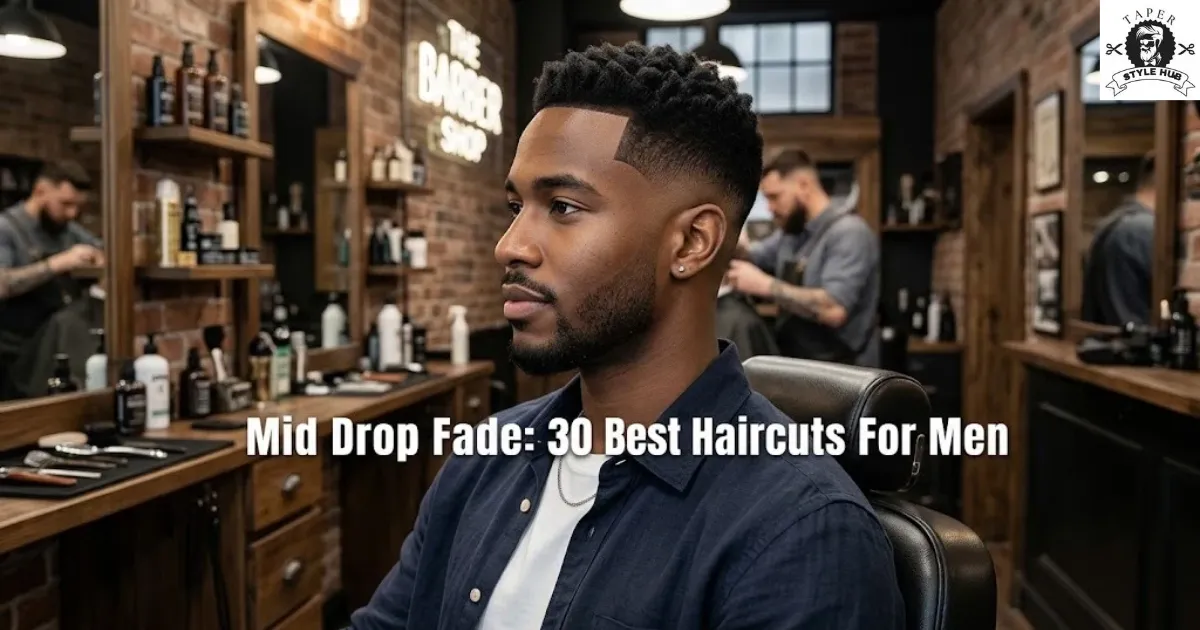
A mid drop fade is one of those haircuts that looks sharp from every angle without feeling over the top. The fade starts near the temple, then curves down behind the ear toward the nape.
That curve is what sets it apart. From the front you see a clean mid fade, but from the side and back the line follows the natural shape of your skull, which adds depth and a polished finish.
In this guide, we cover what the cut really is, how it compares with other fades, and 30 styles grouped into clear categories. You will also get barber scripts, styling steps, and upkeep advice.
Whether you wear straight hair, tight curls, or a longer top, there is a version here that fits your routine. Let us start with the basics.
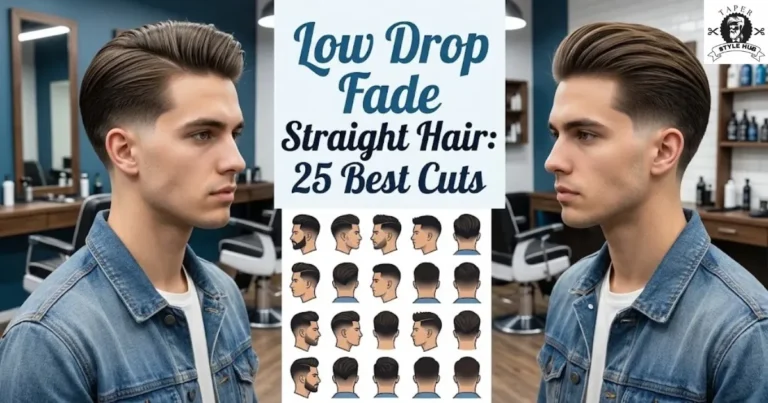
👉 Also Read: Low Drop Fade Straight Hair
Mid Drop Fade Guide: Everything You Need Before Your Next Barber Visit
Think of this guide as a shortcut to a better haircut. Every section answers a question men usually ask before sitting in the chair, so you can walk in prepared and walk out happy.
👉 Also Read: Burst Fade Curly Hair
What Is a Mid Drop Fade Haircut?
A mid drop fade combines two simple ideas. The word mid tells you where the fade begins, roughly halfway up the side of the head near the temple. The word drop describes the path the line takes after that.
Instead of running level around the head, the line bends downward behind the ear and finishes low at the nape. The hair graduates from very short at the bottom to longer hair above.
This arc keeps more hair above the line at the back, so the crown looks fuller and rounder than it would under a level cut. It also frames the ears neatly.
Neither word decides how short the base is or how long the top stays. Those are separate choices, which is why the same cut can look soft on one man and sharp on another.
The result is a shape that works as well in a boardroom as it does at the gym, which explains why it keeps showing up in barbershops everywhere.
👉 Also Read: High Burst Fade
Is a Mid Drop Fade the Same as a Mid Fade?
Not quite. A standard mid fade keeps a mostly level line around the head, while a mid drop fade starts at the same height and then dips behind the ear. Face on, they look almost identical.
The difference shows in profile and from behind. If you want that curved back outline, say the word drop clearly so your barber builds the arc from the first pass.
There is also a practical side. Turning a drop into a level fade only needs a higher cut at the back, but rebuilding a drop from a level fade means growing hair out first.
If you are unsure, ask the barber to show you the curve with the clippers before cutting, so there are no surprises later.
👉 Also Read: Mid Burst Fade
How a Mid Drop Fade Is Cut

Barbers usually start with a consultation, checking growth patterns, density, and head shape. Then they set a guideline at mid-temple height, often with a number two guard, and carry it down and back in a gentle curve.
Next comes the blend. Working through smaller guards such as a number one and a half, then a one, the barber uses the clipper lever to erase any visible line between lengths.
For a skin finish, a trimmer sets the zero line and a foil shaver takes the base down to bare skin. Finally, the top is shaped with clippers or scissors.
👉 Also Read: Low Burst Fade
Mid Drop Fade Guard Numbers, Skin Finishes, and Top Length
Guard numbers describe cutting length, not fade height. On most sets, a number one leaves about one eighth of an inch, while a number two leaves about a quarter inch.
- Skin finish: a bare base made with a foil shaver, giving the sharpest contrast.
- Number 0.5 or 1: a close shadow base that feels softer than skin.
- Number 2: a gentle base with subtle contrast.
- Top length: best given in inches or shown with a photo.
A skin finish is not a guard setting. If you want contrast without bare skin, ask for a shadow base instead.
👉 Also Read: Burst Fade Straight Hair
30 Best Mid Drop Fade Haircuts for Men
The 30 styles below are grouped into five categories, so you can jump straight to the look that suits your hair. Each one pairs the same fade shape with a different top or finish.
Mix and match as you read. The fade and the top are separate choices, so you can swap any top from one category onto another base.
👉 Also Read: Burst Fade Design
Classic and Clean Mid Drop Fade Styles

These are the timeless picks. They work in offices, classrooms, and gyms, and they are the safest place to start if this is your first fade.
“All The Types Shown Below Are Displayed In The Single Image Above☝️”
1. Classic Mid Drop Fade
Short sides blend into a neat top about two inches long. It is the standard version, clean and balanced, with nothing loud and nothing missing.
Best for straight or slightly wavy hair. A little matte clay pushed to the side finishes the look in under a minute.
Ask your barber: give me a mid drop fade, blended from a zero up to a two, with about two inches left on top, neat and tidy.
👉 Also Read: Taper Mullet 40 Modern Types For Men
2. Mid Drop Skin Fade
Here the base goes all the way down to bare skin, which creates a razor-sharp contrast against the hair above. It gets noticed in any room.
Best for thick hair that needs strong separation. Expect to book your next visit sooner, because regrowth shows quickly.
Ask your barber: take the base to skin, blend up through a one to a two, and keep one and a half inches on top.
3. Mid Drop Taper Fade
The taper keeps the blend soft around the ears and neckline instead of going to skin. It reads neat and professional without any harsh edge.
Best for fine or thinning hair. A light cream on top keeps the soft finish from looking heavy.
Ask your barber: a taper finish with no skin, blended from a one to a three, and about two inches on top.
4. Mid Drop Fade with Side Part
A clean side part sits above faded sides for an office-friendly look. It is polished enough for a meeting and relaxed enough for the weekend.
Comb the part in while the hair is damp, then set it with a medium-hold pomade for a tidy finish.
Ask your barber: a mid drop fade with the sides blended from a one to a three, and two to three inches on top so I can part it.
5. Mid Drop Fade with Line Up
A crisp line up squares off the forehead and temples, giving the whole cut a freshly finished look. The sharp edges frame the face nicely.
Best for coarse or curly hair. Keep the top simple and let the lines do the talking.
Ask your barber: add a shape up along the forehead and temples, with the base taken to skin and blended up to a two.
6. Mid Drop Fade with Crew Cut
A short crew cut up top paired with a curved fade gives a neat, athletic shape. The drop adds structure that a plain crew cut lacks.
Best for thick, straight hair. A tiny amount of matte product lifts the front and keeps the shape all day.
Ask your barber: crew cut length of about an inch on top, slightly longer in front, with the sides blended from a one to a three.
Textured and Messy Mid Drop Fade Styles
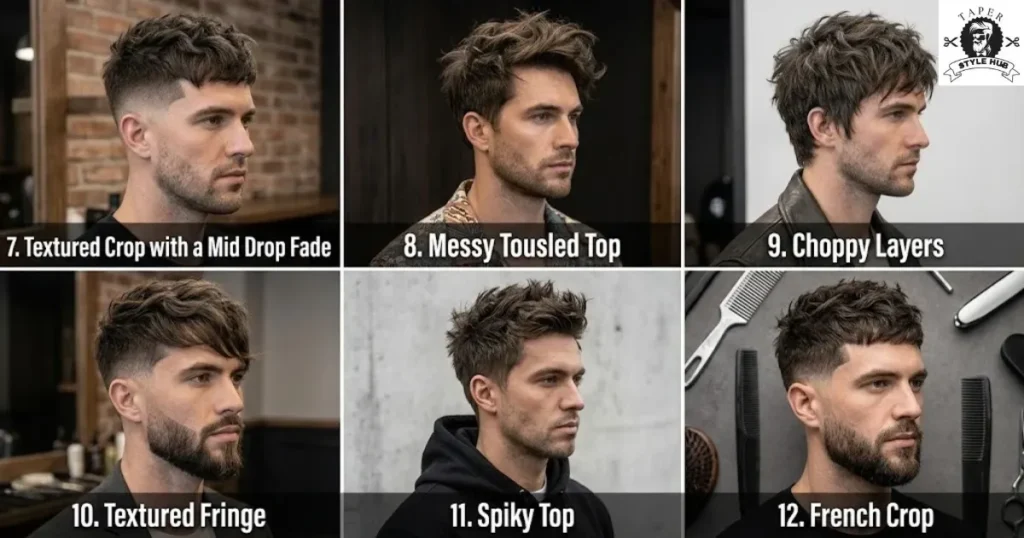
Texture makes a haircut look styled even when you barely try. These versions turn the fade into an easy, lived-in look.
“All The Types Shown Below Are Displayed In The Single Image Above☝️”
7. Textured Crop with a Mid Drop Fade
Choppy, layered hair on top meets clean faded sides. The texture catches light, adds movement, and hides thin spots.
Best for straight hair that tends to lie flat. Work in matte clay with your fingers and let it air dry.
Ask your barber: lots of choppy layers on top at about two inches, with the sides blended from a zero to a two.
8. Messy Tousled Top
Longer, loose hair on top looks perfectly undone, while the tight sides make the mess look planned instead of lazy.
Best for wavy or thick hair. A spritz of sea salt spray on damp hair is all you need.
Ask your barber: keep three to four inches on top with plenty of movement, and finish with a mid drop fade blended up to a three.
9. Choppy Layers
Short, uneven layers create real movement through the top. The curved fade underneath gives those layers a clean frame.
Best for thick, straight hair that grows like a helmet. Point cutting breaks the weight up beautifully.
Ask your barber: point cut the top into short layers, about two inches long, and blend the sides from a one to a three.
10. Textured Fringe
The front hair is pushed forward into a broken, uneven fringe. With the sides kept tight, the fringe becomes the star of the cut.
Best for men with longer foreheads. A little matte paste keeps the texture visible all day.
Ask your barber: leave two to three inches forward for a broken fringe, and take the sides from skin up to a two.
11. Spiky Top
Soft, modern spikes sit above a strong faded base. Think light texture, not the stiff gel spikes of the early 2000s.
Best for medium-density straight hair. Twist small sections upward with strong matte clay.
Ask your barber: about two inches on top cut for texture, with a base blended from a zero to a two.
12. French Crop
A short, textured fringe falls across the forehead in a choppy line. It is stylish, low effort, and very easy to repeat at the barber.
Best for straight or slightly wavy hair. Scrunch matte clay into dry hair for a cool, casual finish.
Ask your barber: a textured French crop, one to one and a half inches, with a choppy fringe and a drop behind the ear.
Length and Flow Mid Drop Fade Styles

Short sides and a longer top give you room to sweep, slick, or lift. These are the cuts that reward a little styling time.
“All The Types Shown Below Are Displayed In The Single Image Above☝️”
13. Mid Drop Fade with Quiff
The top is lifted up and back into a full quiff while the sides drop away cleanly. Volume above, precision below.
Blow-dry with a round brush, then lock the shape in with medium-hold pomade.
Ask your barber: keep three to four inches on top for a quiff, with a mid drop fade blended from a one to a three on the sides.
14. Mid Drop Fade with Pompadour
A big, swept-up pompadour meets modern faded sides. It blends old-school confidence with a sharper, current outline.
Best for thick hair with natural body. Volume mousse and a blow-dryer do most of the work.
Ask your barber: leave three to five inches for a pompadour, with the sides taken from skin up to a two.
15. Slick Back
The hair is combed straight back with a smooth finish. The curved fade adds edge to a style that could otherwise feel stuffy.
Apply pomade to damp hair, comb it back, and finish with a cool blast from the dryer.
Ask your barber: leave three to four inches for a slick back, with a mid drop fade running from a zero to a two on the sides.
16. Comb Over
A modern comb over has real volume, not a flat sweep. The fade keeps the look young and sharp instead of corporate.
Best for straight hair with good density. It also helps disguise thinning at the temples.
Ask your barber: comb over length of two to three inches on top, with the sides blended from a one to a three.
17. Middle Part
The top splits down the center and falls to both sides, giving longer hair a clean, defined outline against the faded base.
Best for medium-length wavy or straight hair. Keep the part natural rather than perfectly razor straight.
Ask your barber: leave three to four inches on top for a middle part, and blend the sides smoothly into it.
18. Long Top
Five inches or more on top creates maximum contrast with the shortened sides. Wear it loose, swept back, or even tied up.
Best for thick hair and men growing out a shorter cut. Light cream keeps the length under control.
Ask your barber: keep five to six inches on top, clean up the ends, and blend the sides from a one to a three.
Curly, Wavy, and Coily Mid Drop Fade Styles

Curls and a drop fade make one of the best pairings in men’s hair. The fade shows off the texture while the curve follows its natural shape.
“All The Types Shown Below Are Displayed In The Single Image Above☝️”
19. Curly Top with a Mid Drop Fade
Natural curls stay full on top while the sides are faded and shaped. The curls get all the attention, and the cut stays tidy.
Leave three to four inches for definition. Use curl cream on damp hair and never brush dry curls.
Ask your barber: leave three to four inches of curl, shape the curls, and blend the sides from a one to a two.
20. Tight Coils
Short, tight coils sit above a crisp faded base. The result is clean, sharp, and very easy to live with day to day.
Best for coily hair types. A twist sponge and light moisturizer are all the styling you need.
Ask your barber: about one and a half inches of coil on top, with the sides taken to skin and blended into a one.
21. Loose Waves
Soft waves flow across the top over a smooth fade. It feels relaxed and modern without trying too hard.
Ask for light layering to support the wave pattern, then scrunch in sea salt spray and let it dry.
Ask your barber: keep three to four inches with light layers for the wave, and blend the sides from a one to a three.
22. 360 Waves
A brushed wave pattern wraps the top while the sides stay clean and tight. Contrast is the whole point of this style.
Brush daily, keep the hair moisturized, and wear a durag at night to protect the pattern.
Ask your barber: leave the top long enough to brush into waves, with a tight faded base and a clean neckline.
23. Curly Fringe
Curls fall forward over the forehead into a loose, soft fringe. The faded sides keep the rest of the head crisp.
Scrunch curl-defining cream into the front and let the hair dry naturally for the best shape.
Ask your barber: leave about three inches of curl falling forward, and blend the sides from a one to a two.
24. High Top Twists
Twists or sponge curls rise above a precise faded base. The curved line gives the height a clean foundation.
Best for men who want a bold silhouette. Retwist regularly and moisturize to keep the shape neat.
Ask your barber: keep the top long enough to twist, with a skin base and a sharp curve behind the ear.
Bold and Modern Mid Drop Fade Styles

The last category goes bigger. These versions add edge, color, or detail, turning the fade into a full statement.
“All The Types Shown Below Are Displayed In The Single Image Above☝️”
25. Mid Drop Fade with Buzz Cut
A short buzz on top keeps maintenance close to zero. The curve gives a plain buzz the shape it normally lacks.
Ask for a number three on top and a faded base. Skip the products and apply sunscreen instead.
Ask your barber: a number three on top, with the sides blended from a zero to a two.
26. Mid Drop Fade with Hard Part
A razor-shaved line marks the part and adds instant edge. It pairs well with a comb over or a slick back.
Best for thick, straight hair. Expect more frequent touch ups to keep that line crisp.
Ask your barber: a hard part on the side I choose, two to three inches on top, and a zero to two blend.
27. Mid Drop Fade with Hair Design
A shaved line or simple pattern sits in the faded section. The curve makes a clean canvas for a slash or small shape.
Keep the design simple, because it grows out fast. Show your barber a reference photo first.
Ask your barber: one simple shaved line on the side, with about two inches left on top.
28. Faded Beard
The head fade flows straight into a faded beard with no hard line between hair and beard. The gradient runs smoothly from temple to chin.
Best for full beards. Use beard oil daily and tidy the cheek line weekly.
Ask your barber: blend the sideburns into the beard so there is no line between the two, and keep the fade clean on the head.
29. Platinum Blonde Top
A bleached top pops against a sharp faded base. The color contrast does half the styling work for you.
Use purple shampoo weekly to keep the blonde bright, and choose matte products so the color does not look dull.
Ask your barber: bleach the top to platinum, keep two to three inches, and blend the sides from a zero to a two.
30. Mid Bald Drop Fade
The base is taken extremely close with a foil shaver, then blended into longer hair higher up the side. It looks clean and dramatic.
Best for men who want maximum contrast. It pairs especially well with a short boxed beard.
Ask your barber: take the base to bald with a foil shaver, then blend up smoothly through a one and a two.
Mid Drop Fade by Hair Type

Texture, density, and growth direction change how any fade reads on your head. Use these notes to match the cut to your hair.
“All The Types Shown Below Are Displayed In The Single Image Above☝️”
Straight Hair
Straight hair shows every line of the blend, so ask for a smooth gradient. Add texture on top to avoid a flat, heavy look.
Fringes, crops, side parts, and slick backs all work, so choose based on how your hair naturally falls.
Wavy Hair
Waves gain volume from the contrast with tight sides. Air drying with a light cream keeps natural movement without frizz.
Textured tops, messy fringes, and slick backs show off the natural bend, so avoid cutting the top too short.
Curly Hair
Curls need length to form, usually three inches or more. Judge the length when the hair is dry, because curls shrink as they dry.
A curl cream and a diffuser on low heat keep the shape defined without making the hair frizzy or heavy.
Thick Hair
Thick hair benefits from layering or thinning on top so it never looks bulky. The curved fade also removes weight from the sides.
Ask your barber to remove bulk in the right places while keeping enough fullness for the style you want.
Coily and Black Hair
Coily hair holds crisp lines and a clear curve very well. A moisturized scalp and regular line up keep the finish sharp.
Match the base to your density, and leave enough length on top for twists, waves, or a sponge texture.
Mid Drop Fade vs Other Fade Styles
Fade names describe height, shape, or finish. Here is how this cut compares with its closest relatives.
| Fade Style | Starting Point | Line Path | Best For |
|---|---|---|---|
| Mid drop fade | Temple level | Curves behind the ear | Balanced, versatile looks |
| Mid fade | Temple level | Mostly level | Simple, classic cuts |
| Low drop fade | Just above the ear | Curves low | Subtle, conservative styles |
| High drop fade | Upper head | Curves high | Bold, high contrast looks |
| Taper | Hairline and neck | Gentle | Natural, soft finishes |
| Burst fade | Around the ear | Semicircle | Mohawks and longer tops |
Versus a Standard Mid Fade
Both start at the same height. The drop version curves behind the ear, while the standard mid fade stays level all the way around.
Versus a Low or High Drop Fade
A low drop fade leaves more hair on the sides and feels subtle. A high drop fade exposes much more scalp, so the middle option is easier to wear daily.
Versus a Taper
A taper shortens hair gently at the sideburns and neckline only. A fade removes length higher up the sides and creates a clearer gradient.
Versus a Burst Fade
A burst fade wraps around the ear in a semicircle and leaves the back longer. A drop keeps falling toward the nape.
Is a Mid Drop Fade Good for Your Face Shape?
Almost every face shape can wear this cut. The top matters more than the fade, so choose the top style with your face in mind.
| Face Shape | Best Top Style | Why It Works |
|---|---|---|
| Round | Quiff or pompadour | Adds height and length |
| Oval | Almost any style | Balanced proportions |
| Square | Textured crop or side part | Softens strong angles |
| Oblong | Fringe | Reduces vertical length |
| Diamond | Textured fringe | Balances the cheekbones |
Treat the table as a starting point, not a rule. Density, hairline, and head shape also change how the cut looks on you.
Round faces gain length from height on top, while square jaws look softer with texture and a side part. Oblong faces suit a fringe, and diamond faces gain balance from fullness at the forehead.
How to Ask Your Barber for a Mid Drop Fade
Barbers do not all use these words the same way, so clear instructions prevent most disappointments. Give your barber these five decisions in order.
- Height: say mid and point to where the fade should begin.
- Curve: ask for a subtle or a pronounced drop behind the ear.
- Base: choose skin, a number 0.5, or a number 1.
- Top: name the length in inches and the style.
- Edges: decide on the neckline shape, line up, and beard blend.
A simple script works well: “I would like a mid drop fade starting about here, curving down behind my ear, with a number one base and two inches on top.”
Bring side and back photos, because the curve cannot be seen from the front. Also ask the barber to mark the guideline first, since hair can always be cut higher but never lower.
Mention your hairline, any cowlick at the crown, and how much time you will realistically spend styling the top each morning. This helps the barber choose a cut you can manage.
How to Style a Mid Drop Fade at Home
The fade needs almost no daily work. The top decides the routine, and most looks take about five minutes.
- Start with clean, towel-dried hair, since products grip better on damp strands.
- Add a pre-styler, such as sea salt spray for texture or curl cream for definition.
- Blow-dry in the direction you want the hair to sit.
- Finish with a small amount of clay, pomade, or cream worked through the top.
Use less product than you think you need. A pea-sized amount is usually enough, and you can always add more.
Fine hair benefits from a volumizing powder at the roots, while curly hair prefers a lightweight cream instead of gel. Short tops need little or nothing at all.
How to Maintain a Mid Drop Fade
Most men need a refresh every two to three weeks. A skin finish shows regrowth sooner, so those cuts may need a visit closer to every two weeks.
The neckline grows out first and is the most visible area. A quick cleanup between full cuts keeps the outline tidy and buys you extra days.
Trim the top every four to six weeks to protect its shape. Wash gently, condition the top, and moisturize the scalp, because dry skin shows up fast on faded sides.
Shampoo and conditioner matter as well. Healthy hair is easier to style and holds the blend better, so choose products that match your hair type and avoid loading it with heavy product every day.
Best Products for a Mid Drop Fade
Choose products by the finish you want. Start with one and add others only if your hair truly needs them.
- Matte clay for texture and strong hold.
- Pomade for slick backs and comb overs.
- Sea salt spray for light volume.
- Curl cream for definition and softness.
- Texture powder for lift on fine hair.
- Beard oil if you wear facial hair with the cut.
Avoid heavy gels and greasy waxes on short tops. They weigh the hair down and can make the sharp lines of the fade look dull.
How Long Does a Mid Drop Fade Last?
A fresh cut looks sharp for roughly one to two weeks. After three weeks, the blend softens and the curve loses definition, especially with a skin base.
Skin finishes show growth first, while a shadow base softens more gradually. That is why two men with the same cut can need different schedules.
Growth speed matters too. Note when your cut starts to look grown in, then book your next visit a few days earlier.
Who Should Get a Mid Drop Fade?
This cut suits men who want a clean, modern look without going extreme. It works well if you want:
- More contrast than a low fade.
- Less exposure than a high fade.
- A rounded shape from behind.
- Flexibility with the top.
It is less forgiving on very fine or thinning sides, and strong cowlicks behind the ear can fight the curve. In those cases, ask your barber about a softer taper or a higher base.
It also suits men moving up from a low fade who want slightly more contrast without committing to a high start.
Common Mid Drop Fade Mistakes and How to Fix Them
Most problems with this cut come from vague instructions, not bad barbers. Knowing what can be fixed in the chair saves you from weeks of regret.
- Line set too high: this cannot be fixed, so let it grow and ask for a lower, marked guideline next time.
- Visible band between lengths: ask for another blending pass while the clippers are still out.
- Drop too shallow: ask to deepen the curve before the back is cut short, or bring a rear photo next time.
- Choppy join into the top: ask the barber to reblend the connection.
- Top shorter than expected: give the length in inches at your next visit.
Speak up early. Hair removed during the appointment cannot be put back, but a calm request in the middle of the cut can change the whole result.
How to Check Your Mid Drop Fade Before You Leave the Chair
Use a hand mirror and look at three things: the side, the back, and the neckline. The line should start where you agreed and fall gradually behind the ear without any hard stripes.
Both sides should mirror each other closely. Allow for natural asymmetry, but if one side sits clearly higher, ask for it to be evened out.
Finally, check how the top meets the fade. It should sit at the length you requested and blend in smoothly. Take a few photos of the finished shape, because they make your next brief far easier.
Growing Out a Mid Drop Fade Without Looking Messy
Sometimes you want more length at the back or on the sides. Tell your barber about the plan before a routine refresh, so they tidy only what needs tidying.
You can keep the curve and soften the contrast by choosing a longer shortest finish, such as a number one instead of skin. The shape stays, but regrowth blends in more gently.
A clean neckline is the easiest way to look put together during a grow-out. A quick trim every few weeks keeps the outline neat while everything else catches up.
Barber Terms to Know Before Booking a Mid Drop Fade
A little vocabulary goes a long way. These terms come up in almost every consultation, and knowing them helps you explain exactly what you want.
- Guideline: the first line the barber sets to mark where the fade begins.
- Lever: the clipper adjustment used to blend between guard lengths.
- Foil shaver: a close-cutting tool used to reach a bare skin finish.
- Shadow fade: a soft, darker transition that stops short of bare skin.
- Line up: a sharp edge trimmed along the hairline and temples.
- Nape: the lowest point at the back of the neck, where the curve ends.
- Weight line: a visible edge where long hair meets short hair.
Using the right words also shows your barber that you have done your homework, which usually leads to a more careful cut.
Final Thoughts on Mid Drop Fade
The mid drop fade stays popular because it balances sharpness and wearability. The curve flatters most head shapes, and the top can change as often as you like.
Pick the style that suits your hair type, bring a reference photo, and book regular touch ups. With the right barber and a simple routine, this cut looks polished every day.
Keep the five decisions in mind next time you book: height, curve, base, top, and edges. Say them clearly, show your photos, and the chair becomes a much more predictable place.
Mid Drop Fade FAQs
How often should I get a mid drop fade trimmed?
Every two to three weeks. The curve blurs as hair grows, so a quick cleanup keeps the cut looking sharp.
Does a mid drop fade work on curly hair?
Yes. The fade keeps the sides clean while curls stay full on top. Ask your barber to shape the curls, not just shorten them.
What is the difference between a drop fade and a taper?
A drop fade removes length in a curved gradient up the side. A taper only shortens the edges gently.
Can I get a mid drop fade with a beard?
Yes. The fade can blend into the beard for a seamless, connected look from temple to jaw.
How do I ask my barber for it?
Give the height, curve, base, top length, and edges. A side and back photo makes everything clearer.

I’m M Ahmad Ansari, founder and content creator at Taper Style Hub. With 3+ years of experience researching taper haircuts, hairstyles, grooming, and men’s style, I create practical, accurate, and easy-to-understand content. My goal is to provide readers with trustworthy information, useful tips, and inspiring ideas for choosing and styling the perfect taper haircut.

3 Comments