

French Crop Fade: 30 Best Styles & Photos
The French crop fade is one of those rare haircuts that looks sharp on day one and still holds together weeks later. A short, textured top is pushed forward into a tidy fringe, while the sides melt away into a smooth fade.
Barbers love it because it works on almost every hair type, and men love it because it needs very little effort in the morning. It sits comfortably between a polished office cut and a relaxed street style.
This guide covers everything from the basic anatomy of the cut to 30 distinct variations, grouped into clear categories. You will also learn how to talk to your barber, style the cut at home, and keep it fresh between visits.
👉 Also Read: Drop Fade
Everything You Need to Know About the French Crop Fade
Before picking a favorite look, it helps to understand what makes this haircut tick. The sections below build from the basics to the finer technical details, so you can walk into any barbershop with confidence.
👉 Also Read: Low Drop Fade
What Is a French Crop Fade Haircut?
A French crop fade is a short men’s haircut built from three parts: faded sides and back, a textured top with moderate length, and a forward-brushed fringe that sits across the forehead. The fade keeps the outline clean, while the crop supplies shape.
Unlike styles that sweep hair back or to the side, this cut directs everything toward the front. That forward movement creates a structured silhouette, and it is the main feature that separates a crop from other short men’s hairstyles.
👉 Also Read: Mid Drop Fade
Key Features of the Cut
- Short sides and back with a clean fade
- Textured or layered top for natural movement
- Forward-facing fringe, blunt or choppy
- Flexible styling from neat to messy
- Low daily effort with the right product
Together, these features explain why the style appeals to students, office workers, and creatives alike. Nothing about it feels forced, and the structure does most of the work for you.
👉 Also Read: Low Drop Fade Straight Hair
Where the French Crop Fade Comes From
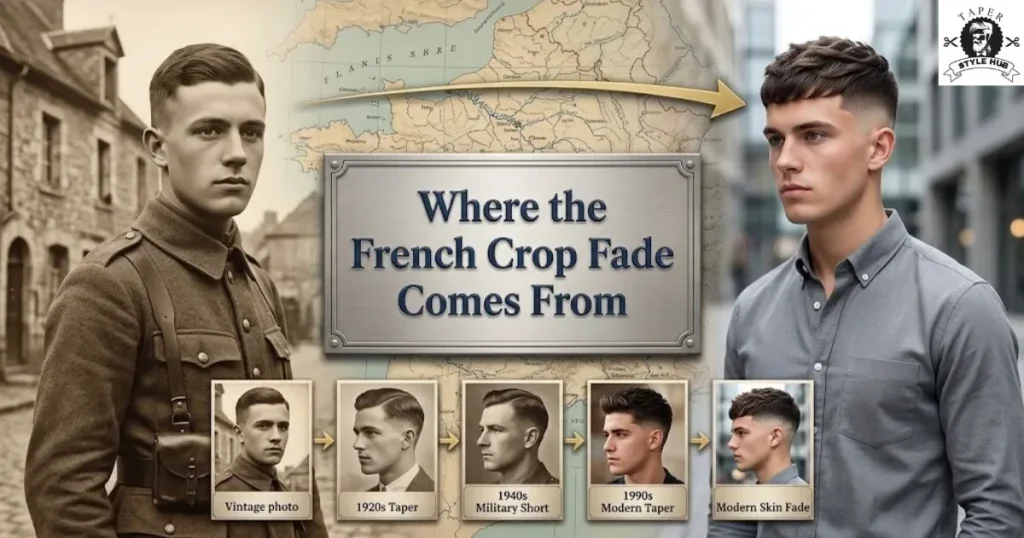
The crop has roots in military-style grooming, where short, practical haircuts were the norm. Over time, barbers added texture on top and gradually blended the sides, turning a strict regulation cut into a modern fashion statement.
Television gave it another boost. Shows like Peaky Blinders pushed sharp, short-sided styles into the mainstream, and today the French crop fade appears everywhere from barbershop menus to red carpet events.
What keeps the cut relevant is its adaptability. A barber can raise or lower the fade, lengthen the fringe, or add more texture, and the result still reads as a French crop.
👉 Also Read: Burst Fade Curly Hair
Why Barbers Keep Recommending This Cut
Barbers like cuts that look good on a wide range of clients, and this one delivers. It thickens the look of fine hair, reduces bulk in dense hair, and softens a high forehead with a well-placed fringe.
It also grows out more gracefully than many trendy styles. Because the structure is built into the cut itself, it does not depend on a perfect blow-dry or a complicated routine to look intentional.
For clients who are nervous about commitment, it is an easy entry into fade territory. The top stays long enough to style, and the sides can be adjusted from subtle to bold at the next visit.
👉 Also Read: High Burst Fade
Who Looks Best With This Haircut
The crop is more forgiving than most short styles, but a few groups benefit from it more than others. Men with fine hair, a high forehead, or a busy schedule tend to get the most out of it.
Students and young professionals like the sharp outline, while older men appreciate how the forward fringe softens a thinning front. Dense, wavy hair also thrives, since the cut removes bulk without losing movement.
It is less ideal for anyone who wants minimal barber visits or hair styled upward. In that case, a longer textured crop or a classic crew cut may feel more practical.
French Crop Fade vs Caesar Cut, Crew Cut and Textured Crop
Men often confuse this haircut with other short styles, and the confusion is understandable because the lengths look similar at a glance. The table below separates them by fringe, texture, and styling effort.
| Haircut | Fringe | Top Texture | Styling Effort |
|---|---|---|---|
| French crop fade | Forward and textured | High | Low to moderate |
| Caesar cut | Short, blunt, uniform | Minimal | Very low |
| Crew cut | None, brushed upward | Low to moderate | Low |
| Textured crop | Similar length, flexible direction | High | Low to moderate |
In short, a Caesar is flatter and more uniform, a crew cut skips the fringe, and a textured crop is the broader family that a French crop belongs to. The fade is what gives this version its clean edge.
Fade vs Taper: What Is the Difference?

Many clients use fade and taper as if they mean the same thing, yet the two are slightly different. A taper trims the sides gradually and keeps more length, while a fade moves closer to bare skin.
In practice, barbers use both words loosely, so describe where the blend should start and how short it should finish. That clarity matters more than the label.
For a crop, a taper usually feels softer and more professional. A fade creates sharper contrast and a stronger separation from the top.
30 French Crop Fade Types Grouped by Category
Instead of scrolling through a random list, it is easier to sort the options by what actually changes in the cut. The six categories below cover fade height, fade shape, top style, fringe style, hair type, and finishing touches.
Each category explains its five variations, so you can mix and match. A fade height from one group can pair with a fringe from another, which is how most custom cuts are born.
Fade Height Types for the Crop

Fade height decides how much contrast shows between the sides and the top. It also affects how quickly the cut grows out, so this is usually the first choice to make with your barber.
“All The Types Shown Below Are Displayed In The Single Image Above☝️”
1. Low French Crop Fade
A low fade starts just above the ears and hairline, which keeps the transition soft and subtle. It is the safest choice for office settings because the contrast stays gentle while the top still shows texture.
Thick hair can feel a little heavy with this height, so ask your barber to remove internal weight. It also grows out gracefully, making it a good pick if barber visits are rare.
2. Mid French Crop Fade
A mid fade begins around the temples and delivers a balanced, modern look. The contrast is clearer than a low fade, yet the cut never feels as dramatic as a high fade.
This is one of the most requested versions because it suits most face shapes. Fine hair should keep a little extra texture on top so the scalp does not show through.
3. High French Crop Fade
A high fade starts near or above the temple corner, creating strong contrast between the skin-close sides and the textured top. The result looks bold, sharp, and confident.
It works best on thick hair, which has enough volume to balance the tight sides. Expect more frequent touch-ups, since regrowth becomes visible quickly at this height.
4. Skin French Crop Fade
A skin fade takes the sides down to bare skin before blending upward. This produces the cleanest finish possible and makes the fringe stand out even more.
The trade-off is upkeep. A skin-close finish starts looking soft within two weeks, so plan regular visits and consider a lighter shadow finish if your neckline gets irritated.
5. Taper French Crop Fade
A taper keeps the shortest point around the sideburns and neckline, leaving more length above it. It reads as natural and professional, with none of the harsh contrast of a skin finish.
Because the blend is gradual, this version tolerates growth well. It is ideal for men who want a crisp outline without committing to a very short look.
Fade Shape Types for a Textured Crop

Where the fade curves matters just as much as how high it starts. These variations change the outline around the ears and the back of the head, adding personality without altering the crop on top.
“All The Types Shown Below Are Displayed In The Single Image Above☝️”
6. Drop French Crop Fade
A drop fade follows the natural curve of the skull, dipping lower behind the ear. This creates a smoother side profile and adds a subtle sense of shape.
The curve flatters rounder heads and makes the cut look deliberate from every angle. Ask your barber to keep the line even on both sides to avoid an uneven finish.
7. Burst French Crop Fade
A burst fade curves around the ear in a semicircle while leaving extra length at the nape. It is a trendy detail that pairs especially well with a short, blunt fringe.
Younger clients tend to favor it because it adds movement and attitude. It also works nicely when you want to keep some length at the back.
8. Shadow French Crop Fade
A shadow fade uses a zero-guard pass to leave a faint layer of stubble instead of bare skin. It looks close and clean without the stark edge of a true skin fade.
This finish usually lasts longer between cuts and feels kinder to sensitive necklines. It is a smart compromise for men who want sharpness with less upkeep.
9. Disconnected French Crop Fade
A disconnected crop leaves a visible gap between the top and the faded sides, often with a razor-cut line. The contrast is dramatic, and the top looks almost separate from the rest.
It suits formal events and bold personal style alike. Pushing the top forward also helps hide a receding hairline while keeping the silhouette sharp.
10. Temple French Crop Fade
A temple fade focuses the blend around the temples and sideburns, leaving the back softer. It frames the face cleanly and highlights the cheekbones.
The cut works well on darker hair, where the contrast stands out most. Keep the fringe straight and textured to complete the sleek look.
Top Length and Texture Types for the Crop

The top is where the crop gets its character. Changing length and texture can turn the same fade into a tidy office style or a relaxed weekend look.
“All The Types Shown Below Are Displayed In The Single Image Above☝️”
11. Short French Crop Fade
A short crop keeps the top and fringe close to the head, creating a minimal and low-maintenance look. It needs only a small amount of product and works nicely with a clean fade.
The downside is that it can look plain if there is no texture. Ask your barber to point-cut the top so it keeps some movement.
12. Long French Crop Fade
A long crop leaves more length through the top and fringe, giving you extra styling freedom. You can push it forward, tousle it, or even sweep it slightly to the side.
Longer hair needs a little more drying time and product control. In return, it offers more movement and a softer feel than the short version.
13. Textured French Crop Fade
A textured crop uses choppy layers to create separation and volume. Instead of a flat, combed-down block, the top shows natural movement that looks lived in.
It is especially helpful for fine hair because texture adds the illusion of thickness. A matte clay or powder brings out the layers without making the hair stiff.
14. Messy French Crop Fade
A messy crop takes texture further, leaving the top deliberately uneven and relaxed. The fringe breaks into small pieces and falls forward in a casual way.
This version suits wavy or slightly thick hair and requires almost no precision when styling. A light sea salt spray is usually all you need.
15. Classic French Crop Fade
The classic version keeps a neat top, a defined fringe, and short faded sides. It is polished and understated, and it does not rely on heavy texture.
If you want a timeless option that works at school, at work, and at events, this is the safest place to start. It also grows out evenly.
Fringe Style Types for a French Crop Fade

The fringe is the signature element of the crop, and small changes in length or edge can transform the entire look. These five options cover the most common choices.
“All The Types Shown Below Are Displayed In The Single Image Above☝️”
16. Blunt Fringe French Crop Fade
A blunt fringe is cut straight across just above the brow. It exposes more forehead and creates a graphic, structured line that feels sharp and intentional.
Straight hair holds this edge best. If your hair is wavy or curly, ask for a slightly softer line so the fringe does not look forced.
17. Choppy Fringe French Crop Fade
A choppy fringe is point-cut so the ends look broken and uneven. This removes the hard line and gives the front a natural, lived-in feel.
It is more forgiving than a blunt cut because small growth changes are less noticeable. It also reshapes easily after a shower.
18. Micro Fringe French Crop Fade
A micro fringe sits very high on the forehead, close to the hairline. It is an edgy choice that suits thick, straight hair and emphasizes strong facial structure.
Because there is so little length, precision matters. Visit a barber who is comfortable with short, detailed cutting.
19. Long Fringe French Crop Fade
A long fringe falls well down the forehead in soft, loose pieces. It provides extra coverage and a relaxed shape that feels modern and approachable.
Expect more daily styling, since the length needs direction and a touch of product to stay in place. A blow-dryer helps set it forward.
20. Side-Swept French Crop Fade
Traditional crops do not have a part, but a longer top can be swept to one side for a smart, formal feel. The faded sides keep the shape tight.
This is a popular choice for weddings and interviews because it looks tidy yet still modern. Use a light cream to avoid a heavy finish.
Hair Type Variations for the Crop

Hair texture changes how a crop behaves, so the best version depends on what grows from your scalp. Each type below uses the same basic structure with small technical adjustments.
“All The Types Shown Below Are Displayed In The Single Image Above☝️”
21. Straight Hair French Crop Fade
Straight hair gives the cleanest base for a crop, and it holds a blunt fringe beautifully. The risk is looking too flat, so ask for texturizing to build separation.
A little matte paste and a blow-dry forward usually do the job. Skip heavy products that weigh the strands down.
22. Wavy Hair French Crop Fade
Wavy hair adds natural movement, so the barber can cut with the wave instead of against it. That keeps the fringe from splitting unevenly.
Sea salt spray enhances the pattern without much effort. The result looks relaxed, textured, and easy to maintain.
23. Curly Hair French Crop Fade
Curly hair needs extra length on top to allow for shrinkage. The sides stay short and controlled, which keeps the curls from looking too wide.
A curl cream defines the pattern better than wax or clay. Let the fringe follow the curl instead of forcing a razor-straight edge.
24. Thick Hair French Crop Fade
Thick hair benefits from internal thinning, which removes bulk while keeping the top structured. The fade then controls width on the sides.
A strong-hold pomade or clay keeps the shape under control. Without thinning, the crop can feel heavy and puffy by midday.
25. Thin Hair French Crop Fade
Thin or fine hair looks fuller with a shorter, textured top. Layering creates lift, and a forward fringe helps soften a receding hairline.
Avoid a very high fade, which can make the top look weaker by contrast. A light styling powder adds grip and volume at the roots.
Style Add-Ons for a Personal Finish

These final variations add a detail, color, or hybrid element to the base cut. They are perfect when you want something personal rather than a standard barbershop template.
“All The Types Shown Below Are Displayed In The Single Image Above☝️”
26. French Crop Fade With Beard
Blending the fade into a trimmed beard creates a strong, masculine look that sharpens the jawline. The crop keeps the top neat while the beard adds balance.
Ask your barber to connect the sideburns smoothly to the beard line. A tidy neckline and a little balm complete the finish.
27. French Crop Fade With Shaved Design
Thin lines or patterns shaved into the faded sides turn the cut into a statement. Two horizontal lines above the temple are among the most popular choices.
Designs look best on a skin fade, where the contrast is clearest. Keep in mind that the lines need frequent refreshing to stay crisp.
28. Bleached French Crop Fade
Bleaching the top to a platinum or icy blond shade adds dramatic contrast against darker faded sides. The color highlights every layer of texture.
Bleached hair is more fragile, so use a hydrating conditioner and avoid excessive heat. A purple shampoo keeps the tone from turning yellow.
29. French Crop Fade Mullet
This hybrid keeps the short, blunt crop at the front while letting the back grow longer into a mullet. The faded sides make the contrast look deliberate.
It is bold and playful, and it works best on straight or wavy hair. Shape the back with a light paste for movement.
30. French Crop Fade for a Receding Hairline
The forward fringe naturally covers the front hairline and softens the temples. This makes the crop one of the most practical choices for men with a receding line.
Keep the top short and textured, and avoid extra height. It will not hide crown thinning, but it does create a fuller, more balanced front.
Best Settings and Occasions for the Crop

One reason this haircut spreads so quickly is that it adapts to different environments. A small change in fade height or fringe length shifts the mood from casual to formal without a full restyle.
“All The Types Shown Below Are Displayed In The Single Image Above☝️”
School and Campus
Younger men often choose a mid or burst fade with a messy, textured top. It looks current, dries fast, and needs only a quick pass of paste before class.
Office and Formal Events
A low taper with a neat, blunt fringe reads as polished and professional. Add a touch of light cream, keep the hairline tidy, and the cut suits interviews, weddings, and client meetings.
Weekend and Creative Looks
Weekends leave room for bolder choices such as a skin fade, bleached top, or shaved design. Creative fields also welcome longer fringes and playful texture.
How to Choose the Right French Crop Fade for Your Face
Picking a cut by photo alone often leads to disappointment, because the same style behaves differently on every head. A better method is to match the cut to your face shape, hairline, and daily routine.
Face Shape Guide
- Round face: choose a mid or high fade with a textured top to add height
- Oval face: almost any version works, so choose by style preference
- Square face: a textured, softer fringe balances a strong jawline
- Long face: pick a low fade and a slightly longer fringe for balance
- Heart-shaped face: add crown height with tapered sides to balance the chin
Hairline and Forehead Considerations
A high forehead looks shorter with a forward fringe, while a receding hairline benefits from a short, textured front. Strong cowlicks may need a longer fringe or a barber who cuts with the growth direction.
Lifestyle and Maintenance Level
If you prefer a low-effort routine, choose a short crop with a low fade or taper. If you enjoy styling, a longer, more textured top gives you room to experiment.
Also consider your workplace. Conservative offices suit a classic crop with a taper, while creative environments leave space for bold fades and designs.
How Hair Density and Growth Patterns Change the Result
Two men can show the same photo and leave with noticeably different haircuts. The difference usually comes from density, growth direction, and the way each head of hair behaves as it dries.
Density and Scalp Visibility
Dense hair holds a crop effortlessly, while fine hair needs extra weight on top to avoid see-through spots. A good barber leaves enough length to cover the scalp and uses texture to build lift.
Cowlicks and Crown Whorls
A strong front cowlick can push the fringe sideways. Cutting the fringe slightly longer at that spot, or working with the direction, gives a far more natural result than fighting it.
Natural Growth Direction
Hair rarely grows perfectly forward. Experienced barbers study the growth pattern first, then decide how much length the fringe needs so it settles into place without constant styling.
How to Ask Your Barber for a French Crop Fade
Saying only the name of the cut leaves too much open to interpretation, because every barber defines fade height and fringe length slightly differently. Specific words prevent most disappointing results.
What to Say in the Chair
Describe the length on top, the fringe style, the fade height, and the finish. Clear details help the barber plan the structure before the clippers ever touch your head.
- State how much length you want to keep on top
- Choose a blunt, choppy, or soft fringe
- Name the fade height: low, mid, or high
- Pick the finish: skin, shadow, or natural
- Say whether you want a natural hairline or a sharp line-up
Using Reference Photos Wisely
Bring two or three photos showing the front, side, and back. Point out exactly what you like, and mention if the model’s hair density differs from yours.
Avoid filtered or heavily edited pictures, since a barber cannot reproduce effects that do not reflect real hair behavior.
Barber Terms Worth Knowing
- Guard number: the clipper attachment that sets the length
- Blend: the smooth transition between two lengths
- Line-up: a crisp edge cut along the front hairline
- Point cutting: snipping into the ends to create texture
- Weight line: the visible edge where lengths meet
Knowing these terms helps you ask for the right result and understand your barber’s suggestions. It also makes the consultation shorter and more productive.
How to Style a French Crop Fade at Home
Styling takes about five minutes once you know the routine. The goal is to direct the hair forward, build texture, and avoid overloading the top with product.
- Start with clean, slightly damp hair
- Apply sea salt spray for texture and light volume
- Blow-dry the top forward on low or medium heat
- Rub a pea-sized amount of clay or paste between your palms
- Work it through from the crown toward the fringe
- Separate the fringe with your fingertips and stop before it looks coated
Blow-Drying Tips for a Natural Fringe
Point the dryer downward and move it in short passes, brushing the fringe forward with your fingers. Heat that is too high can dry the ends and make the texture look frizzy.
Finish with a cool blast to set the shape. This simple step helps the fringe hold its direction for hours.
Styling Curly Hair
Curly hair should skip the blow-dryer and use a diffuser or air-dry instead. Scrunch in a curl cream rather than combing it through, which keeps the curls clumped.
Tools Worth Having at Home
- A wide-tooth comb for sectioning and shaping
- A small hand mirror to check the back and sides
- A compact blow-dryer with a low-heat setting
- A travel-size spray for quick midday touch-ups
Best Products for a French Crop Fade
No single product fits everyone, so match the category to your hair behavior. The table below compares the most useful options for a textured crop.
| Product | Hold | Finish | Best For |
|---|---|---|---|
| Matte clay | Medium to strong | Matte | Thick or straight hair |
| Matte paste | Light to medium | Low shine | Fine hair and natural movement |
| Texture powder | Light | Matte, volumizing | Thin hair needing lift |
| Sea salt spray | Light | Textured | Wavy hair and second-day refresh |
| Curl cream | Light to medium | Defined | Curly and coily hair |
Start with a pea-sized amount, because it is easier to add more than to remove it. Too much clay is the fastest way to make a crop look stiff and heavy.
Modern Trends and Twists on the Crop
Barbers keep reinventing this haircut, and recent seasons have brought softer textures, longer fringes, and more color. The structure stays the same, but the details feel fresher every year.
Hybrids such as the crop mullet and the burst-faded crop show how flexible the base shape is. Natural finishes are also gaining ground, with shadow tapers replacing harsh skin lines.
Expect to see more personalized cuts, where the barber adjusts the fade, fringe, and top to match the client’s growth pattern instead of copying a template.
Small Details That Make the Cut Look Expensive
Small finishing touches separate an average crop from a great one. Neckline shape, sideburn length, and the way the fade meets the ear all affect how clean the cut looks.
Ask for a natural neckline if your hair grows unevenly, because a sharp square line shows regrowth quickly. A softly rounded or tapered edge stays tidy for longer.
Sideburn length also matters. Slightly shorter sideburns make the face look longer, while fuller ones add width, so choose according to your face shape.
Check the back view before leaving the chair. A clean, symmetrical fade at the nape shows real craftsmanship.
Weather and Seasonal Styling Adjustments
Humidity can puff up the fringe and ruin a carefully built shape. On damp days, a light-hold spray helps the style survive until evening.
Cold, dry weather brings static and flyaways instead. An extra pass of cream or a touch of leave-in conditioner keeps the top smooth and controlled.
French Crop Fade Maintenance and Grow-Out
A fade changes quickly, so the sides need more attention than the top does. Most men book a visit every two to four weeks to keep the outline sharp.
Skin-close finishes show growth soonest, while a natural taper holds its shape longer. If time is tight, a quick fringe trim can buy you an extra week.
Grow-Out Timeline
| Stage | What You Will Notice | What to Do |
|---|---|---|
| Week one | Sharp, clean outline | Enjoy and style lightly |
| Week two | Sides soften at the edges | Tidy the neckline only |
| Week three | Fade loses definition | Book a barber visit |
| Week four | Fringe and top feel heavy | Trim the fringe and refresh the fade |
Daily Care Between Barber Visits
- Wash with a gentle shampoo and condition when hair feels dry
- Reset the fringe with water and low heat each morning
- Use a clarifying shampoo weekly to remove product build-up
- Tidy only the neckline at home and leave the blend to your barber
Product Build-Up and Scalp Health
Clay and paste can cling to the scalp if they are not washed out properly. Rinse thoroughly, and use a clarifying shampoo once a week to prevent flaking and heaviness.
A short crop leaves more scalp exposed, so a light moisturizer or sunscreen on sunny days is worth considering. Healthy skin makes any fade look cleaner.
When to Soften the Cut
If a skin-close finish causes bumps or itching at the neckline, switch to a shadow or natural taper. A slightly longer finish reduces friction, and persistent irritation is worth showing to a dermatologist.
Hair Care Habits That Support a Sharp Crop
Healthy hair styles better, and a crop shows every flaw in texture. Wash two or three times a week with a gentle shampoo, and avoid scrubbing hard around the faded areas.
Conditioner matters even for short hair. A light formula keeps the top soft and manageable, while a leave-in cream helps tame flyaways around the fringe.
Sleep also affects styling. A silk or satin pillowcase reduces friction, so the fringe wakes up closer to the shape you left it in.
Time and Budget Expectations
A typical visit takes thirty to forty-five minutes, since the fade needs careful blending and the top needs texture work. Book a longer slot if you want a design or a bleached top.
Plan for a barber visit every few weeks, plus a modest product budget. A single tub of clay usually lasts for months because the cut needs so little.
Many men find that the routine costs less than expected, especially compared with longer styles that need more products and salon time.
Common French Crop Fade Mistakes to Avoid
Most disappointing results trace back to a handful of avoidable habits. Knowing them in advance saves money, time, and a few awkward weeks of regrowth.
- Choosing the wrong fade level for your hair density
- Leaving too much weight on top so the crop looks flat or bulky
- Ignoring face shape when picking the fringe length
- Using too much product and creating a stiff, greasy finish
- Copying online photos exactly without adapting them to your hair
A good barber adjusts the cut to your texture and growth pattern instead of copying a photo. Choose one who asks questions before reaching for the clippers.
Final Thoughts on the French Crop Fade
The French crop fade endures because it solves a real problem: it looks sharp, adapts to nearly every hair type, and asks for very little daily effort. Few haircuts balance structure and ease so well.
Choose the fade height, fringe, and texture that match your hair and lifestyle, communicate them clearly, and keep up with regular trims. With those basics in place, this cut will serve you for years.
FAQs About the French Crop Fade
What is a French crop fade?
It is a short men’s haircut with faded sides, a textured top, and a forward fringe. The fade keeps the outline clean.
Is a French crop fade good for thin hair?
Yes. A short, textured top creates the look of thickness, and the forward fringe softens a receding hairline.
Which fade works best with a French crop?
A low or mid fade suits most men. Choose a high or skin fade for sharper contrast.
How often should I trim a French crop fade?
Every two to four weeks keeps the sides sharp. The top can usually wait a little longer.
Is this haircut low maintenance?
Yes. The structure holds the shape, so you mainly need a small amount of product and regular barber visits.

I’m M Ahmad Ansari, founder and content creator at Taper Style Hub. With 3+ years of experience researching taper haircuts, hairstyles, grooming, and men’s style, I create practical, accurate, and easy-to-understand content. My goal is to provide readers with trustworthy information, useful tips, and inspiring ideas for choosing and styling the perfect taper haircut.

6 Comments