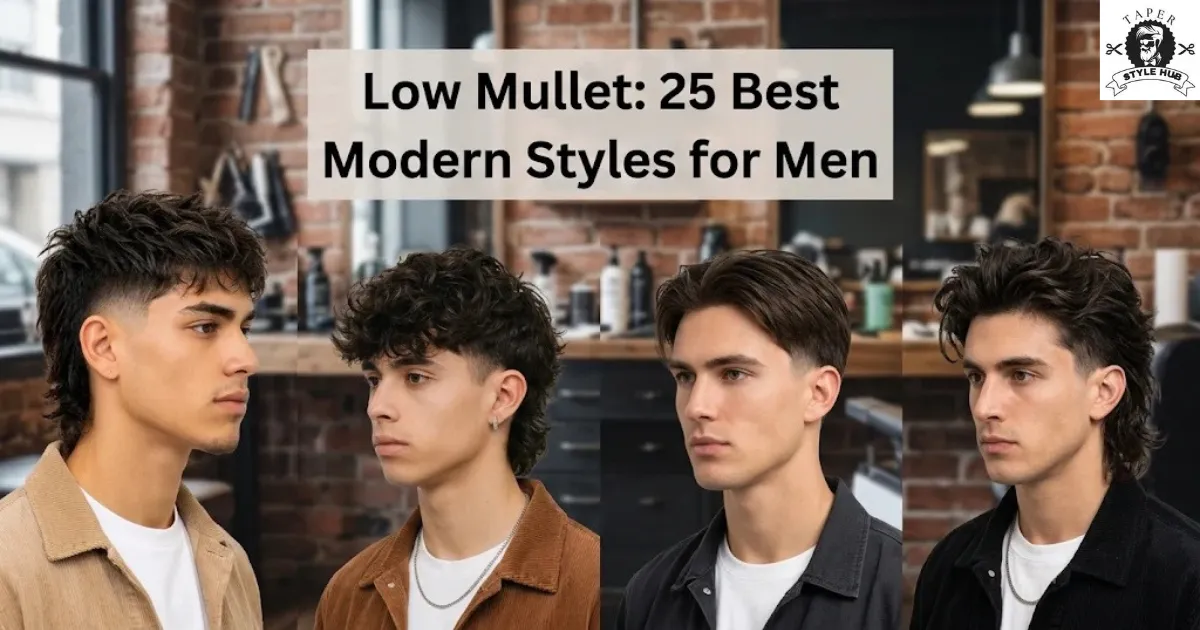
Low Mullet: 25 Best Modern Styles for Men
A low mullet is a modern haircut that keeps the sides short with a low taper or fade while leaving real length through the top and back. It gives you the bold mullet shape without the messy, dated feel of the classic version.
The mullet works because the fade stays near the ears and neckline, so the sides look clean while the back keeps its personality. It suits straight, wavy, curly, and thick hair, and it fits the office as easily as a weekend out.
This guide covers 25 styles grouped into clear categories, plus barber scripts, face shape advice, styling steps, maintenance schedules, and the mistakes that ruin the cut. By the end, you will know exactly what to ask for.
👉 Also Read: Long Mullet
Low Mullet Haircut: The Complete Guide for Men in 2026
Whether you are trying a mullet for the first time or refining one you already wear, the details below will help you get it right. Every section builds on the one before it, so you can read in order or jump to what you need.
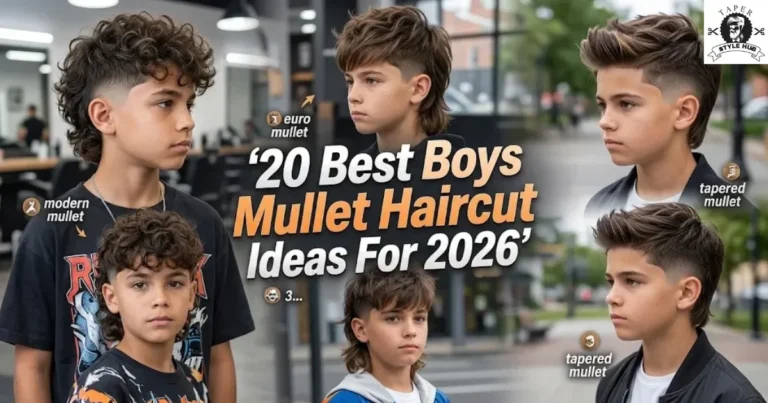
👉 Also Read: Boys Mullet Haircut
What Is a Low Mullet Haircut?
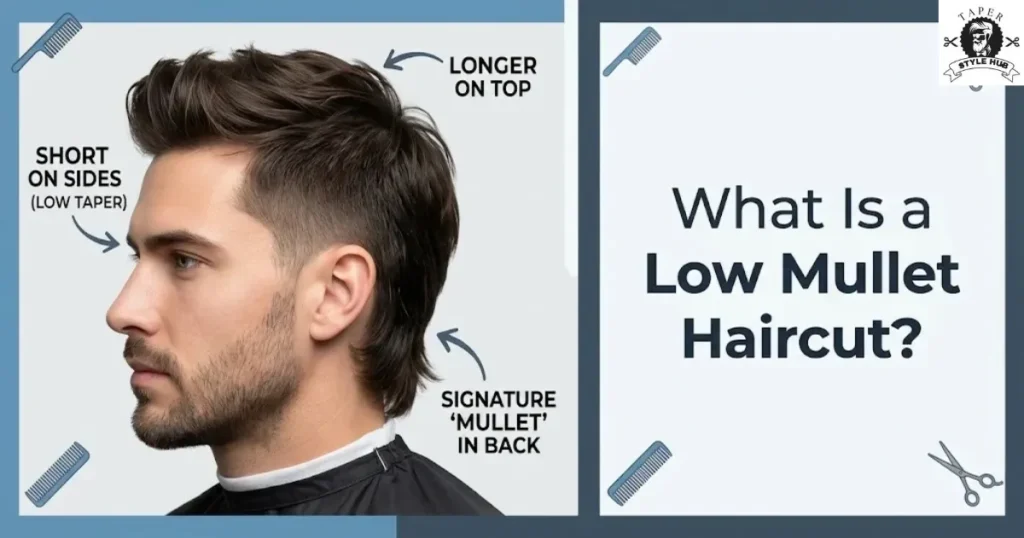
A mullet haircut combines short, blended sides with a longer back and a textured top. The taper or fade stays low, starting around the sideburns, the area above the ears, and the nape. Because the shortest hair sits at the bottom, the cut stays wearable.
A classic mullet usually jumps from short to long with no blend. The mullet adds a smooth gradient, so the change in length looks planned instead of accidental. That small difference is what makes the modern version so popular with barbers and clients.
👉 Also Read: 80s Mullet
Key Features of a Low Mullet
- Short or tapered sides with a low fade line
- A textured or layered top with natural movement
- A longer back, often called the tail
- A clean, shaped neckline
- Adjustable contrast, from soft taper to sharp skin fade
👉 Also Read: Old School Mullet
Parts of the Cut
Knowing the parts makes it easier to explain what you want. The top runs from the hairline to the crown, the fringe sits at the front, the sides sit above the ears, and the nape forms the lower back of the head. The tail is the longest section.
👉 Also Read: Modern Mullet
The Rise of the Low Mullet: From Retro Cut to Modern Staple
The mullet first became famous in the 1970s and 1980s, when rock stars and athletes wore it short in front and long in back. Over time it earned a reputation as a joke, mostly because the shape had no polish and no blend.
Modern barbers changed that story by adding tapers, fades, and layers. The mullet is the most wearable result, because the shortest hair stays near the perimeter and the rest of the cut keeps its weight and shape.
Social media then did the rest. Short videos of before and after transformations showed how a clean fade can turn a risky haircut into a confident one, and clients began asking for it by name.
👉 Also Read: Straight Hair Mullet
Why the Low Mullet Is Trending in 2026
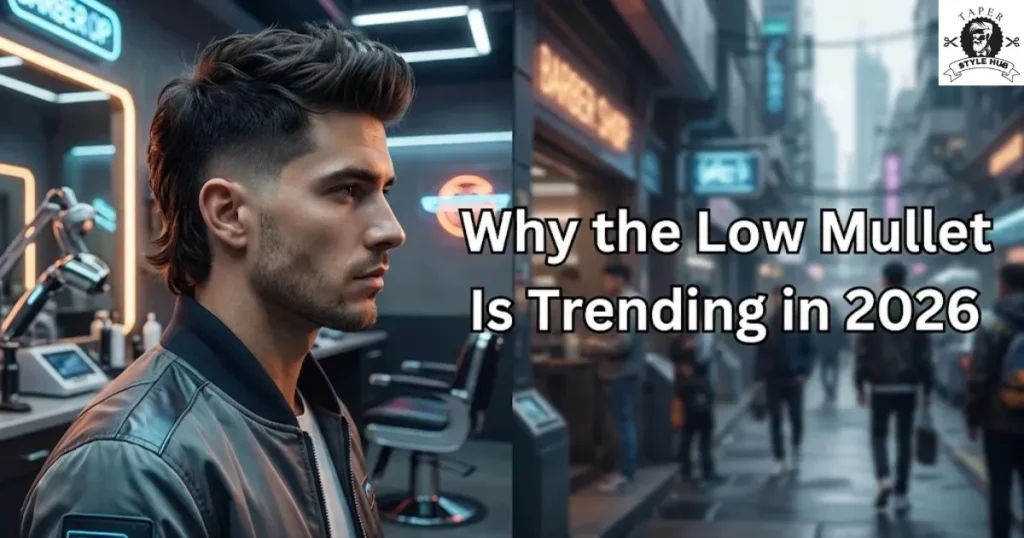
Men want haircuts that look unique but stay easy to live with. The mullet delivers both. The taper keeps the edges tidy, and the back length shows off natural texture such as waves or curls.
It also grows out gracefully. A low taper blends into itself, so you avoid the harsh line that appears after a few weeks with higher fades. Barbers share transformation clips online, which keeps the style visible and keeps new clients curious.
Actors and musicians such as Joe Keery, Morgan Wallen, and Paul Mescal have also helped bring the modern mullet back into mainstream style, giving men plenty of reference photos to bring to their next appointment.
Low Mullet vs Low Taper Mullet vs Low Fade Mullet
These names often get used interchangeably, which confuses clients and barbers alike. The practical difference comes down to how much hair is removed from the lower sides and how strong the contrast looks.
| Style | Sides | Back | Overall Look |
|---|---|---|---|
| Low Mullet | Short or tapered | Longer | Natural and balanced |
| Low Taper Mullet | Soft taper | Longer | Subtle and clean |
| Low Fade Mullet | Visible fade | Longer | Sharper contrast |
| Mid Fade Mullet | Higher fade | Longer | More dramatic |
| High Fade Mullet | High fade | Longer | Bold and edgy |
If you want the sides to keep more weight, ask for a low taper. If you want a clear line between short and long, ask for a low fade. Always show a photo so both of you picture the same cut.
Best Low Mullet Styles Built on Fades and Tapers
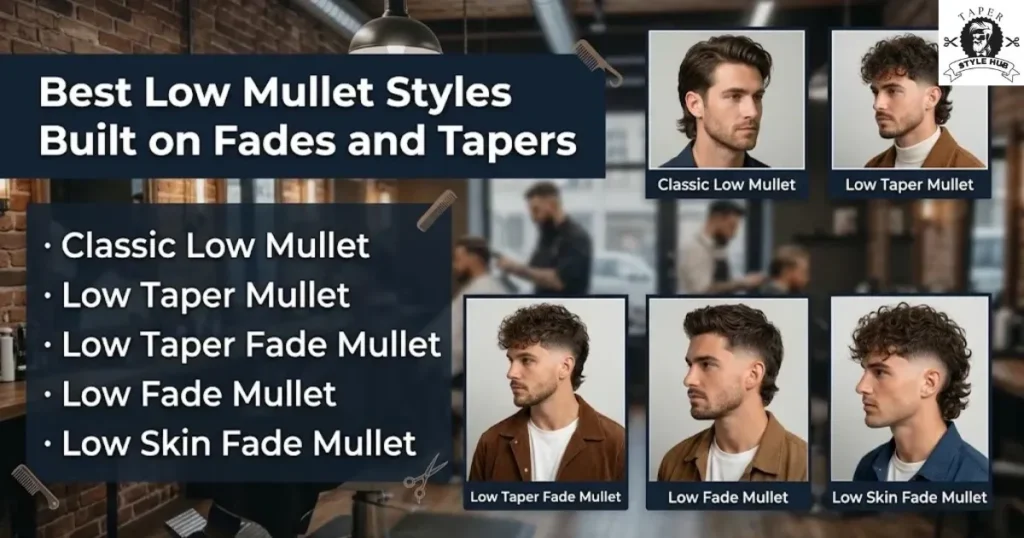
These five styles change mainly through the fade or taper. Start here if the sides are the part of the haircut you care about most.
“All The Types Shown Below Are Displayed In The Single Image Above☝️”
Classic Low Mullet
The classic mullet pairs short tapered sides with a medium top and a soft tail at the nape. It is the easiest starting point if this is your first mullet, and it works with almost any hair texture.
Ask for medium length on top, about three inches, and a tail that ends at the nape or just below. Matte paste and a quick finger comb finish the look in under two minutes.
Low Taper Mullet
This version uses a subtle taper around the ears and neckline, leaving more hair on the sides. It looks softer and cleaner, which makes it a safe choice for men who worry about looking too bold.
Because the taper stays close to the natural hairline, this version grows out gently. Expect to book a trim every four to six weeks instead of every two, which makes it a low effort option.
Low Taper Fade Mullet
A low taper fade creates a cleaner transition while staying close to the natural hairline. The top stays textured and the back stays long, giving a polished but modern finish that suits most settings.
Ask your barber to start with a #1 or #2 at the base and blend upward. A smooth blend matters more than the exact guard number, so check the finish in a mirror before you leave.
Low Fade Mullet
The low fade removes more weight from the lower sides than a traditional taper, creating stronger contrast between the sides and the longer back. Pick it if you like crisp edges and a more defined outline.
Because more hair comes off the lower sides, this version shows off the tail more clearly. Plan a fade touch-up every two to three weeks to keep the edges crisp and the contrast sharp.
Low Skin Fade Mullet
The sides go down to bare skin at the base, which produces the highest contrast and makes the top and tail stand out. It looks sharp, but it grows out quickly and needs visits about every two weeks.
Skin fades suit men who want a high-impact outline and do not mind frequent visits. Moisturize the exposed skin and avoid heavy products near the fade, because buildup shows up quickly on bare areas.
Textured Low Mullet Styles for Natural Movement
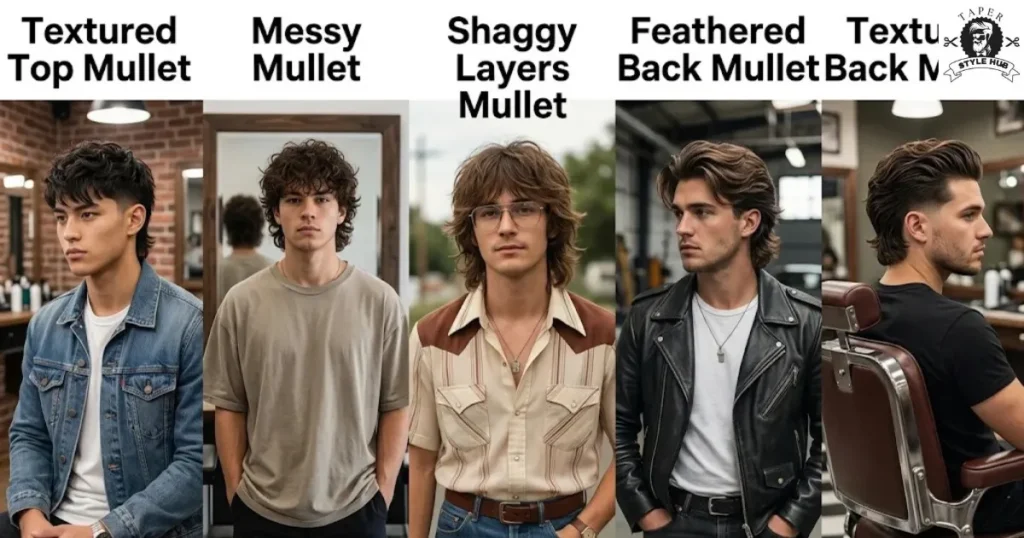
Texture keeps the cut from looking flat or blocky. These five styles use layers and point cutting to create movement through the top and back.
“All The Types Shown Below Are Displayed In The Single Image Above☝️”
Textured Top Mullet
Texture through the top prevents the haircut from appearing flat. Matte clay or paste emphasizes the separation between pieces, which works especially well on straight and thick hair.
Ask for point cutting through the top so the ends look broken instead of blunt. A pea-sized amount of clay, warmed in your palms, adds separation without making the hair stiff or shiny.
Messy Mullet
The messy version uses choppy layers and natural texture for an intentionally relaxed look. Skip the comb, work paste through dry hair with your fingers, and let the pieces fall where they want.
This style forgives imperfect mornings, which is why it appeals to men who dislike long routines. Wash two or three times a week, and let a little natural oil give the pieces their grip.
Shaggy Layers Mullet
Shaggy layers add volume and movement from root to tip. This version sits between a mullet and a modern shag, and it suits wavy, thick, and textured hair that already wants to move.
Request layers throughout the crown and back, and ask the barber to keep the taper tight so the volume does not swallow the sides. Sea salt spray and air drying create the lived-in finish.
Feathered Back Mullet
The back is shaped into soft, feathered layers instead of blunt length. That creates a smoother flow and a less rigid silhouette, which helps when the tail is long or the hair is dense.
Feathered ends need a skilled hand with scissors, so choose a barber who shows mullet work in their portfolio. Trim the ends every eight weeks to prevent splitting and keep the flow smooth.
Textured Back Mullet
Instead of letting the back hang as one solid section, ask your barber to place layers carefully through it. The ends separate, the tail moves when you walk, and the whole cut feels lighter.
Ask for point cutting and slide cutting through the tail rather than a blunt line. This removes weight, improves movement, and helps the back grow out evenly between visits.
Low Mullet Styles for Every Hair Type
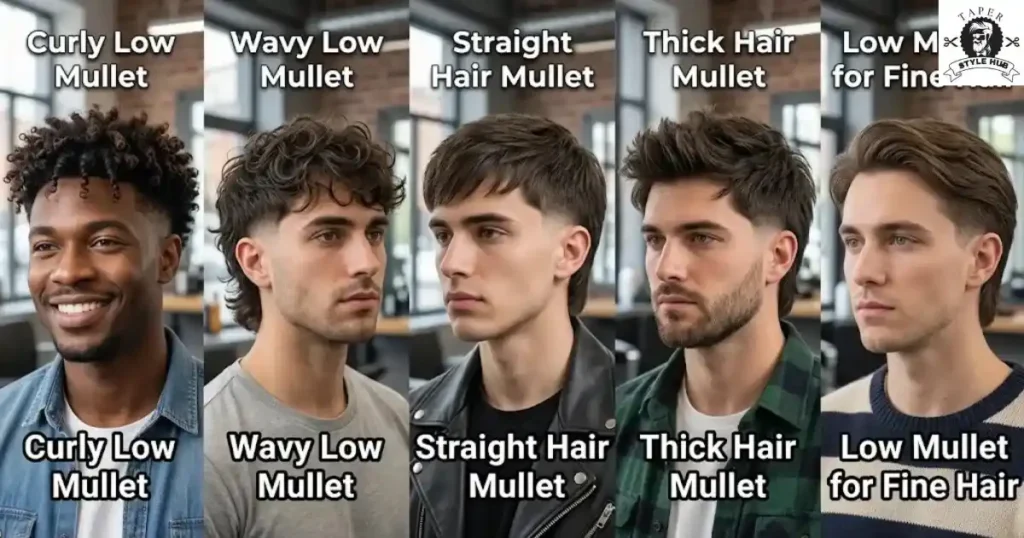
Hair texture should shape how your barber cuts the style. These five versions are built around the natural behavior of each hair type.
“All The Types Shown Below Are Displayed In The Single Image Above☝️”
Curly Low Mullet
Curly hair builds an impressive mullet shape on its own. The curls add volume and movement to the back while the low taper keeps the sides neat. Ask your barber to preserve the curl pattern.
Allow extra length on top because curls shrink as they dry. Apply curl cream to damp hair, scrunch upward, and avoid brushing the curls once they are dry, or the shape will puff and lose definition.
Wavy Low Mullet
Waves create movement naturally, which makes this the easiest hair type for a relaxed mullet. A few soft layers help the shape flow, and a light cream is usually all the styling you need.
Let the hair air dry or diffuse it on low heat to protect the wave pattern. Avoid excessive thinning, because it can cause frizz and break up the natural flow of the tail.
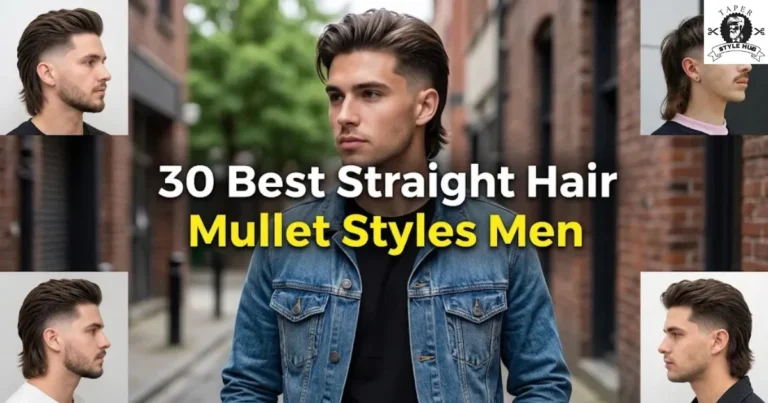
Straight Hair Mullet
Straight hair gives the cut a clean silhouette, but it shows every line. Add layers and point cutting so the back moves instead of hanging like a curtain, and use sea salt spray for grip.
Straight hair can fall flat by midday, so rough dry it with your fingers and add texture powder at the roots. Regular layering keeps the tail from turning into one heavy block.
Thick Hair Mullet
Thick hair supplies plenty of volume for a strong mullet shape. Strategic layering removes excess weight around the crown and back without destroying fullness, so the cut never looks like a helmet.
Ask your barber to thin the middle sections lightly and remove weight near the crown. Condition the tail regularly, because dense hair tends to be dry and can feel scratchy.
Low Mullet for Fine Hair
Fine hair works best with a shorter, more controlled tail. Avoid heavy thinning, because removing too much density can make the back look sparse. Texture powder adds lift without weighing strands down.
Keep the top short enough to look full and avoid heavy pomade, which pulls fine strands flat. A volumizing shampoo and a light mousse help the cut look thicker.
Front and Part Variations of the Low Mullet
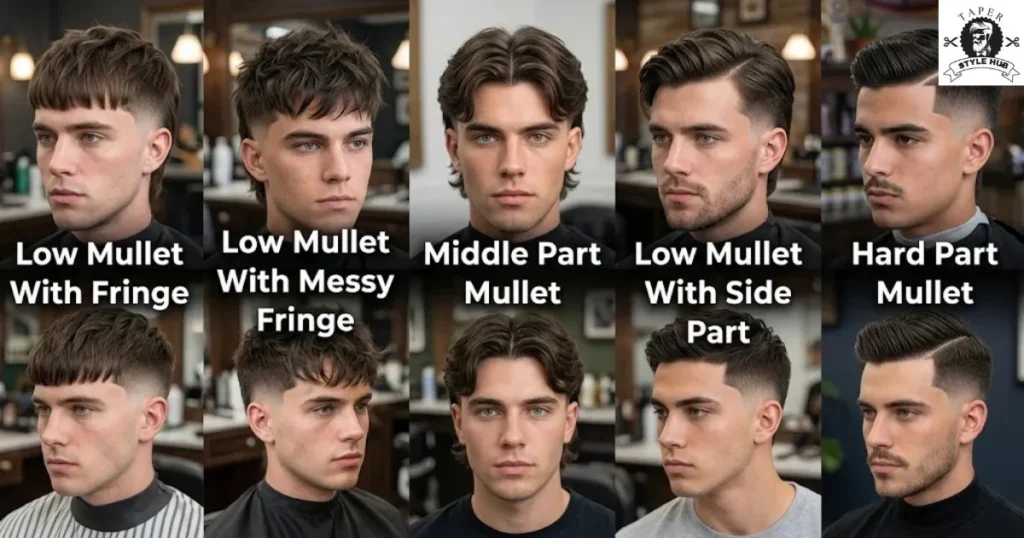
The front of the haircut changes the whole mood. These five styles adjust the fringe or part while keeping the same low sides and longer back.
“All The Types Shown Below Are Displayed In The Single Image Above☝️”
Low Mullet With Fringe
A fringe gives the front a distinct shape while the longer back creates the mullet silhouette. A textured fringe works especially well with a low taper and suits oval, diamond, and heart-shaped faces.
Specify how long and how thick you want the fringe before the barber starts cutting. A short, choppy fringe looks edgy, while a longer one falls across the brow for a softer feel.
Low Mullet With Messy Fringe
A messy fringe gives the haircut a youthful, relaxed feel. The longer back balances the shorter front, and a little matte clay keeps the pieces separated without making them look styled.
Blow-dry the fringe forward, then break it up with your fingertips and a touch of paste. The look works best when the pieces are uneven, so avoid combing it into place.
Middle Part Mullet
The middle part creates a softer appearance at the front and frames the face evenly. It pairs well with wavy hair and medium to longer lengths, and it echoes popular Korean hairstyles.
Blow-dry the hair away from the face before making the part, and keep the front layers even. Straight and wavy hair hold this shape best, especially at medium length.
Low Mullet With Side Part
A side part gives the mullet a more structured look. It works in both casual and smarter settings, so it is a good option when you want the back length without losing a polished front.
Comb the top over with a little light pomade and keep the part clean. This style pairs well with a tidy neckline, which makes it a dependable choice for formal settings.
Hard Part Mullet
A hard part is shaved or cut into one side for a sharp edge. It looks best on thick or wavy hair where the line stays visible, but it softens fast and needs redrawing every two weeks.
Show your barber exactly where the part should sit and how deep the line should be. Clean, straight lines look sharp, while an uneven part disrupts the balance of the whole cut.
Length and Detail Options for a Low Mullet
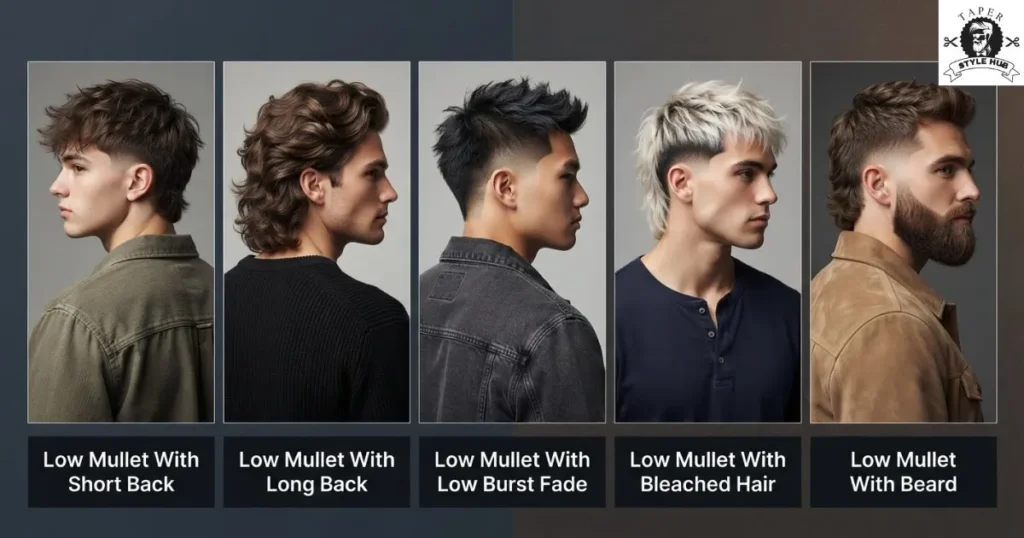
The last group focuses on length, color, and finishing details. Use these to push the cut toward subtle or bold depending on your lifestyle.
“All The Types Shown Below Are Displayed In The Single Image Above☝️”
Low Mullet With Short Back
You do not need a very long back to create a mullet. A short, controlled tail provides the basic shape, keeps the cut easy to maintain, and is ideal while you decide how far to go.
Leave only a few extra inches at the nape and keep the sides faded. This version is perfect for growing out, since you can add length gradually without an awkward stage.
Low Mullet With Long Back
A longer back creates a stronger mullet identity. Layers prevent the extra length from becoming heavy or flat, and regular trims of split ends keep the tail looking healthy.
Let the tail reach the collar or beyond while the sides stay tapered. Condition often, detangle with a wide-tooth comb, and trim the ends every eight to ten weeks.
Low Mullet With Low Burst Fade
A burst fade curves around the ear in a half circle while the back stays long. It creates a distinctive transition and a sharp look in photos, but it needs a refresh every two to three weeks.
Choose this version if you want a bolder outline and do not mind frequent trims. The curve around the ear grows out fast, so a refresh every two to three weeks keeps it clean.
Low Mullet With Bleached Hair
Color emphasizes the layers and texture of the cut. Lightened hair makes individual pieces more noticeable, but bleach dries the lengths, so use conditioner and purple shampoo to keep the tone fresh.
Bleach the top and tail while leaving the faded sides natural for contrast. Space color appointments carefully and use a deep conditioner weekly so the lightened lengths stay soft instead of brittle.
Low Mullet With Beard
A mullet with a beard works because the fade can run straight into the beard line. Ask your barber to blend the sideburn fade into the beard, and keep the edges clean so the whole look reads as one shape.
Match the beard length to the fade. A short beard suits a skin fade, while a fuller beard looks better with a softer taper, and a shared trim schedule keeps both looking fresh.
How to Choose the Right Low Mullet for Your Hair Type
Use this table as a quick reference when planning your cut. It shows what each hair type needs most so you can brief your barber with confidence.
| Hair Type | What to Ask For | Best Product |
|---|---|---|
| Straight | Layers, point cutting, controlled back | Sea salt spray |
| Wavy | Soft layers, minimal thinning | Light cream |
| Curly | Tight taper, room for shrinkage | Curl cream |
| Thick | Internal layering, weight removal | Matte clay |
| Fine | Shorter tail, light texture | Texture powder |
Remember that hair behaves differently from person to person. If your barber suggests a small change to suit your density or growth pattern, it is usually worth listening.
Best Low Mullet for Your Face Shape
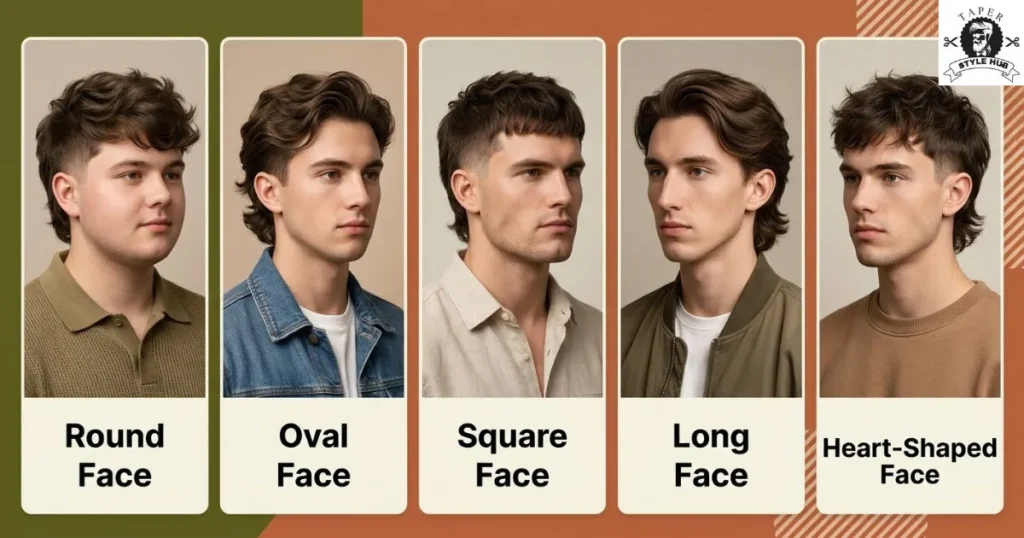
Face shape is a guide, not a rule. You can adjust height, width, and back length to balance your features.
“All The Types Shown Below Are Displayed In The Single Image Above☝️”
Round Face
Add a little height on top and keep the sides tight to create a longer visual profile. Avoid excessive width around the sides.
Oval Face
Oval faces handle almost every mullet variation, from short and textured to long and flowing. Pick the one you like best.
Square Face
A softer, layered mullet complements a strong jawline without looking rigid. A textured fringe softens the corners nicely.
Long Face
Avoid too much height. A fringe and a little extra side volume shorten the look of a long face and create better proportions.
Heart-Shaped Face
A textured top and a balanced back distribute visual weight more evenly. A fringe covers a wider forehead, and fuller back length balances a narrow chin.
How Long Should the Back of a Low Mullet Be?
There is no universal length. A short mullet keeps only a few inches of extra length at the nape, while a dramatic version can extend well below the collar.
Choose based on lifestyle. A short back is easier to maintain, a medium back is the most versatile, and a long back gives the strongest mullet appearance. If this is your first mullet, medium is usually the safest place to start.
How to Ask Your Barber for a Low Mullet
Most bad mullets happen because of one word: mullet. It can mean many things, so the clearer you describe each part, the better your result.
Barber Script
Try saying: I want a modern low mullet with a low taper around the ears and neckline. Keep the sides fairly full, leave length in the back, add soft layers, and give me a textured fringe.
Bring front, side, and back photos. Pictures remove most of the guesswork and protect you from a cut that turns out more dramatic than you planned.
Quick Barber Cheat Sheet
| Detail | What to Say |
|---|---|
| Clipper guard | Start with a #1 or #2 at the base and blend up to a #3 or #4 |
| Fade height | Low, starting just above the ear |
| Top length | About 2 to 4 inches with point cutting |
| Back length | Nape, collar, or just past the collar |
| Fringe | Forward, side-swept, or straight across |
Clipper Guard
A #1 guard leaves about 3 millimeters and a #2 leaves about 6. Most low fades start at skin, then move to a #1 or #2 before joining the longer hair. Simply ask what your barber plans to use.
Fade Height
Low means the fade stays near the bottom of the head. If it climbs above the top of the ear, it becomes a mid fade and the cut looks very different. Point to the spot on your head.
Top and Back Length
Show the top length with your fingers or use landmarks like covering your eyebrows. For the back, name the exact end point, such as the nape or collar, because this detail causes most disappointments.
Neckline and Fringe
Decide early whether the neckline should be rounded, squared, or tapered. A tapered neckline grows out best. For the fringe, say whether you want it forward, side-swept, or straight across.
How to Style a Low Mullet
Good styling takes about five minutes once you know your routine. Start with damp hair, use a small amount of product, and let the cut do most of the work.
Best Styling Products
- Sea salt spray for grip and rough texture
- Matte clay or paste for hold without shine
- Texture powder for lift on fine hair
- Curl cream for definition and frizz control
- Light oil or serum to smooth flyaways in the tail
Step-by-Step Styling Guide
- Wash and towel-dry until the hair is damp, not dripping.
- Apply sea salt spray or curl cream from roots to ends.
- Blow-dry the top upward and the back downward, or use a diffuser for curls.
- Warm a pea-sized amount of clay and work it through the top.
- Shape the fringe and break up the tail with your fingertips.
- Finish with a light, flexible-hold spray only if needed.
Styling by Hair Type
Straight hair needs more texture product than you expect, and rough drying with your fingers prevents a flat finish. Curly hair needs less product and no dry raking, so scrunch upward while diffusing and then leave it alone.
Do not overload the hair with product. Movement is part of the haircut, and too much wax or gel turns a relaxed mullet into something stiff and greasy.
How to Wear a Low Mullet at Work, School, and Weekends
A mullet adapts to different settings if you adjust the styling. The cut stays the same, but the finish changes with the occasion.
At the Office
Keep the tail tidy and tuck it behind the ears if needed. Choose a low taper rather than a skin fade, add a side part, and use a light cream so the finish looks smooth instead of messy.
At School or College
Younger men usually want an easy routine. A short tail and low taper grow out neatly between trims, and a quick pass of matte paste is enough to look put together before class.
On Weekends and Nights Out
This is the time to push the style. Add texture spray, let the fringe fall forward, and leave the tail loose. Bleached tips or a small design in the fade add personality with very little effort.
How to Maintain a Low Mullet
A fade looks sharpest in the first two weeks, then softens. Planning your visits around that rhythm keeps the cut looking intentional.
Low Mullet Trim Schedule
| Area | How Often |
|---|---|
| Taper and neckline | Every 2 to 3 weeks |
| Top and layers | Every 4 to 6 weeks |
| Tail | Every 8 to 12 weeks |
| Skin fade | About every 2 weeks |
Daily Hair Care Routine
- Wash two or three times a week with a gentle shampoo
- Condition the tail, since it is the oldest and driest hair
- Use heat protectant if you blow-dry often
- Keep heavy pomade away from the roots
- Sleep on a smooth pillowcase to reduce frizz
Growing Out the Back
Growing a tail takes patience and usually a few months. In the meantime, keep the sides faded, ask your barber to leave the back alone, and trim only split ends. A shorter mullet works well during this stage.
Is a Low Mullet High Maintenance?
A low taper mullet is relatively manageable because the shortened area is concentrated around the perimeter, and the sides keep more weight. The effort depends on the version you choose.
A sharper low fade or skin fade needs frequent cleanups, while a softer taper grows out naturally. Styling usually takes five minutes, so the real commitment is the barber schedule, not the daily routine.
Low Mullet vs Other Popular Haircuts
Low Mullet vs Modern Mullet
A mullet refers specifically to the lower placement of the taper or fade. A modern mullet is a broader category that can be low, mid, high, curly, shaggy, or heavily textured.
Low Mullet vs Classic Mullet
The classic version has no blend, so the change from short to long is abrupt. The mullet is smoother, tidier at the neckline, and far easier to wear with different outfits.
Low Mullet vs Wolf Cut
A wolf cut relies on heavy layering all over, producing a shaggy, voluminous shape. A mullet keeps cleaner sides and a clearly longer back. Choose the wolf cut for volume everywhere, the mullet for contrast.
Low Mullet vs Burst Fade Mullet
A standard low fade follows the hairline evenly, while a burst fade wraps around the ear in a curve. The burst looks bolder and needs refreshing more often, so choose it only if you enjoy frequent barber visits.
How Fast Does Hair Grow and What That Means for Your Cut
Hair grows around half an inch each month for many people, though speed varies with genetics, age, and health. That growth rate explains why a short fade blurs so quickly while the tail takes patience to build.
Use the rate to plan your visits. A fade loses its crisp edge after two weeks, the top needs shape after about a month, and the tail only needs attention every couple of months.
Barber Questions to Ask Before Your First Mullet Cut
A good consultation saves you from a disappointing result. Before the clippers come out, ask a few direct questions so you and your barber share the same picture of the finished cut.
- Have you cut mullets before, and can I see examples?
- Which guard numbers will you use at the base of the fade?
- How much length will you remove from the back?
- How will you layer the top so it does not look flat?
- How often should I return to keep the shape?
Barbers who welcome these questions usually deliver better results. If the answers feel vague, bring a photo and ask again, or consider a stylist who specializes in textured, layered cuts.
Common Myths About Mullets
One myth says mullets only suit rock fans or country singers. In reality, modern fades and layers make the shape adaptable to office wear, campus life, and gym sessions without any costume feel.
Another myth claims you need very long hair. A short tail works well, and you can build length gradually. A third myth says the cut is impossible to style, yet five minutes and one product usually do the job.
Seasonal Care Tips for Your Cut
Summer sun and chlorine dry out the tail, so rinse after swimming and use a leave-in conditioner. Lighter products also keep the hair from feeling heavy in the heat.
Winter brings static and dryness. Switch to a richer conditioner, avoid washing too often, and keep a small amount of cream handy to smooth flyaways under hats and hoods.
In humid weather, waves and curls expand, so use anti-frizz serum sparingly and ask your barber to remove extra weight for a more controlled shape.
Pros and Cons of a Low Mullet
Pros
- Looks neat, modern, and bold at the same time
- Works on straight, wavy, curly, and thick hair
- Easy to adjust from subtle to dramatic
- Grows out gracefully into other styles
Cons
- The fade needs regular touch-ups
- The tail takes months to grow
- It needs a little styling
- Strict dress codes may see it as too bold
Common Low Mullet Mistakes to Avoid
Most disappointing results come from the same handful of errors. Avoid these and your cut will look sharper for longer.
- Asking for a mullet without naming the fade type and height
- Letting the fade climb too high
- Cutting the back too short
- Over-thinning fine or curly hair
- Skipping texture on straight or heavy hair
- Using too much product
- Waiting too long between taper cleanups
Who Should Get a Low Mullet?
A mullet suits men who want personality without an aggressive fade. It is a strong match if you like longer hair in the back, enjoy textured styles, and want several styling options.
It may not suit you if your workplace demands a very conservative cut or if you strongly prefer a uniform short style. In that case, try the short version first.
Age is rarely the deciding factor. Teenagers, university students, and men in their forties all wear this cut well with simple styling.
Just match the styling to the setting, keep the neckline clean, and keep the tail tidy for everyday life. Regular touch-ups make the biggest difference overall.
Celebrity Inspiration for the Low Mullet
Joe Keery helped bring soft, textured layers back into mainstream style, making him a good reference for wavy versions. Morgan Wallen shows the cut with a textured top, while Paul Mescal wears a short, neat version.
For a softer, youthful look, Jungkook and The Kid LAROI offer fluffy and wavy references. Joji shows how clean faded sides can sit beside a simple modern tail.
Final Thoughts on the Low Mullet Haircut
The mullet is a modern take on a classic that lets you keep length in the back without an overly dramatic look. Clean sides, a textured top, and a flowing tail make it flexible enough for almost any hair type.
Before you book, decide on your taper height, side length, back length, and amount of texture. Bring clear photos, follow a steady trim schedule, and your low mullet will stay stylish and easy to make your own.
Low Mullet FAQs
What is a low mullet haircut?
A mullet keeps the sides short or tapered while leaving noticeable length in the back, with the fade kept low near the ears and neckline.
How often should I trim a low mullet?
Most versions need shaping every 3 to 6 weeks, with a quick taper cleanup every 2 to 3 weeks.
Is a low mullet good for curly hair?
Yes. Curls add natural volume to the tail, and the low taper keeps the sides neat when your barber works with your curl pattern.
Is a low mullet professional?
A subtle low taper mullet with a tidy tail can look polished, although workplace dress codes vary.
What should I tell my barber?
Name the fade type and height, the top length, the back length, and whether you want a fringe, then bring front, side, and back photos.

I’m M Ahmad Ansari, founder and content creator at Taper Style Hub. With 3+ years of experience researching taper haircuts, hairstyles, grooming, and men’s style, I create practical, accurate, and easy-to-understand content. My goal is to provide readers with trustworthy information, useful tips, and inspiring ideas for choosing and styling the perfect taper haircut.
3 Comments