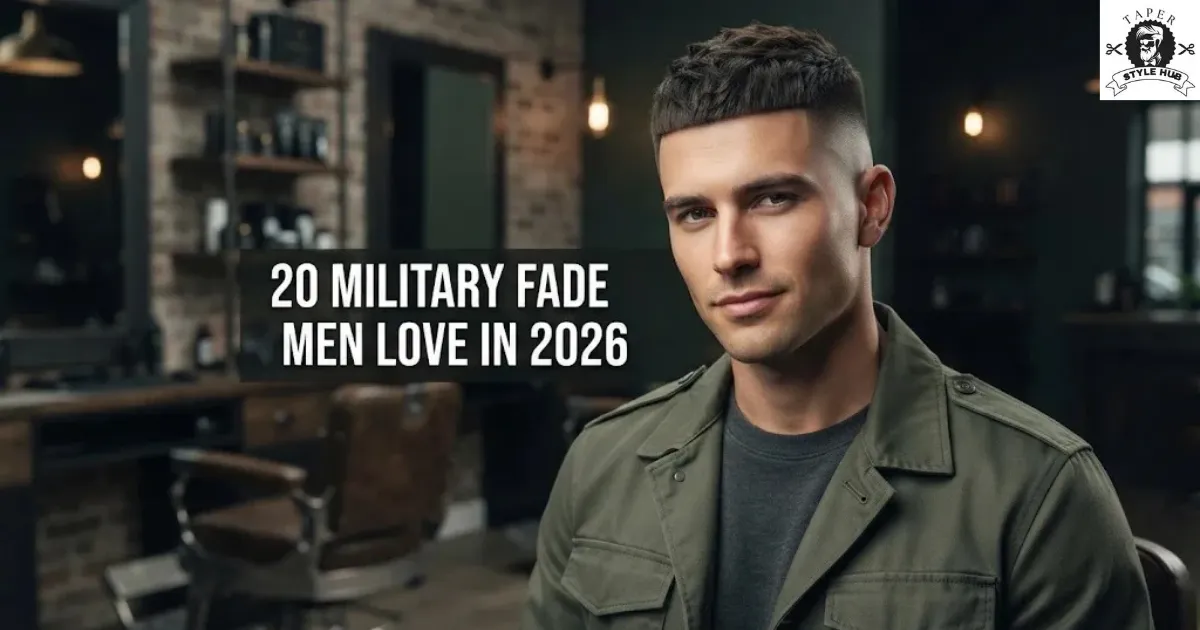
20 Military Fade Styles Men Love In 2026
The military fade is one of the cleanest haircuts a man can wear in 2026. It pairs very short, tightly blended sides with a neat top, and it looks sharp in an office, a gym, or a barbershop chair.
Born in the armed forces, this cut was built for discipline and speed. Today it has moved far beyond the barracks, and men of every age, hair texture, and style now ask their barber for it.
In this guide, you will find 20 styles sorted into clear categories, plus face shape tips, barber instructions, a step-by-step tutorial, styling advice, and maintenance habits that keep the fade crisp.
👉 Also Read: Crew Cut Haircut
Military Fade Haircut Guide for Men in 2026
What Is a Military Fade Haircut?
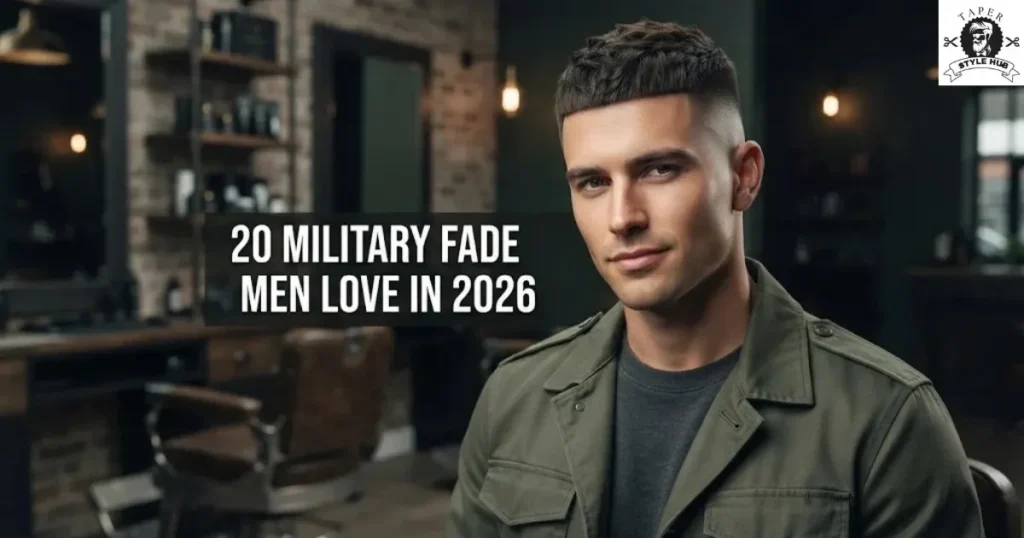
A military fade haircut is a short men’s hairstyle where the sides and back gradually shorten from the top down to skin level or a very close length. The blend is smooth, with no harsh line between lengths.
The top stays slightly longer, usually between a quarter inch and a few inches, depending on the style. This contrast between the faded sides and the textured top gives the cut its structured, uniform look.
Unlike a plain buzz cut, a fade adds shape and dimension. The graduated transition highlights the jawline, the temples, and the natural curve of the skull, so the head looks clean from every angle.
Because the military fade follows clear rules, it is also easy to explain to a barber. Fade height, clipper guard numbers, and top length are the three details that define almost every version.
👉 Also Read: Crew Cut No Fade
The History Behind the Military Fade
The fade haircut began in the United States military around the 1940s and 1950s. Strict grooming standards demanded short, neat hair that was hygienic, practical, and easy to maintain in the field.
Barbers on and near bases perfected the clipper blend because it saved time and looked disciplined. The harsh lines and sharp angles signaled that a soldier meant business.
In the 1980s, Black barbers reworked the style into the hi-top fade, also called the flattop, and it became a signature look in hip-hop culture. That moment carried the fade into everyday fashion.
Today the military fade sits at the crossroads of both stories. It keeps the discipline of its origins while borrowing the creativity of modern barbershop culture.
👉 Also Read: Low Mullet
Why Men Still Choose a Military Fade
Trends come and go, yet this haircut stays popular because it solves real problems. It looks professional, saves time every morning, and adapts to many tastes without losing its identity.
- Low maintenance: short hair needs very little daily styling
- Professional: suits offices, interviews, and formal events
- Versatile: works with straight, wavy, and curly hair
- Comfortable: stays cool in hot weather and during workouts
- Flexible: pairs well with beards, textured tops, and longer lengths
A well-executed fade can make anyone look cooler, edgier, and more pulled together. That confidence boost is a big reason men keep returning to the same barber chair.
👉 Also Read: Long Mullet
Military Fade Styles by Fade Height
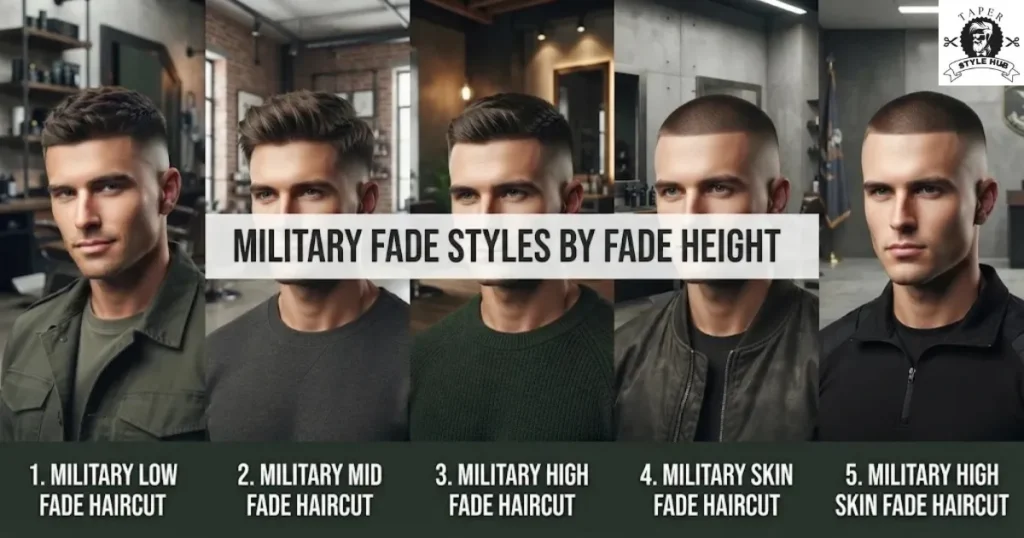
Fade height controls how much of the head stays short. Low, mid, and high versions change the contrast between the sides and the top, so each military fade height creates a different mood.
“All The Types Shown Below Are Displayed In The Single Image Above☝️”
1. Military Low Fade Haircut
The military low fade starts just above the ears and follows the neckline. It keeps the sides clean while leaving most of the head covered, so the result feels subtle, balanced, and professional.
It suits office workers, students, and anyone who wants a polished look without drama. A little matte pomade keeps the top neat with a natural finish.
Because the blend sits low, the style grows out gently over several weeks. That gives you more freedom between appointments and keeps the overall shape tidy even when life gets busy.
2. Military Mid Fade Haircut
The mid version begins around the middle of the head, near the temple line. This placement gives a smooth, natural blend that sits between the soft low fade and the bold high fade.
It works with many hair types and face shapes. Light blow-drying adds texture and volume to the top, which makes it ideal for both casual and professional settings.
Barbers often recommend this height as a safe starting point for first-timers. It shows the fade clearly without exposing too much of the scalp, so the change feels comfortable rather than shocking.
3. Military High Fade Haircut
The military high fade starts high near the temples and creates strong contrast between the top and the shaved sides. The effect is bold, masculine, and very sharp.
Keep the top short and textured for a clean, military-inspired finish. Expect regular barber visits, since high fades lose their edge quickly.
The high version pairs beautifully with a beard because the sharp contrast frames the face. It also looks great with a squared neckline, which adds even more definition around the ears.
4. Military Skin Fade Haircut
A skin fade blends the sides all the way down to bare skin. The clean transition makes the haircut look fresh, modern, and precise, and it is one of the most requested cuts in barbershops.
It pairs well with short textured tops, buzz cuts, and crew cuts. Book a trim every two to three weeks to keep the skin fade looking crisp.
Skin fades also make the scalp easy to inspect, so a light moisturizer after each cut helps prevent irritation. Pair it with a clean razor finish for the sharpest possible edges.
5. Military High Skin Fade Haircut
This version combines the height of a high fade with the bare-skin finish. It is among the sharpest military fade options trending this year.
The look highlights facial features and delivers a polished barbershop feel. A lightweight styling cream controls the top without leaving it greasy.
Because the contrast is so strong, the top should stay short or neatly textured. Anything too messy can fight the clean sides and weaken the overall effect.
Military Fade Styles by Top Length and Shape
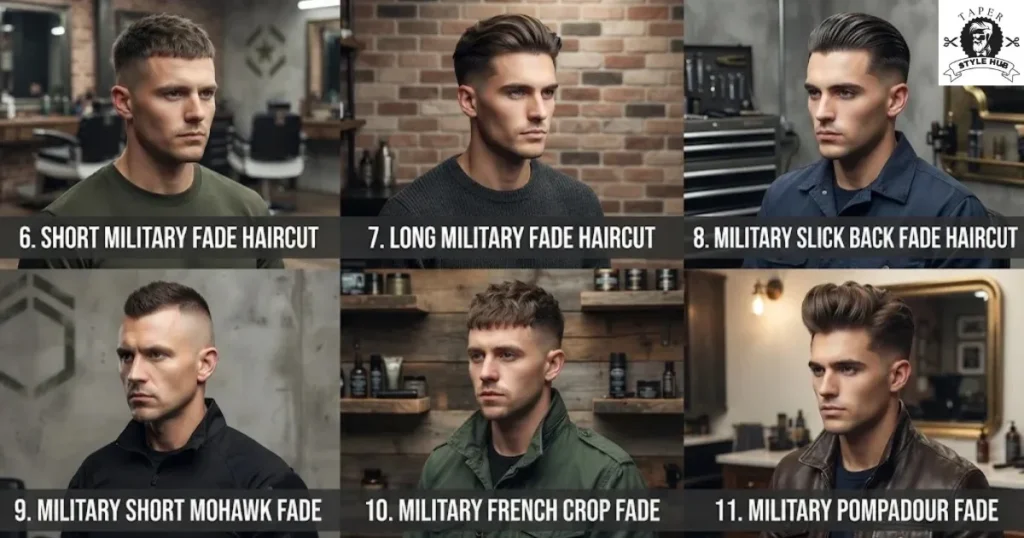
Once you pick the fade height, the top decides your personality. Short, long, slicked, or spiked tops all work with a military fade, and each one changes how the haircut wears day to day.
“All The Types Shown Below Are Displayed In The Single Image Above☝️”
6. Short Military Fade Haircut
The short version keeps the top very short while the fade holds the sides clean. It needs almost no styling and feels comfortable in hot weather.
Active men love it for gyms, sports, and long workdays. A tiny amount of styling paste gives a tidy, natural look.
Many barbers pair it with a number two guard on top for an even, uniform finish. It is also the easiest version to keep neat at home with a basic trimmer between visits.
7. Long Military Fade Haircut
Here the faded sides meet longer hair on top, which gives you room to experiment. You can brush it back, style it messy, or build textured layers.
The fade keeps everything neat even when the top gets playful. Sea salt spray adds natural movement and light texture.
This cut grows out gracefully because the extra length hides small changes in the fade. It suits creative men who like changing their parting, texture, or direction from week to week.
8. Military Slick Back Fade Haircut
A smooth slicked-back top over faded sides creates a classy, polished result. It looks right at formal events, offices, and dinners.
Use a lightweight pomade and comb the hair backward in one clean motion. The finish stays sleek with just a hint of shine.
Start the comb at the front and sweep backward while the product is still workable. A quick pass with a blow dryer on low heat sets the shape for long, comfortable wear.
9. Military Short Mohawk Fade
This cut combines a tight fade with a short strip of hair running from the forehead to the crown. It looks sporty and confident without becoming extreme.
Texturizing powder adds volume and shape to the center strip. Younger men especially enjoy how eye-catching the style feels.
Keep the sides tight and the strip narrow to preserve the disciplined feel. A wider strip drifts toward a punk look, which may not match every workplace or dress code.
10. Military French Crop Fade
The French crop pairs a tight fade with a short, textured top and a straight fringe that sits close to the forehead. It is easy to manage and hides a receding hairline well.
A small amount of texture clay gives light hold and a matte finish. The neat fade around the ears and neckline completes the sharp look.
The fringe length depends on your hairline, so ask your barber to cut it slightly shorter at first. You can always leave more length at the next appointment.
11. Military Pompadour Fade
A pompadour fade lifts the top up and slightly back for height and movement while the sides stay short and faded. It feels bold yet refined.
Blow-dry the top upward, then finish with pomade for control and shine. It works at weddings, parties, and the office alike.
Expect to spend a few extra minutes on styling compared with other options. The effort pays off, because the height and shine make the haircut stand out in any crowd.
Classic Military Haircuts Combined With a Military Fade
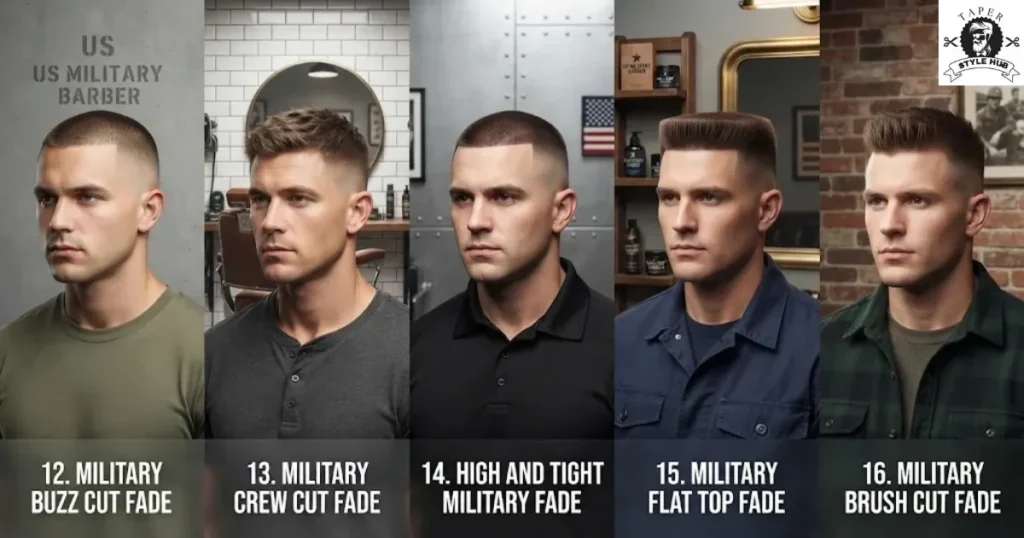
Many iconic armed forces cuts become even sharper when a fade is added. These classic shapes blend tradition with modern barbering and give the military fade a familiar, structured foundation.
“All The Types Shown Below Are Displayed In The Single Image Above☝️”
12. Military Buzz Cut Fade
A buzz cut fade clips the top to a uniform short length while the sides taper down to the skin. It gives a clean, no-nonsense look that highlights the eyes and jawline.
It is perfect for guys who want almost zero effort. A drop of argan oil keeps the scalp soft and healthy.
Choose a guard number that matches your head shape, since a very short top reveals every curve. A number two or three is a safe place to begin.
13. Military Crew Cut Fade
The crew cut keeps the top about finger length and styled forward, with sides that fade neatly. It is structured, masculine, and practical.
Add a little molding paste for texture and hold. It is ideal for active lifestyles and busy mornings.
The forward-styled top also frames the forehead nicely, which helps men with longer faces. Ask for a gentle taper at the nape so the back looks natural.
14. High and Tight Military Fade
The high and tight is the most recognizable armed forces cut. Ultra-short sides fade sharply into a short cropped top for dramatic contrast.
Many people consider it the most attractive of all military styles. A small touch of styling cream smooths the top.
Because so little hair remains on top, even small growth shows quickly. Plan a trim every two weeks if you want the cleanest contrast.
15. Military Flat Top Fade
A flat top builds a level, box-shaped surface on top of faded sides. The squared shape adds strength to the jawline and creates a bold silhouette.
It needs regular trims to stay perfectly level. Molding paste keeps the top firm and sharply defined.
Use a flat-top comb and a steady hand to level the surface, because even tiny height differences stand out. Many barbers use clippers over a comb for the most accurate result.
16. Military Brush Cut Fade
The brush cut stands the hair upright and flat on top with faded or tapered sides. It creates a squared, clean finish that looks disciplined.
It is low maintenance and stays put through wind and sweat. Texture clay adds a natural matte look.
The upright top works best with thick, strong hair that naturally stands up. Fine hair may need a little more product to hold the same shape.
Military Fade Styles for Different Hair Types and Personal Looks
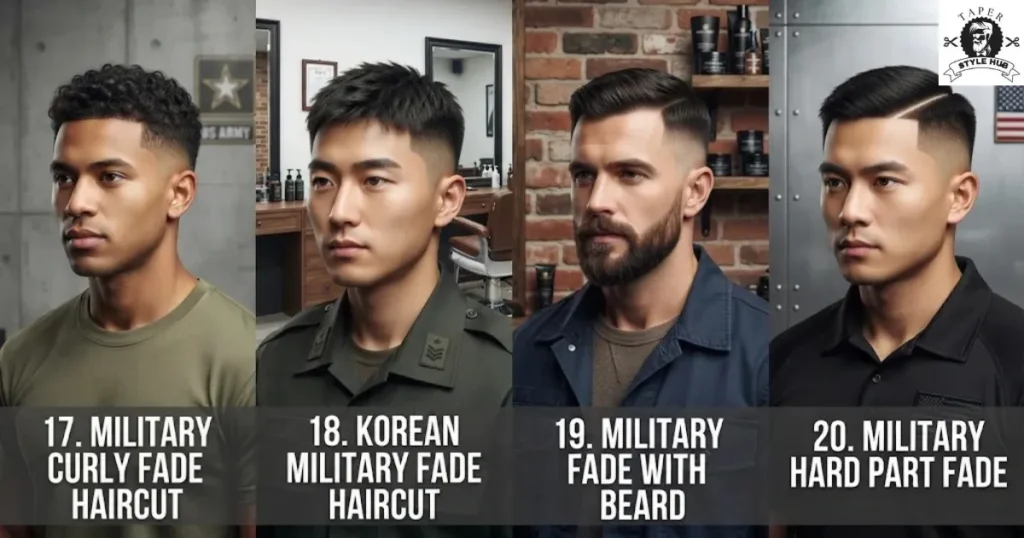
Hair texture and personal taste shape the final result. These four variations help you adapt the military fade to curls, trends, beards, and a precise parting.
“All The Types Shown Below Are Displayed In The Single Image Above☝️”
17. Military Curly Fade Haircut
Tight curls on top meet a clean fade on the sides. The contrast controls volume while still showing natural movement and personality.
Curl cream keeps the curls defined, soft, and frizz-free. Curly hairstyles keep gaining popularity in 2026.
Ask your barber to leave enough length for the curls to bounce and form. Cutting them too short removes the pattern that makes this version special.
18. Korean Military Fade Haircut
Korean fashion and entertainment inspired this soft, youthful version. It usually features a gentle fade with textured, slightly longer hair on top.
Light wax creates soft movement without stiffness. The style mixes military neatness with a trendy, modern feel.
This version often keeps a slightly longer fringe that sweeps across the forehead. Soft layers help the top move naturally and give the cut its signature youthful energy.
19. Military Fade With Beard
A beard framed by a sharp fade looks strong and intentional. The sides blend into the sideburns and beard line so everything flows together.
Trim the beard to match the angles of the haircut. A small amount of molding paste finishes the top.
Keep the beard line crisp along the cheeks and neck so it matches the sharp edges of the fade. Regular beard oil also keeps the hair soft and healthy.
20. Military Hard Part Fade
A razor-cut hard part carves a bold line between the combed top and the faded sides. The result is crisp, professional, and highly structured.
Comb the top to one side and use pomade for smooth hold. The subtle shine makes the line stand out.
Refresh the part line every few days with a trimmer or razor to keep it bold. Use a fine-tooth comb to follow the line with each styling session.
Clipper Guard Guide for a Military Fade
Clipper guards decide how short each zone becomes. This simple table shows how barbers usually blend a military fade from the bottom up.
| Guard | Typical Use | Result |
|---|---|---|
| No guard (0) | Bottom guideline and skin finish | Bare skin look |
| Number 1 | Lower sides | Very short stubble |
| Number 1.5 | Transition zone | Soft blend |
| Number 2 | Middle of the head | Slightly more length |
| Number 3 | Upper sides near the top | Heavier blend into the top |
Every barber adjusts these numbers to your head shape and hair density. Treat them as a conversation starter rather than a strict rule.
Military Fade vs Taper Fade: What Is the Difference?
Many men confuse a military fade with a taper fade. Both blend short sides into a longer top, but the details are different.
A taper keeps more length and usually reaches only the neckline and sideburns, so it looks softer. A fade shortens much more hair and can reach the skin, which creates stronger contrast.
Barbers explain that the placement of the blend decides the name. Above the temple area it is a high fade, below it a low fade, and lower still it becomes a taper.
Drop and burst fades curve around the ear, while this cut stays level and uniform. If you want a bold, disciplined result, choose the military fade.
How to Choose the Right Military Fade Haircut
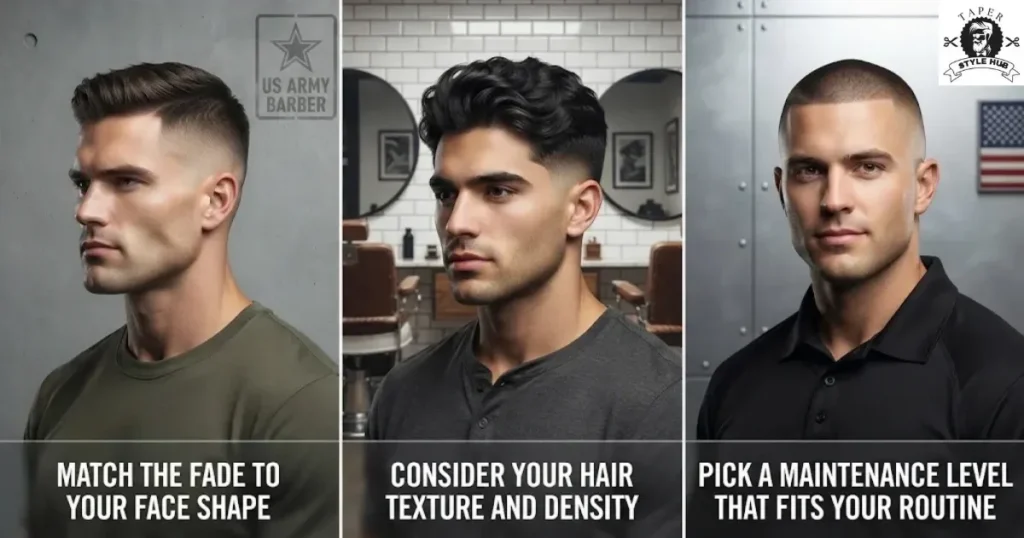
Choosing a fade is easier when you start with three things: your face shape, your hair texture, and how much time you want to spend on upkeep. A cut that matches these details always looks better.
“All The Types Shown Below Are Displayed In The Single Image Above☝️”
Match the Fade to Your Face Shape
Round faces usually look great with a high fade because the extra contrast adds definition and visual length. The sharper sides slim the face and create a stronger outline.
Square faces suit almost every style, since a fade highlights a strong jawline. Oval faces are the most flexible, so low, mid, and high fades all work naturally.
Heart-shaped faces look balanced with a low or mid fade and a slightly fuller top.
Consider Your Hair Texture and Density
Straight and fine hair responds well to crew cuts, flat tops, and textured crops. The fade adds shape where thin hair might otherwise look flat.
Thick or wavy hair suits high and tight styles and buzz cuts because the short length keeps the hair controlled. Curly hair works beautifully with a skin or mid fade and a defined top.
Pick a Maintenance Level That Fits Your Routine
Skin fades and high fades need barber visits every two to three weeks to stay sharp. If you prefer low-maintenance grooming, a short military fade or low fade grows out more gracefully.
A thinning crown or receding hairline also benefits from short, even lengths. The reduced contrast makes hair look cleaner, fuller, and more balanced.
Military Fade for Thinning Hair and Receding Hairlines
Many men worry that a short haircut will highlight thinning hair. In practice, the opposite often happens, because even length reduces contrast between thick and thin areas.
A mid or high fade with a short textured top makes the hairline look intentional. Avoid long, swept-over styles that draw attention to gaps.
Matte products also help. They add visual density without shine, which can make thinning areas look more obvious under bright lights.
If hair loss bothers you, speak with a barber or a dermatologist about options. A good haircut is a strong start, but it is only one part of the picture.
How to Ask Your Barber for a Military Fade
Clear communication gets you the haircut you imagined. Barbers love specific terms because they remove guesswork and save time in the chair.
Start with the name of the style, such as military fade, high and tight, or crew cut fade. Then explain the fade height, the top length, and the finish you prefer.
- Name the fade height: low, mid, or high
- Mention the finish: skin fade or shadow fade
- Give guard numbers for the top
- Describe the neckline: tapered or squared
- Bring a reference photo to confirm the details
A photo helps your barber match the fade, the top length, and the side detailing. It guarantees a consistent, sharp, and uniform finish every time.
What to Expect During Your Military Fade Appointment
A good barber begins with a short consultation. Expect questions about your lifestyle, hair growth patterns, and how often you plan to return.
The cut itself usually takes between twenty and forty minutes. Skin fades and detailed designs may take longer because precision work cannot be rushed.
Your barber will check symmetry from several angles and often finishes with a hot towel or a razor edge. These small steps make the whole look feel complete.
Before leaving, ask which products suit your top and when to book the next visit. Clear advice at this stage prevents most styling frustrations later.
Tools Needed for a Military Fade Haircut
Before the first cut, barbers prepare a small but precise toolkit. Each item has a job, and together they create a smooth, clean blend.
- Professional clippers with an adjustable lever
- Trimmers for the neckline and edges
- Clipper guards from 0 to 3
- A fine-tooth comb for blending
- Thinning shears for weight removal
- A razor for the hard part and edge up
- Light styling product for the finish
Straight hair often works best with rotary motor clippers, while coarse or textured hair responds well to magnetic motor clippers. The right tool prevents hard lines and keeps the blend seamless.
Military Fade Haircut Step-by-Step Tutorial
This tutorial shows how a barber builds a military fade from the ground up. It explains the process rather than replacing professional training, so practice patiently before trying it at home.
Step 1: Create the First Guideline
Start with a zero guard to set the lowest guideline around the head. Follow the temple area and connect the line around the back with a soft scooping motion.
Step 2: Open the Lever for the Second Guideline
Open the clipper lever fully and cut the second guideline above the first. Work one section at a time so the fade stays balanced and even.
Step 3: Blend With Different Guards
Move through the guards in order. The number 1 removes bulk from the lower sides, the 1.5 softens the transition, the number 2 blends higher, and the number 3 cleans the heavier areas near the top.
Step 4: Remove the Fade Lines
Use lever play and the corners of the clipper to erase visible lines. Flicking the clipper outward at the end of each stroke clears dark spots and smooths the blend.
Step 5: Clean the Neckline With Trimmers
Trimmers sharpen the neckline and the lower fade area. This step gives the haircut a fresh and polished finish.
Step 6: Repeat on the Other Side and the Back
Repeat the same process on the opposite side and across the back. Compare both sides often so the fade stays symmetrical.
Step 7: Texturize the Top
Use thinning shears to remove extra weight while keeping volume. Then cut the top to the desired length with scissors or a clipper guard.
Step 8: Create the Hard Part and Edge Up
Finish by sharpening the hairline and hard part with a razor. Style with a comb and a light product for a clean final look.
How to Style a Military Fade Every Day
Styling this haircut takes only a few minutes because the haircut already has structure. The right routine keeps it looking fresh from morning to night.
Start With Clean Hair
Wash with a clarifying shampoo to remove buildup, then towel-dry until the hair is slightly damp. Damp hair spreads product evenly and holds its shape longer.
Add a Light Hold Product
Rub a small amount of pomade, texture clay, or molding paste between your palms. Work it through the top and shape the hair for a precise look.
Choose the Right Product for Your Top
- Texture clay: strong matte hold for short textured tops
- Molding paste: medium hold with flexible texture
- Pomade: shine and control for slick backs
- Sea salt spray: lightweight volume and movement
- Texture powder: instant lift without oil
- Argan oil: moisture and light shine for the scalp
Finish With a Clean Look
Comb the top neatly and smooth the sides for a crisp finish. Heavy gels make short hair look greasy, so keep the product light.
Best Occasions to Wear a Military Fade
One reason this haircut stays popular is its range. It adapts to many settings without needing a new look for each one.
Office and Interviews
A low or mid military fade with a neat side part looks professional and confident. It tells employers you pay attention to details.
Sports and Outdoor Activities
Short fades stay cool, dry quickly, and never get in the way. Athletes and soldiers have trusted them for decades.
Weddings and Formal Events
A slick back or pompadour fade adds elegance to a suit. Pomade provides the shine that formal photos love.
Everyday Casual Style
A textured top with a skin fade fits jeans, hoodies, and weekend plans. It looks effortless with very little work.
How to Maintain a Military Fade Haircut
Maintaining this haircut is simple when you follow a steady routine. A few good habits keep the blend smooth and the edges sharp between appointments.
- Visit the barber every two to three weeks
- Wash with a mild shampoo and condition lightly
- Keep the neckline clean between visits
- Brush the top daily to keep it tidy
- Moisturize the scalp to prevent flakes and dryness
A healthy scalp enhances shine and comfort, so do not skip scalp care. Regular trims also stop uneven growth and keep the haircut crisp and uniform.
Home Touch-Up Tips Between Barber Visits
A small home kit saves money between barber visits. A reliable trimmer, a handheld mirror, and a soft neck brush cover most touch-up needs.
Use the trimmer only on the neckline and around the ears, working slowly with short strokes. Avoid cutting into the blended area, because that zone depends on professional skill.
Clean your tools after every use and store them dry. Sharp, well-maintained blades give smoother results and reduce the chance of skin irritation.
Replace worn guards and blades when they start pulling hair. Cheap equipment can leave uneven lines that spoil the clean look you worked to build.
Scalp and Skin Care for Short Fades
Short sides expose more skin, so basic care matters. A clean, hydrated scalp looks healthier and makes the fade appear sharper.
After a close shave, razor bumps and irritation can appear. A cooling aftershave balm or fragrance-free moisturizer calms the area and speeds up recovery.
Sunscreen is another smart habit, especially for men with very short or skin-level sides. Exposed scalp burns easily, and sun damage can last for years.
Wash your hair gently and avoid scrubbing hard. Mild shampoo cleans buildup while protecting the natural oils that keep the scalp comfortable.
Common Military Fade Mistakes to Avoid
Even a great haircut can go wrong with small errors. Avoid these common slip-ups to protect your military fade.
- Skipping trims until the fade grows out completely
- Using heavy gel that makes short hair look stiff
- Choosing a fade height that ignores face shape
- Asking for a style without a reference photo
- Cutting at home with the wrong clippers
Most problems come from rushing. Take your time choosing the style, find a skilled barber, and the results will speak for themselves.
Military Fade Myths Worth Ignoring
Several myths still follow this haircut around. Clearing them up helps you decide with confidence instead of guessing.
Myth one says the style only suits soldiers. In reality, civilians of every profession wear it, and it fits student life, creative work, and corporate settings equally well.
Myth two claims it looks bad on round or long faces. The right fade height and top shape balance almost any face, so the secret is choosing wisely, not avoiding the cut.
Myth three insists that short hair means no style. Textured tops, hard parts, and beard blends prove there is plenty of room for personality.
Military Fade Haircut Cost and Barbershop Tips
Prices depend on the city, the barber’s experience, and the complexity of the blend. A simple fade costs less than a skin fade with a hard part and beard work.
Booking a skilled barber is usually worth the extra money, since a clean blend lasts longer and grows out better. Cheap cuts that look uneven often need correction sooner.
Rebooking regularly and arriving with a clear reference photo also help build a good relationship with your barber. Loyal clients often enjoy better appointment slots and more careful service.
Seasonal Tips for Your Fade
In summer, a shorter top and a lower fade keep you cool and reduce sweat. Sunscreen on the scalp becomes especially important during this season.
In winter, many men let the top grow a little longer for warmth and texture. The fade stays the same, so the haircut still looks structured under a beanie.
Humidity affects styling too. Matte products and light sprays hold better in damp weather than heavy gels, which can feel sticky and uncomfortable.
Pairing Your Fade With Clothing and Grooming
A sharp fade deserves a clean wardrobe to match. Fitted shirts, structured jackets, and simple boots echo the disciplined spirit of the haircut.
Eyebrows and facial hair complete the picture. Tidy brows and a trimmed beard keep the face balanced and make the clean sides stand out even more.
Accessories like sunglasses and watches add personality without clutter. Choose pieces that suit your daily routine and let the haircut remain the centerpiece.
How Long Does a Military Fade Take to Grow Out?
Hair grows roughly half an inch per month, so a fade softens noticeably after two weeks. By week four, the contrast between the sides and the top becomes much less defined.
Low fades grow out gently and stay presentable longest. High and skin fades lose their crisp look fastest because the bare skin area fills in quickly.
If you cannot visit the barber on time, clean the neckline at home with a trimmer. Never attempt to fade the sides yourself without practice, since mistakes take weeks to fix.
Military Fade Trends to Watch in 2026
Skin fades with textured tops continue to dominate barbershops this year. Men want sharp sides with natural, touchable hair on top.
Korean-inspired softness is also rising, along with curly variations and beard-friendly blends. Personalized fade lines are becoming common as barbers experiment with creative detail.
Whatever the trend, the classic fade remains the foundation. It adapts to new ideas without losing its clean, disciplined character.
Final Thoughts on the Military Fade
The military fade continues to dominate men’s hairstyle trends in 2026 because of its clean appearance, modern style, and easy upkeep. From low fades to skin fades and curly variations, there is a version for every personality.
It works for men who want a sharp, masculine look without spending hours in front of a mirror. It fits casual, professional, and sporty lifestyles while staying fashionable.
Remember that the best haircut is the one you feel confident wearing. Trust your barber, enjoy the process, and keep experimenting with small changes until the look feels completely and unmistakably yours.
Choose your fade height, pick a top that suits your hair, and talk clearly with your barber. With regular trims and light styling, your military fade will stay fresh all year.
Military Fade FAQs
Is a military fade good for everyday wear?
Yes. The military fade looks clean, stylish, and professional in almost every setting, from the office to the gym.
How often should you trim a fade?
Most men visit the barber every two to three weeks. Skin and high fades may need trims even sooner.
Which face shape suits this haircut?
Square, oval, and heart-shaped faces suit it best, but round faces also look great with a high fade.
Can curly hair work with this style?
Absolutely. A fade keeps the sides tidy while curls on top add texture and control.
Is this haircut easy to maintain?
Yes, with regular trims, light products, and a clean neckline. Short versions need the least effort.

I’m M Ahmad Ansari, founder and content creator at Taper Style Hub. With 3+ years of experience researching taper haircuts, hairstyles, grooming, and men’s style, I create practical, accurate, and easy-to-understand content. My goal is to provide readers with trustworthy information, useful tips, and inspiring ideas for choosing and styling the perfect taper haircut.
5 Comments