30 Best Crew Cut Haircut Ideas For Men
A crew cut haircut is one of those rare styles that never really leaves the barbershop menu. It’s short, sharp, easy to manage, and it suits almost every man who sits in the chair.
This guide covers 30 crew cut variations, grouped into clear categories so you can compare them quickly. You’ll also learn who each style suits, what to tell your barber, and how to style and maintain the cut at home.
Whether you want a military-clean look, a textured top, or a modern fade, there’s a version here that fits your hair type, face shape, and daily routine.
👉 Also Read: Crew Cut No Fade
Complete Crew Cut Haircut Guide for Modern Men
Before jumping into the 30 styles, it helps to understand what makes this cut work. Once you know the basics, picking the right version gets much easier.
👉 Also Read: Low Mullet
What Is a Crew Cut Haircut?
A crew cut haircut keeps the sides and back short, usually clipped or tapered, while the top stays slightly longer. The longest point sits at the front hairline, where the hair can be styled up and away from the forehead.
The top is normally just long enough to cut with scissors, often between one and two inches. That small bit of length is what separates the style from a buzz cut, where everything is clipped to one even length.
Because the structure is so simple, barbers can adjust the fade, the top length, and the finish to suit you. That flexibility is why the crew cut remains a barbershop staple.
👉 Also Read: Long Mullet
The History Behind the Crew Cut Haircut
The crew cut haircut grew out of military grooming. Electric clippers made close, uniform cuts quick and cheap, and armed forces in several countries adopted short regulation styles that were easy to keep neat in the field.
The name is often linked to college rowing crews, where short hair was practical on the water. From there, the look spread through campuses and into everyday barbershops.
By the middle of the twentieth century, the style was everywhere, from sports fields to Hollywood. Today it keeps showing up on red carpets, which proves that classic doesn’t have to mean dated.
That history explains the cut’s no-nonsense character. It was designed to be quick, tidy, and practical, and those same qualities still make it appealing today.
👉 Also Read: Boys Mullet Haircut
Who Suits a Crew Cut Haircut?

One reason the crew cut haircut lasts is its range. It works across ages, jobs, and hair types, but a few details change how it looks on you.
👉 Also Read: 80s Mullet
Best Face Shapes for a Crew Cut Haircut
Oval and square faces handle almost any version, since the short sides show off strong jawlines and balanced proportions. You can go sharper with a skin fade or keep it classic.
Round faces benefit from a little height on top, like a short quiff or a textured front, which adds length. A light beard can help too, as long as it stays neat and short.
Long or oblong faces look best with a standard or butch version. Avoid piling on height at the front, because extra volume can make the face look even longer.
Best Hair Types for a Crew Cut Haircut
Straight hair gives the cleanest result, but it can look flat, so ask for light texturizing on top. A matte paste does the rest.
Wavy and curly hair work beautifully when the top has a bit more length. The curls add natural texture, and the short sides keep everything under control.
Thick hair holds shape well, while fine or thinning hair benefits from a slightly longer, forward-brushed top. That trick helps disguise a receding hairline.
Crew Cut for Different Ages
Teenagers like it for its edge and simplicity. Men in their thirties and forties often prefer it because it’s professional and easy to maintain.
Older men appreciate the neat shape, and a light taper can make gray hair look polished rather than thin.
Crew Cut Haircut vs Buzz Cut, Butch Cut, and Ivy League
Barbers use these terms loosely, so it’s worth knowing how they differ. A quick comparison helps you ask for exactly what you want.
- Buzz cut: one uniform clipper length all over the head, with no real shape on top.
- Butch cut: a very short crew cut where the top is barely longer than the sides.
- Crew cut: short tapered sides with a top long enough to style forward or up.
- Ivy League: a longer crew cut with enough top length to part and comb to the side.
- French crop: a short, textured top with a straight fringe and faded sides.
Keep these definitions in mind when you book. Showing your barber a reference photo removes any doubt about length.
Crew Cut Haircut Length and Guard Sizes Explained
Length is where most crew cuts go right or wrong. Clipper guards are numbered, and a smaller number leaves shorter hair.
A classic crew cut haircut uses a number two or three guard on the sides and back, with a number five or longer on top. Many barbers then taper the sides into the top for a smooth transition.
If you’re unsure, start longer. You can always go shorter at the next visit, but you can’t glue hair back on.
Fades change the math slightly. With a skin fade, the sides drop to bare skin and the top blends upward over a few inches, so the contrast looks much sharper than a simple clipper-guard taper.
Classic and Military Crew Cut Haircut Styles
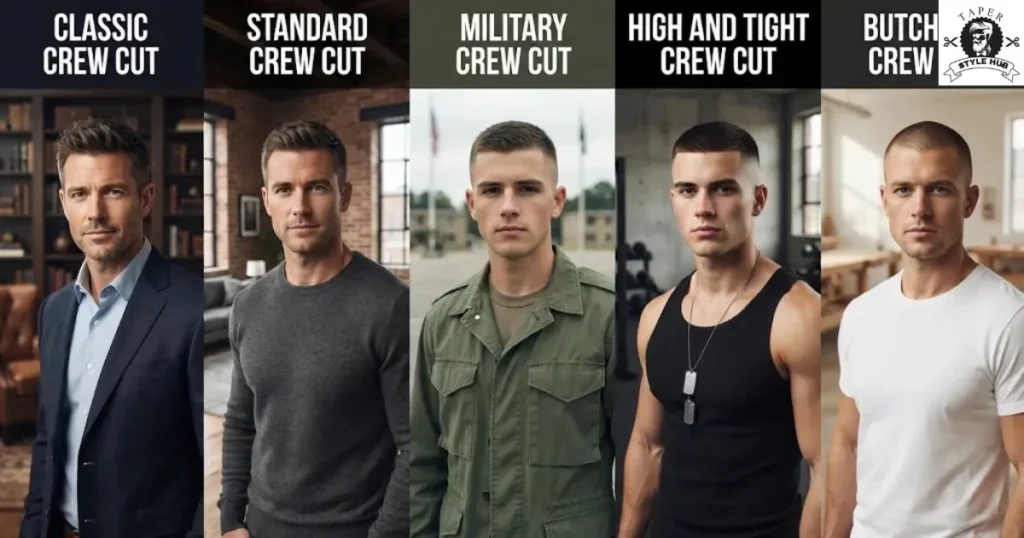
These are the traditional versions. They’re neat, low-effort, and ideal if you want a clean look that never needs much thought.
“All The Types Shown Below Are Displayed In The Single Image Above☝️”
Classic Crew Cut
The original: short tapered sides, a slightly longer top, and a front that sweeps up gently. It’s simple, professional, and works with almost any outfit or job.
Best for men who want a dependable everyday cut. Ask for a number two on the sides, blend into the top, and keep the front a little longer for styling.
Standard Crew Cut
This version keeps the top at about one to two inches with a natural taper on the sides. It’s the safest choice if it’s your first crew cut haircut.
It works well for oval and square faces and most hair types. Expect to book a trim about every four weeks to keep the taper tidy.
Military Crew Cut
Very tidy and very short, this cut follows regulation-style grooming. The sides are tight, the top is flat and even, and the neckline is clean.
This one suits anyone who values speed and discipline in their routine. Almost no styling is needed, so a quick towel dry is all you’ll ever do.
High and Tight Crew Cut
The sides are clipped high up the head, leaving a small patch of hair on top. It’s sharp, athletic, and extremely easy to maintain.
Ask your barber to clip the sides high and leave a short, even top. It looks especially good on men with strong jawlines and well-shaped heads.
Butch Cut Crew Cut
Almost a buzz cut, but with a touch more length and shape on top. It needs almost no styling and suits anyone who wants zero fuss.
Because the length is so short, it’s ideal for summer, sports, and busy schedules. Just make sure your barber keeps a little shape on top.
Fade and Taper Crew Cut Haircut Styles

Adding a fade or taper gives the crew cut more contrast and a modern edge. The height of the fade changes the whole personality of the cut.
“All The Types Shown Below Are Displayed In The Single Image Above☝️”
Skin Fade Crew Cut
The sides fade down to bare skin for a razor-sharp, high-contrast finish. It looks clean on day one and needs regular touch-ups to stay crisp.
Choose this if you want a sharp, modern finish. Because the fade grows out visibly within two weeks, plan frequent touch-ups to keep the contrast crisp.
Zero Fade Crew Cut
A zero fade blends down to the skin without a harsh line, so the transition looks smooth. It pairs well with a textured top and a trimmed beard.
Ask for a zero fade that blends smoothly into the sides. It works especially well with a crew cut haircut that has a little texture on top.
High Fade Crew Cut
The fade starts high, near the temples, which creates bold contrast against a longer top. It’s a confident look that suits fashion-forward guys.
Pair it with a textured or slightly longer top for maximum contrast. It suits younger guys and anyone who wants a clearly modern statement.
Mid Fade Crew Cut
Starting around the middle of the sides, a mid fade balances sharp and subtle. It’s the most flexible option and works for the office or the weekend.
Tell your barber where the fade should start, usually just above the ear. It’s an easy upgrade for a standard crew cut haircut.
Taper Fade Crew Cut
A taper keeps more length at the sideburns and neckline for a softer, more natural finish. It grows out gracefully, so the cut stays presentable longer.
This is a great pick if you want a neat look without harsh lines. It also tends to look better as it grows out between appointments.
Textured and Styled Crew Cut Haircut Ideas

If a plain crew cut haircut feels too flat, these variations add movement, height, or shape. A little product makes a big difference here.
“All The Types Shown Below Are Displayed In The Single Image Above☝️”
Textured Crew Cut
Layers and varied lengths on top create a natural, slightly messy finish. Work in a pea-sized amount of matte clay and you’re done.
Ask your barber to point-cut the top for natural separation. It’s perfect for straight or slightly wavy hair that needs extra movement.
Spiky Crew Cut
Short spikes at the front add attitude and a youthful feel. Use a strong-hold gel or paste so the shape lasts through the day.
Dry your hair first, then push the product forward and upward with your fingertips. It looks best on thicker hair that can hold the shape.
Crew Cut with a Quiff
Leave a little extra length at the front, then blow-dry it up and back. A touch of pomade locks in the volume for a polished, masculine look.
Use a blow dryer and a small round brush to lift the front. This version flatters round faces by adding height and length.
Slicked Back Crew Cut
With a slightly longer top, you can comb everything back using pomade or gel. The tight sides make the shape look deliberate and sophisticated.
Comb the product through while the hair is slightly damp for a smoother finish. It’s a favorite for formal events and professional settings.
French Crop Crew Cut
This hybrid pairs a short, textured top with a blunt fringe and faded sides. It’s modern, quick to style, and great for fine or thinning hair.
Ask for a short, textured top with a straight fringe across the forehead. It’s a smart choice for guys with thinning hair or a receding hairline.
Longer and Ivy League Crew Cut Haircut Styles
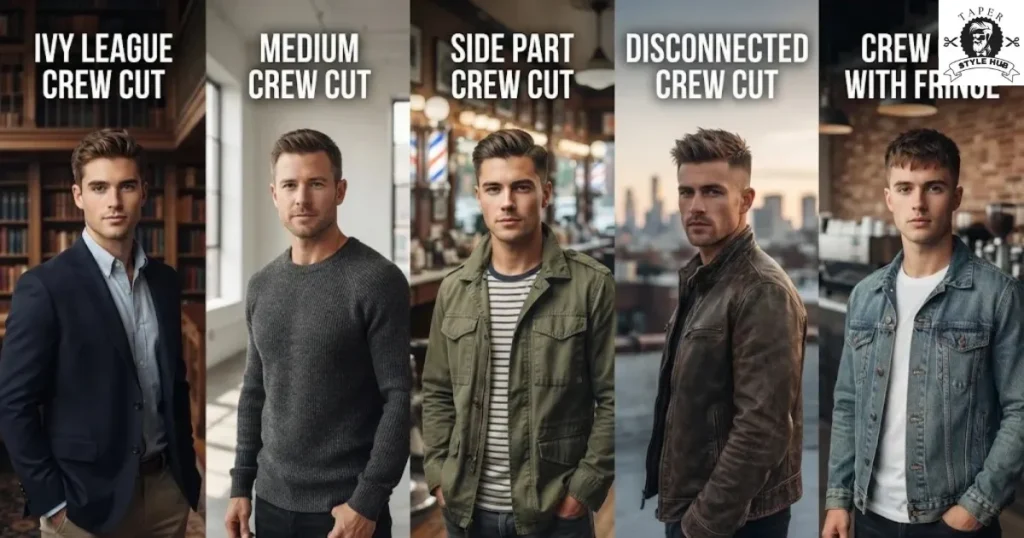
Not everyone wants a very short top. These styles keep the crew cut structure while leaving enough length to part, comb, or sweep.
“All The Types Shown Below Are Displayed In The Single Image Above☝️”
Ivy League Crew Cut
Also called the Princeton or Harvard clip, this is a grown-out crew cut with enough length on top to part. It looks conservative and polished without much upkeep.
Blow-dry the top back with a vented brush, then add a little cream or paste. It’s a polished choice for men who find a full crew cut too short.
Medium Crew Cut
The top stays at a medium length while the sides are tapered or faded. That extra length adds volume and gives you more styling options.
Ask for a medium length on top with a gradual taper on the sides. It works best on straight to slightly wavy hair.
Side Part Crew Cut
Comb the top into a clean side part for a professional, client-ready finish. It’s a smart choice for interviews, meetings, and formal events.
Comb the hair while it’s damp, then set the part with a bit of pomade. It looks sharpest when the sides are kept tidy and tapered.
Disconnected Crew Cut
Here the top is noticeably longer than the closely clipped sides, with little blending between them. The contrast is bold, so it suits men who like a statement.
Let your barber know how much contrast you want between the top and sides. Add a beard if you want the look to feel balanced.
Crew Cut with Fringe
Bring a short block fringe forward for a youthful, structured look. It frames the face well and is especially useful for hiding a high forehead.
Keep the fringe straight or lightly textured, depending on your style. It’s an easy way to add personality to a standard crew cut haircut.
Crew Cut Haircut Styles for Different Hair Types

Hair texture changes how a cut behaves, so these versions are tuned for specific types. Pick the one that works with your natural growth.
“All The Types Shown Below Are Displayed In The Single Image Above☝️”
Curly Crew Cut
Curls on top with tapered sides create contrast and control. Keep the top a bit longer so the curls hold their shape instead of shrinking.
Ask for scissor work on top so the curls keep their shape. A light cream or curl product keeps them soft and defined without heaviness.
Wavy Crew Cut
Natural waves add movement without any effort. A light cream or sea salt spray enhances the texture and keeps frizz down.
Let the top air dry for the most natural look. A small dab of paste adds definition while keeping the finish relaxed.
Thick Hair Crew Cut
Thick hair needs thinning or texturizing so the top doesn’t puff out. A fade on the sides removes bulk and keeps the cut looking tidy.
Request thinning shears or texturizing on top to remove bulk. This keeps the cut light and makes daily styling far easier.
Crew Cut for Thinning Hair
A short, forward-brushed top draws attention away from a receding hairline. Keeping the sides tight makes the thinner areas far less noticeable.
Avoid long, combed-over styles, because they draw attention to thin spots. A short crew cut haircut looks confident and intentional instead.
Blonde Crew Cut
Whether natural or bleached, blonde looks striking against a faded crew cut. Purple shampoo helps keep brassy tones under control.
Bleaching can dry hair out, so use a moisturizing shampoo and conditioner. Regular trims also keep the color looking fresh and even.
Detail and Grooming Crew Cut Haircut Variations

The last group focuses on finishing touches. Small details like a beard, a line up, or a hard part can transform the same basic cut.
“All The Types Shown Below Are Displayed In The Single Image Above☝️”
Crew Cut with a Beard
A neat beard balances the clean lines of the cut and adds structure to softer jawlines. Keep the beard trimmed so the overall look stays sharp.
Match your beard length to the sides of your haircut so the two blend naturally. A short, boxed beard suits the style best.
Crew Cut with a Line Up
A crisp line up defines the hairline and frames the face. It needs frequent touch-ups, so expect to visit your barber every couple of weeks.
Ask for a clean, natural-looking line rather than a sharp, straight one. It keeps the look modern and flattering for most faces.
Crew Cut with a Hard Part
Your barber shaves a thin line into the hair to make the part stand out. Combined with a side-swept top, it creates a stylish, vintage feel.
Tell your barber which side you normally part on. Style the top with a comb and a light pomade to keep the line visible.
Caesar Cut
The Caesar cut features a short, horizontal fringe brushed forward. It’s low-profile, easy to style, and great for men who want something subtle.
Ask for a short, even fringe with tapered sides. It’s a great fit for men with a strong forehead and a low-maintenance routine.
Boys’ Crew Cut
Parents love this style because it’s neat, comfortable, and quick to maintain. It keeps hair out of the eyes and holds up through school and sports.
Use a number two guard on the sides and a number five on top for a classic crew cut haircut. Keep the first cut a little longer.
Crew Cut Haircut Pros and Cons
Every style has trade-offs, so here is an honest look at both sides before you commit.
Advantages of a Crew Cut
- Very low maintenance and quick to style every morning.
- Works with most face shapes, ages, and hair types.
- Looks professional in the office and relaxed on weekends.
- Stays cool in summer and dries in minutes.
- Easy to customize with fades, textures, and beards.
Drawbacks to Consider
- Needs regular trims to keep the sides and neckline sharp.
- Leaves little room to hide a bad cut, since the hair is so short.
- May not suit men who prefer longer, more dramatic styles.
How to Choose the Right Crew Cut Haircut for You
Start with your face shape and hair type, then think about your daily routine. A busy schedule points toward a butch or military cut, while a creative job gives you room for texture.
Next, consider how much time you want to spend on upkeep. Fades look sharp but need frequent visits, whereas a natural taper forgives longer gaps between appointments.
Finally, be realistic about your hair. Cowlicks, thin patches, and strong curl patterns all affect the result, so a good barber will adapt the crew cut haircut to your head.
Neckline and Sideburn Options for a Crew Cut Haircut
The neckline frames the whole cut, so it deserves attention. A blocked neckline looks sharp but grows out quickly, while a tapered one fades softly and ages more gracefully.
Rounded necklines fall in between and suit most men. Ask your barber to match the shape to the back of your head and the thickness of your neck.
Sideburns matter just as much. Keep them level with the middle of the ear for a classic look, or taper them lightly for a softer finish.
What to Expect at Your Barber Appointment
A good barber starts with a short consultation. Explain the length you want on top, show your reference photo, and mention any cowlicks or thin areas.
Next comes the clipper work on the sides and back, followed by scissor work on top. Many barbers finish with a trimmer around the ears and neckline.
Before you leave, ask for a quick styling demo. Seeing the product amount and technique once saves you plenty of guesswork at home.
Most appointments for a simple cut take around twenty to thirty minutes, though fades and line ups may take a little longer.
How to Ask Your Barber for a Crew Cut Haircut
Clear communication saves you from an unwanted result. Barbers are used to this cut, but small details still matter.
- Bring a reference photo that shows the exact top length and fade height.
- Say whether you want a taper or a fade, and where it should start.
- Mention the guard numbers if you know them, such as a number two on the sides.
- Tell your barber how much length you want on top, in inches if possible.
- Ask how the neckline will be finished, either blocked, rounded, or tapered.
If you want help styling the finished cut, ask your barber which product they used. That small step makes home styling much easier.
How to Style a Crew Cut Haircut at Home
Styling takes about two minutes, which is part of the appeal. Follow these steps for a clean finish.
- Towel dry your hair after washing so it’s damp, not dripping.
- Rub a small amount of product between your palms.
- Work it through from the back to the front.
- Push the front slightly up and forward.
- Shape the finish with your fingers or a comb.
Match the product to the finish you want. Matte clay gives texture, pomade adds shine, and a cream keeps things soft and natural.
Best Products for Styling a Crew Cut
Matte clay and paste suit textured looks, while pomade and gel work better for slicked or spiky versions. Light creams are best for curls and waves.
Use less than you think you need. Short hair gets weighed down quickly, and too much product makes the cut look greasy.
How to Cut a Crew Cut Haircut at Home
Cutting your own hair is doable if you take your time. Start longer than you think you need, because you can always trim more.
- Start with clean, dry hair and comb it in its natural direction.
- Attach a guide comb for the sides and back, such as a number two.
- Begin at the neckline and move upward in slow, overlapping passes.
- Switch to a longer guard, such as a number five, for the top.
- Blend the area where the sides meet the top with light upward strokes.
- Clean the edges around the ears and neckline with a trimmer.
Check your work in a mirror from several angles before cutting more. Rushing is the quickest way to create uneven spots.
Tools You Need for a Home Cut
A reliable clipper with guide combs, a trimmer, a comb, and a cape or towel are enough. Cordless clippers make the neckline easier to reach.
Keep your tools clean and oiled so the blades glide smoothly. Dull or dirty clippers pull hair and leave rough, uneven patches that are hard to fix.
Tools and Products Checklist for a Crew Cut
You don’t need a bathroom full of gear. A few well-chosen items cover everything from cutting to styling.
- Cordless clippers with a full set of guide combs
- A small trimmer for edges and the neckline
- A fine-tooth comb and a vented brush
- Matte clay or paste for texture
- Pomade or gel for shine and hold
- A light styling cream for curls and waves
- A gentle shampoo and a scalp moisturizer
Common Crew Cut Haircut Mistakes to Avoid
- Starting too short: begin with a longer guard and go shorter only if needed.
- Pressing too hard: a light hand prevents uneven patches.
- Skipping the top length: that extra length is what separates a crew cut from a buzz cut.
- Ignoring cowlicks: leave a little extra length where hair grows in odd directions.
- Rushing the neckline: take time with the edges so the cut looks finished.
- Overusing product: a small amount is plenty for short hair.
Avoiding these mistakes keeps your crew cut haircut looking sharp between visits and saves you unnecessary extra trips.
Crew Cut Haircut Myths Worth Ignoring
A few common beliefs keep men away from this style, and most of them are simply wrong.
Myth one says it only suits military types. In reality, a crew cut haircut works on office workers, athletes, artists, and students, because the shape adapts to your hair and style.
Myth two claims it makes everyone look the same. Add a fade, texture, a quiff, or a beard, and two crew cuts can look completely different.
Myth three says it only works on thick hair. Fine and thinning hair actually do well, since the short length makes the hair look fuller and neater.
Quick Daily Styling Tips
These small habits make a big difference in how your cut looks each day.
- Style on damp hair for the most natural finish.
- Warm the product in your palms before applying.
- Use a comb for precision and fingers for texture.
- Apply less than you think you need.
- Use a blow dryer to lift the front for extra height.
- Wash out heavy product regularly to avoid buildup.
How to Maintain a Crew Cut Haircut
The sides grow faster than the top, so the shape loses its balance quickly. Most men need a trim every three to four weeks.
Fades and line ups soften faster, so you might want a touch-up every two weeks. A classic taper can often stretch a little longer.
Between visits, wash regularly, moisturize your scalp, and use a light product. Short hair makes scalp health more visible, so don’t skip the basics.
Hair Care for a Healthy Crew Cut
Short hair shows the scalp, so skin and hair care matter more than you might expect. A simple routine keeps everything looking healthy.
Wash with a gentle shampoo two or three times a week, or daily if you train hard. Follow with a light conditioner on the top section if your hair feels dry.
Moisturize your scalp, particularly after a skin fade, and use sunscreen when you’re outdoors. That small habit protects exposed skin and keeps the area comfortable.
If you bleach or color your hair, add a hydrating mask once a week. Healthy hair holds its shape and takes styling product much better.
Crew Cut Haircut for Boys and Teens
A kid-friendly crew cut haircut is neat, comfortable, and easy to manage for busy parents. It keeps hair off the face and survives sports, school, and playgrounds.
Choose a calm moment, keep the first cut simple, and let your child see the clipper before you start. A snack or a favorite show can make the whole experience smoother.
For teens, add a light fade or a textured top to give the style more personality. Cowlicks are common, so leave a little extra length in those spots.
Crew Cut Looks for Weddings, Interviews, and Date Nights
A crew cut adapts to any occasion with only small changes. For interviews, keep it classic with a neat side part and a clean neckline.
For weddings, schedule your trim a few days beforehand so the fade settles in. A touch of pomade gives a polished finish for photos.
On date nights, go for texture. Tousle the top with matte clay and let the natural movement make the cut look relaxed and confident.
Pairing a Crew Cut Haircut with Beards and Glasses
Facial hair changes the whole look. A short boxed beard suits the cut best, while stubble keeps things casual and rugged.
Glasses also play a role. Thick frames balance a very short style, whereas thin metal frames look sleek with a skin fade.
Try different combinations before settling on one. Small changes to beard length or frame shape can completely refresh your crew cut haircut.
How to Grow Out a Crew Cut
Growing out a crew cut takes patience, but the stages are manageable. Stop trimming the top and let the sides grow naturally for a few weeks.
The Ivy League and medium crew cut are easy halfway points. They keep the structure tidy while the top gains enough length to part or sweep.
Book a trim every six to eight weeks during this stage to shape the neckline and sideburns. That prevents the awkward fuzzy phase and keeps the growth looking intentional.
Crew Cut Haircut for Different Seasons and Lifestyles
Summer and Winter Care
In summer, a short crew cut keeps you cool and dries quickly after swimming or workouts. Apply sunscreen to exposed scalp areas, especially with a skin fade.
In winter, you can leave the top slightly longer for warmth and texture. Moisturize your scalp, because dry indoor air often causes flakes on short hair.
Office, Gym, and Everyday Wear
A crew cut haircut works in boardrooms and gyms alike. A side part or neat quiff suits formal settings, while a textured or spiky top fits casual weekends.
Athletes love the cut because it stays out of the way and dries quickly. That practicality is exactly why it has lasted so long.
Crew Cut Haircut Trends to Watch in 2026
Right now, barbers are leaning toward softer fades and more texture on top. The result looks modern without losing the neat, short structure that defines a crew cut haircut.
Natural finishes are also popular. Matte products and light, messy styling are replacing heavy shine and stiff spikes.
Expect more men to pair the cut with short beards and subtle line ups. Those details add polish without extra effort.
Celebrities Who Wear a Crew Cut Haircut
Plenty of well-known faces have made the crew cut look effortless. Channing Tatum, Jamie Foxx, and Tom Hardy have all worn short, tapered versions on the red carpet.
Others, including Nick Jonas, Zayn Malik, and Matt Damon, show how a longer or textured top changes the vibe. Even David Beckham and Michael B. Jordan have rocked blonde and buzzed takes.
Pay attention to how each celebrity styles the top, since that detail changes the look more than the fade does.
Saving a few celebrity photos is a smart way to explain your preferred length and fade to your barber.
Final Thoughts on the Crew Cut Haircut
The crew cut haircut stays popular because it’s simple, flexible, and genuinely practical. With 30 variations, you can keep it classic or make it sharper, longer, or more textured.
If you’re still undecided, book a short consultation and ask your barber to sketch out two or three options. A professional eye on your hairline, crown, and head shape saves a lot of trial and error.
Choose a style that fits your hair type and face shape, bring a clear reference to your barber, and keep up with regular trims. Do that, and your crew cut haircut will look fresh every day.
Crew Cut Haircut FAQs
What is a crew cut haircut?
It’s a short style with tapered or clipped sides and a slightly longer top. The front is usually styled up or forward.
How long should the top be for a crew cut?
Most crew cuts leave the top between one and two inches. Longer versions like the Ivy League go beyond that.
Is a crew cut the same as a buzz cut?
No. A buzz cut is one even length all over, while a crew cut keeps shape and extra length on top.
How often should I get a crew cut trimmed?
Every three to four weeks keeps the shape clean. Fades and line ups may need a refresh every two weeks.
Does a crew cut suit thinning hair?
Yes. A short, forward-brushed top with tight sides makes thinning areas far less noticeable.

I’m M Ahmad Ansari, founder and content creator at Taper Style Hub. With 3+ years of experience researching taper haircuts, hairstyles, grooming, and men’s style, I create practical, accurate, and easy-to-understand content. My goal is to provide readers with trustworthy information, useful tips, and inspiring ideas for choosing and styling the perfect taper haircut.




4 Comments