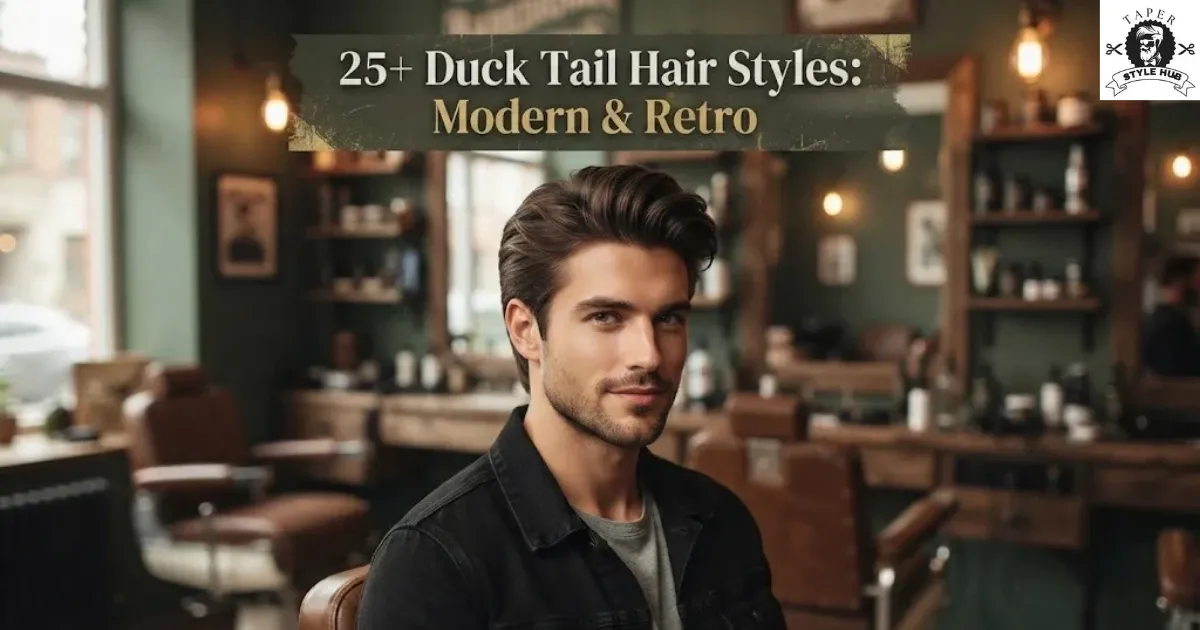
25+ Duck Tail Hair Styles: Modern & Retro
Duck tail hair is a classic men’s hairstyle where both sides are combed backward and meet at the center of the nape. The result is a neat seam that looks like a duck’s tail. It started in the 1940s and still turns heads today.
This guide covers the history, anatomy, 35 style types, cutting steps, styling routines and maintenance. Whether you want a vintage greaser look or a modern fade, you will find everything about duck tail hair in one place.
👉 Also Read: Medium Quiff Haircut
Everything You Need to Know About Duck Tail Hair
Before choosing a style, it helps to understand the basics. Good duck tail hair depends on length, weight, product and a barber who understands the shape. The sections below build your knowledge step by step.
👉 Also Read: Military Fade
What Is Duck Tail Hair?
Duck tail hair is a haircut defined by direction rather than only length. The hair on both sides of the head is combed backward and toward the middle of the nape. Where the two sections meet, a visible central line forms.
People call it the DA, the duck’s arse, the duck’s ass or simply the duck haircut. The names change by region, but the shape stays the same. The back view is what gives the style its identity.
From the front, duck tail hair can resemble a slick back, a quiff or a pompadour. That flexibility explains why barbers keep adapting it. The front follows fashion, while the back remains instantly recognizable.
A traditional ducktail haircut usually includes these features:
- Medium to long hair on top and toward the back
- Fuller or tapered sides
- Hair combed backward from both sides
- A visible center line at the back
- Enough weight at the nape to form the tail
- A neat, controlled finish
👉 Also Read: Medium Quiff Haircut
History of Duck Tail Hair

The story of duck tail hair begins in the 1940s. Many historians link its early look to Pachuco culture among Mexican American communities in California. The slicked, centered back was part of a bold personal style.
Philadelphia barber Joe Cirello is also credited with inventing the cut during the same decade. Whoever deserves the credit, the haircut spread quickly through barbershops and street corners across America.
👉 Also Read: Military Fade
From Pachuco Roots to Greaser Icon
Early wearers faced hostility, and the hairstyle became tied to danger in the public eye. That reputation made it attractive to rebellious youth. By the 1950s, rock ‘n’ roll fans had adopted it as a badge of attitude.
👉 Also Read: Crew Cut Haircut
The 1950s Rockabilly Era
Elvis Presley and James Dean made the look famous. Pomade and hair grease kept the sides glossy, while fine combs created crisp lines. Leather jackets, denim and boots completed the greaser image, and Teddy Boys and Rockers in Britain followed.
👉 Also Read: Crew Cut No Fade
Revival in the 1980s and 1990s
Later decades loosened the style. The 1980s added volume, and the 1990s favored relaxed, longer cuts. Today, duck tail hair returns through social media, barbershop culture and rockabilly events, usually with fades and added texture.
The Anatomy of Duck Tail Hair
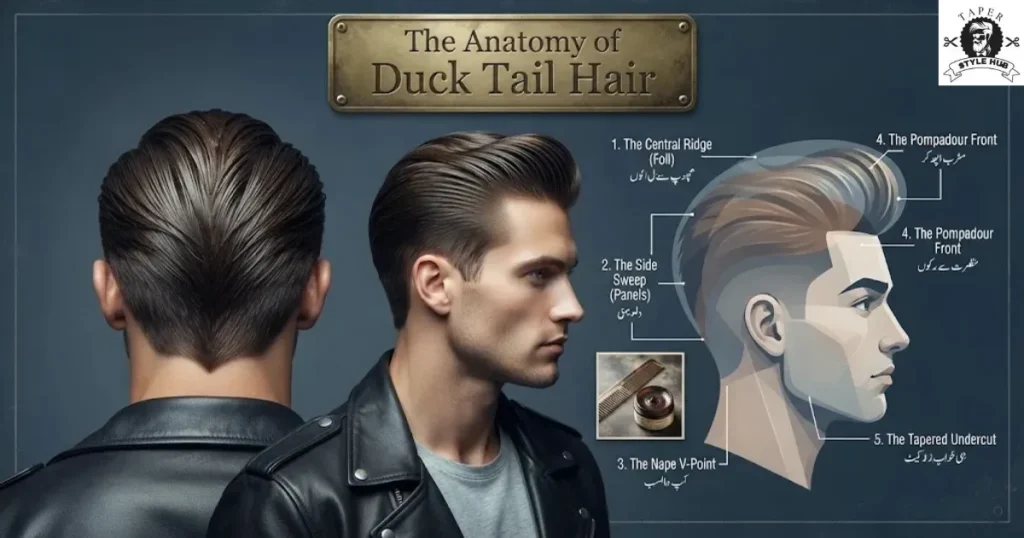
Understanding how the shape works helps you avoid a bad cut. The hair needs enough length and weight for both sides to travel backward and meet. If the back is cut too short or thinned too heavily, the tail disappears.
The Back Shape
The back is the star of the style. After combing, the left and right sections come together at the nape and form a central seam. The finish can be a pointed tail, a rounded shape or a soft natural point.
The Top and Sides
The top needs length to move backward, and the sides need enough weight to flow with it. A well-cut duck tail hair design guides the eye toward the center instead of leaving a random long section at the back.
35 Types of Duck Tail Hair Styles
To keep things clear, the 35 types below are grouped into seven categories. Each category shares one main idea, such as vintage character, fades, length, texture, hybrids, color or lifestyle. Choose the category first, then pick the variation that suits you.
Classic and Vintage Duck Tail Hair Styles
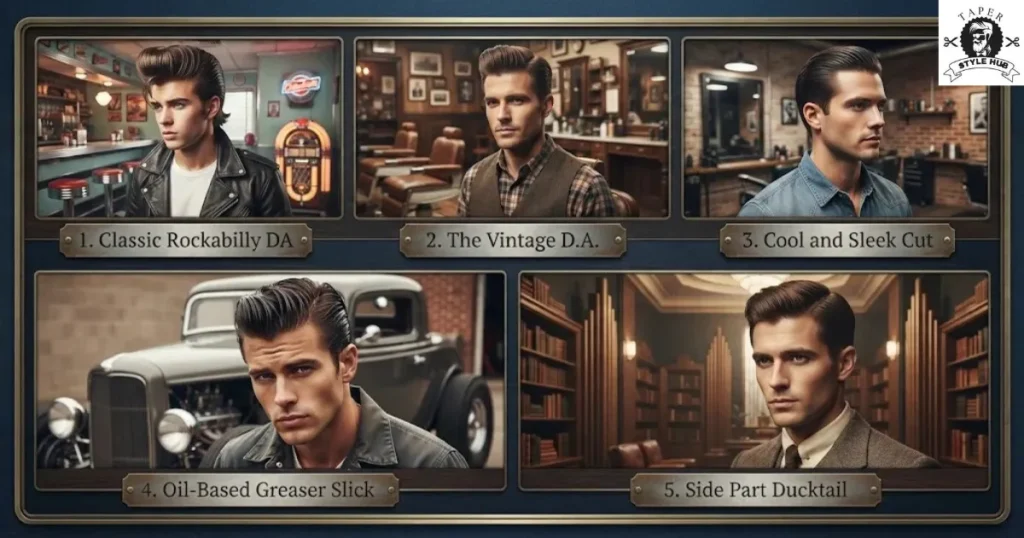
These styles stay closest to the original 1950s look. They suit anyone who loves retro culture and enjoys daily combing. Classic duck tail hair rewards patience with a polished, glossy result.
“All The Types Shown Below Are Displayed In The Single Image Above☝️”
1. Classic Rockabilly DA
This is the most faithful version of the original. The top and sides stay long, then get combed back with high-shine pomade. The seam down the back becomes the star, showing off precise grooming and vintage confidence.
2. The Vintage D.A.
This version pays homage to the original 50s cuts with generous, flowing hair in every section. Hair serum adds gloss and holds the shape. Long hair makes it easy to achieve, and the front can flick upward.
3. Cool and Sleek Cut
The sleek cut is tidy and neat at all times. Apply a little hair cream, then use a fine comb to smooth everything backward in layers. Everything meets at the nape, creating a clean and cool finish.
4. Oil-Based Greaser Slick
Oil-based pomade gives this style its authentic wet shine and strong durability. It needs daily combing and regular washing to avoid buildup. Pair it with a leather jacket and boots for the full greaser effect.
5. Side Part Ducktail
A deep side part adds structure to the front while the back keeps its classic seam. The contrast creates two clear sections of hair. It looks sharp, timeless and surprisingly professional for office or formal settings.
Fade and Taper Duck Tail Hair Styles
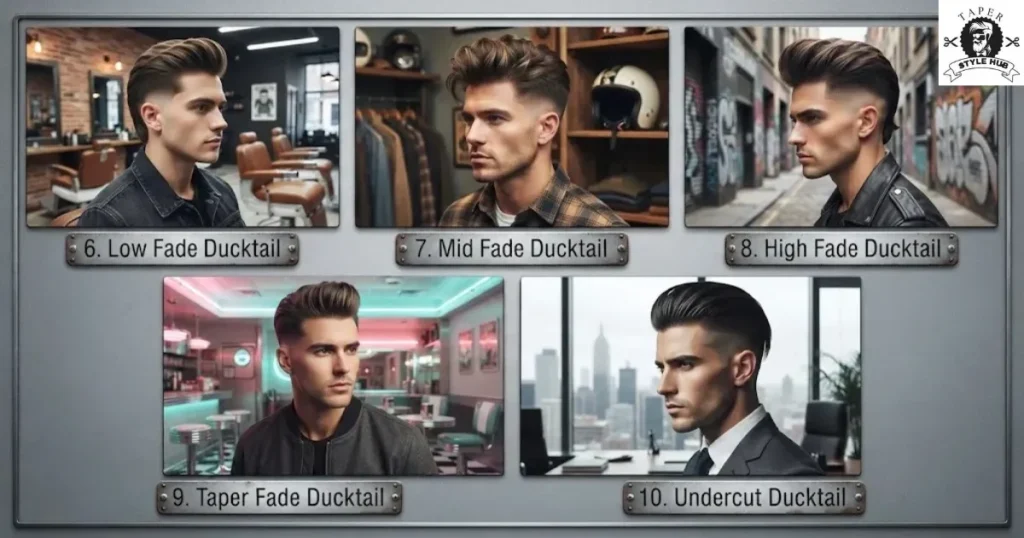
Fades modernize the vintage shape. The sides get cleaner, while the top and back keep enough length for the tail. This category makes duck tail hair easier to wear every day, especially in modern workplaces.
“All The Types Shown Below Are Displayed In The Single Image Above☝️”
6. Low Fade Ducktail
A low fade starts just above the ears and neckline. It offers a subtle, gradual transition that feels conservative and tidy. This is the safest option for anyone trying a ducktail haircut for the first time.
7. Mid Fade Ducktail
A mid fade sits around the temple level and boosts the effect of the longer top. It balances vintage character with a contemporary silhouette. Comb everything backward so the sides meet neatly at the nape.
8. High Fade Ducktail
A high fade climbs almost to the hairline, creating strong contrast with the top. It looks bold, sharp and modern. Keep the center back long enough, or the tail will lose its definition.
9. Taper Fade Ducktail
A taper fade shortens the hair gradually toward the neckline and temples. It gives a clean, stylish finish without removing too much length. The tail at the nape stays visible and well defined.
10. Undercut Ducktail
The sides are buzzed short while the top stays long and slicked back into a tail. This disconnected shape merges rockabilly attitude with urban street style. It works especially well on straight hair.
Short, Medium and Long Duck Tail Hair Styles
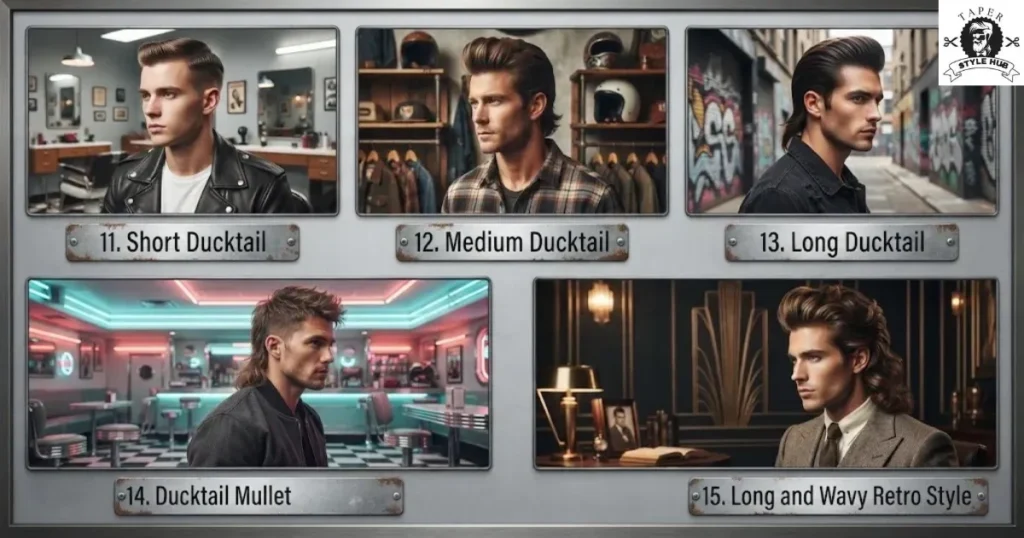
Length changes how dramatic the tail looks. Shorter cuts feel practical, while longer cuts create a bigger statement. Every length of duck tail hair needs enough weight at the nape to hold its shape.
“All The Types Shown Below Are Displayed In The Single Image Above☝️”
11. Short Ducktail
A short ducktail keeps the main idea without requiring long hair. The sides stay neat, and the back keeps a small central shape. It suits men who like the concept but not a dramatic vintage look.
12. Medium Ducktail
Medium length is the practical starting point. It provides enough hair to direct both sides toward the center while staying manageable. Most barbers recommend this length for beginners and for everyday styling.
13. Long Ducktail
Long hair creates a fuller, more noticeable tail. It can fuse beautifully with a minimal mullet shape while keeping side hair. Expect more washing, drying and styling time to keep the back looking intentional.
14. Ducktail Mullet
The front and sides stay shorter while the back grows longer. The back hair is then directed to the center to form the tail. It is a bold choice for people who enjoy a strong hairstyle.
15. Long and Wavy Retro Style
This retro look borrows from the 70s and 80s. Long, wavy hair forms a subtle mullet with a sizable tail at the back. The front can be messy and curly or straight and combed.
Textured and Natural Duck Tail Hair Styles

Not everyone wants a glossy, rigid finish. Texture-focused variations use clays, creams and powders for a relaxed look. This approach makes duck tail hair friendlier for natural waves, curls and coils.
“All The Types Shown Below Are Displayed In The Single Image Above☝️”
16. Textured Ducktail
Matte clay replaces heavy pomade for a natural, softer finish. The seam stays visible, but the strands look looser. Work the product through damp hair with your fingers instead of a comb.
17. Messy Ducktail
Comb everything back, then mess the top slightly with your hands. The back still meets in the middle like a tail. It presents a laid-back personality that still feels current and carefree.
18. Wavy Ducktail
Wavy hair gives the tail a softer appearance. Instead of removing natural movement, a barber shapes the cut around the wave pattern. A light pomade or styling cream controls the hair without flattening it.
19. Curly Ducktail
Curly hair can absolutely wear this style. Keep enough length so the curls move toward the back naturally. A curl cream usually works better than a heavy pomade for tighter patterns.
20. Afro-Textured Ducktail
Textured and coily hair can create the central back effect using its natural pattern. A taper at the temples and neckline gives a clean frame. The look ranges from smooth and traditional to bold and modern.
Pompadour and Quiff Hybrid Duck Tail Hair Styles
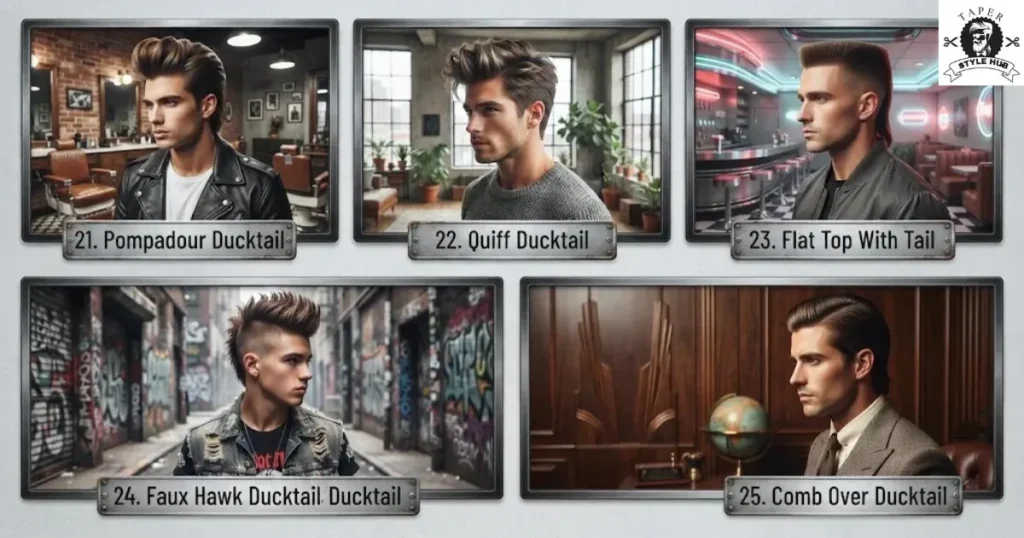
Hybrids combine the tail with a dramatic front. Since the defining feature sits at the back, the front is free to change. These combinations make duck tail hair feel unique and highly personal.
“All The Types Shown Below Are Displayed In The Single Image Above☝️”
21. Pompadour Ducktail
The front is styled high with volume and lift, while the sides sweep back to meet at the seam. Blow dry the hair upward before applying pomade. Finish with strong-hold spray to lock the height in.
22. Quiff Ducktail
A quiff offers a lifted front that is softer than a full pompadour. Paired with the tail, it looks trendy and modern. It suits men who want lift without too much maintenance.
23. Flat Top With Tail
Use gel or cream on short hair, fade the sides, and lay the top flat and flowing backward. The back hair meets in the middle. It is low effort but still gives a bold, radical edge.
24. Faux Hawk Ducktail
The faux hawk pushes the center of the top upward while the sides slide back toward the nape. It adds a contemporary, trendy feel. Strong clay or wax keeps the ridge standing all day.
25. Comb Over Ducktail
The back follows the standard tail plan, while the top is combed over from one side. This calm, polished look suits workplaces. It proves that duck tail hair does not always need to look rebellious.
Color and Beard Combos for Duck Tail Hair
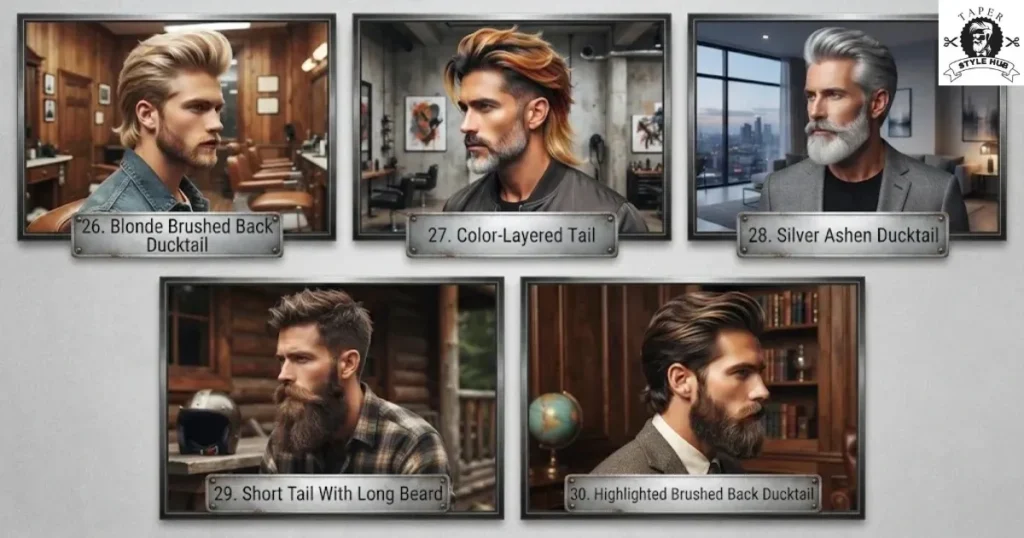
Color and facial hair can transform the whole look. Contrast draws attention to the tail and sharpens the silhouette. These combinations help duck tail hair feel fresh instead of purely retro.
“All The Types Shown Below Are Displayed In The Single Image Above☝️”
26. Blonde Brushed Back Ducktail
Even without natural blonde hair, you can bleach the top layer for a contrasty effect. Brush everything back and let the tail meet in the middle. The lighter shade makes the shape stand out.
27. Color-Layered Tail
Apply bleach or color only to the layers that meet at the back. The contrast highlights the seam and gives a modern twist to an old style. Draw a fine line across the neck for a neat finish.
28. Silver Ashen Ducktail
Gray hair looks excellent when slicked back. Brush it all toward the center and fade the sides if you wish. Add a sharp beard to show that style has no age limit.
29. Short Tail With Long Beard
A short ducktail combined with a long beard creates a complementary contrast. A mid fade around the sides and back boosts the top section. Keep the beard trimmed so it balances the tail.
30. Highlighted Brushed Back Ducktail
Subtle highlights add depth to brushed-back hair. The lighter strands catch the light along the seam and top. This option adds dimension without the commitment of a full color change.
Everyday and Occasion Duck Tail Hair Styles
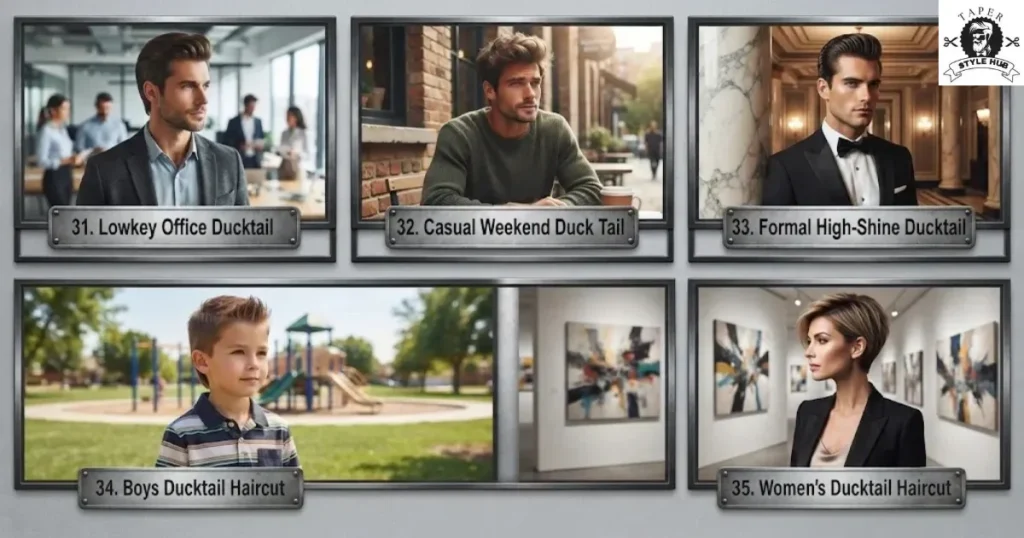
The last category focuses on lifestyle. It covers looks for work, parties, weekends and different wearers. Each version shows how adaptable duck tail hair can be across situations.
“All The Types Shown Below Are Displayed In The Single Image Above☝️”
31. Lowkey Office Ducktail
Brush the hair back with a little pomade and nudge the sides toward each other gently. The tail stays subtle, so it looks like a neat back brush. It is the easiest style to maintain.
32. Casual Weekend Duck Tail
Use pomade or cream to seal a messy texture on shorter hair. Make the tail at the back, then comb the front loosely with your fingers. It presents a laid-back person who still follows trends.
33. Formal High-Shine Ducktail
For weddings and formal events, use a high-shine pomade and comb everything smooth. A sharp neckline and precise seam give a polished appearance. Carry a pocket comb for quick touch-ups during the evening.
34. Boys Ducktail Haircut
A boys version is shorter and easier to maintain. The tail does not need to be long. A small central shape at the back delivers the same idea while keeping the haircut practical for school.
35. Women’s Ducktail Haircut
The shape is not limited to men. A female version uses shorter layers and a softer center-back shape. Vintage 1950s women’s styles also rely on similar directional styling.
Best Duck Tail Hair for Different Hair Types
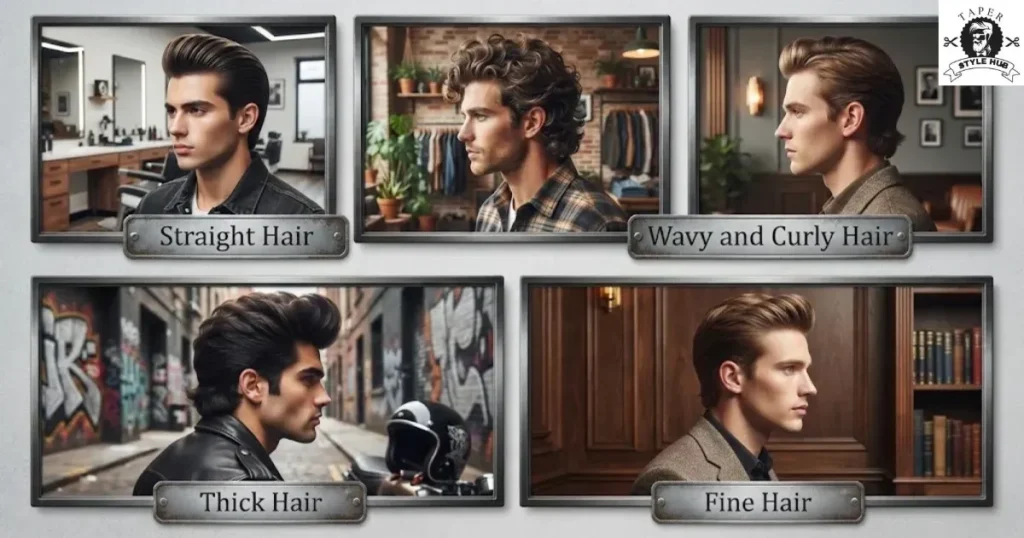
Hair texture affects how easily the shape forms. The good news is that every texture can adapt with the right cut and product. Here is how duck tail hair behaves on each type.
“All The Types Shown Below Are Displayed In The Single Image Above☝️”
Straight Hair
Straight hair is the easiest to comb into a traditional tail. It holds well with pomade, and medium to thick strands create a very clear center line.
Wavy and Curly Hair
Waves and curls create a softer, textured tail. Do not fight the natural pattern. Keep extra length and use creams so the hair moves toward the center without turning stiff.
Thick Hair
Thick hair makes a full, impressive tail, but it needs weight control. The barber should remove bulk without thinning the central section too much.
Fine Hair
Fine hair works when the cut keeps enough length and weight. Choose a lightweight product that adds control without making the hair look greasy or heavy.
Classic vs Modern Duck Tail Hair
Both versions share the same central idea. The difference lies in the cut, the product and the amount of definition. This table compares classic and modern duck tail hair side by side.
| Feature | Classic Ducktail | Modern Ducktail |
|---|---|---|
| Sides | Fuller or tapered | Tapered or faded |
| Top | Slick and controlled | Textured or slick |
| Product | Pomade or hair grease | Pomade, cream, clay or wax |
| Back | Strong central tail | Softer or textured tail |
| Finish | Polished and glossy | Natural and relaxed |
| Main influence | 1950s greaser culture | Contemporary men’s grooming |
Best Duck Tail Hair Comparison With Other Styles
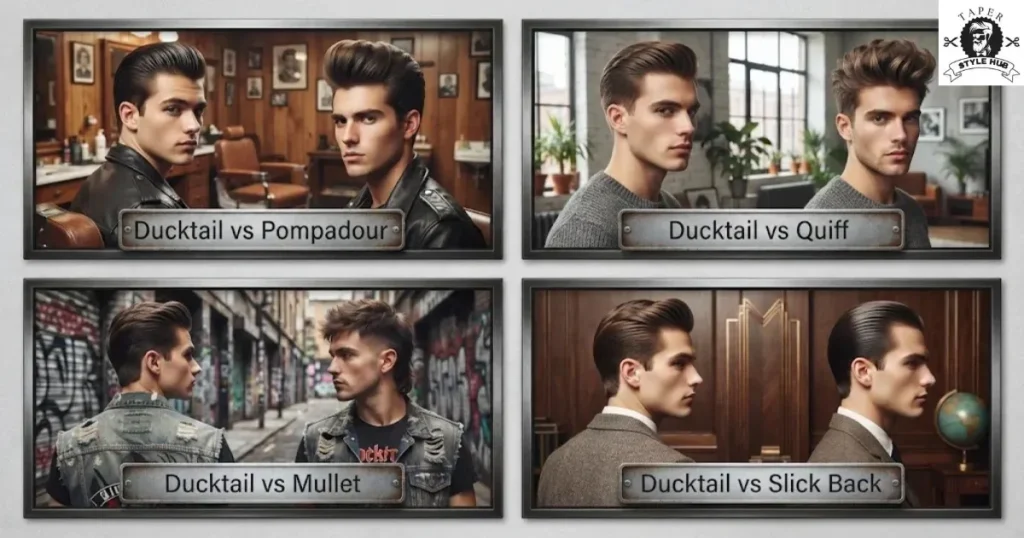
From the front, several men’s hairstyles look alike. The back is what separates them. Compare the main rivals below to see where duck tail hair stands apart.
“All The Types Shown Below Are Displayed In The Single Image Above☝️”
Ducktail vs Pompadour
A pompadour focuses on height and volume at the front. A ducktail is defined by how the hair comes together at the back. A single haircut can combine both.
Ducktail vs Quiff
A quiff usually has lift and volume at the front. The ducktail’s signature feature is the central back shape, so the two styles pair easily.
Ducktail vs Mullet
A mullet has short front and sides with noticeably longer hair at the back. A ducktail directs the back hair toward the center. Some modern cuts blend both ideas.
Ducktail vs Slick Back
A slick back is simply combed backward. A ducktail takes that idea further by guiding both sides toward the center of the nape.
How to Ask Your Barber for Duck Tail Hair
Not every barber knows this cut, so choose one who enjoys vintage or rockabilly work. Explain the shape instead of only naming the haircut. A clear description prevents disappointment.
Try saying: “I want enough length on top and at the back to comb the hair toward the center. Keep the sides neat, but leave weight in the back for the tail.” Then show front and back photos.
Also tell your barber what you prefer:
- Classic or modern styling
- Short or medium sides
- A taper or a fade
- A natural or sharply defined tail
- A slick or textured finish
How to Cut Duck Tail Hair
Cutting this style needs more attention to shape than simply removing length from the sides. Barbers often use scissors, clippers or both. The goal is to keep the top and back connected.
Cutting the Sides
Traditional cuts keep some length so the sides flow backward. Modern versions taper around the temples and ears. Barbers often “walk the guide” by combing each new section into the previous cut.
Cutting the Top
The top needs enough length to move backward. Point cutting keeps it soft and blends better than blunt cutting. Avoid heavy thinning, because weak weight makes the back look flat.
Shaping the Back and Nape
Many barbers cut the center back slightly shorter, so the side hair combs over and separates cleanly. Then they clean the sideburns and neckline. A tidy nape makes duck tail hair look deliberate.
How to Style Duck Tail Hair Step by Step
Styling is what makes the shape visible. Follow this simple routine at home, and adjust the product to your preferred finish.
- Wash your hair and keep it slightly damp.
- Warm a small amount of pomade between your palms.
- Work the product through the top and sides.
- Comb the top straight back from the hairline.
- Guide the left and right sides toward the nape.
- Define the center seam with the tip of your comb.
- Finish with a light mist of hairspray.
Do not apply too much product at once. Adding more later is easier than removing the excess. For a modern finish, use your fingers after combing to add natural texture.
Best Products and Tools for Duck Tail Hair
The right products decide how glossy, firm or natural the result looks. Choose according to the finish you want, not only the haircut. Good tools also make duck tail hair far easier to control.
Products
- Oil-based pomade for authentic high shine
- Water-based pomade for easier washing
- Matte clay or wax for texture and flexible hold
- Styling cream for a softer finish
- Hairspray for all-day hold
Tools
- Fine-tooth comb for precise lines
- Pocket comb for quick touch-ups
- Blow dryer and vent brush for volume
- Clippers and barber scissors for trims
How to Maintain Duck Tail Hair
Regular trims keep the sides and neckline clean. The top and back can grow longer, but check the central shape at every visit. If the tail becomes thin or uneven, the haircut loses its main feature.
At home, restyle with a comb each morning and use a small amount of product. Wash regularly to prevent buildup, and use a clarifying shampoo once a week. Healthy hair holds duck tail hair far better.
Be gentle when drying. Pat the hair with a soft towel instead of rubbing hard, and avoid pulling the hair too tightly while styling. Good habits protect the length you need.
Celebrity Inspiration for Duck Tail Hair
Elvis Presley and James Dean are the best-known icons of the style. Marlon Brando also carried a rebellious, slightly messier version. More recently, stars like Leonardo DiCaprio and Justin Timberlake have worn similar looks.
These names prove that duck tail hair adapts across eras. You can copy the high shine of Elvis or the relaxed attitude of Dean. Either way, the look carries confidence.
Final Thoughts on Duck Tail Hair
Duck tail hair stands out because of its distinctive back shape and strong 1950s roots. Modern versions with tapers, fades and texture make it fresh and wearable. Every hair type can adapt to it.
Keep enough length and weight for the hair to meet at the center. Bring front and back reference photos to your barber and describe the finish you want. With patience, you will master this timeless style.
FAQs About Duck Tail Hair
What does duck tail hair look like?
The hair is combed backward from both sides and meets at the center of the nape. This forms a visible seam that resembles a duck’s tail.
Who invented the ducktail haircut?
Philadelphia barber Joe Cirello is credited with inventing it in the 1940s. It became hugely popular during the 1950s.
Is the ducktail haircut still popular?
Yes. Classic versions remain popular with vintage fans, while modern versions use fades, tapers and texture.
What hair length is best for a ducktail?
Medium length, around 4 to 6 inches on top, is a practical starting point. Longer hair creates a bigger tail.
Can I get a ducktail with a fade?
Yes. Fade the sides and keep enough length at the back so the tail shape stays visible.

I’m M Ahmad Ansari, founder and content creator at Taper Style Hub. With 3+ years of experience researching taper haircuts, hairstyles, grooming, and men’s style, I create practical, accurate, and easy-to-understand content. My goal is to provide readers with trustworthy information, useful tips, and inspiring ideas for choosing and styling the perfect taper haircut.
5 Comments