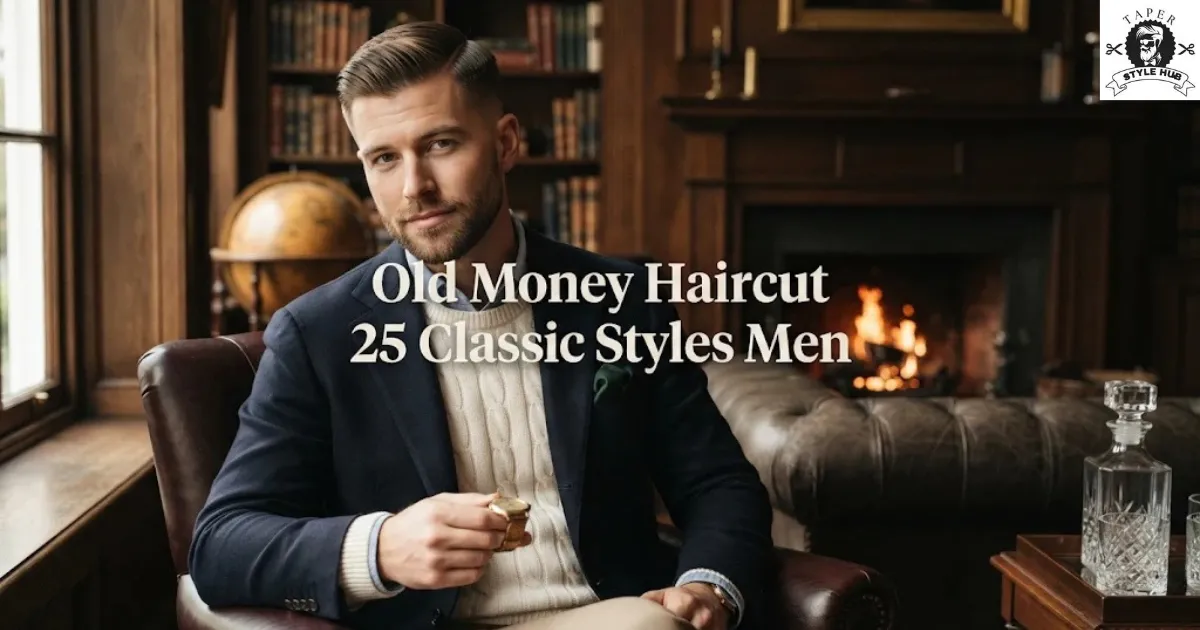
Old Money Haircut 25 Classic Styles Men
An old money haircut is the grooming equivalent of a navy blazer: quiet, balanced, and never out of place. If you want hair that looks polished without looking overstyled, this guide covers every cut, tip, and product you need.
In 2026, men are moving away from loud fades and heavy gel. They want clean lines, natural movement, and a finish that signals quiet confidence. That shift explains why the old money haircut keeps trending across barbershops and social media.
Below, you will find 25 classic styles sorted into five clear categories. You will also get face shape advice, hair type tips, styling steps, product picks, and barber-ready phrases.
👉 Also Read: Wolf Cut Short Hair Men
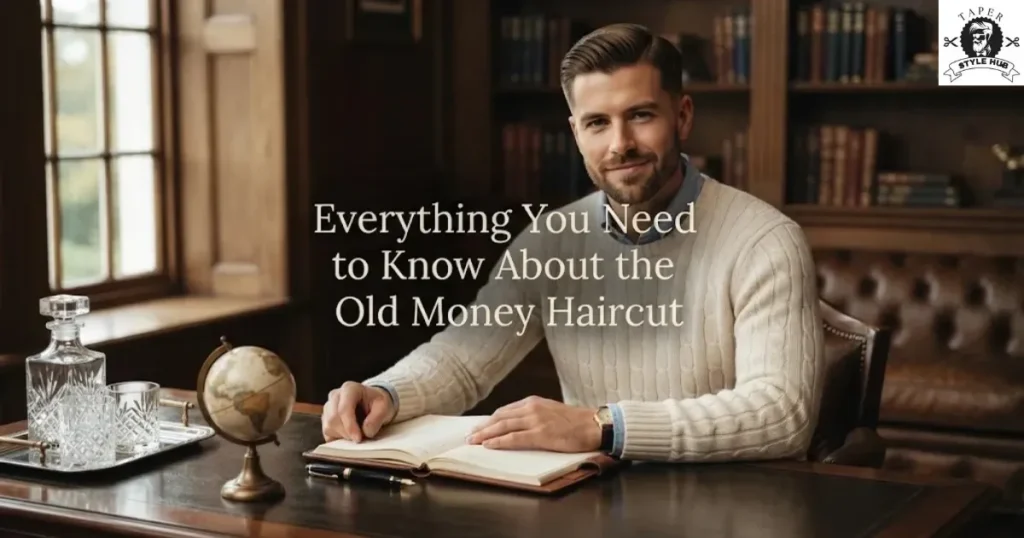
Everything You Need to Know About the Old Money Haircut
What Is an Old Money Haircut?
An old money haircut is not one single style. It is a grooming philosophy built on traditional shapes, natural volume, and neatly tapered sides. Think side parts, slick backs, and Ivy League cuts that have survived for decades.
The look comes from prep school culture, Ivy League campuses, and European aristocracy. Those men wanted hair that looked polished at breakfast and still sharp at dinner, without constant attention.
Unlike trend-driven styles, these cuts rely on proportion, clean edges, and a matte or low-shine finish. The goal is understated elegance, never theatrics.
👉 Also Read: Temp Haircut
Why the Old Money Haircut Looks So Expensive
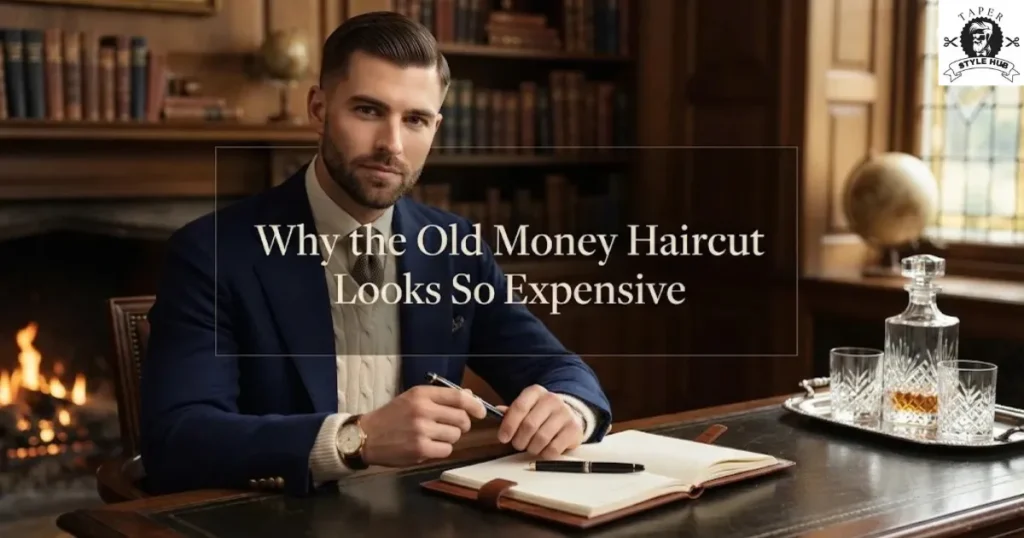
Expensive hair is rarely about product price. It comes from precision cutting, healthy hair, and a shape that sits naturally. A well-made old money haircut shows discipline because the work is visible in the edges, not in the styling.
Another reason is restraint. Barbers avoid extreme contrast, so the cut looks balanced from every angle. That quiet confidence is exactly what the quiet luxury trend celebrates.
Healthy hair also matters. Regular trims, gentle shampoo, and light conditioning give the hair a natural sheen that no heavy pomade can imitate.
👉 Also Read: Wolf Cut Men Short
Core Rules of Every Old Money Haircut
Before choosing a style, learn the rules that make any old money haircut work.
- Clean edges: a tidy neckline and sideburns matter more than fancy styling.
- Tapered sides: choose a scissor taper or low taper instead of a high skin fade.
- Controlled length: keep enough length on top to comb, sweep, or part.
- Natural finish: use matte or low-shine products for a soft, touchable result.
- Regular trims: book your barber every three to five weeks.
👉 Also Read: Undercut Fade
The History Behind the Old Money Haircut
The roots go back to early twentieth-century American and European elite circles. Ivy League universities made short, tidy cuts fashionable, and the look soon became shorthand for refinement.
Icons later cemented the style. John F. Kennedy and Cary Grant wore neat side parts, while Paul Newman showed how casual elegance could look effortless.
Today, Ryan Gosling and other modern stars keep the old money haircut alive with softer, textured versions that suit contemporary wardrobes.
👉 Also Read: Duck Tail Hair
Side Part Old Money Haircut Styles for Men
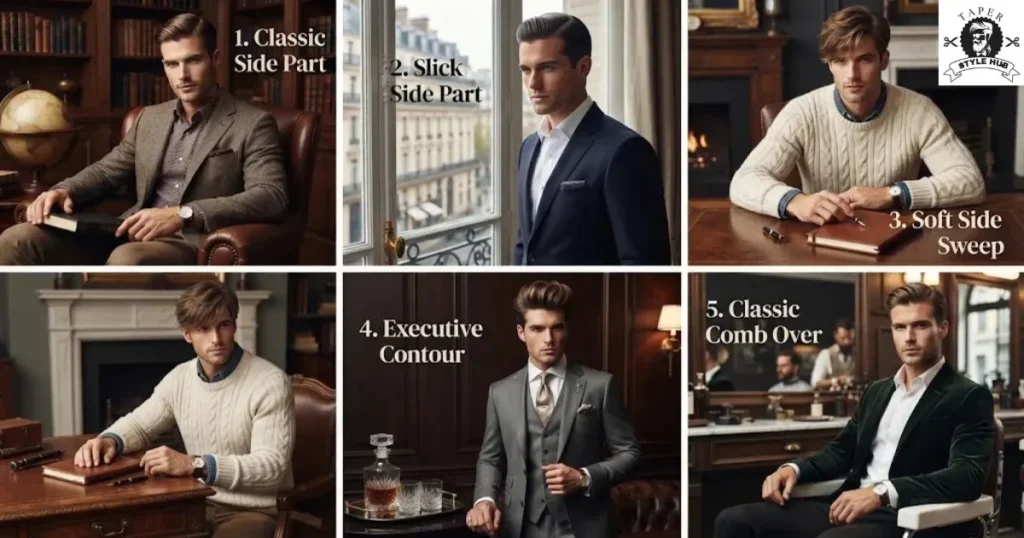
The side part is the backbone of the old money haircut family. These five styles show how one simple parting can look sharp, soft, or executive depending on length, taper, and finish.
“All The Types Shown Below Are Displayed In The Single Image Above☝️”
1. Classic Side Part
The classic side part is the navy blazer of hairstyles. Hair is combed neatly to one side along a natural parting, with tapered sides and a clean neckline that keeps everything sharp.
It suits straight and slightly wavy hair, and it flatters oval, square, and heart-shaped faces. Few cuts look this professional while staying so easy to wear every day.
Ask your barber for a scissor-cut top, a low taper, and a natural part line. Style it with a pea-sized amount of styling cream on damp hair.
👉 Also Read: Medium Quiff Haircut
2. Slick Side Part
The slick side part adds controlled shine and a sharper line. It carries boardroom energy and works beautifully with suits, crisp shirts, and tailored knitwear without looking stiff.
This style needs extra length on top, usually three inches or more. Thicker hair holds the shape well, while fine hair may need a little volumizing spray at the roots.
Request tapered sides and a clean neckline. Apply light pomade to towel-dried hair, comb the part first, then smooth the remaining hair back for a polished finish.
3. Soft Side Sweep
The soft side sweep skips the hard part completely. Hair falls naturally to one side, so it looks like it simply grew that way. It is the most relaxed old money haircut in this category.
It works best on wavy to slightly curly hair with medium length on top. Men who dislike structured styling usually love how forgiving this cut feels.
Ask for tapered sides and enough length to sweep across. Mist sea salt spray on damp hair, then air dry with a light tousle.
4. Executive Contour
The executive contour is a classic businessman’s cut. It features medium length on top, scissor-cut sides, and precise cleanup around the ears and neckline for an authoritative shape.
There is no fade and no heavy texture here. The cut has been worn in boardrooms since the 1950s, and it still reads as composed and credible in 2026.
Request a natural side part with a low taper. A touch of light cream and a gentle comb-through keep it professional all day.
5. Classic Comb Over
The classic comb over has survived every style era because it looks clean and professional. Done well, it appears structured rather than forced, with a soft blend into the crown.
It suits men who want a traditional shape and works especially well for those with thinning areas, since the sweep helps balance coverage.
Ask for longer hair on top, a low taper, and smooth blending. Use a small amount of light pomade for subtle control without heavy shine.
Ivy League and Short Old Money Haircut Styles
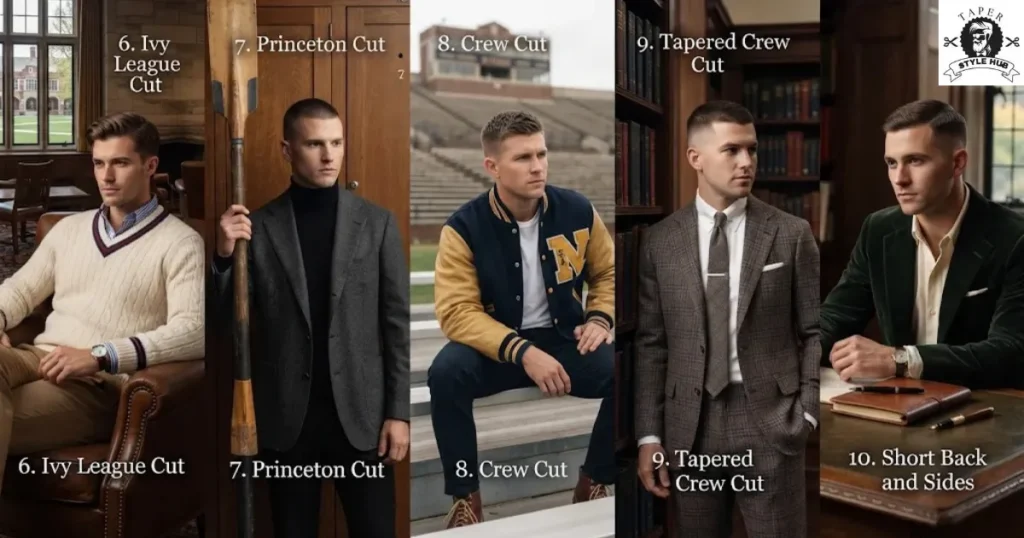
Short styles prove that an old money haircut does not need length. These five cuts are neat, practical, and ideal for busy mornings when you want a polished result in seconds.
“All The Types Shown Below Are Displayed In The Single Image Above☝️”
6. Ivy League Cut
The Ivy League cut sits between a crew cut and a side part. The sides are short and tapered, while the top is long enough to sweep to one side or part softly.
It defined elite campus style for decades and remains one of the most requested professional cuts. It flatters oval, rectangular, and round faces, and it helps camouflage a receding hairline.
Ask for scissor texture on top and a clean neckline. Work a little matte paste through damp hair, then comb it lightly into place.
7. Princeton Cut
The Princeton cut is a slightly more structured Ivy League. It features a defined natural part, short sides, and a tidy top that looks formal without feeling rigid.
This cut suits men who move between office days and relaxed weekends. It keeps its shape well and grows out gracefully between appointments.
Request a low taper and a clean neckline. Comb the hair to the side while damp, then finish with a light cream.
8. Crew Cut
The crew cut is short, clean, and almost effortless. The top is slightly longer than the sides, and a soft taper keeps everything neat from every angle.
It has stayed relevant for decades because it suits almost every face shape. It is also a smart choice for men who hate long styling routines.
Ask for soft blending around the ears and neckline. A touch of matte paste adds natural texture without any visible shine.
9. Tapered Crew Cut
Think of this as the polished version of the classic crew cut. The tapered edges make the style look intentional and refined instead of rushed or careless.
It works well in conservative offices and formal settings. Because the lines are crisp, it also pairs nicely with a neatly trimmed short beard.
Request a crew cut on top with a tapered neckline and a soft blend between lengths. A pea-sized amount of styling cream keeps it neat.
10. Short Back and Sides
Barbers have delivered this cut for generations because it is dependable and flattering. The back and sides stay short and tidy while the top keeps enough length for light styling.
It suits straight hair best, though wavy hair can look great with a little extra layering. The simple structure makes it a timeless old money haircut for any age.
Ask for light layering on top and a natural taper at the neckline. Dry with a brush and add a small amount of matte paste.
Slick Back and Swept Back Old Money Haircut Styles
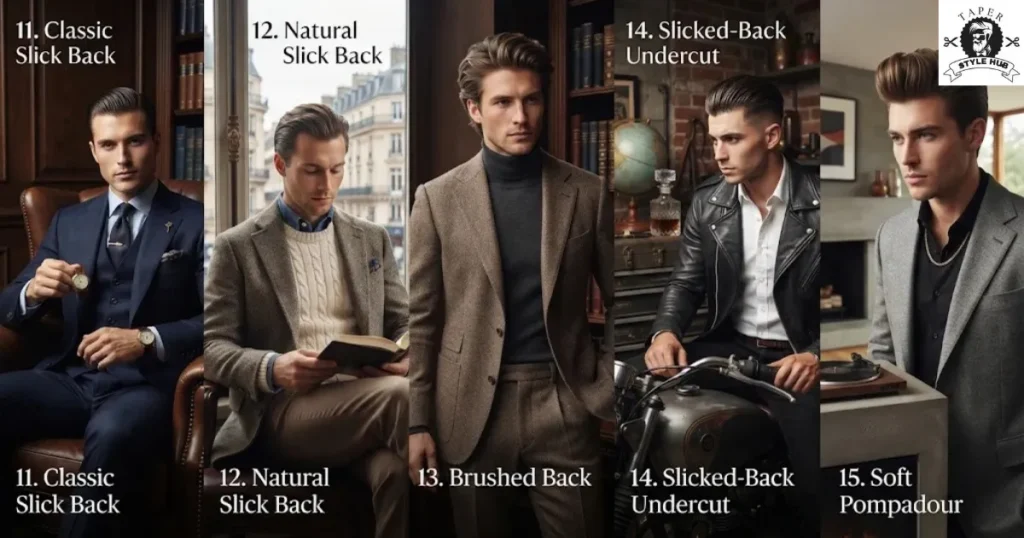
Swept styles bring presence and polish. When they are cut with restraint, they deliver high status without the greasy look of past decades. Here are five ways to wear them.
“All The Types Shown Below Are Displayed In The Single Image Above☝️”
11. Classic Slick Back
All hair sweeps straight back from the forehead with no part. The classic slick back works best on medium to long hair that has enough weight to lie flat.
The finish should be smooth, never lacquered. Old money versions use restraint, which means a low to medium shine instead of the wet gel look of the 1980s.
Ask for scissor-blended sides and a tapered neckline. Use a water-based pomade and comb through with a fine-tooth comb.
12. Natural Slick Back
This version pulls hair back without harsh undercuts. It keeps some natural movement, so the result looks mature, confident, and relaxed instead of formal or heavy.
It is ideal for men with straight to slightly wavy hair who want polish without a strict shape. It also looks great with an open collar and a simple knit.
Request a medium-length top and soft side blending. Apply styling cream to damp hair and brush it backward as it dries.
13. Brushed Back
The brushed back style pushes hair away from the face without flattening it. It carries more texture than a slick back and reads as effortlessly groomed.
It suits oval and rectangular faces, and it works best with medium-length hair. The volume at the front adds height without looking sculpted.
Ask for natural length on top with tidy tapered sides. Work a little matte cream into dry hair and pull a brush backward.
14. Slicked-Back Undercut
This is one of the most recognizable looks right now. Longer hair on top, around three to five inches, sweeps back above shorter tapered sides for a defined contrast.
The modern version softens the fade, so the sides look structured rather than shaved. Keeping the blend gradual helps the old money haircut feel timeless instead of trendy.
Request a clean tapered neckline and a gradual blend. Use medium-hold pomade with a natural, low-shine finish.
15. Soft Pompadour
The old money pompadour is moderate, not towering. Volume lifts at the front and sweeps slightly back, while tapered sides keep the proportions neat and balanced.
It gives presence without theatrics, which makes it one of the most wearable pompadours for professional settings. It also suits men with round faces because it adds height.
Blow-dry upward with a round brush, then set the shape with a light matte clay. Ask your barber for a gentle taper, not a skin fade.
Textured and Soft Old Money Haircut Styles
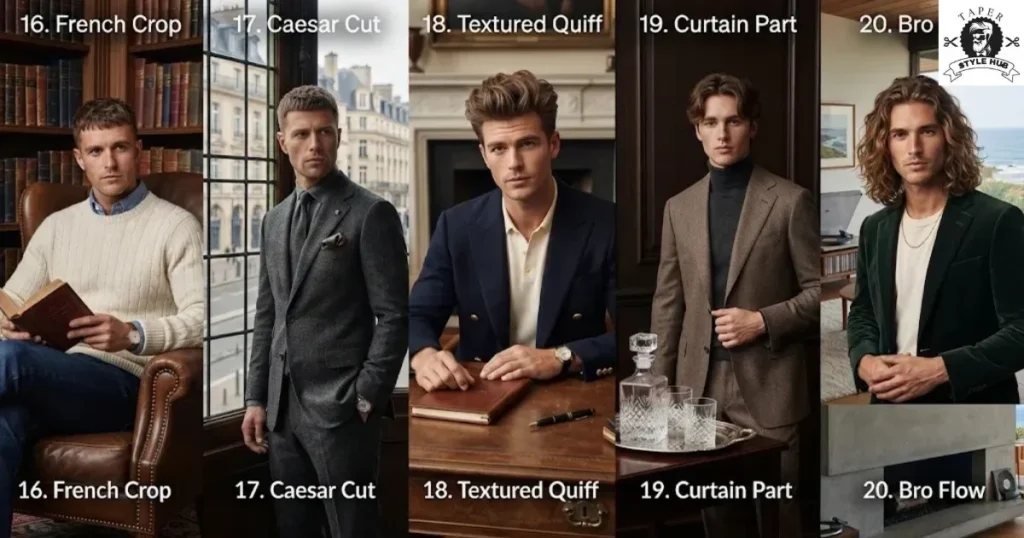
Not every classic cut needs a strict shape. These five styles use texture, fringe, and natural movement to keep the old money haircut relaxed, modern, and easy to live with.
“All The Types Shown Below Are Displayed In The Single Image Above☝️”
16. French Crop
The French crop is clean and practical. It features a short textured top with a soft fringe and neatly tapered sides, giving you a modern look without constant styling.
It is one of the most refined short cuts in classic grooming. It also flatters men with higher foreheads and works well on straight or slightly wavy hair.
Ask for a low taper and a natural, not blunt, fringe. Press a small amount of clay forward through dry hair.
17. Caesar Cut
The Caesar has a short, forward fringe that frames the face. The uniform length across the top keeps the shape symmetrical, clean, and very easy to maintain.
It is especially useful for men with thinning temples or a high forehead. George Clooney made the style look quietly expensive rather than simply practical.
Request short layers on top and evenly tapered sides. Rub styling cream through damp hair and brush it forward.
18. Textured Quiff
The textured quiff adds personality while staying conservative. Volume builds at the front and sweeps slightly back, using natural texture instead of a sculpted wave.
It is a good middle ground for men who want more presence than a side part gives. Wavy or slightly thick hair handles this cut especially well.
Ask for short tapered sides and a longer top. Style with matte paste and blow-dry for lift, keeping the height subtle.
19. Curtain Part
Curtains bring personality when kept neat. A soft middle or slightly off-center part lets medium-length hair fall gently on each side, creating a vintage boarding school feel.
This cut softens strong jawlines and looks great with winter knitwear and trench coats. Keep the shine low to avoid a greasy, grungy finish.
Request medium layers and tapered sides. Blow-dry outward from the center and finish with a lightweight cream.
20. Bro Flow
The bro flow works when your hair has length and natural movement. It looks effortless but stays controlled when you trim it regularly.
It is the most relaxed old money haircut in this guide, so it suits creative offices and casual weekends. Healthy, well-conditioned hair makes it look far more premium.
Ask for medium layers with tidy tapered edges. Apply leave-in conditioner and push the hair back with your hands.
Modern and Hair-Type Friendly Old Money Haircut Styles
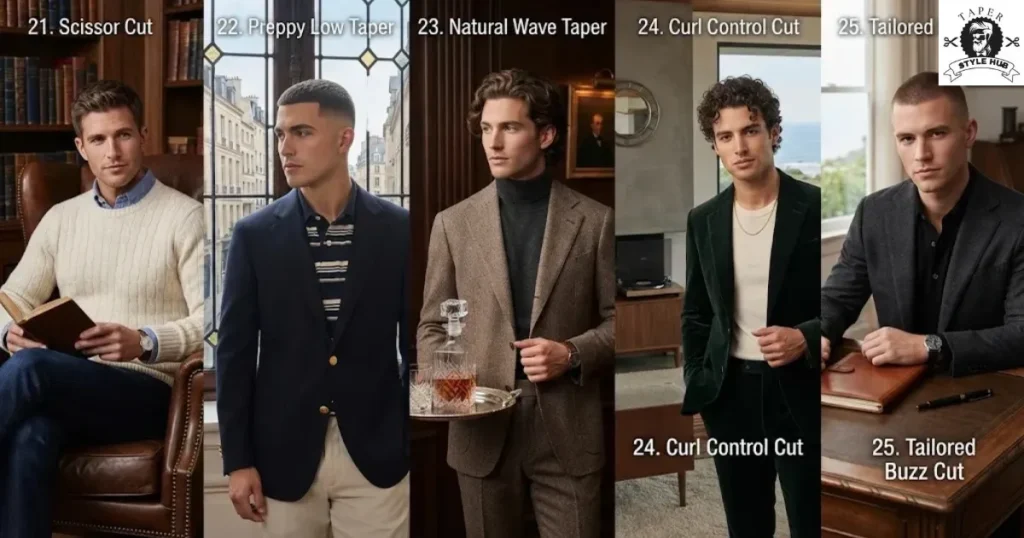
These final styles update tradition for modern barbering and different hair textures. Each one keeps the old principles of balance, restraint, and clean finishing.
“All The Types Shown Below Are Displayed In The Single Image Above☝️”
21. Scissor Cut
A scissor cut keeps hair slightly longer and more natural-looking. It is ideal for men who prefer softness and movement over tight fades.
Because the barber shapes the hair with shears, the outline stays soft and gentle. It works especially well for medium-length hair and light waves.
Ask for light layering and clean edges around the ears. Let it air dry and shape it with a little cream.
22. Preppy Low Taper
A low taper keeps edges crisp without feeling trendy. It is a versatile cut that works with almost any wardrobe, from blazers to simple sweaters.
It bridges tradition and modern barbering, so it suits younger professionals who want a classic base with a cleaner finish. Keep the taper conservative.
Request a low taper around the ears and neck plus a medium-length top. Shape the top with matte cream.
23. Natural Wave Taper
Men with wavy hair can wear this style effortlessly. The top waves sit naturally while gradual tapered sides keep the shape controlled.
It looks expensive because it works with your texture instead of fighting it. Forcing straight styling on waves rarely looks polished by the end of the day.
Use a small amount of curl cream on damp hair and air dry. Ask for three to five inches on top.
24. Curl Control Cut
Curly hair can carry an old money haircut through smart length management. The top stays at a moderate length to prevent bulk, and tapered sides keep proportions balanced.
The result is polished natural texture rather than forced straightness. The same approach also works for coily hair with a clean geometric shape.
Apply a light curl cream to define the pattern without crunch. Visit your barber regularly to keep the outline consistent.
25. Tailored Buzz Cut
A buzz cut can look refined when it is shaped properly. A slightly longer top, shorter sides, and a tapered neckline keep it from looking military-basic.
It is the lowest-effort option here and suits men with strong head shapes or thinning hair. Clean edges are what make it look tailored.
Maintain it with frequent trims, ideally every two to three weeks. Keep the scalp moisturized and protected from the sun.
Old Money Haircut Comparison at a Glance
Use this quick table to match each old money haircut category with your routine and hair length.
| Category | Top Length | Maintenance | Best For |
|---|---|---|---|
| Side Part Styles | 2–4 inches | Every 4–5 weeks | Office and formal events |
| Ivy League and Short Styles | 1–2 inches | Every 3–5 weeks | Busy schedules |
| Slick Back Styles | 3–5 inches | Every 3–4 weeks | Strong jawlines, thick hair |
| Textured and Soft Styles | 2–5 inches | Every 4–6 weeks | Wavy hair, relaxed looks |
| Modern and Hair-Type Styles | 0.5–5 inches | Every 2–5 weeks | Curly, wavy, and short hair |
Best Old Money Haircut for Your Face Shape
Face shape decides how balanced your old money haircut looks. Use these guidelines, then let your barber fine-tune the length and taper for your head shape.
Oval Faces
Oval faces suit nearly every style in this guide. The Ivy League, classic side part, and slick back are standouts because they respect natural symmetry instead of competing with it.
Round Faces
Round faces benefit from height and vertical lines. Try a soft pompadour, textured quiff, or high side part, and keep the sides slightly tighter to avoid adding width.
Square Faces
Square faces look great with softer movement. A longer Ivy League, curtain part, or natural wave taper relaxes angular jawlines without hiding strong features.
Heart-Shaped Faces
Heart-shaped faces balance well with a lower side part and a fuller sweep. A textured fringe or Caesar cut also reduces the emphasis on a wider forehead.
Long Faces
Long faces should avoid too much height. Choose a side sweep, curtain part, or French crop to add width and balance the proportions.
Choosing an Old Money Haircut by Hair Type
Your natural texture should guide the cut. Work with it instead of forcing a different pattern, and every old money haircut will look more polished.
Straight Hair
Straight hair creates smooth lines and sharp parts naturally. Side parts, slick backs, and Ivy League cuts all look excellent and need very little product.
Wavy Hair
Wavy hair adds natural movement that suits scissor cuts, quiffs, and soft sweeps. Keep the top slightly longer so the waves have room to move.
Curly and Coily Hair
Curly and coily hair thrives with controlled length and clean tapered sides. A curl control cut or short natural shape looks refined when the edges stay crisp.
Thick Hair
Thick hair gives excellent volume. Ask for light thinning and layering so styles like the textured Ivy League and slick back do not look bulky.
Fine and Thinning Hair
Fine or thinning hair looks fuller with shorter, textured cuts such as the French crop, Caesar, or Ivy League. Avoid heavy products that weigh the hair down.
How to Ask Your Barber for an Old Money Haircut
The phrase old money haircut can mean different things to different barbers. Clear technical words and a reference photo remove the guesswork and protect you from a bad result.
- Ask for a classic scissor cut with natural movement.
- Request a low taper or scissor-cut sides instead of a skin fade.
- Specify how much length you want to keep on top, in inches.
- Choose a natural side part, slick back, or Ivy League finish.
- Ask for a clean, tapered neckline and tidy sideburns.
Bring two photos if possible, one showing length and one showing finish. Also tell your barber how much time you spend styling each morning.
How to Style an Old Money Haircut at Home
A good old money haircut does not need a long routine. Four simple steps give you a neat, natural finish in about five minutes.
- Wash and towel-dry your hair until it is slightly damp.
- Comb it into your natural part or backward direction.
- Blow-dry on medium heat while guiding the hair with a brush or fingers.
- Finish with a small amount of matte paste, cream, or light pomade.
Start with less product than you think you need. You can always add more, but too much makes the style look stiff and overworked.
Best Products for an Old Money Haircut
The right product keeps an old money haircut soft, controlled, and natural. Heavy gels and high-shine waxes work against the look.
- Matte paste: natural texture and hold without visible shine.
- Styling cream: soft control and light movement for everyday wear.
- Water-based pomade: polished shine for side parts and slick backs.
- Sea salt spray: relaxed texture for wavy and swept styles.
- Texture powder: quiet root lift for fine hair.
- Leave-in conditioner: softness and frizz control for longer cuts.
Tools matter too. A fine-tooth comb, a round brush, and a reliable hairdryer help you shape any style with precision.
How to Maintain an Old Money Haircut
Maintenance is what separates a polished old money haircut from a grown-out one. Short styles like the Ivy League and crew cut need a trim every three to five weeks.
Longer side parts, slick backs, and scissor cuts can stretch to four to six weeks. Tapered edges around the ears and neck lose their shape first, so book accordingly.
At home, wash two to three times per week, condition regularly, and brush daily for light shine. Healthy hair always looks more expensive than heavily styled hair.
Common Old Money Haircut Mistakes to Avoid
Even the best cut can look wrong when small details go astray. Watch out for these frequent errors.
- Using too much product, which makes the hair look stiff and wet.
- Choosing a high skin fade, which removes the classic silhouette.
- Skipping regular trims, so the shape grows out untidy.
- Forcing a hard part against your natural growth pattern.
- Copying a photo without adapting it to your hair type.
Avoid these mistakes and your old money haircut will keep looking intentional between barber visits.
Old Money Haircut vs Classic Haircut: What Is the Difference?
Many classic cuts qualify, but not every classic cut is an old money haircut. The difference lies in intention, finish, and length, which together create a softer and more considered look.
An old money haircut keeps longer top sections, soft taper transitions, and a natural finish. A standard classic cut may use sharper fades or heavier product, which changes the overall impression.
In short, every old money haircut is classic, but it is chosen and maintained with extra care as part of a wider aesthetic.
Pairing Your Old Money Haircut With a Beard and Outfit
Grooming works as a system. A short, shaped beard or a clean shave matches the neat lines of an old money haircut, while an untidy beard breaks the effect.
Clothing finishes the picture. Tailored blazers, fine knitwear, pleated trousers, and leather loafers reinforce the quiet luxury feel and let the haircut blend into a cohesive look.
Keep colors neutral and accessories minimal, such as a simple watch. When the hair, beard, and wardrobe speak the same language, the whole look feels effortless.
Final Thoughts on the Old Money Haircut
The old money haircut endures because it values balance, grooming discipline, and timeless proportions over fast-moving trends. Whether you choose a side part, slick back, or Ivy League cut, restraint is the secret.
Match the style to your face shape and hair type, keep your trims consistent, and use light products. Those small habits make any cut look considered and quietly expensive.
Pick one of the 25 styles above, show your barber a reference photo, and walk out with a look that never needs to try too hard.
FAQs About the Old Money Haircut
What is an old money haircut?
It is a classic, understated style such as a side part, slick back, or Ivy League cut. It features tapered sides, natural volume, and a polished finish.
Which style is the easiest to maintain?
The crew cut and Ivy League cut are the easiest. They need minimal styling and only a quick trim every three to five weeks.
Can you get an old money haircut with a fade?
Yes, but keep it low and gradual. A low taper fits the aesthetic, while a high skin fade looks more modern than classic.
Does this style work for curly hair?
Yes. Keep the top at a moderate length, taper the sides, and use a light curl cream to define the pattern.
What products suit this look?
Matte paste, styling cream, and water-based pomade work best. They give control with a natural, low-shine finish.

I’m M Ahmad Ansari, founder and content creator at Taper Style Hub. With 3+ years of experience researching taper haircuts, hairstyles, grooming, and men’s style, I create practical, accurate, and easy-to-understand content. My goal is to provide readers with trustworthy information, useful tips, and inspiring ideas for choosing and styling the perfect taper haircut.
One Comment