Warrior Cut: 25 Bold Styles For Men 2026
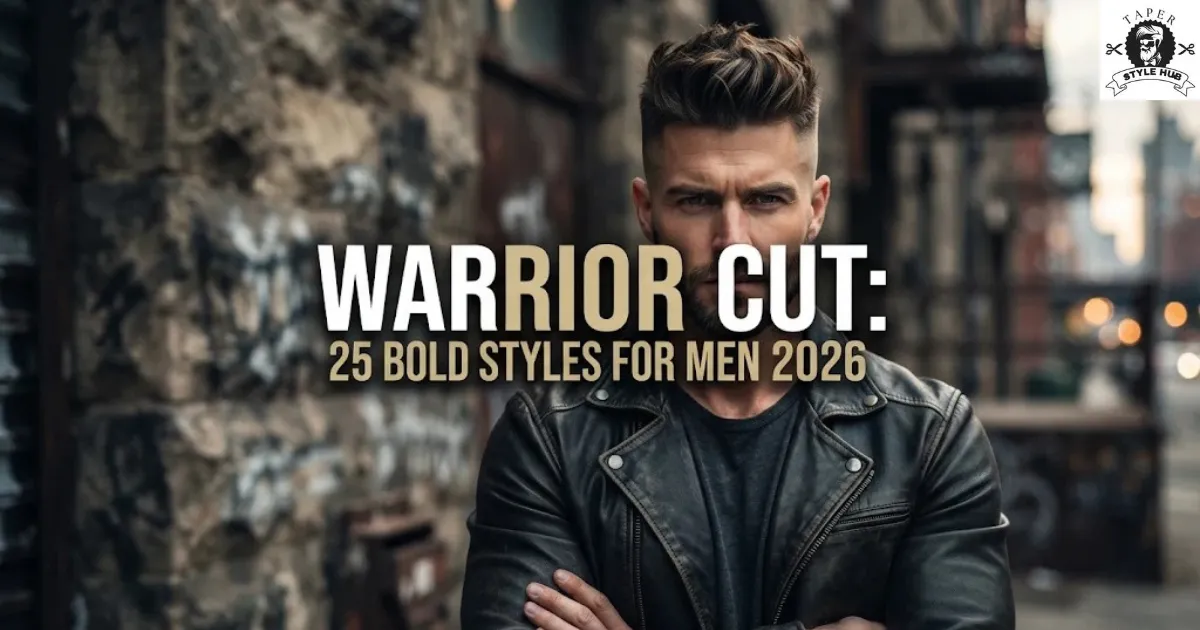
The warrior cut is a textured men’s haircut with a longer, messy top and cleanly tapered sides. It looks rugged and confident, yet it still feels easy to wear. Barbers across the world now hear this request every week.
This guide covers 25 styles, face shape advice, hair type tips, barber scripts, styling steps and grow-out plans. You will also learn how to avoid the common mistakes that ruin the shape.
Whether your hair is straight, wavy, curly or thinning, there is a version that fits. Read on, pick your favorite, and walk into the barbershop with a clear plan.
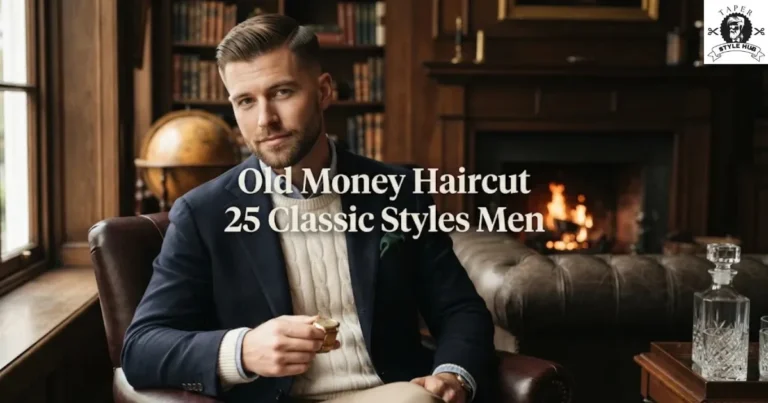
👉 Also Read: Old Money Haircut
What Is a Warrior Cut Haircut and Why Is It Trending?
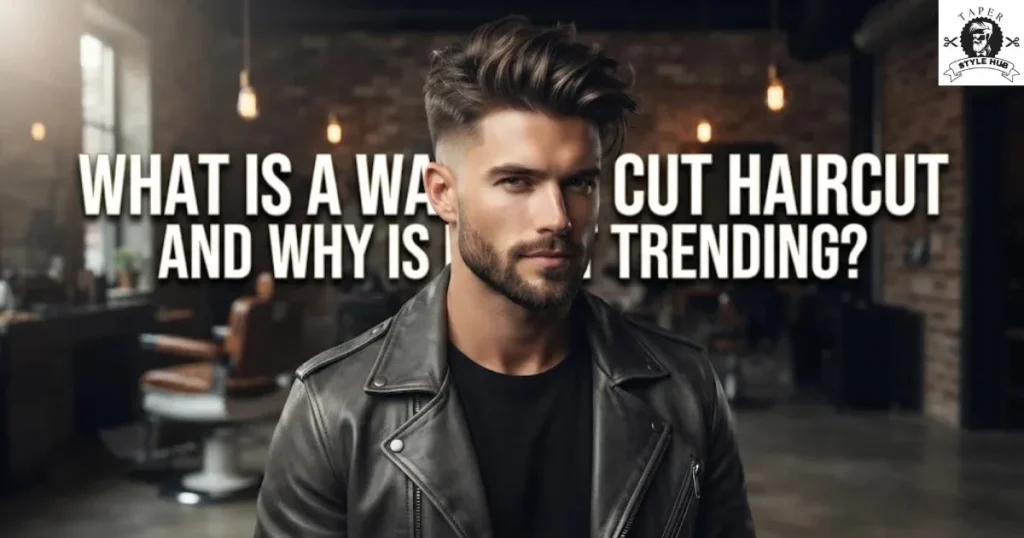
A warrior cut combines a longer textured top with tapered or faded sides. The top usually measures two and a half to four inches and carries choppy, point-cut layers. The finish is matte, natural and deliberately undone.
That contrast is the whole idea. The sides stay clean and structured, while the top looks loose and lived in. Together they create controlled chaos that suits modern barbering.
The style is trending because men want texture and movement instead of stiff, glossy hair. Scissor work also grows out more gracefully than a tight skin fade, so fewer barber visits are needed.
Social media pushed the look into the mainstream, and celebrities such as Austin Butler kept it there. Its roots go back much further, which brings us to the origin story.
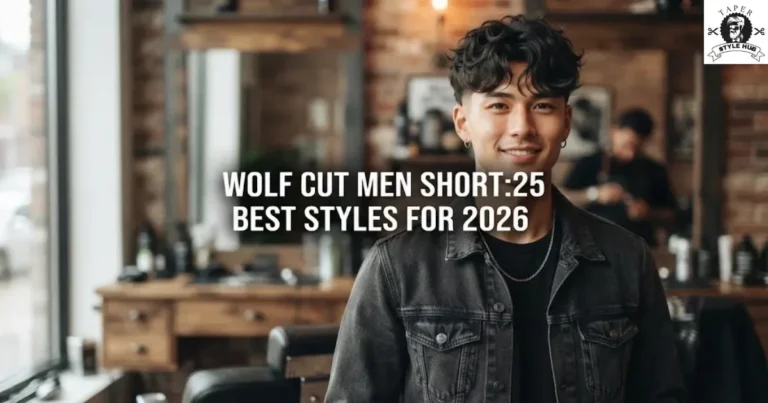
👉 Also Read: Wolf Cut Short Hair Men
Where the Warrior Cut Came From
The name started as a social media label, not a barbershop tradition. Barbers began posting textured, disconnected cuts online around 2023, and the bold name stuck because it matched the rugged look.
The aesthetic itself is older. Brad Pitt wore a choppy, uneven crop as Tyler Durden in Fight Club in 1999, and that grunge mood still shapes the style today.
Modern versions are cleaner. Tapered sides, matte products and careful point cutting replace the heavy wax and rough edges of the nineties, giving the look a polished edge.
Austin Butler later wore a longer, more fashion-led version in public. His appearances showed that the haircut works on a red carpet as well as in a neighborhood barbershop.
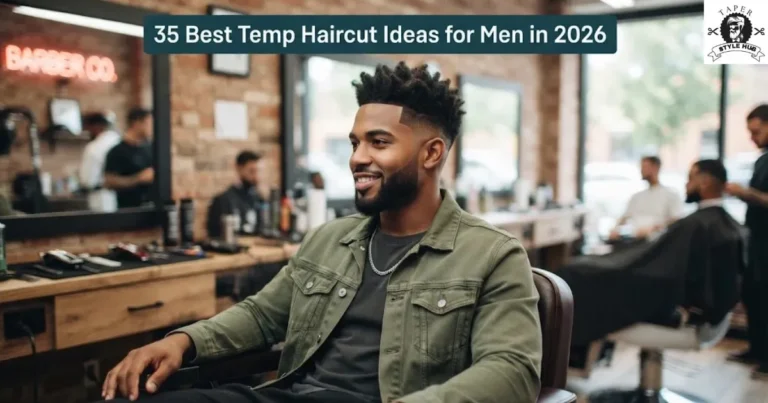
👉 Also Read: Temp Haircut
Warrior Cut vs Wolf Cut, Textured Crop and Mullet
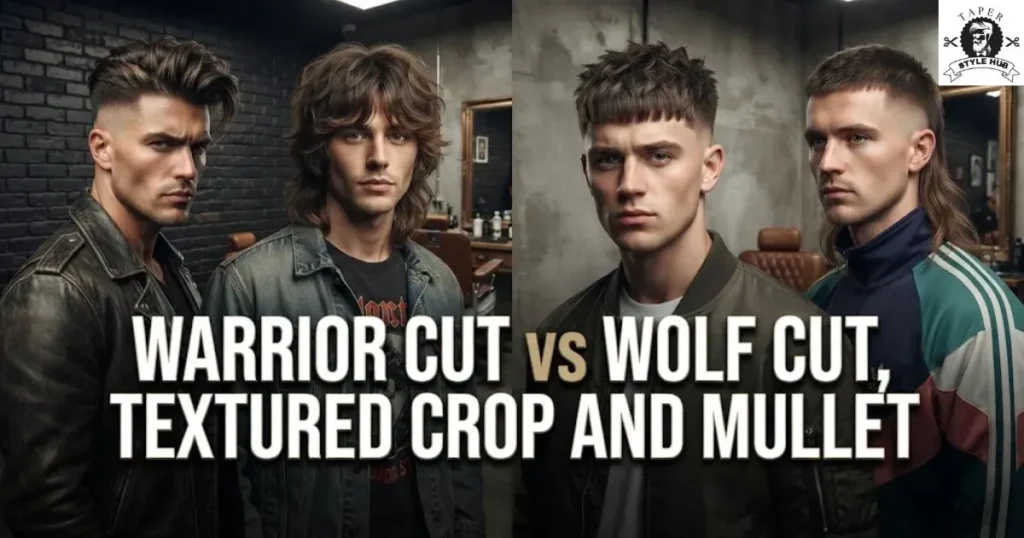
Many men confuse these styles, so the table below separates them. The biggest difference is how the sides and back are cut.
| Style | Top Length | Sides | Typical Trim Gap |
|---|---|---|---|
| Warrior cut | 3 to 4 inches | Soft taper or fade | 3 to 5 weeks |
| Wolf cut | Long through crown and back | Longer, rarely faded | 6 to 8 weeks |
| Textured crop | 1 to 3 inches | Faded | 3 to 4 weeks |
| Mullet | Short front, long back | Short | 4 to 6 weeks |
The wolf cut keeps heavy length at the crown and back. The warrior cut stays shorter and more structured, with close sides that make the textured top stand out.
A mullet is short at the front and longest at the back. A textured crop is the milder cousin, with lighter layers and less disconnection on top.
👉 Also Read: Wolf Cut Men Short
Anatomy of a Perfect Warrior Cut
Every great version shares the same building blocks. Knowing them helps you explain the cut clearly and spot a poor result quickly.
- Top: three to four inches with point-cut layers
- Fringe: slightly longer and pushed forward or up
- Sides: soft taper or low fade, never a harsh line
- Back: blended into the top, never cut square
- Finish: matte, dry and slightly messy
If one of these parts is missing, the result drifts toward a plain textured crop. The disconnection and the matte finish are what make it feel like the real thing.
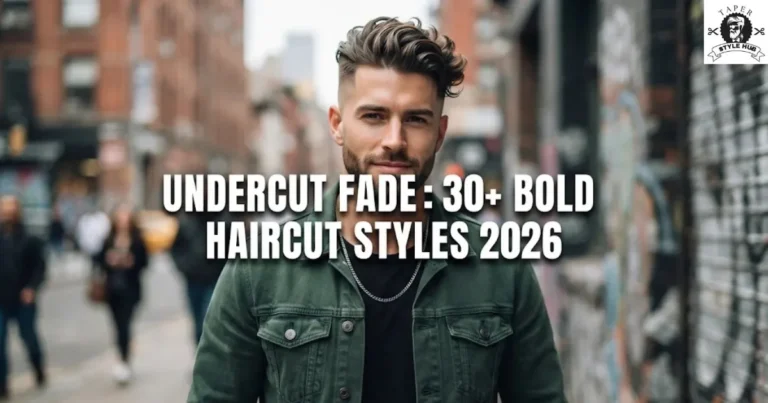
👉 Also Read: Undercut Fade
25 Warrior Cut Styles Grouped by Category
Instead of one long list, the styles below are sorted into five categories. Each group solves a different need, from side shape to hair type.
Taper-Based Warrior Cut Styles
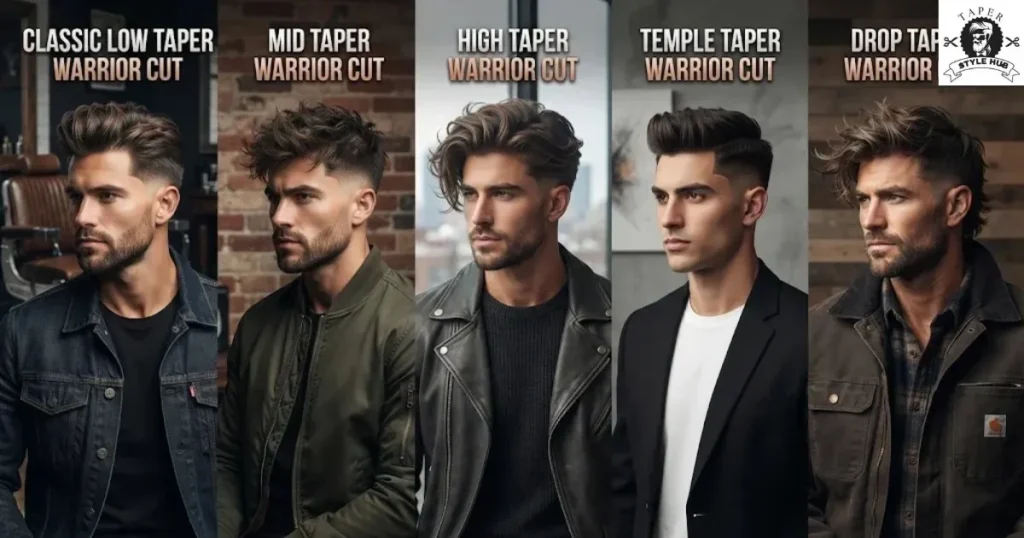
Tapers shorten the sides gradually and keep a natural outline. They are the safest choice for work, school and low-maintenance routines.
“All The Types Shown Below Are Displayed In The Single Image Above☝️”
Classic Low Taper Warrior Cut
This is the baseline version. Keep two and a half to three inches on top, add heavy point cutting, and finish with a low taper. It suits most face shapes and needs a trim every four to five weeks.
Mid Taper
A mid taper starts at the temple and sharpens the outline without using skin. It frames the cheekbones, keeps the sides neat, and still lets the textured top look relaxed.
High Taper
The high taper creates a bold outline while avoiding a harsh bald fade. It makes the top look thicker by contrast and works well for men who want a stronger statement.
Temple Taper
A temple taper tightens only the hair around the temples and sideburns. The result frames the face and looks fresh longer, especially when you leave extra length around the ear.
Drop Taper
A drop taper curves down behind the ear and follows the natural shape of the head. Paired with a textured top, it looks athletic, tailored and clean from the side and back.
Fade-Based Warrior Cut Styles
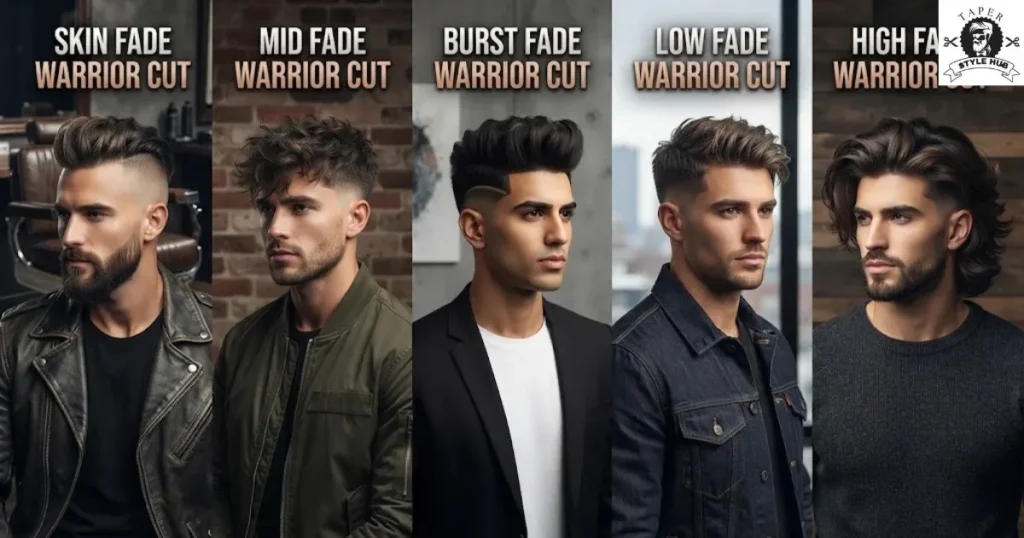
Fades take the sides much shorter and deliver the strongest contrast. They look sharp, but they need more frequent barber visits.
“All The Types Shown Below Are Displayed In The Single Image Above☝️”
Skin Fade Warrior Cut
The skin fade goes down to zero guard and blends up into the full textured top. It is the sharpest version, but it needs a refresh every two to three weeks.
Mid Fade
A mid fade starts at the temple and is the version most reference photos show. It gives clear contrast, suits thick hair well, and needs a visit every three to four weeks.
Burst Fade
The burst fade curves around the ear and leaves length at the nape. It adds side-profile drama without a full high fade, and it works nicely with wavy or curly tops.
Low Fade
A low fade starts just above the ear and follows the neckline. It looks subtle and professional, which makes it a good middle path between a taper and a mid fade.
High Fade
The high fade begins above the temple and creates the boldest side contrast. Check school or workplace rules first, because some dress codes treat high fades as too extreme.
Length-Based Warrior Cut Styles
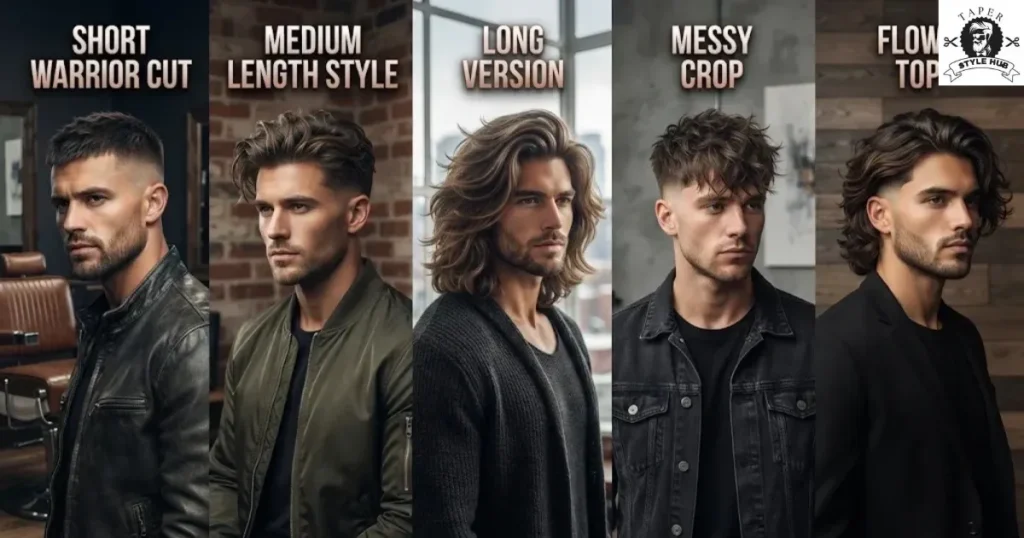
Top length changes both the mood and the morning routine. Choose the length that matches the time you are willing to spend styling.
“All The Types Shown Below Are Displayed In The Single Image Above☝️”
Short Warrior Cut
Keep one and a half to two inches on top for a tighter, faster look. Short layers also make fine hair look fuller, and styling takes only two or three minutes.
Medium Length Style
Three to four inches is the sweet spot for most men. It gives enough length for movement, yet it still looks controlled when you only run your fingers through it once.
Long Version
With four or more inches on top, the long version flows and moves. It grows out gracefully, but it needs more conditioning, a blow dryer and a barber who can layer without collapsing the shape.
Messy Crop
This short, choppy crop is the easiest cool haircut to wear. A small fringe, heavy point cutting and a little paste give a gritty finish that looks better the less you fuss.
Flowy Top
A longer layered top with a low taper creates soft movement instead of stiff spikes. Mist sea salt spray into damp hair, scrunch the ends lightly, and let it shift naturally through the day.
Hair Type Warrior Cut Styles
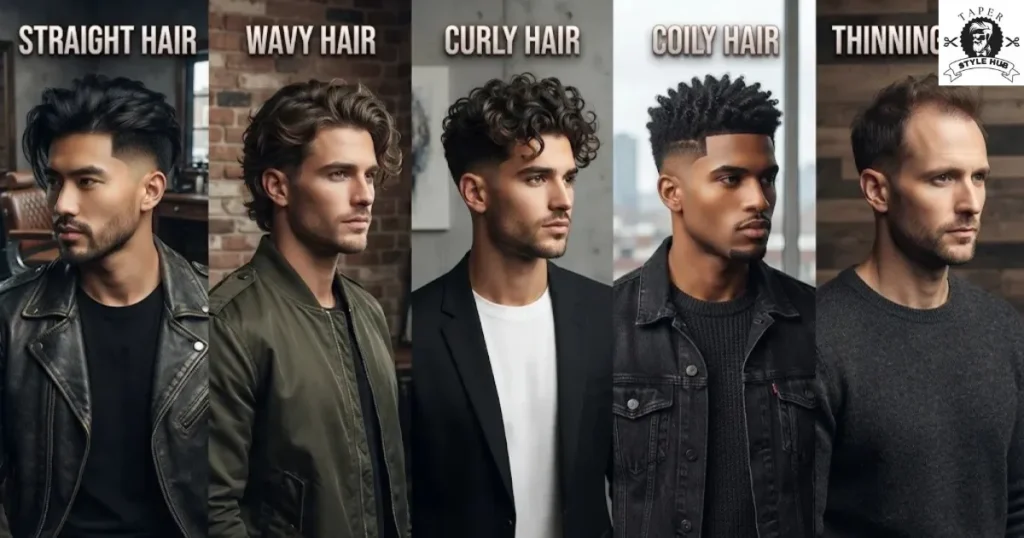
Hair texture decides how much work the barber and the product must do. These five versions are tuned to different hair types.
“All The Types Shown Below Are Displayed In The Single Image Above☝️”
Straight Hair
Straight hair needs the most technique. Ask for heavy point cutting or razor texture so the ends separate, then add sea salt spray and a pinch of matte clay for grip.
Wavy Hair
Waves are the easiest canvas because they create movement on their own. Let the natural pattern drive the texture, remove weight instead of length, and air dry for an effortless result.
Curly Hair
Curls build the texture automatically. Ask the barber to cut the top dry so shrinkage is visible, keep the taper low, avoid over-thinning, and apply curl cream to damp hair afterward.
Coily Hair
Coily hair shrinks as it dries, so three stretched inches can look like one. Cut it dry, keep enough length for the pattern to form, and prioritize moisture over heavy shine.
Thinning Hair
Volume at the crown draws the eye upward and away from a receding hairline. Keep the sides fuller, choose a longer textured fringe, and avoid slicking everything back.
Creative and Hybrid Warrior Cut Styles
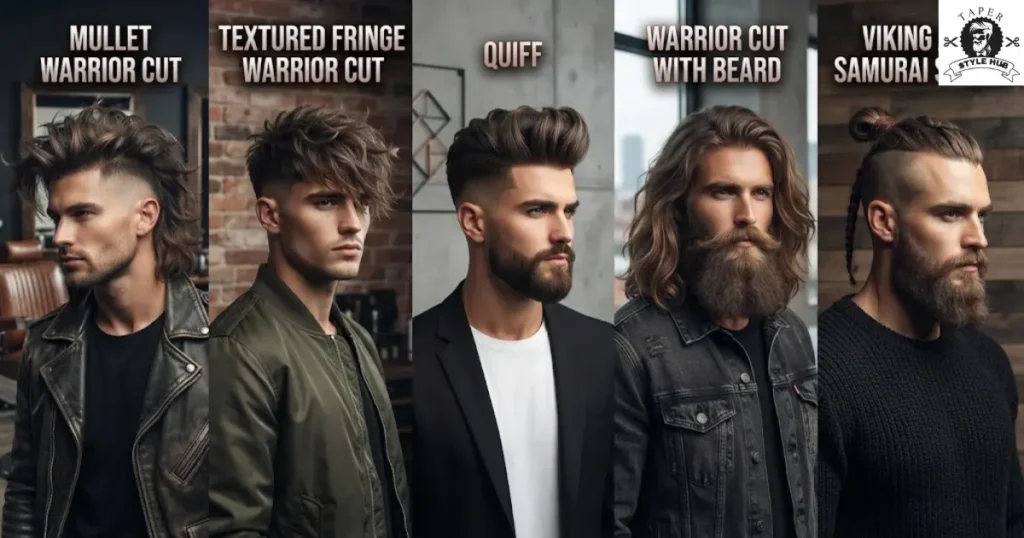
These versions blend the core shape with other popular looks. They add personality, but they also ask for more commitment.
“All The Types Shown Below Are Displayed In The Single Image Above☝️”
Mullet Warrior Cut
This version leaves extra length at the back and blends it into the textured top. Keep the nape tapered and book regular trims, or the shape turns shaggy and overgrown.
Textured Fringe Warrior Cut
A choppy fringe falls forward, frames the face and softens a high forehead. Point cutting keeps the ends broken up, so the fringe never turns into a flat, heavy curtain.
Quiff
Lift the front section up and back for extra height. Dry it with a brush, set it with a medium-hold clay, and keep the texture rough so the shape never looks too polished.
Warrior Cut With Beard
A short, softly shaped beard balances the volume on top. Blend the taper into the sideburn without a hard line, and trim the neckline weekly so the whole look stays tidy.
Viking and Samurai Styles
These pop-culture takes use more length, tapered or shaved sides, and sometimes braids or a topknot. Treat them as a mood, then adapt the length and styling to your own hair.
How to Choose the Right Warrior Cut for Your Face Shape
Face shape decides where you need height, width and softness. The table below gives quick starting points, and your barber can fine-tune them.
| Face Shape | Best Version | What to Avoid |
|---|---|---|
| Oval | Any version, start with the classic | Nothing major |
| Square | Textured fringe with a soft taper | Hard, geometric lines |
| Round | Short sides with lifted height on top | Extra width at the sides |
| Diamond | Forward fringe with a low taper | High fades that expose narrow temples |
| Oblong | Fuller texture with a low taper | Tall volume on top |
| Heart | Textured fringe, moderate top length | Slicked-back styles |
Square and diamond faces suit the style best because the choppy top plays against strong, defined features. Round faces simply need the texture styled upward instead of outward.
Is a Warrior Cut Right for You?
Ask yourself three quick questions before booking. Your honest answers save time, money and regret.
- Do you have defined features? If yes, go bold with a fade or temple taper.
- Do you have softer features? Choose a low taper and style the top upward.
- Can you spare three to five minutes each morning? If not, pick the short or wavy version.
How Long Should Hair Be Before Getting a Warrior Cut?
You need about one and a half inches for the short version and two and a half inches for the classic. Anything shorter loses the layers that create the choppy texture.
If you are growing out a buzz cut, start with the short version and move to the classic later. That route avoids the awkward gap between a crop and a full top.
Thick or curly hair behaves differently when wet, so tell your barber how your hair actually falls. A dry cut removes most surprises.
How to Ask Your Barber for a Warrior Cut
Most bad results come from unclear instructions, not bad barbers. Without specific words, many barbers default to a standard textured crop and miss the disconnected, undone feel.
A Simple Barber Script
Use this four-part script: style name, top length, side treatment and what you do not want. Read it aloud before the clippers come out.
“I want a textured cut with three to four inches on top. Please point cut the layers for a messy, piecey finish. Use a low taper on the sides with no skin, keep everything connected, and give me a matte finish.”
Barber Terms in Plain English
- Point cutting: snipping into the ends to create peaks and valleys.
- Scissor over comb: blending with scissors for a softer result.
- Weight line: the point where hair sits heaviest.
- Taper vs fade: a taper shortens gradually, while a fade goes to the skin.
- Razor texturing: thinning the ends with a razor, best for thick hair.
Bring Reference Photos
Bring two or three photos showing the front, side and back. Point out what you love, and show one photo of a look you dislike.
Also ask three quick questions: Are you comfortable with scissor work on my hair type? How much weight will you remove? Can you cut the top dry?
What Not to Say to Your Barber
Avoid saying only the name of the cut. The label alone covers many different versions, so always add top length, side treatment and finish.
Also avoid vague phrases like “just a little off the top”. Precise numbers and photos protect you from a flat, ordinary result.
How to Find the Right Barber for a Warrior Cut
Look for a barber whose portfolio shows scissor work, textured tops and disconnected shapes. A clipper-only barber may produce an excellent fade but a flat, ordinary top.
Check recent photos on social media, read reviews, and book a short consultation first. A good barber will discuss your hair type, cowlicks and routine before cutting.
If the barber dismisses your questions or says the plan will work on any hair, treat that as a warning sign. Choose someone who explains the process.
How to Style a Warrior Cut at Home
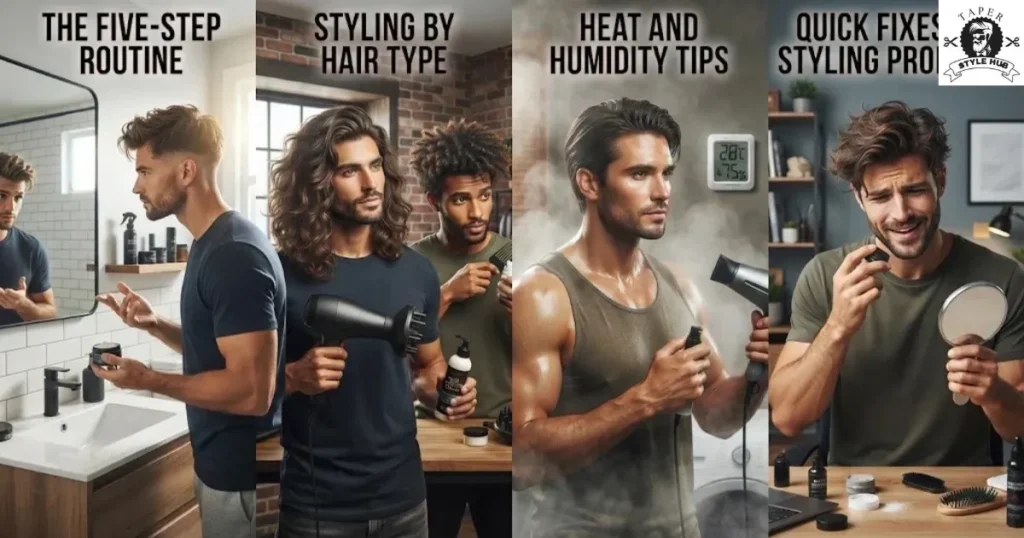
Styling takes about five minutes once you learn the routine. The goal is texture and grip, not stiffness or shine.
“All The Types Shown Below Are Displayed In The Single Image Above☝️”
The Five-Step Routine
- Towel dry until the hair feels damp, not wet.
- Apply sea salt spray or mousse for grip.
- Blow dry on medium heat, lifting the roots with your fingers.
- Warm a pea-sized amount of clay or paste in your palms and work it through.
- Pinch and pull small sections apart, then stop when it looks messy on purpose.
Styling by Hair Type
Fine hair prefers mousse and texture powder, because heavy creams weigh it down. Thick hair holds clay well, and curly hair does best with curl cream and air drying.
Heat and Humidity Tips
Hot weather softens light products, so switch to clay and finish with a light setting spray. A slightly shorter top also keeps its lift when sweat and humidity build.
Quick Fixes for Styling Problems
If the top looks flat, add texture powder at the roots and lift with your fingertips. A quick blast from the dryer also brings back height.
If the top looks greasy or heavy, you used too much product. Wash it out, then restart with a smaller amount and a light salt spray first.
If cowlicks fight the shape, style the area while it is damp and dry it in the direction you want. Tell your barber where each cowlick sits.
Best Products for Styling a Warrior Cut
Choose matte, flexible formulas over glossy ones. The table matches each product type to its hold, finish and ideal hair.
| Product Type | Hold | Finish | Best For |
|---|---|---|---|
| Sea salt spray | Light | Matte, gritty | Prep for any hair |
| Mousse | Light | Natural | Fine hair needing volume |
| Texture powder | Light to medium | Matte | Fine or thinning hair |
| Clay | Strong | Matte | Thick or straight hair |
| Paste | Medium | Natural | Wavy hair and longer cuts |
| Pomade | Medium to strong | Shiny | Slicked-back versions |
| Curl cream | Light | Soft, defined | Curly and coily hair |
Always start with a pea-sized amount. Strong products work in tiny doses, and using half a tub flattens the point-cut layers you paid for.
Apply product with your fingertips instead of your palms. Fingertips deposit it on the peaks of the layers, which keeps the intentional unevenness that defines the look.
Warrior Cut Maintenance and Trim Schedule
This haircut is easier to maintain than a skin fade, yet it still needs a plan. The sides decide how often you visit, while the top can wait longer.
| Version | Trim Every |
|---|---|
| Short | 3 weeks |
| Classic or low taper | 4 to 5 weeks |
| Fade | 3 to 4 weeks |
| Skin fade | 2 to 3 weeks |
| Mullet or long | 6 to 8 weeks |
Between visits, tidy the neckline with a trimmer and leave the top alone. Scissor work often costs a little more than clipper work, so ask about the price before you book.
How to Grow Out a Warrior Cut
Hair grows roughly half an inch per month. From a buzz cut, expect five to six months to reach three inches, while a short crop needs about three to five months.
The awkward stage usually lands around months two and three, when the top puffs out. Use clay to control the volume, wear a cap on bad days, and book a small tidy-up every four to six weeks.
What Changes Week by Week
In week one the texture is crisp and the sides are tight. By week three the layers look heavier, and the cut reads as a longer version.
By week six, low tapers and messy versions still hold a shape, while skin fades lose their contrast. Pick a low-maintenance version if you cannot rebook quickly.
Common Warrior Cut Mistakes to Avoid
A few small errors can ruin the shape quickly. Watch for these eight, and you will avoid most disappointments.
- Using too much product, which kills natural movement.
- Choosing shine over a matte finish.
- Fading the sides too high and losing connection to the top.
- Cutting the top under one and a half inches, which removes the layers.
- Over-thinning, which causes frizz on curls and holes in fine hair.
- Skipping the blow dry when your hair lies flat.
- Combing the top, which flattens the peaks.
- Skipping reference photos and letting the barber guess.
How to Fix a Bad Warrior Cut
If the top looks too smooth, return within a few days and ask for more point cutting. Most texture problems are easy to fix quickly.
If the sides sit too high, grow them out for two weeks and then reblend. A fade cannot go lower without length to blend into.
If the top is too short, simply wait four to six weeks. Cutting again too soon only makes the problem worse.
Hair Care Routine for a Warrior Cut
Healthy ends make the layers look sharper and style more easily. A simple routine keeps the texture soft and free of frizz.
- Wash two to three times a week to protect natural oils.
- Use a hydrating conditioner on the ends after every wash.
- Apply a heat protectant before blow drying.
- Add a deep conditioning treatment once a week.
- Rinse out sea salt spray at night, because it can dry the hair.
Keep the blow dryer moving and avoid the hottest setting. Limiting heat protects the ends and keeps the layers from turning fuzzy.
Curly and coily hair needs extra moisture, so add a leave-in conditioner and detangle gently with fingers or a wide-tooth comb.
Warrior Cut With Glasses, Beards and Special Events
Glasses work well with this haircut. Ask for a fringe that stops above the frames so the texture never fights the lenses.
A beard needs the same care as the hair. A messy top paired with a messy beard looks unkempt, so keep the beard short, shaped and softly tapered.
For weddings and formal events, sculpt the top with paste and finish with a light spray. The hair stays textured and dressy for hours without turning stiff.
At the gym, a shorter top and a low taper handle sweat and helmets better. Keep a small tub of clay in your bag for quick fixes.
Warrior Cut for Teens, Adults and Older Men
Teens usually prefer the short or classic versions with a low taper, because those meet most school rules. Check the written dress code before choosing a fade.
Adults in their twenties and thirties can wear any version. The longer, fashion-led cuts suit creative workplaces, while a conservative two-inch top fits stricter offices.
Older men can wear it too, especially with silver or thinning hair. Keep the top slightly shorter, add volume at the crown, and choose a low taper for a polished, modern look.
Warrior Cut Myths Worth Ignoring
A few persistent myths scare men away from this haircut. Here are the most common ones, corrected.
Myth One: It Is Just a Mullet
The shapes differ. A mullet grows longest at the back, while this style keeps a tapered nape and a full textured top.
Myth Two: It Needs Hours of Styling
The texture is cut into the hair, so styling takes about five minutes. Wavy and curly hair can often skip the dryer completely.
Myth Three: It Only Works on Thick Hair
Fine hair can wear a shorter version with light texture and mousse. Shorter layers actually make thin strands look fuller.
How Much Does a Warrior Cut Cost?
Prices vary by city, shop and barber experience. Scissor-heavy cuts can cost more than a basic clipper cut because they take longer.
A low taper costs less over a year because it needs fewer visits than a skin fade. Always confirm the price and the time needed before you sit down.
Tipping and extras vary by region, so budget for a small tip and an occasional product refill. Good clay lasts several months when you use only a tiny pea-sized amount.
Is a Warrior Cut School and Office Friendly?
The classic low taper version passes most school rules and workplace expectations. Few dress codes ban a textured top with softly tapered sides.
| Version | School | Office |
|---|---|---|
| Low taper | Usually safe | Safe |
| Mid fade | Usually safe | Safe |
| High fade | Check policy | Mostly safe |
| Skin fade | Check policy | Mostly safe |
| Long or mullet | Check policy | Depends on workplace |
Rules differ between schools and employers, so read the actual policy first. For a conservative setting, choose a two-inch top with a low taper and a controlled matte finish.
Who Should Skip the Warrior Cut
This haircut is not for everyone. Skip it if you want a neat, polished look with a smooth finish, or if you refuse to touch styling products.
Very fine hair with no styling time can fall flat, and strict dress codes may clash with the messy top. A low taper version reduces that risk.
If you love a crisp, shiny, perfectly combed finish, a classic side part or crew cut will suit you better. Choose the style that matches your real routine.
The Scissor-Cut Movement Behind the Warrior Cut
For years, sharp clipper work and skin fades dominated men’s grooming. Now many men want softer outlines, visible texture and haircuts that grow out without drama.
Scissor-led styles such as the middle part, wolf cut and textured crop belong to the same movement. They trade precision for personality and movement.
This haircut sits at the bold end of that shift. It keeps clean sides for structure, yet it lets the top behave like real, living hair.
Matte products also helped. Men now prefer a dry, touchable finish over wet-look gels, and the warrior shape shows that finish off perfectly.
Quick Guide to Choosing Your Warrior Cut
Use this quick checklist to narrow the 25 options. Match your hair type, lifestyle and dress code to one clear starting point.
- Wavy hair and zero effort: messy or wavy version.
- Thick hair: mid fade or classic with weight removal.
- Straight hair: classic with heavy point cutting.
- Curly or coily hair: dry-cut version with a low taper.
- Thinning hair: textured fringe with volume at the crown.
- Strict school or office: conservative low taper with two inches on top.
If you are still unsure, start with the classic low taper. It is the safest first step, and your barber can always go bolder next time.
Barber Scripts for Every Warrior Cut Category
Copy these short scripts and adjust the numbers to your own hair. Each one covers one category from the list above.
- Taper: “Low taper, number 2 at the lowest, no skin, three inches on top with heavy point cutting.”
- Fade: “Mid fade starting at the temple, three inches on top, choppy layers and a matte finish.”
- Length: “Keep four inches on top, remove weight, and layer so it moves instead of sitting flat.”
- Hair type: “Please cut the top dry, because my hair shrinks and changes shape when wet.”
- Hybrid: “Add a soft mullet at the nape, keep it blended, and avoid any harsh disconnection.”
Seasonal Tips for Your Warrior Cut
In summer, rinse chlorine and salt water out promptly and condition more often. Sun and pool water dry the ends and flatten the texture.
In winter, dry air and hats cause static and flat spots. Use a light leave-in conditioner, and refresh the top with a little water and clay after removing a hat.
Essential Tools for a Warrior Cut at Home
A few simple tools make daily styling faster and cleaner. You do not need a bathroom full of gadgets.
- A blow dryer with a nozzle for controlled lift
- A wide-tooth comb for detangling, never for styling
- A trimmer for neckline tidy-ups between visits
- A diffuser for curly and wavy hair
- A small mirror to check the back and sides
Warrior Cut Aftercare for the First 48 Hours
Fresh layers behave differently on day one. Resist the urge to over-style, and let the hair settle naturally for a day or two.
Rinse away loose clippings, avoid heavy products, and sleep on a clean pillowcase. Smooth cotton or satin reduces friction and keeps the ends from roughing up.
If something looks off, take photos in good light and contact the barber within a few days. Early feedback makes fixes simple.
Warrior Cut Hair Color and Highlights
Color can make the layers pop. Light highlights or a subtle bleached top emphasize the choppy separation, especially on dark hair.
Natural dark brown and black shades look rich with a matte finish. Silver and gray hair also suits the style, because the texture hides thinning and looks intentional.
Colored hair needs extra care. Use a color-safe shampoo, add a weekly mask, and avoid hot tools so the layers stay healthy.
Warrior Cut vs Middle Part, Crew Cut and Edgar
The middle part is the softer cousin. It relies on length and a clean parting, while this style relies on texture and contrast.
A crew cut is shorter and neater. It needs almost no styling, but it lacks the movement and disconnection that define the warrior look.
The Edgar cut uses a blunt fringe and a high fade. It can blend with this look, but the Edgar fringe is straight, while warrior texture stays choppy.
Neckline and Sideburn Care for Your Warrior Cut
A clean neckline keeps the cut looking fresh between visits. Use a trimmer to remove stray hair, but never cut a new line above your natural one.
Sideburns should stay soft and blended into the taper. Avoid sharp, boxed corners, because they fight the relaxed character of the top.
Leave the top to your barber. Home scissor work usually creates uneven layers that take weeks to correct.
Pro Tips to Get More From Your Warrior Cut
Small habits make a big difference. These tips come from the same principles barbers use behind the chair.
- Style from the back forward so the front never gets overloaded.
- Mention cowlicks before the first cut starts.
- Rough dry with your hands instead of a brush.
- Press down stray pieces, then re-separate them into softer points.
- Photograph your hair after each cut to track what works.
- Book your next appointment before leaving the chair.
Reference Photo Checklist for a Warrior Cut
Good reference photos remove guesswork. Use this checklist before you leave home.
- A front view showing the fringe and top texture
- A side view showing the taper or fade height
- A back view showing the neckline and nape
- A model with a similar hair type and density
- One photo of a result you do not want
Photos from social media can be heavily filtered or styled with extra product. Treat them as direction, then let your barber adapt the plan to your hair.
Final Thoughts on Choosing Your Warrior Cut
This haircut works because it is flexible. You can keep it short and sharp, let it grow long and wild, or choose a quiet low taper for work.
Success comes down to three things: a clear barber script, the right product amount, and honest expectations about maintenance. Get those right, and the style rewards you every morning.
- Keep two and a half to four inches on top with heavy point cutting.
- Choose a low taper if you want the safest, easiest version.
- Cut curly and coily hair dry so shrinkage never surprises you.
- Use a pea-sized amount of matte product and avoid shine.
- Bring front, side and back photos to every appointment.
Pick the version that fits your face, hair type and schedule. Then walk into the barbershop with photos, a script and confidence. Your best haircut starts with preparation.
Warrior Cut FAQs for Men
What Is a Warrior Cut?
It is a textured men’s haircut with a longer, choppy top and tapered or faded sides. The finish is matte and deliberately messy.
Is It the Same as a Mullet?
No. A mullet is longest at the back, while this haircut keeps a tapered nape and a full textured top.
How Long Should Hair Be?
Aim for three to four inches on top. The short version works with one and a half to two inches.
Is It High Maintenance?
No. Styling takes about five minutes, and most versions need a trim every three to five weeks.
Does It Work on Thin or Curly Hair?
Yes. Curls create texture naturally, and a shorter version with light layers makes thin hair look fuller.

I’m M Ahmad Ansari, founder and content creator at Taper Style Hub. With 3+ years of experience researching taper haircuts, hairstyles, grooming, and men’s style, I create practical, accurate, and easy-to-understand content. My goal is to provide readers with trustworthy information, useful tips, and inspiring ideas for choosing and styling the perfect taper haircut.