
Mid Taper Textured Fringe: 20 Best Styles
A mid taper textured fringe gives you tidy, blended sides and a choppy top that falls naturally over the forehead. It looks sharp without trying too hard, and barbers get asked for it daily.
The taper starts around the temple and shortens toward the neckline, while the fringe keeps enough length for movement. Together they create contrast that suits school, the office and weekend plans.
This guide covers what the cut is, who it suits, 20 styles sorted into categories, barber scripts, styling steps, products and upkeep. Everything works for straight, wavy, curly and thick hair.
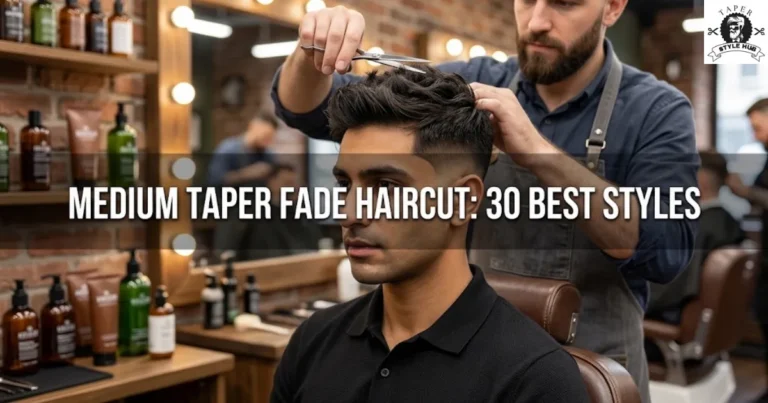
👉 Also Read: Medium Taper Fade Haircut
Mid Taper Textured Fringe Guide for Men in 2026
Use the sections below as a quick reference before your next barber visit, or read straight through to build a full picture of the cut.
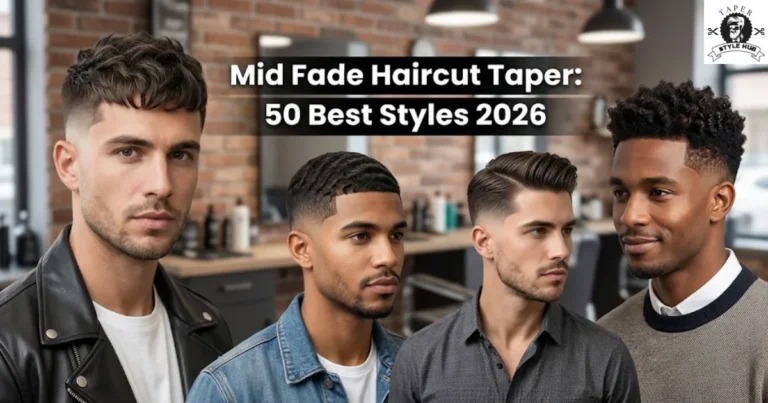
👉 Also Read: Mid Fade Haircut Taper
What Is a Mid Taper Textured Fringe?
A mid taper textured fringe combines two separate decisions. The mid taper controls where the sides begin to shorten, and the textured fringe controls how the front section is cut and worn.
Unlike a skin fade, a mid taper keeps a soft gradient of length around the ears. The fringe is shaped with point cutting or texturizing shears, so it separates into pieces instead of one heavy curtain.
Some barbers call it a textured fringe with a mid taper, and others say mid taper fade with textured fringe. The finished haircut is the same in every case.
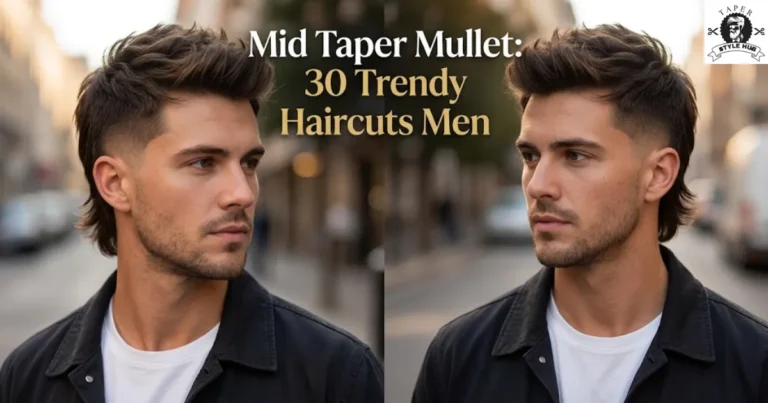
👉 Also Read: Mid Taper Mullet
Key Features of a Mid Taper Textured Fringe
- Tapered sides that begin around the temple and blend into the neckline
- A layered fringe that falls forward with visible separation
- Softer contrast than a mid fade or skin fade
- Works on straight, wavy, curly, thick and fine hair
- Easy to dress up for work or down for weekends
- Moderate daily styling with matte products
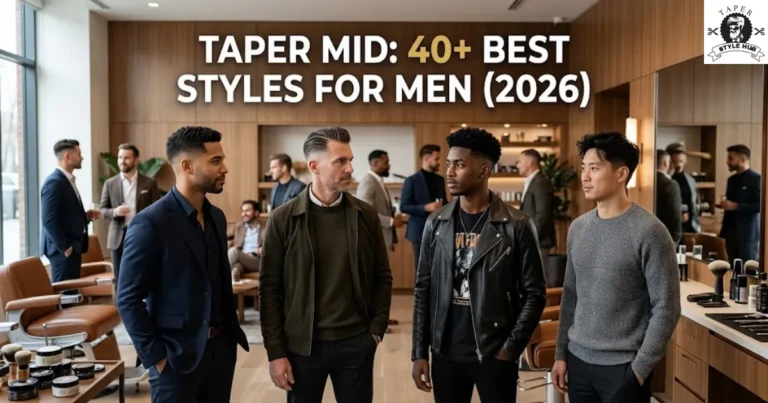
👉 Also Read: Taper Mid
Why the Mid Taper Textured Fringe Works So Well
Good haircuts rely on proportion. Short, tapered sides pull weight away from the cheeks and jaw, while the fuller fringe adds shape at the front.
That contrast between controlled and expressive is what makes a mid taper textured fringe look planned rather than grown out. Barbers sometimes call it contrast styling.
The cut also grows out gracefully. Because the sides keep some length, you do not get the harsh regrowth line that a skin fade shows after two weeks.
Social media has helped too, since the style photographs well from the front, side and back. Reference photos are easy to find, which makes the barber conversation simpler.
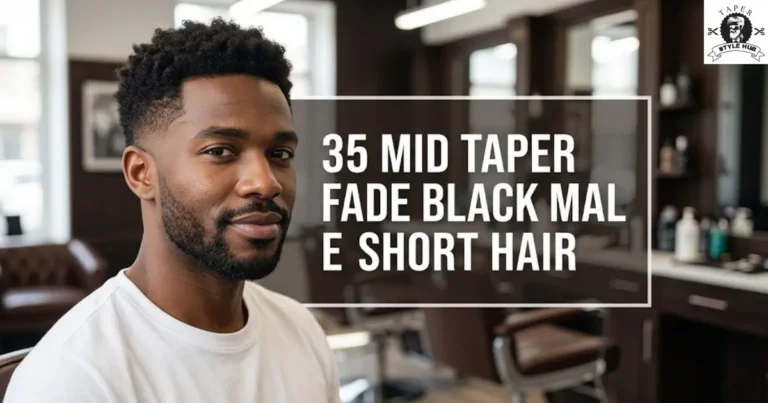
👉 Also Read: Mid Taper Fade Black Male Short Hair
Why the Mid Taper Textured Fringe Stays Popular in 2026
Trends move fast, but this cut keeps its place because it asks very little. You do not need perfect hair or a long routine to look put together on a rushed morning.
In 2026 the focus is on natural texture and soft finishes. Men want to look polished without looking overdone, and a loose fringe over a clean taper fits that mood.
It also hides a high forehead or early thinning when styled forward, and it works with both casual and smart outfits.
Who Should Get a Mid Taper Textured Fringe?
This haircut is versatile, but it works best when the fringe length and taper height match your face shape and hair type. A good barber adjusts both during the consultation.
Age matters less than lifestyle. If you are happy to spend a few minutes styling and visit the barber every few weeks, the cut will suit you.
Best Face Shapes for a Mid Taper Textured Fringe
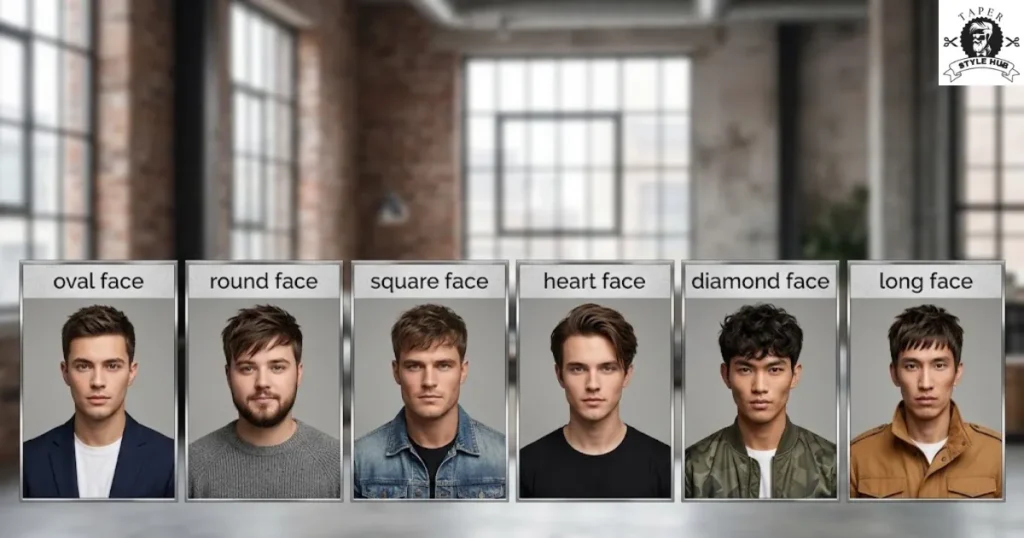
“All The Types Shown Below Are Displayed In The Single Image Above☝️”
Oval Face
Oval faces carry almost every version of the mid taper textured fringe. The balanced proportions mean you can choose length based on taste instead of correction.
Round Face
A round face benefits from extra height at the crown and a fringe that sweeps slightly to one side. Keep the taper tight so the sides add no width.
Square Face
A softer, side-swept fringe balances a strong jawline. Avoid a blunt, straight-across edge, which can emphasize sharp angles instead of softening them.
Heart Face
A fuller fringe covers part of a wider forehead and balances a narrower chin. Ask for a little side sweep to keep the front from looking too heavy.
Diamond Face
Volume near the forehead balances prominent cheekbones. A mid taper textured fringe with tight sides keeps the widest part of the face from looking exaggerated.
Long Face
Long faces look better with less height. Keep the fringe forward and low so it shortens the face visually, and skip tall quiffs.
Best Hair Types for a Mid Taper Textured Fringe
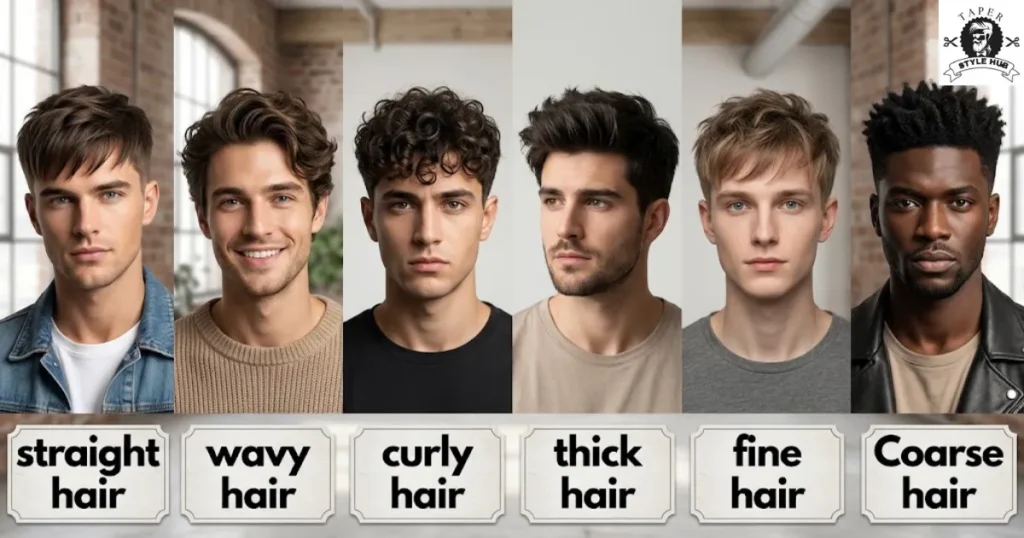
“All The Types Shown Below Are Displayed In The Single Image Above☝️”
Straight Hair
Straight hair shows cut lines clearly but tends to fall flat. Point cutting and a little texture powder build the separation that straight hair cannot create alone.
Wavy Hair
Wavy hair already has movement, so styling is easy. Sea salt spray or a light cream is usually enough to show off the natural bends.
Curly Hair
Curls stay full on top while the taper keeps the sides controlled. Curl cream defines each coil, and the top should stay longer because curls shrink as they dry.
Thick Hair
Thick hair holds texture well but can look bulky. Your barber should remove weight with thinning or point cutting so the fringe sits naturally against the taper.
Fine Hair
Fine hair needs lightweight products and a blow dry with a round brush. Avoid over-thinning, because too much weight removal makes the fringe look sparse.
Coarse Hair
Coarse hair responds well to layered cutting. A leave-in conditioner softens it while keeping the natural texture that makes this cut work.
Mid Taper Textured Fringe for Different Ages
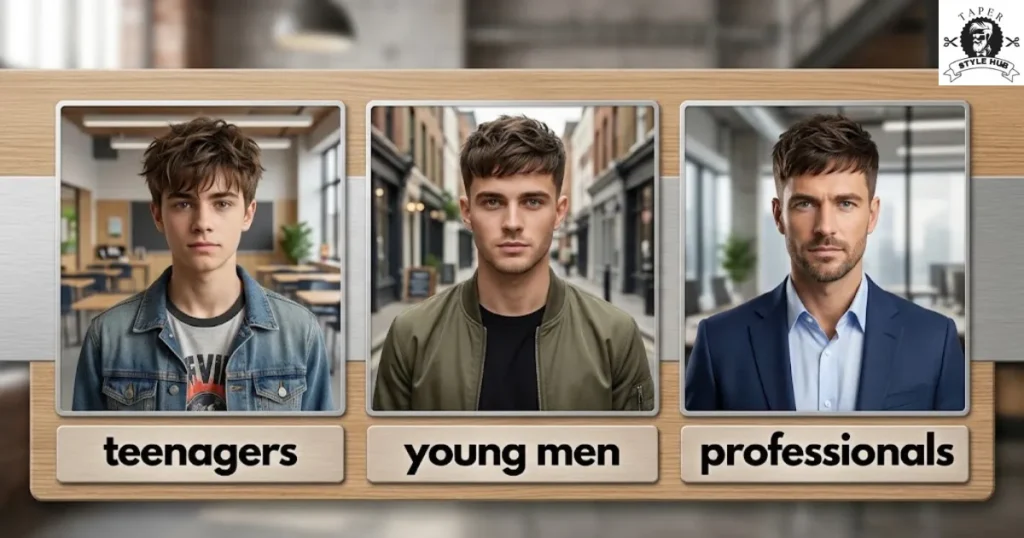
“All The Types Shown Below Are Displayed In The Single Image Above☝️”
Teenagers
Teens usually prefer a choppier, messier top. A slightly shorter fringe with a clean taper also stays within most school and sports rules.
Young Men
Men in their twenties and early thirties can experiment with volume, blowouts and hard parts. The base cut makes it easy to change the look every few months.
Professionals
Choose a shorter fringe, a soft side sweep and a matte finish. A tidy taper adds polish without looking like you tried too hard.
20 Best Mid Taper Textured Fringe Styles for Men
Every style below uses a mid taper on the sides, so the top does the changing. We grouped the 20 options into five categories to make choosing easier.
Classic Mid Taper Textured Fringe Styles
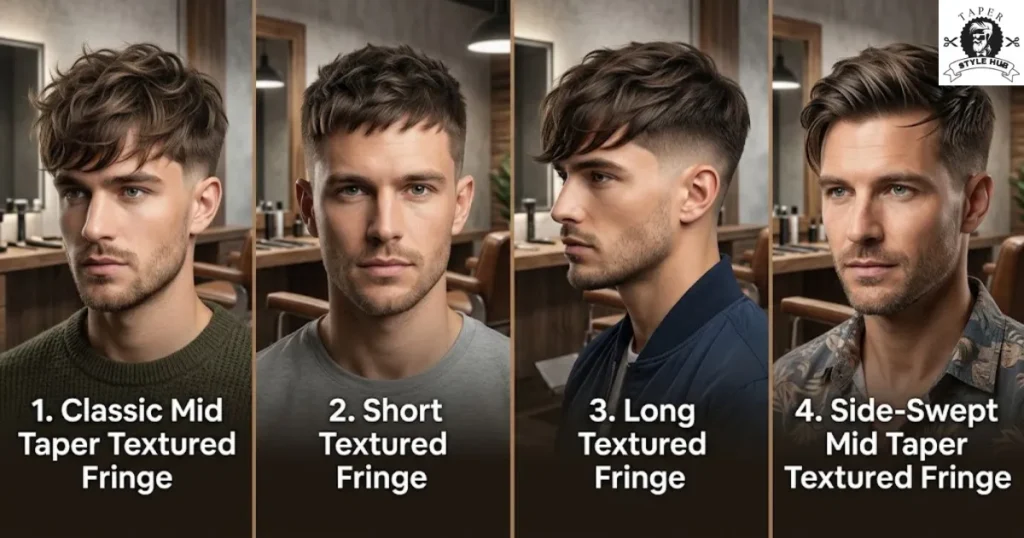
These four are the safest starting point. They work on most hair types, need little effort and suit everyday settings.
“All The Types Shown Below Are Displayed In The Single Image Above☝️”
1. Classic Mid Taper Textured Fringe
The original version has layered pieces on top and a balanced taper around the ears and neckline. It sits slightly above the eyebrows and falls forward without styling fuss.
- Best for: straight to wavy hair
- Top length: 2 to 3 inches
- Tell your barber: “Mid taper, forward textured fringe, point cut on top.”
2. Short Textured Fringe
Keeping the fringe close to the forehead makes daily styling quick. It suits office workers, students and anyone who wants a clean look with minimal product.
- Best for: busy mornings and work
- Top length: 1.5 to 2 inches
- Tell your barber: “Short textured top, mid taper, soft blend.”
3. Long Textured Fringe
Extra length at the front gives maximum movement. Thick or wavy hair handles this version best, as long as the barber removes bulk with thinning shears.
- Best for: thick or wavy hair
- Top length: 4 inches or more
- Tell your barber: “Keep the front long and remove weight, not length.”
4. Side-Swept Mid Taper Textured Fringe
The fringe falls to one side and softens strong angles, which helps square and heart-shaped faces. Dry it in the direction you want, because hair remembers how it was dried.
- Best for: square and heart face shapes
- Top length: 3 inches
- Tell your barber: “Sweep the fringe to one side and blend the sides.”
Messy and Choppy Mid Taper Textured Fringe Styles
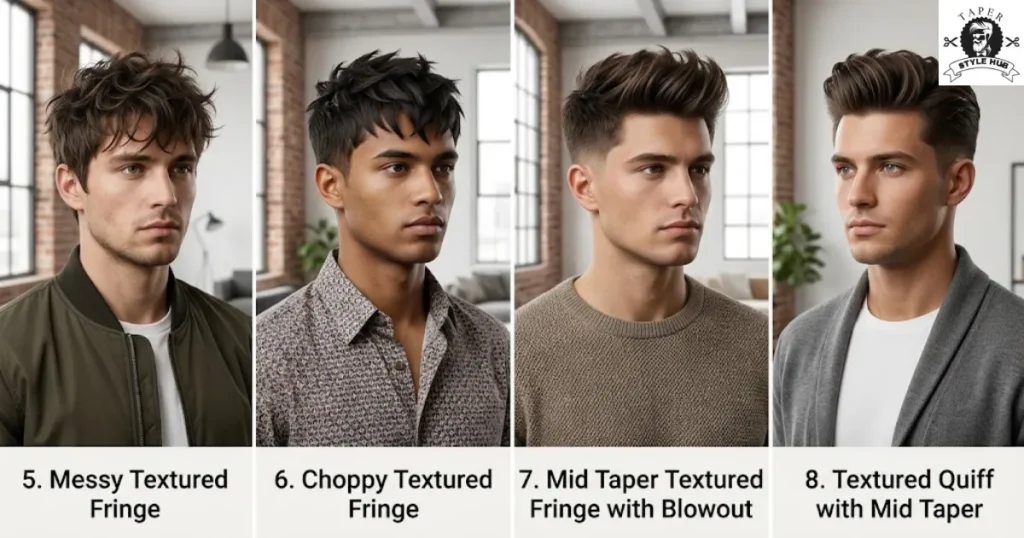
If you like a lived-in finish, start here. These cuts rely on point cutting and light products to keep the top loose and separated.
“All The Types Shown Below Are Displayed In The Single Image Above☝️”
5. Messy Textured Fringe
Pieces point in slightly different directions, so the top looks slept in on purpose. Finger styling with a little paste works better than a comb.
- Best for: students and busy guys
- Top length: 2 to 4 inches
- Tell your barber: “Cut it uneven and choppy, keep the sides tapered.”
6. Choppy Textured Fringe
Layers are cut at different lengths so small pieces separate from each other. The result looks full even on straight hair and hides cowlicks well.
- Best for: thick or straight hair
- Top length: 2.5 to 3 inches
- Tell your barber: “Point cut the fringe so it looks choppy, not blunt.”
7. Mid Taper Textured Fringe with Blowout
A blow dryer lifts the roots and pushes the fringe up and forward, creating a fuller, more polished shape. It takes about five extra minutes each morning.
- Best for: straight and wavy hair
- Top length: 3 to 5 inches
- Tell your barber: “Leave enough length to blow dry up and forward.”
8. Textured Quiff with Mid Taper
The front lifts up and back instead of falling forward, adding height that round faces appreciate. Matte clay and a blow dryer hold the shape all day.
- Best for: round and oval faces
- Top length: 3 to 4 inches
- Tell your barber: “Keep the front longer so I can lift it.”
Mid Taper Textured Fringe Styles by Hair Type
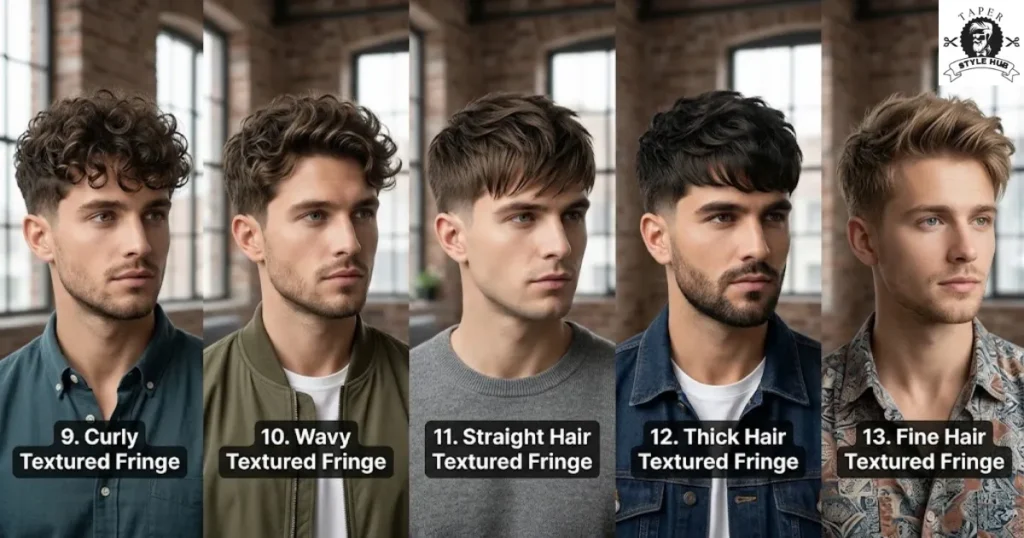
Your natural texture changes how the cut is shaped and styled. These five options are built around the way each hair type behaves.
“All The Types Shown Below Are Displayed In The Single Image Above☝️”
9. Curly Textured Fringe
Natural curls form the fringe, and the taper stops the sides from looking too wide. Keep the top slightly longer than you think, since curls spring up as they dry.
- Best for: curly hair
- Top length: 3 to 4 inches
- Tell your barber: “Keep the curls full on top and taper the sides evenly.”
10. Wavy Textured Fringe
Waves do most of the styling for you, which makes this the easiest version to live with. A light sea salt spray is usually all you need.
- Best for: wavy hair
- Top length: 3 inches
- Tell your barber: “Layer it to show my natural wave.”
11. Straight Hair Textured Fringe
Straight hair needs good cutting technique to avoid looking flat. Point cutting, layering and a little root lift create the movement it lacks naturally.
- Best for: straight hair
- Top length: 2 to 3 inches
- Tell your barber: “Point cut the top and add layers for movement.”
12. Thick Hair Textured Fringe
Thick hair gives you volume to spare, but it needs weight removal so the fringe sits neatly. Light wax or clay keeps it controlled without a greasy finish.
- Best for: thick or dense hair
- Top length: 3 inches
- Tell your barber: “Thin it out so it does not look bulky.”
13. Fine Hair Textured Fringe
Fine hair benefits from a fuller front and lightweight products. Leave some weight in the fringe, because over-thinning makes it look sparse.
- Best for: fine or thinning hair
- Top length: 2 to 3 inches
- Tell your barber: “Keep weight in the fringe and do not over-thin.”
Modern Twists on the Mid Taper Textured Fringe
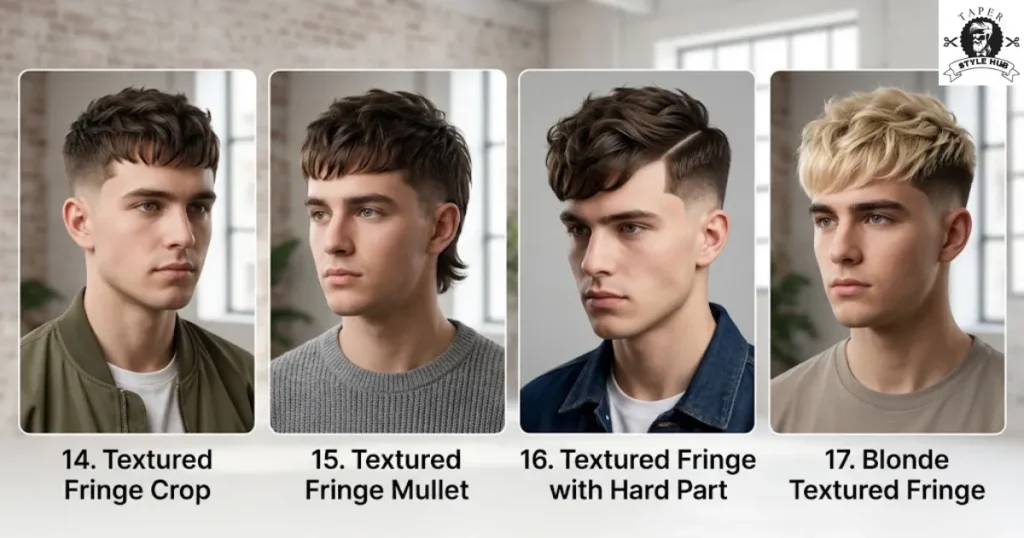
Want something less standard? These variations add shape, color or length at the back while keeping the same clean taper.
“All The Types Shown Below Are Displayed In The Single Image Above☝️”
14. Textured Fringe Crop
Inspired by the French crop, this version keeps the fringe short and textured. It stays out of your eyes, which suits sport and active routines.
- Best for: active lifestyles
- Top length: 1.5 inches
- Tell your barber: “Textured crop, short fringe, mid taper.”
15. Textured Fringe Mullet
The top stays textured while extra length grows at the back. It gives younger men a bolder look without losing the neat sides.
- Best for: creative, confident styles
- Top length: 3 to 5 inches
- Tell your barber: “Keep the back long and the sides tapered.”
16. Textured Fringe with Hard Part
A shaved part line adds sharpness and helps direct the fringe, so styling gets easier. Plan a quick line-up every two weeks to keep it crisp.
- Best for: polished, professional looks
- Top length: 2 to 3 inches
- Tell your barber: “Add a defined side part and keep the top textured.”
17. Blonde Textured Fringe
Lighter tones make every layer easier to see, so the texture stands out in natural light. Highlights work as well as a full blonde color.
- Best for: men who want visible texture
- Top length: 3 inches
- Tell your barber: “Add blonde highlights through the textured top.”
Grooming and Finish Variations of the Mid Taper Textured Fringe
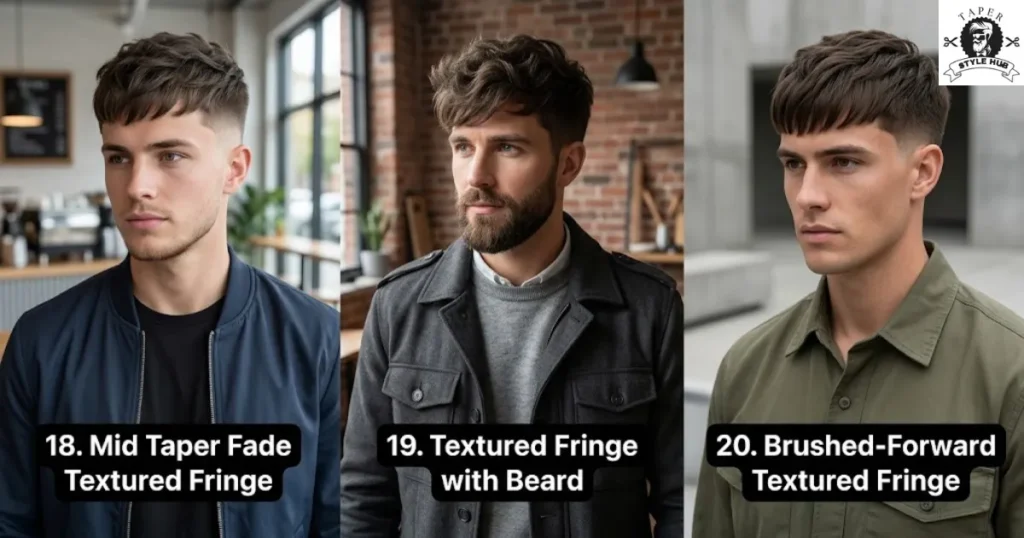
The last three options change the finish rather than the top. They help when you want more contrast, a beard match or a cleaner outline.
“All The Types Shown Below Are Displayed In The Single Image Above☝️”
18. Mid Taper Fade Textured Fringe
Blending the sides slightly closer gives sharper contrast while the top stays full. It works especially well on thick hair and adds definition around the temples.
- Best for: strong jawlines
- Top length: 2 to 3 inches
- Tell your barber: “Mid taper with a short fade at the bottom, no hard line.”
19. Textured Fringe with Beard
A neatly faded beard connects to the sideburns and finishes the look. Keep the transition smooth so the taper and beard read as one shape.
- Best for: men with facial hair
- Top length: 2 to 4 inches
- Tell your barber: “Blend the beard into the sideburns.”
20. Brushed-Forward Textured Fringe
Inspired by the Caesar cut, this short, tidy version brushes forward and suits receding hairlines. It needs very little product and grows out cleanly.
- Best for: receding hairlines
- Top length: 1 to 2 inches
- Tell your barber: “Short, textured, brushed forward with a mid taper.”
Quick Guide to Choosing Your Style
Not sure which of the 20 to pick? Match your hair type to the table below and start with the first style listed.
| Hair Type | Best Styles | Main Tip |
|---|---|---|
| Straight | 1, 5, 6, 11 | Add layers for lift |
| Wavy | 4, 7, 10 | Let it air dry |
| Thick | 3, 6, 12 | Remove weight |
| Curly | 9, 15 | Keep the top longer |
| Fine | 2, 13, 20 | Do not over-thin |
Mid Taper vs Low Taper vs High Taper
Taper height changes how much contrast shows from the front. The fringe can stay exactly the same, so compare the three before you decide.
| Feature | Mid Taper | Low Taper | High Taper |
|---|---|---|---|
| Starting Point | Around the temple | Just above the ears | Higher on the sides |
| Overall Look | Balanced and modern | Soft and classic | Sharp and bold |
| Contrast | Medium | Low | High |
| Best For | Most face shapes | Subtle, professional styles | Thick hair and defined looks |
| Trim Schedule | Every 3 to 4 weeks | Every 4 weeks | Every 2 to 3 weeks |
If you want one haircut that works almost anywhere, a mid taper textured fringe offers the most balanced contrast without removing too much from the sides.
Mid Taper Textured Fringe vs Mid Fade
A mid taper blends the temple and neckline only, so the sides keep weight and the fringe looks fuller. A mid fade takes a band around the whole side and back.
Pick the taper for a softer, office-friendly shape. Pick the fade when you want the fringe to stand out against much shorter sides.
Mid Taper Textured Fringe vs Other Fringe Cuts
Plenty of fringe haircuts look similar from across a room. The table below shows how each one differs in length, finish and effort.
| Cut | Finish | Top Length | Effort |
|---|---|---|---|
| Textured Fringe | Soft and messy | 2 to 5 inches | Low |
| Blunt Fringe | Sharp and solid | 2 to 4 inches | Medium |
| French Crop | Short and controlled | 1 to 2 inches | Low |
| Curtain Fringe | Soft and parted | 4 to 6 inches | Medium |
Cutting Techniques That Create the Texture
Texture comes from how the barber removes weight, not from cutting the top shorter. Three techniques do most of the work, and each gives a slightly different finish.
Point Cutting
The barber holds the shears vertically and snips into the ends. This breaks up the edge and creates a piece-y finish instead of a blunt line.
Razor Cutting
A razor tapers individual strands for a softer, feathered edge. It suits thick hair, but it can leave fine or frizzy hair looking fuzzy.
Slide Cutting
Shears glide down the hair shaft to remove bulk while keeping length. It is useful when you want movement without losing the fringe.
How to Ask Your Barber for a Mid Taper Textured Fringe
Vague requests lead to surprises, so name each decision clearly. Show two or three reference photos with a similar hair type, including front, side and back views.
- State the taper height: “Start the taper around the temple.”
- Describe the finish: skin or soft shadow at the bottom.
- Give the top length or point to a photo.
- Ask for point cutting, not a blunt line.
- Request a blended fade with no hard edge.
- Confirm the neckline and sideburn shape.
- Ask how often to return to keep it sharp.
A simple version to say aloud: “Mid taper at the temple, shadow finish, keep the length on top and point cut the fringe so I can push it forward.”
Barber Tips for the Best Results
Small habits during the appointment make a big difference to the final cut. Keep these points in mind before you sit down.
- Bring photos of someone with similar hair texture and density
- Tell the barber how much time you spend styling each morning
- Start longer, because you can always go shorter
- Mention cowlicks or a receding hairline early
- Ask which products suit your hair type
Guard Sizes for a Mid Taper Textured Fringe
Guard numbers tell the barber exactly how short to go. Treat the table below as a starting point, because head shape and density can change the plan.
| Guard | Length | Where It Is Used |
|---|---|---|
| Foil or 0 | 0 mm | Bottom of a skin finish |
| 0.5 | 1.5 mm | Neckline and around the ears |
| 1 | 3 mm | Lower taper zone |
| 2 | 6 mm | Mid taper zone |
| 3 | 10 mm | Upper blend into the top |
| Scissors | 2 to 5 inches | Textured fringe on top |
Skin Finish vs Shadow Finish
Closeness is a separate choice from taper height. A skin finish goes down to the scalp at the shortest point, while a shadow finish leaves a trace of hair.
Shadow holds its shape longer between visits and is kinder to sensitive skin. Skin looks sharper on day one but softens within about a week.
How to Style a Mid Taper Textured Fringe at Home
Styling takes about five minutes once you know the routine. Work with damp hair and use your fingers instead of a comb to keep the layers separated.
- Wash with a lightweight shampoo so the fringe does not get weighed down.
- Towel dry gently until the hair is damp, not dripping.
- Spray sea salt spray through the roots to build grip.
- Blow dry the fringe forward while lifting the roots with your fingers.
- Warm a pea-sized amount of matte clay between your palms and work it through.
- Pinch and separate the ends, then stop before the top looks stiff.
Best Hair Products for a Mid Taper Textured Fringe
Matte, dry-finish products keep the pieces apart. Shiny gels and heavy pomades smooth the fringe flat, which defeats the point of the texture.
| Product | Effect | Best For |
|---|---|---|
| Matte Clay | Flexible hold, no shine | Everyday texture |
| Texture Paste | Medium hold, easy to rework | Messy and short fringes |
| Sea Salt Spray | Adds grip and body | Straight and fine hair |
| Texture Powder | Instant lift, no weight | Fuller looking fringes |
| Styling Cream | Light control, natural finish | Wavy and curly hair |
| Leave-In Conditioner | Softens and reduces frizz | Curly and coarse hair |
| Heat Protectant | Shields hair from the dryer | Daily blow drying |
Maintenance Tips for a Mid Taper Textured Fringe
The taper loses its edge before the fringe does, so most men refresh the sides more often than the top. Hair grows about half an inch a month, which explains why.
| Task | Frequency | Why It Matters |
|---|---|---|
| Barber trim | Every 3 to 4 weeks | Keeps the taper sharp |
| Neckline clean-up | Every 2 to 3 weeks | Stops the outline looking fuzzy |
| Washing | 2 to 3 times a week | Protects natural oils |
| Deep conditioning | Weekly | Controls frizz in curly hair |
| Product refresh | As needed | Revives a flat fringe |
Between visits, finger style the fringe, protect it from heat and avoid layering too much product. Small habits keep the texture alive.
How Fast Does a Mid Taper Grow Out?
Healthy hair grows roughly half an inch a month, which is about an eighth of an inch a week. That is the same gap as one guard size.
So the taper climbs about one guard number each week. A skin finish blurs quickly, while a shadow finish has further to travel before contrast disappears.
Hair and Scalp Care Between Cuts
Wash with a shampoo that matches your hair type and avoid washing daily if your hair turns dry. Conditioner adds the softness and body the fringe depends on.
If you blow dry often, apply heat protectant first and use medium heat. Too much heat damages any hair type over time.
Razor bumps near the neckline are common after very close cuts. Ask for a shadow finish, and see a dermatologist if the bumps keep returning.
Common Mistakes With a Mid Taper Textured Fringe
- Using too much product, which turns texture into a heavy block
- Choosing shiny gel instead of matte clay or paste
- Cutting the top too short, so the pieces cannot move
- Over-thinning the fringe until it looks wispy
- Skipping trims and letting the taper grow into a shapeless outline
- Walking into the barbershop without reference photos
Pros and Cons of a Mid Taper Textured Fringe
No haircut is perfect, so here is an honest look at what you gain and what you commit to.
Pros
- Works with straight, wavy, curly and thick hair
- Adds natural volume and movement
- Suits most face shapes with small tweaks
- Looks good with or without a beard
- Fits both casual and professional settings
Cons
- Needs a trim every 3 to 4 weeks
- Looks best with a few minutes of daily styling
- Longer fringes need more product and patience
- Heavy products can flatten the texture
- Not ideal if you want zero maintenance
Is a Mid Taper Textured Fringe Right for You?
The cut is a strong match if you recognize yourself in most of the points below.
- You want a modern look without a full skin fade
- You prefer natural movement over a stiff, combed style
- Your hair is straight, wavy, curly or thick
- You can spare a few minutes each morning
- You can visit your barber every 3 to 4 weeks
If you want hair that needs no styling at all, a shorter crop may suit you much better. Talk it through with your barber first.
Final Thoughts on the Mid Taper Textured Fringe
The mid taper textured fringe balances clean, tapered sides with an expressive top, which is why it keeps appearing in barbershops year after year. It adapts to hair type, face shape and lifestyle with small adjustments.
Bring reference photos, describe the taper height and fringe length clearly, and keep up with regular trims. Do that and your new haircut will stay sharp from the first day to the last.
FAQs About Mid Taper Textured Fringe
What is a mid taper textured fringe?
It is a haircut with sides that taper from the temple down and a layered fringe falling forward on top.
How often should I trim a mid taper textured fringe?
Every three to four weeks keeps the taper sharp and the fringe in shape.
Is a mid taper textured fringe good for straight hair?
Yes. Point cutting and a little texture powder add the movement straight hair lacks.
Can curly hair get a mid taper textured fringe?
Yes. The taper controls the sides while the curls stay full and defined on top.
Is a mid taper the same as a mid fade?
No. A taper blends only the temple and neckline, while a fade covers the whole side and back.

I’m M Ahmad Ansari, founder and content creator at Taper Style Hub. With 3+ years of experience researching taper haircuts, hairstyles, grooming, and men’s style, I create practical, accurate, and easy-to-understand content. My goal is to provide readers with trustworthy information, useful tips, and inspiring ideas for choosing and styling the perfect taper haircut.
One Comment