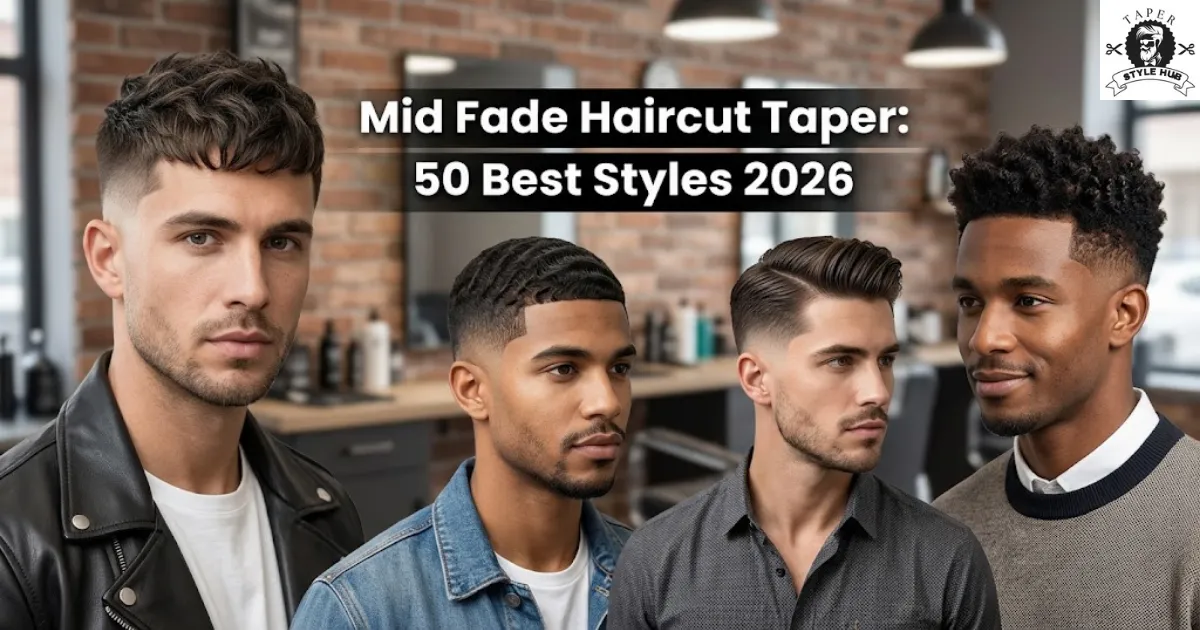
Mid Fade Haircut Taper:50 Best Styles 2026
The mid fade haircut taper is the cut barbers hear about every single day, and for good reason. It sits between a low taper and a high fade, so you get sharp edges without going too dramatic.
It works on curly, straight, wavy and coily hair, and it suits most face shapes. Better still, it looks right in an office, at a weekend barbecue or on a night out.
This guide covers placement, contrast, barber wording, guard numbers and 50 styles sorted into clear categories. You will also find tips on hair type, face shape, products and upkeep, so you can walk into the chair with confidence.
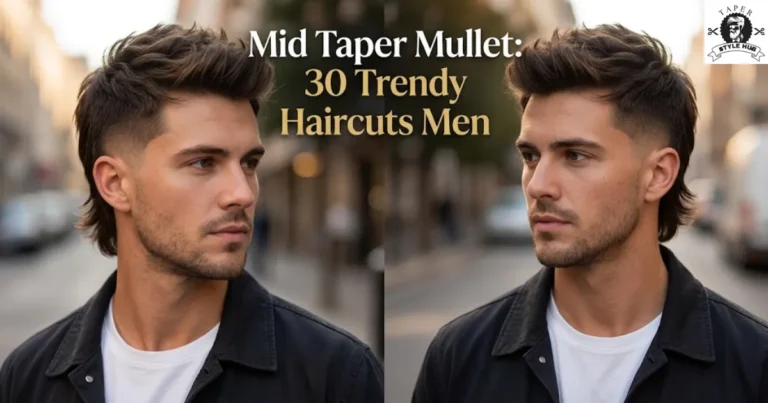
👉 Also Read: Mid Taper Mullet
Mid Fade Haircut Taper Guide: Everything You Need to Know Before Your Next Cut
Before picking a style, it helps to understand what the cut actually does to your head. Once the basics are clear, choosing from the 50 ideas below becomes much easier.
👉 Also Read: Taper Mid
What Is a Mid Fade Haircut Taper?
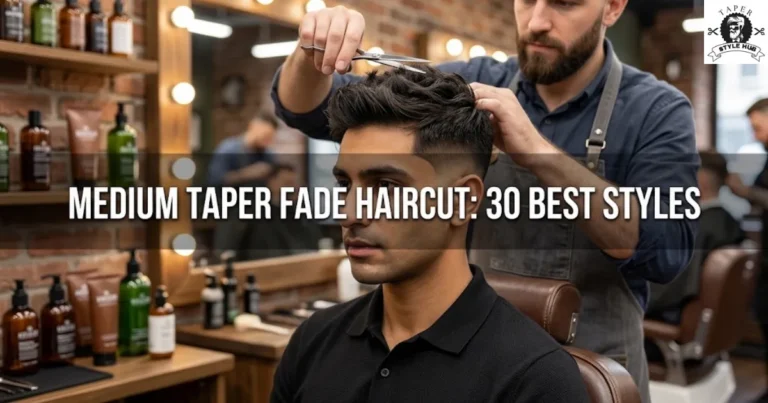
A mid fade haircut taper is a men’s cut where the sides and back shorten gradually, starting around the temples and sideburns. The blend begins near eyebrow level and melts down toward the ear and neckline.
Hair on top keeps its length and texture, so the contrast between the long crown and the tidy sides does most of the visual work. There is no harsh line, only a smooth gradient.
Because the starting point sits halfway up the head, the look feels balanced. It shows more skin than a low taper but far less than a high fade, which makes it the safest first fade.
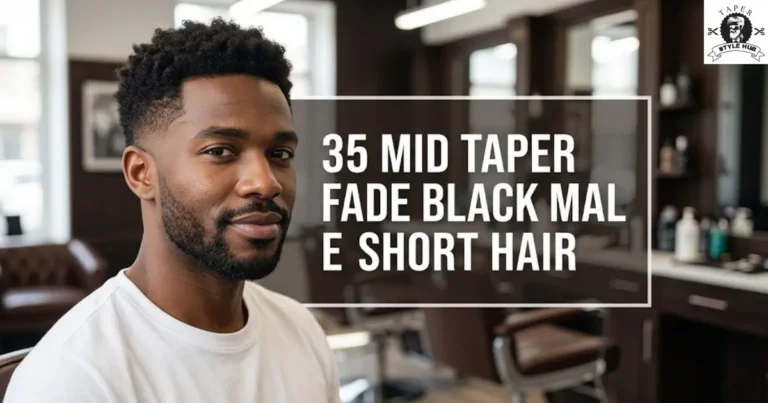
👉 Also Read: Mid Taper Fade Black Male Short Hair
Why the Mid Fade Haircut Taper Is So Popular in 2026
Versatility is the main reason. Barbers cut this shape on straight, curly and coily hair every day, and it flatters oval, square and heart-shaped faces without needing major changes.
It also adapts to your week. Keep the top sleek for Monday meetings, then rough it up with clay on Saturday. The blend underneath stays the same, so one cut handles both moods.
Trends come and go quickly, yet this cut keeps filling barbershop appointment books. Its balance of sharp and subtle is hard to beat, which is why it remains a modern classic.
👉 Also Read: Curly Low Taper Fade
Key Characteristics of a Mid Fade Haircut Taper
- Fade height: begins around the temples, roughly at eyebrow level.
- Blending: a smooth, gradual gradient down the sides and back with no harsh lines.
- Top length: anything from a one-inch buzz to six inches or more of texture.
- Skin exposure: moderate, more than a low taper and less than a high fade.
- Contrast: balanced and noticeable without feeling extreme.
- Maintenance: a touch-up every two to three weeks keeps it sharp.
👉 Also Read: Low Taper Textured Fringe
What a Mid Fade Haircut Taper Looks Like from Every Angle
Seeing the cut from the front, side and back makes it easier to explain to your barber. Each angle shows a different part of the blend.
👉 Also Read: Low Taper Fringe
Front View
The hairline looks crisp and clean, and the fade starts at the temples. Longer hair on top frames the face, while the tidy sides highlight your jawline and cheekbones.
👉 Also Read: Short Low Taper Fade
Side Profile
From the side, hair becomes progressively shorter as it moves toward the ear and sideburns. The gradient is smooth, with at least three length zones blending into each other.
Back View
The crown keeps its full length, and the taper follows the curve of the skull down to the neckline. A well-done blend shows no shelf or heavy weight line.
Mid Fade vs Mid Taper: Is There a Real Difference?
Barbers use both words loosely, but there is a technical difference. A mid fade haircut taper creates a broad gradient across the middle of the sides and back, while a mid taper stays closer to the sideburns and neckline.
A taper keeps more weight through the main side panel, so the result looks quieter. A fade removes more bulk and shows stronger contrast, especially when it blends down to the skin.
| Feature | Mid Fade | Mid Taper |
|---|---|---|
| Blend area | Broad gradient across sides and back | Mostly sideburns and neckline |
| Contrast | Clear and obvious | Soft and subtle |
| Side weight | Less bulk through the sides | More hair kept above the ear |
| Skin exposure | Higher when faded to skin | Lower, usually a shadow |
| Grow-out | Loses sharpness in two to three weeks | Grows out quietly in three to five weeks |
Neither term fixes the shortest length. Both can start at a 0.5, a 1 or bare skin, so always tell your barber exactly how close you want the bottom of the blend.
Where the Mid Fade Haircut Taper Sits on the Fade Spectrum
Think of fades as a ladder. The low version starts just above the ear, the high version starts near the crown, and the mid version lands in the comfortable centre.
| Fade Type | Starting Point | Contrast | Best For |
|---|---|---|---|
| Low Taper | Just above the ear | Subtle | Conservative or formal settings |
| Mid Taper | Temple, around eyebrow level | Balanced | Most workplaces and daily wear |
| High Taper | Near the crown | Bold | Strong statement looks |
That middle position is why the cut feels so flexible. You can keep it polished for work and still look relaxed at the weekend without changing a thing.
Mid Fade Haircut Taper vs Other Popular Fades
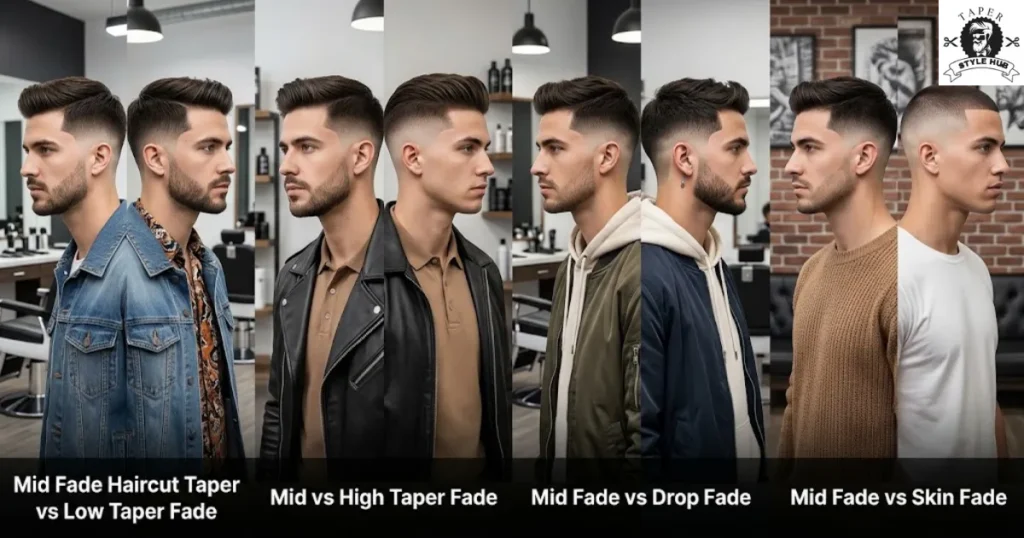
Fade names can get confusing, so here is how the mid fade haircut taper compares with the cuts people often mix it up with.
“All The Types Shown Below Are Displayed In The Single Image Above☝️”
Mid Fade Haircut Taper vs Low Taper Fade
A low taper starts just above the ear and looks soft and understated. The mid version starts higher at the temple, so the contrast is sharper and the shape reads more defined.
Mid vs High Taper Fade
A high fade begins near the crown and exposes a lot of skin, which suits bold looks and thick hair. The mid option is calmer and easier to wear at work.
Mid Fade vs Drop Fade
A drop fade curves down behind the ear instead of running level. Add that curve to a mid start and you get a mid taper drop fade with extra shape at the back.
Mid Fade vs Burst Fade
A burst fade radiates in a semicircle around the ear, which works well with faux hawks and mohawks. The mid version keeps a simple horizontal line that suits every top style.
Mid Fade vs Skin Fade
A skin fade always finishes at bare skin. A mid taper may stop at a short shadow, so ask for a mid skin fade if you want the sharpest possible finish.
50 Best Mid Fade Haircut Taper Styles for Men in 2026
Below, every style is grouped by category so you can jump straight to what fits your hair and your routine. Each idea keeps the same clean sides and changes only what happens on top.
Classic and Professional Mid Fade Haircut Taper Styles
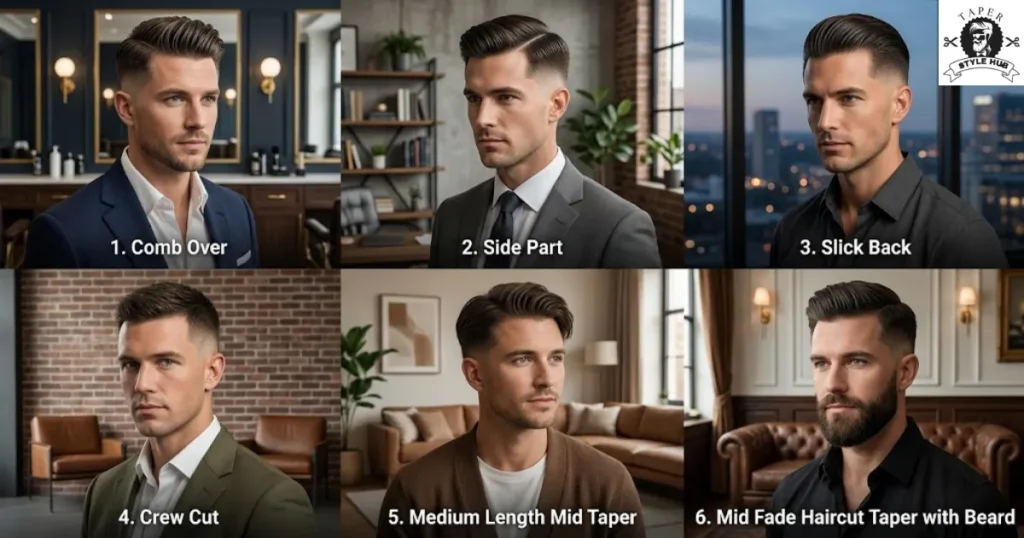
These cuts suit offices, interviews and formal events. The top stays neat while the blend does the polishing.
“All The Types Shown Below Are Displayed In The Single Image Above☝️”
1. Comb Over
A mid fade haircut taper with a comb over sweeps longer hair to one side above clean tapered sides. Apply pomade to damp hair, comb through, then finish with light hairspray for all-day control.
2. Side Part
A defined part line and a longer top add structure without looking stiff. Blow dry in the direction of the part and smooth it with a little pomade for polish and shine.
3. Slick Back
Swept back hair over tight sides looks sharp at work and relaxed at dinner. A round brush and a touch of pomade keep the shape smooth from morning until night.
4. Crew Cut
A short, even top with the blend running around the head gives a tidy, athletic feel. It needs almost no styling and stays comfortable in hot weather or busy schedules.
5. Medium Length Mid Taper
Medium hair on top lets you swap between a side part and a textured finish. It is the easiest choice if you like changing your look every few weeks without a new cut.
6. Mid Fade Haircut Taper with Beard
The blend flows straight into the beard line, so hair and beard read as one connected shape. Book both trims in the same visit to keep the transition seamless and sharp.
Textured and Fringe Mid Fade Haircut Taper Styles
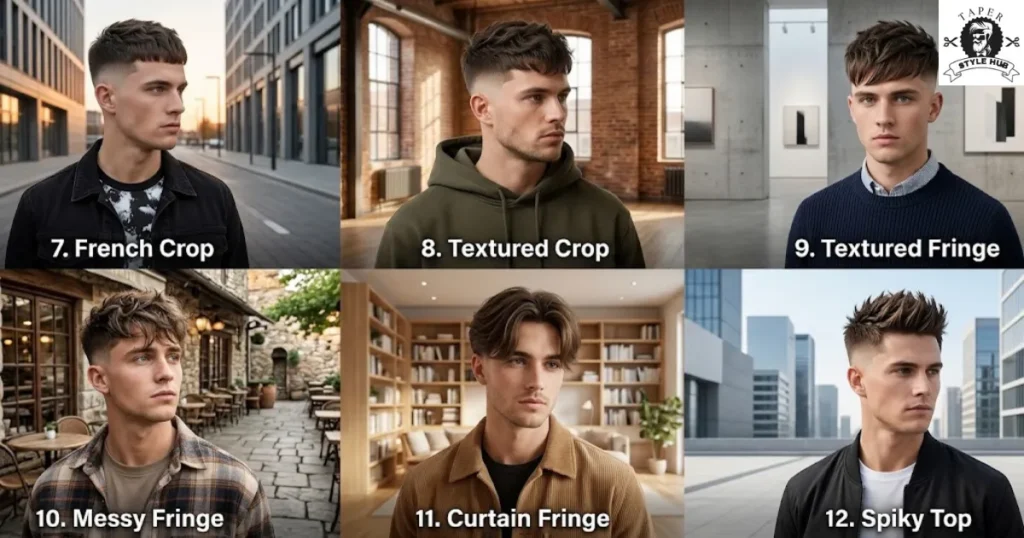
Texture adds movement and personality. These looks work best with straight to wavy hair and a little clay for grip.
“All The Types Shown Below Are Displayed In The Single Image Above☝️”
7. French Crop
Short, textured hair falls forward into a neat fringe above clean sides. It is low effort, and a pinch of texture clay gives it matte grip and clear definition.
8. Textured Crop
Choppy layers on top create depth without much work. This mid fade haircut taper variation suits guys who want to look stylish with only a few minutes of effort each morning.
9. Textured Fringe
Layered, piece-y hair styled forward frames the face and adds edge. Leave two to three inches on top so the fringe has room to sit properly and move naturally.
10. Messy Fringe
Without a fade, a messy fringe can look unkempt. With a mid fade haircut taper underneath, the same tousled top looks deliberate, confident and completely intentional.
11. Curtain Fringe
Hair parts in the centre and falls to both sides in a nineties-inspired shape. Tapered sides keep the look modern instead of dated, and the part frames the face nicely.
12. Spiky Top
Short, textured spikes bring youthful energy while the blend keeps everything tidy. Work texturing paste through damp hair and pull small sections upward for a lively finish.
Voluminous and Lifted Mid Fade Haircut Taper Styles
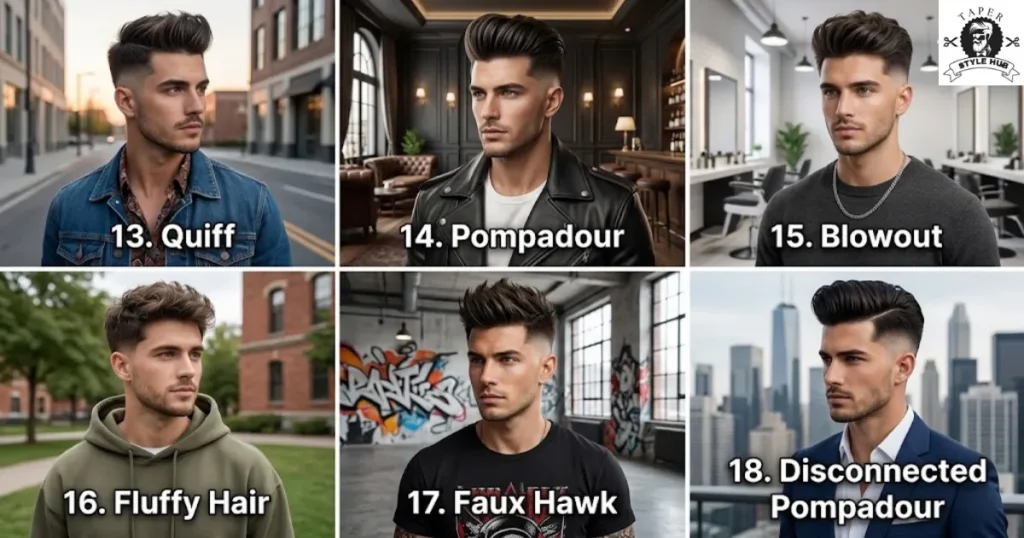
Height and lift draw attention upward, which helps balance wider faces and adds confidence to thick hair.
“All The Types Shown Below Are Displayed In The Single Image Above☝️”
13. Quiff
The front sweeps up and back for height, while the sides stay sleek. Blow dry upward with a round brush and set the shape with molding paste for flexible, natural hold.
14. Pompadour
A bold, voluminous top rises above faded sides for a retro-inspired silhouette. Strong-hold pomade and a hairdryer help the height last through a long evening out.
15. Blowout
Hair is dried up and forward for airy volume that looks fuller than it feels. Sea salt spray before drying gives the lift real grip, and your fingers do the shaping.
16. Fluffy Hair
Soft, bouncy volume sits on top while the blend keeps the sides neat. Embrace the fluff and use light cream rather than heavy products, so the hair stays airy and natural.
17. Faux Hawk
The centre rises into a gentle ridge while the sides stay close. It is playful, easy to style and works especially well with a mid fade haircut taper on thick hair.
18. Disconnected Pompadour
A hard part separates the long top from the faded sides, which sharpens the contrast. It feels more dramatic than a standard pompadour and rewards confident styling.
Curly and Wavy Mid Fade Haircut Taper Styles
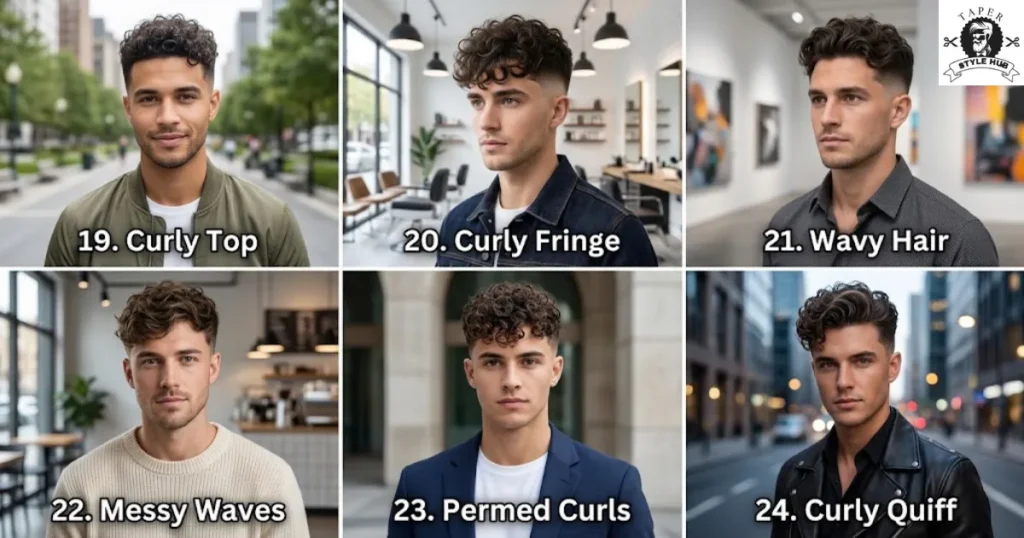
Natural texture does half the styling for you. The blend simply controls the sides so curls and waves can shine.
“All The Types Shown Below Are Displayed In The Single Image Above☝️”
19. Curly Top
Tight curls on top over a clean fade create a bold, youthful shape. Apply curl cream to damp hair and diffuse on low heat to keep definition without frizz.
20. Curly Fringe
Curls fall forward over the forehead for a relaxed, artistic feel. Keep a couple of inches of length because curls shrink noticeably as they dry.
21. Wavy Hair
Soft waves on top pair beautifully with sharp edges. Scrunch in a little texture cream and let the hair dry naturally for effortless movement and body.
22. Messy Waves
Loose, beachy waves keep the look casual while the fade holds the outline. A spritz of sea salt spray adds grip without making the hair feel stiff or crunchy.
23. Permed Curls
A perm adds bounce to straight hair, and the tight sides keep the volume balanced. Handle it gently and use a diffuser to protect the curl pattern between washes.
24. Curly Quiff
Curls lift at the front into a rounded quiff over tidy sides. It is a great way to turn natural volume into a deliberate, well-structured style.
Mid Fade Haircut Taper Styles for Black Men and Afro-Textured Hair
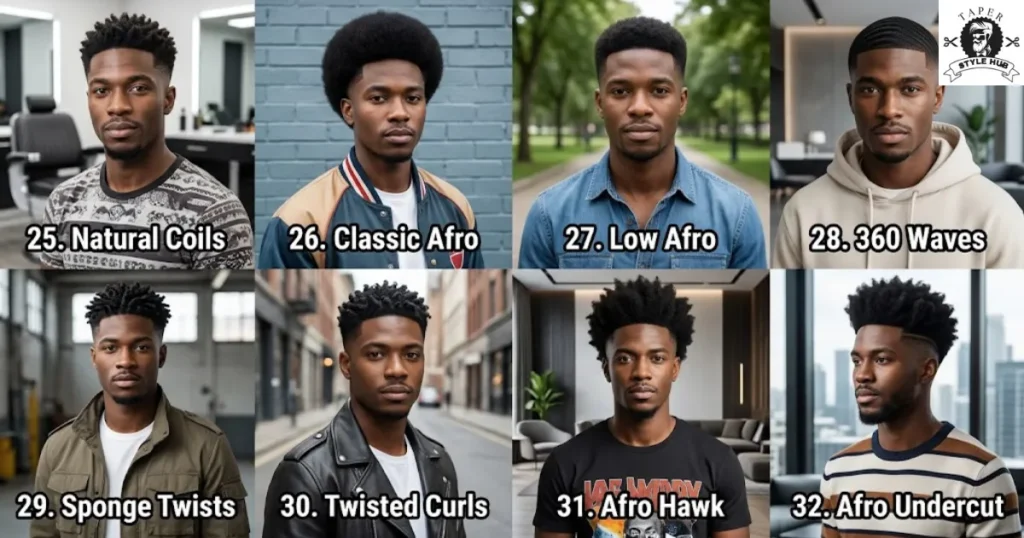
A mid fade haircut taper works especially well on coily textures because it removes side bulk and keeps the top full. Find a barber experienced with your hair type.
“All The Types Shown Below Are Displayed In The Single Image Above☝️”
25. Natural Coils
Tight coils on top sit above crisp tapered sides and sharp edges. Use a lightweight cream on damp hair and diffuse on low heat to protect the shape and volume.
26. Classic Afro
A rounded afro creates bold contrast against clean sides. Use a pick to lift the volume and a leave-in conditioner to keep the strands soft and healthy.
27. Low Afro
Kept close to the head, this version looks neat enough for the office. Ask your barber to round the top slightly so it grows out evenly and holds its shape.
28. 360 Waves
Deep wave patterns take centre stage because the clean sides frame them perfectly. Brush often and keep the scalp moisturised for the best ripples and a healthy shine.
29. Sponge Twists
Defined coils create a textured top that stands out against tapered sides. Use a curl sponge with twist cream and move in small circles for even, tidy coils.
30. Twisted Curls
Defined twists sit on top while the sides stay controlled. It suits men who want a visible curl pattern without the volume of a full afro.
31. Afro Hawk
A strip of afro texture runs down the centre with faded sides on either side. It is bold and eye-catching, so keep the lines sharp with regular visits.
32. Afro Undercut
A hard disconnect separates the afro from the tapered sides. This keeps natural volume intact on top while the sides stay sharp and controlled underneath.
Locs, Braids and Protective Mid Fade Haircut Taper Styles
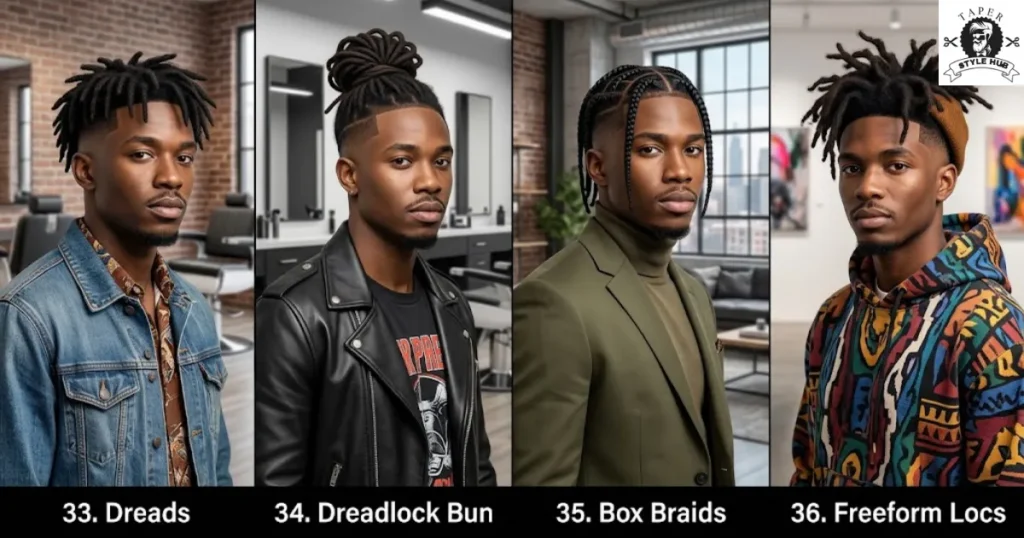
Protective styles bring their own volume, so the blend keeps the sides from competing with them.
“All The Types Shown Below Are Displayed In The Single Image Above☝️”
33. Dreads
Dreads on top pair with a tight fade for a clean silhouette. Light oils keep locs fresh, while regular trims keep the edges sharp and the outline looking intentional.
34. Dreadlock Bun
Locs tied into a bun stay off the face and look professional. The blend underneath keeps the perimeter neat and structured, even when the locs are pulled up tight.
35. Box Braids
Traditional box braids gain a sharper edge when the sides are tapered. Moisturise the scalp between visits and refresh the braids regularly to keep everything looking neat.
36. Freeform Locs
Freeform locs grow naturally, and the fade stops the look from feeling unfinished. It respects natural growth while adding a little deliberate structure around the sides.
Straight, Asian and Thick Hair Mid Fade Haircut Taper Styles
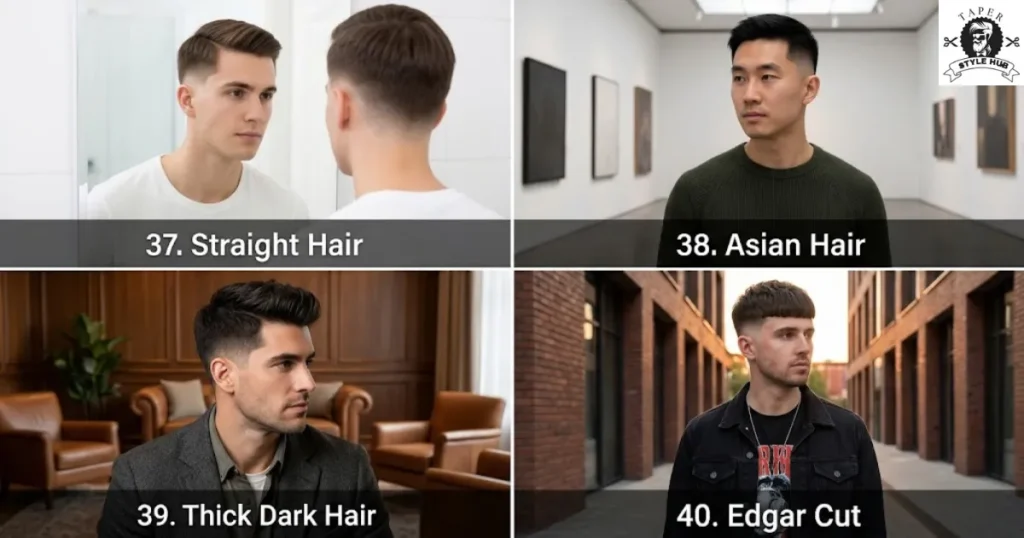
Straight and dense hair shows every line clearly, so precision matters. The upside is a crisp, long-lasting result.
“All The Types Shown Below Are Displayed In The Single Image Above☝️”
37. Straight Hair
Straight hair can look flat without structure, and the blend supplies it. A light clay on top stops the cut from falling flat against the sharp sides.
38. Asian Hair
Thick, straight hair holds a mid fade haircut taper beautifully. A light matte cream keeps the shape in place, and no heavy product is needed to look sharp.
39. Thick Dark Hair
Dense, dark hair keeps the fade line crisp for longer between visits. Ask your barber to use a razor or fade scissors at the blend, since thick hair needs extra thinning there.
40. Edgar Cut
A blunt, straight-across fringe sits above tight tapered sides for a confident street style look. Regular trims matter because the fringe loses its sharp edge fast.
Short and Buzz Cut Mid Fade Haircut Taper Styles
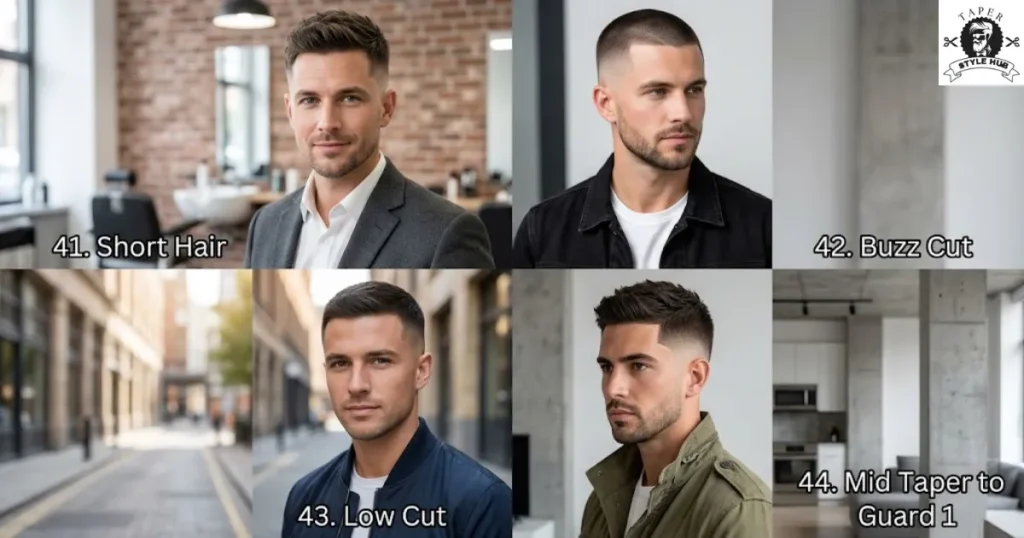
Short cuts need the least effort and show the blend most clearly.
“All The Types Shown Below Are Displayed In The Single Image Above☝️”
41. Short Hair
One to two inches on top with a clean blend gives a polished, low-maintenance look. A dab of light cream defines texture without adding shine or weight.
42. Buzz Cut
A tight, even buzz above a clean taper sharpens the hairline and highlights facial structure. It is as simple as grooming gets, and it needs almost no daily effort.
43. Low Cut
A short, thick, lightly tousled top with tight sides feels natural and modern. Matte cream and your fingers are all the styling you need for a relaxed finish.
44. Mid Taper to Guard 1
A number 1 on the sides leaves about three millimetres of hair, which is skin-close and very sharp. It creates strong contrast with whatever length you keep on top.
Long Hair and Mullet Mid Fade Haircut Taper Styles
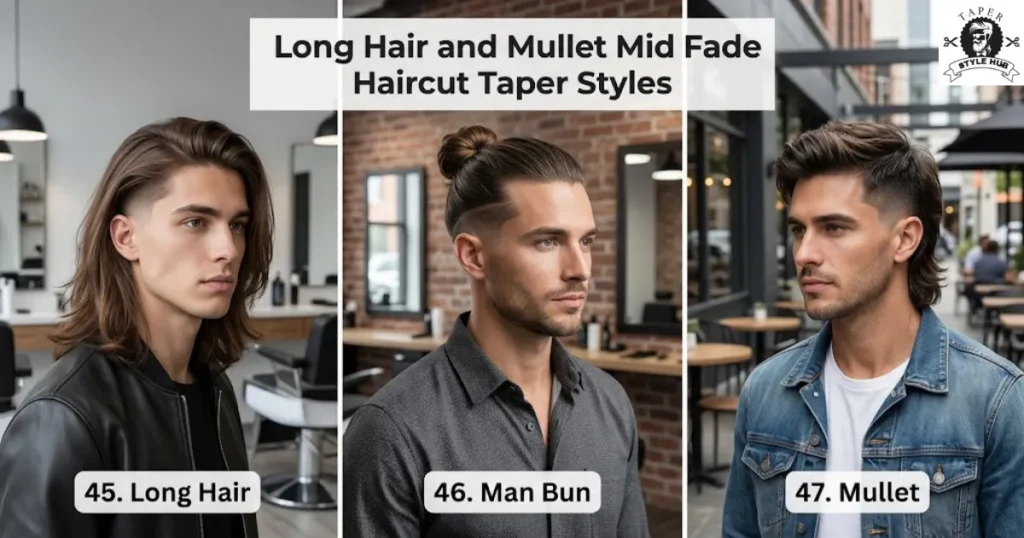
Length on top contrasts with tight sides, creating a silhouette that stands out without a dramatic cut.
“All The Types Shown Below Are Displayed In The Single Image Above☝️”
45. Long Hair
Flowing layers on top against sleek tapered sides make a bold contrast. Use volumising cream and your fingers to direct natural movement without making it look forced.
46. Man Bun
Long hair tied up into a bun looks tidy, and the subtle blend keeps the sides clean. Smooth the top with a little serum before tying it to control flyaways.
47. Mullet
Short sides and a longer back are tied together by a smooth blend through the temples. It makes the modern mullet wearable rather than wild, even in a conservative workplace.
Colour and Custom Mid Fade Haircut Taper Styles
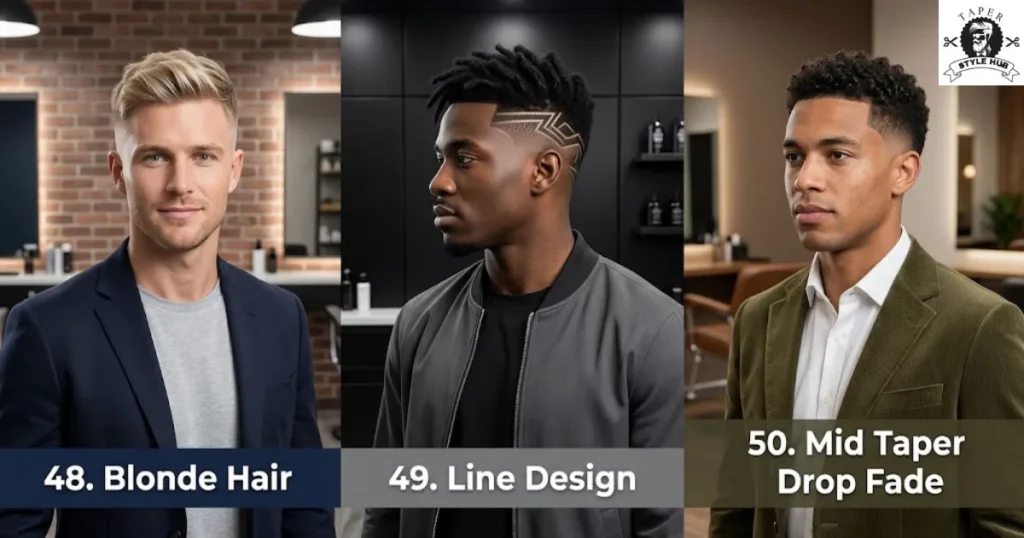
Colour and detail make a familiar cut feel personal. These styles let the blend act as a frame.
“All The Types Shown Below Are Displayed In The Single Image Above☝️”
48. Blonde Hair
Lighter hair makes the fade gradient far more visible. Blow dry gently to protect colour-treated strands and use matte cream for natural texture and separation.
49. Line Design
A shaved line or small pattern carved into the fade makes the cut one of a kind. Visit your barber every two weeks so the design stays sharp and clearly defined.
50. Mid Taper Drop Fade
The blend curves behind the ear, following the skull and adding shape at the back. Request the drop specifically, since a standard mid taper stays level all the way around.
How to Choose the Right Mid Fade Haircut Taper for Your Hair Type
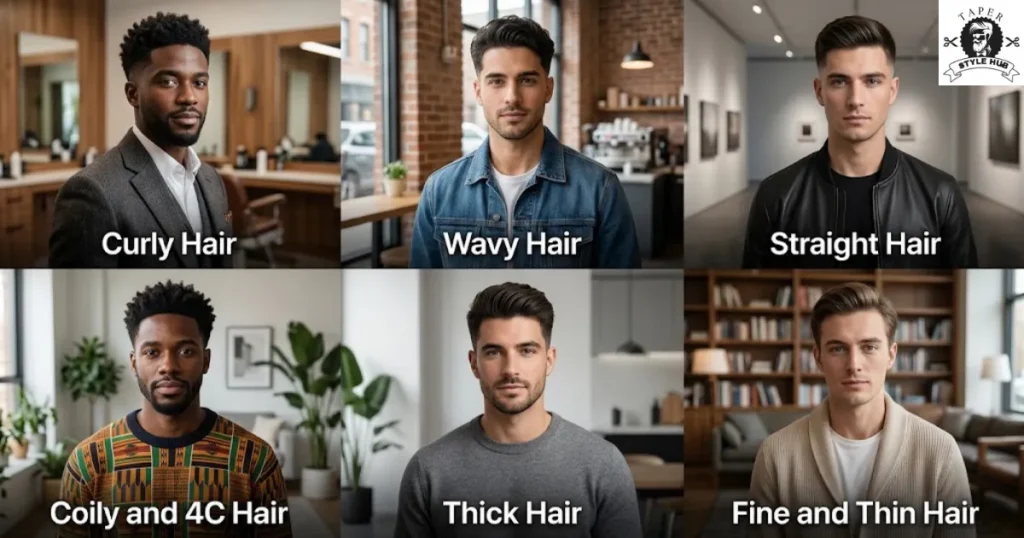
Hair type changes how the blend looks, grows out and holds shape. Matching the cut to your texture saves you from a second trip to the barber.
“All The Types Shown Below Are Displayed In The Single Image Above☝️”
Curly Hair
Keep at least two inches on top so curls can form properly. The blend removes side bulk, which curly hair tends to push outward, and leaves the curl pattern free to show.
Wavy Hair
Wavy hair is probably the easiest texture to work with. Natural movement handles itself while the sides stay tidy, and appointments can often stretch a few extra days.
Straight Hair
Straight hair shows every line, so precise blending matters. Finish with clay or pomade, otherwise the top can fall flat against the sharp sides and look one-dimensional.
Coily and 4C Hair
Dense coils respond well to a gradual blend that balances volume. Moisture is essential, so pair the cut with a leave-in conditioner and natural oils to prevent dryness.
Thick Hair
Thick hair gets bulky quickly, and the mid position removes weight cleanly. Strong-hold products such as clay or molding paste help control the top and stop it puffing out.
Fine or Thin Hair
A mid start keeps more coverage than a high fade and creates the illusion of density. Texture powder at the roots adds lift without weighing thin strands down.
Best Mid Fade Haircut Taper by Face Shape
Face shape decides how much height, width and length suit you. Small tweaks to the top often matter more than the fade itself.
Oval Faces
Balanced proportions mean almost any top works here. Oval faces are ideal for experimenting with bolder styles, so try a quiff, a fringe or a slick back.
Round Faces
Add height on top and keep the sides tight to create length. Quiffs, blowouts and textured tops all draw the eye upward and slim the shape.
Square Faces
A strong jaw already has structure, so soften it with texture or loose curls. A well-groomed beard also frames the jawline and gives the whole look a masculine finish.
Heart-Shaped Faces
Keep the top at medium height and aim volume toward the crown. A light fringe or side part balances a wider forehead and a narrower chin.
Diamond Faces
A textured top with movement softens prominent cheekbones. Side parts, comb overs and fringes all work well because they balance the width at the cheeks.
Oblong Faces
Avoid extra height, which lengthens the face further. A fringe, a messy crop or a middle part adds width and creates better proportions.
Best Mid Fade Haircut Taper Styles by Age Group
The cut works at nearly every age. The right variation simply depends on your lifestyle and how much time you want to spend styling.
Teenagers
Teens usually want something low effort that still looks good. A textured fringe, messy top or blowout all work, and the cut fits most school dress codes easily.
Young Men
Guys in their twenties have the most freedom. Wear a curly top on weekends and a slick back during the week, with the same blend underneath.
Professional Men
A clean comb over or side part reads as polished without looking stiff. Touch it up every two to three weeks so it keeps looking intentional.
Older Men
Mature men often prefer a softer finish, so ask for a shadow instead of skin. A gentle blend keeps thinning areas looking tidy and the overall shape clean.
Mid Fade Haircut Taper for Work, Weekends and Special Occasions
One of the best things about this cut is how easily it moves between settings. A small change in product or styling is usually all it takes.
Office and Interviews
Keep the top neat with a side part or comb over and use pomade for a controlled finish. The clean blend signals attention to detail without trying too hard.
Weekends and Casual Days
Rough up the top with texture clay or sea salt spray for a relaxed shape. The same sides that look polished at work now frame a casual, lived-in top.
Weddings and Special Events
A slick back or quiff with a fresh line-up looks sharp in photos. Book your touch-up a few days beforehand so the edges are crisp on the day.
How Barbers Cut a Mid Fade Haircut Taper
Knowing the process helps you spot a good barber and ask better questions. Most barbers follow the same basic order.
Section the Hair
The barber separates the top from the sides and back, marking where the blend will start. This mark at the temple is the most important decision in the whole cut.
Clipper Work
Clippers with a taper lever or different guards remove length gradually, working from short at the bottom to longer near the mark. Clipper-over-comb work smooths the transition.
Detailing
The neckline, sideburns and hairline are cleaned with a trimmer or razor. A sharp outline is what makes the finished cut look expensive.
How to Ask Your Barber for a Mid Fade Haircut Taper
Vague requests such as clean me up lead to disappointment. A few specific details help your barber deliver exactly what you pictured.
- Say the full name of the cut, so the word mid tells your barber where to begin.
- Bring photos from the front, side and back, ideally of someone with your hair type.
- Name the starting point, for example the temple at eyebrow level.
- Choose a neckline: tapered, rounded or square.
- State your top length in inches rather than saying not too short.
- Say whether you want skin or a short shadow at the bottom.
| Guard | Length | Typical Effect |
|---|---|---|
| 0.5 | 1.5 mm | Skin-close finish |
| 1 | 3 mm | Sharp contrast |
| 2 | 6 mm | Slightly softer transition |
| 3 | 10 mm | Subtle, gentle blend |
| 4 | 13 mm | Keeps the most length |
A simple script works well: mid fade haircut taper starting at the temple, blending down to a number 1 at the neckline, with two inches left on top.
If you are unsure, start with a 0.5 or 1 instead of skin. You can always go shorter before you leave the chair, but you cannot add length back.
Neckline Options for a Mid Fade Haircut Taper
The neckline finishes the cut from behind, so it is worth choosing deliberately. Each option changes how the back of your head looks as it grows out.
Tapered Neckline
The hair blends gradually into the skin with no hard edge. It grows out the most naturally and suits almost every head shape.
Rounded Neckline
A curved outline follows the shape of your nape. It looks soft and neat, though it can look untidy a little sooner than other options.
Square Neckline
A straight edge across the nape gives a bold, clean look. It looks sharp when fresh, but it needs regular upkeep to stay crisp.
How to Style a Mid Fade Haircut Taper at Home
A good routine takes about five minutes. Start with clean, damp hair so products spread evenly and the shape sets properly.
Prep and Dry
Towel dry gently, then apply sea salt spray for grip. Blow dry while lifting the roots with your fingers or a brush to build volume.
Apply the Right Product
Choose a finish. Texture clay gives matte hold, pomade gives polish, and styling cream keeps things soft and natural. Work a small amount through evenly.
Lock the Shape
Finish with a light-hold spray or a pinch of texture powder. This keeps the style, volume and texture in place all day.
Best Products for a Mid Fade Haircut Taper
The right product keeps the top lifted and the sides looking crisp. These are the essentials most barbers recommend.
- Texture clay: strong hold with a matte finish, ideal for structured tops.
- Molding paste: flexible control that is easy to restyle.
- Pomade: shine and structure for comb overs and slick backs.
- Texture powder: instant root lift for flat or fine hair.
- Sea salt spray: a pre-styler that adds grip and light texture.
- Styling cream: smooth control and frizz reduction with a natural look.
- Curl cream: defines curls and coils without stiffness.
- Clarifying shampoo: removes oil and buildup so hair feels light again.
- Leave-in conditioner: keeps curls and coils soft and moisturised.
- Hydrating oil: reduces frizz and smooths dry ends.
How to Maintain a Mid Fade Haircut Taper
Plan a touch-up every two to three weeks. After that the edges soften and the graduation starts to lose its shape.
Between visits, use a detail trimmer to clean the neckline and sideburns. A clean outline makes even a grown-out cut look fresh.
Wash with a gentle shampoo, moisturise textured hair and sleep on a silk or satin pillowcase. These small habits protect your hairline and keep edges crisp overnight.
Tools You Need to Keep Your Fade Fresh at Home
You do not need a full barber kit to keep a mid fade haircut taper tidy between visits. A few simple tools are enough for quick touch-ups.
- A detail trimmer for the neckline, sideburns and temples.
- A cordless clipper with guards for light blending work.
- A small mirror, so you can check the back of your head.
- Clipper oil to keep the blades running smoothly.
- A soft brush to clear loose hair after trimming.
Mid Fade Haircut Taper Grow-Out Timeline
Knowing how the cut ages helps you book appointments at the right time. This is what most men notice week by week.
| Time | What You Will Notice |
|---|---|
| Week 1 | Sharp lines, crisp edges and a clear gradient |
| Week 2 | Slight softening around the neckline and sideburns |
| Week 3 | Blend loses definition and the top looks heavier |
| Week 4 and beyond | Graduation breaks down and the shape looks grown out |
Common Mid Fade Haircut Taper Mistakes to Avoid
Most problems start before the clippers turn on. These are the ones worth knowing about.
- Starting the blend too high, which turns it into a high fade.
- Skipping a reference photo and relying only on words.
- Going too short on top too soon.
- Forgetting to mention your hair type.
- Waiting more than three weeks between cuts.
- Ignoring the neckline shape.
Pros and Cons of a Mid Fade Haircut Taper
No haircut is perfect, so here is an honest summary.
Pros
- Works with nearly every hair type and face shape.
- Suits both formal and casual settings.
- Easier to maintain than a high fade.
- Easy to restyle by changing only the top.
Cons
- Edges soften within two to three weeks.
- Needs a barber who can blend precisely.
- Less dramatic than a high fade.
- Placement must be exact, since too high or too low changes the look.
Final Thoughts on the Mid Fade Haircut Taper
The mid fade haircut taper earns its popularity because it adapts to almost anyone. Change the top, keep the blend, and the same cut can feel classic, edgy or creative.
Pick the style that caught your eye, save a few reference photos and tell your barber exactly where the blend should start. With clear wording, you will leave with a clean, confident look.
FAQs About the Mid Fade Haircut Taper
What is a mid fade haircut taper?
It is a cut where the sides and back shorten gradually from the temples down, blending smoothly into the neckline while the top keeps its length.
How long does a mid fade haircut taper last?
It stays sharp for about two to three weeks. After that, the edges soften and a quick touch-up brings back the clean line.
Which face shapes suit a mid fade haircut taper?
Oval, square and heart-shaped faces suit it best, but small changes on top make it work for round, diamond and oblong faces too.
Is a mid fade haircut taper good for curly hair?
Yes. It removes side bulk and keeps the sides controlled, which lets curls on top look fuller and better defined.
What is the difference between a mid fade and a mid taper?
A mid fade blends across the sides and back with stronger contrast, while a mid taper stays near the sideburns and neckline with more weight kept.

I’m M Ahmad Ansari, founder and content creator at Taper Style Hub. With 3+ years of experience researching taper haircuts, hairstyles, grooming, and men’s style, I create practical, accurate, and easy-to-understand content. My goal is to provide readers with trustworthy information, useful tips, and inspiring ideas for choosing and styling the perfect taper haircut.
2 Comments