
Mid Taper Mullet: 30 Trendy Haircuts Men
A mid taper mullet keeps visible length through the crown and back while a clean taper tidies the temples, sideburns, and neckline. It delivers the attitude of a mullet without the messy look of earlier decades.
This guide explains every style, hair type, barber script, guard number, and upkeep routine. You will walk into the chair with a clear plan and leave with a haircut that looks completely intentional.
👉 Also Read: Taper Mid
Everything You Need to Know About the Mid Taper Mullet
The sections below move from basic definitions to detailed styles, then to styling, products, and maintenance. Read them in order, or jump straight to the part that answers your question.
👉 Also Read: Mid Taper Fade Black Male Short Hair
What Is a Mid Taper Mullet?
A mid taper mullet is a hybrid haircut that combines the longer rear shape of a mullet with a taper beginning around the middle of the temple. The sides stay controlled while the back keeps its length.
The word taper describes a gradual shortening of hair, and the word mid describes where that shortening begins. Because the blend starts halfway up the side, the result looks sharper than a low taper but softer than a high fade.
Three zones must work together: the top, the upper sides, and the longer back. When one zone is cut badly, the whole shape looks accidental instead of deliberate.
The taper can finish at skin, zero, a 0.5 guard, or a longer guard. That finish changes contrast, but it does not change the length of the top or the tail.
👉 Also Read: Curly Low Taper Fade
Why the Mid Taper Mullet Is Trending in 2026
The modern mullet is no longer a joke haircut. Barbers now treat it as a flexible shape that suits offices, gyms, campuses, and weekend plans when the sides are tidy and the back is shaped well.
The mid taper mullet sits between a subtle low taper and a dramatic skin fade, which makes it a safe first mullet. It offers contrast without removing all the side coverage.
Social media also helped. Clear front, side, and back photos make the shape easy to copy, and barbers can reproduce it with simple clipper and scissor work.
It also photographs well from every angle. Clean temples frame the face from the front, while the layered tail adds interest from behind and from the side.
Growing out is easier too. A softer taper leaves less obvious regrowth, so you can wait a few extra days between visits without looking untidy.
👉 Also Read: Low Taper Textured Fringe
From the 1980s Mullet to the Modern Mid Taper Mullet
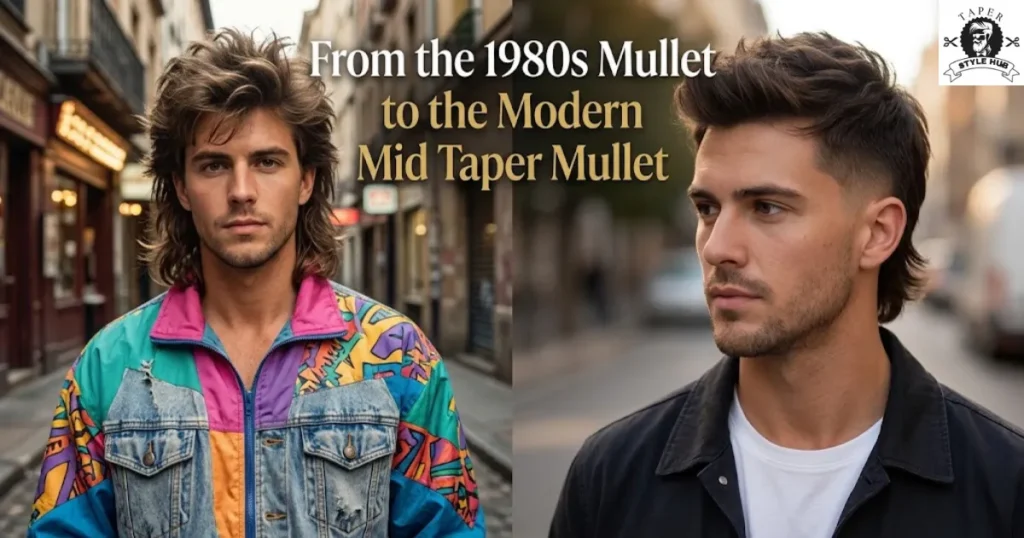
The original mullet became famous in the 1980s with short front and sides and a long, untouched back. It often looked blunt and disconnected, which is why many people dismissed it later.
Modern barbers rebuilt the shape with fades, tapers, and layers. The result keeps the identity of the cut but adds structure and cleaner edges.
Today’s mid taper mullet follows that same logic. It respects the history of the haircut while fitting contemporary grooming standards and fashion.
👉 Also Read: Low Taper Fringe
Mid Taper Mullet at a Glance
This quick table shows the main settings a barber adjusts when building the haircut, so you can compare options before booking.
| Feature | Typical Options |
|---|---|
| Temple transition | Begins around the middle temple |
| Shortest finish | Skin, zero, 0.5, or number 1 |
| Top length | Short and textured to long and flowing |
| Back length | Upper neck, collar, or below the collar |
| Best textures | Straight, wavy, curly, and coily hair |
| Daily styling | Low to moderate depending on texture |
| Taper refresh | Every two to four weeks |
| Full reshape | Every four to eight weeks |
How Long Should Your Hair Be for a Mid Taper Mullet?
You need about three to four inches on top and enough length at the back to reach the upper neck or collar. Shorter hair still works, but it becomes a short version of the cut.
There is no universal length. The right proportions depend on how obvious you want the shape to look and how much maintenance you will accept.
| Length | Back Position | Overall Effect | Best For |
|---|---|---|---|
| Short | Upper neck | Subtle and easy to try | First-timers and offices |
| Medium | Mid-neck to collar | Clearly recognizable modern look | Most hair types |
| Long | At or below the collar | Bold, expressive, high movement | Thick, wavy, or curly hair |
Whatever length you choose, the back should never be left untouched. It needs layering and a deliberate outline, or it will look like an unfinished grow-out.
The crown must also connect the top to the tail. A short crown followed by sudden length creates a shelf, while graduated layers create a smooth flow.
30 Best Mid Taper Mullet Styles Grouped by Category
The thirty styles below are grouped into six categories. Each category shares a common idea, so you can choose a direction first and a variation second.
Classic and Everyday Mid Taper Mullet Styles
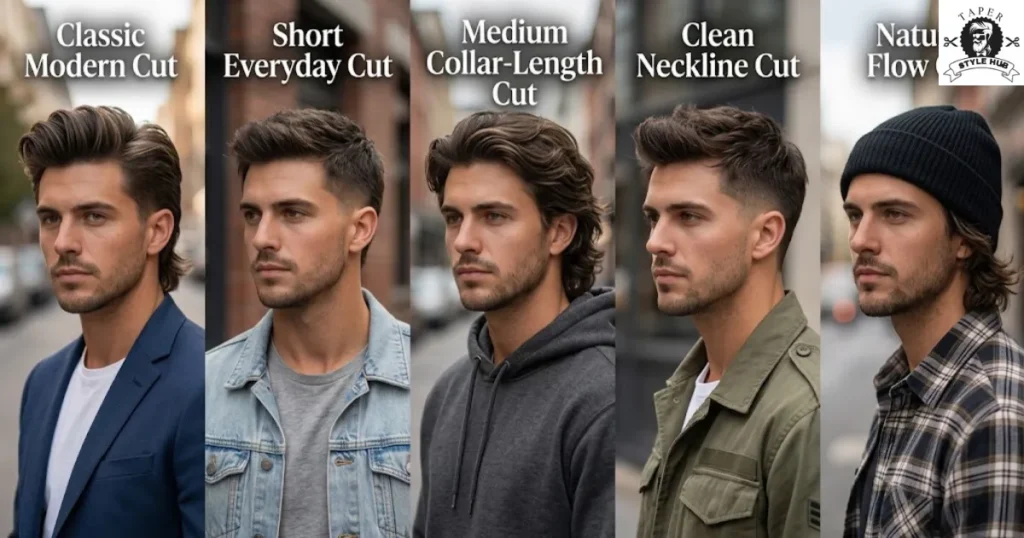
These versions suit most men and need only basic maintenance. They are the best starting point if you have never worn a mullet before.
“All The Types Shown Below Are Displayed In The Single Image Above☝️”
Classic Modern Cut
The classic version keeps a textured top, controlled upper sides, and medium length through the back. The taper cleans the temples and sideburns while the remaining hair connects smoothly into the tail without looking extreme or heavy.
Short Everyday Cut
This version keeps the back only slightly longer than a normal neckline. It works well for beginners and busy schedules, and the barber still creates a clear front-to-back progression so it never looks like an untidy nape.
Medium Collar-Length Cut
The tail finishes at the middle of the neck or just touching the collar. It is the most recognizable balance between a subtle look and a bold one, and it suits almost every hair type and daily routine.
Clean Neckline Cut
Here the barber squares or rounds the nape for a sharper outline. The longer centre of the tail stays untouched, which keeps the haircut tidy, deliberate, and easy to maintain between full appointments.
Natural Flow Cut
This cut uses minimal product and lets the hair fall in its natural pattern. The taper handles the edges while the top and back move freely, giving you a relaxed look that needs very little effort each morning.
Textured and Layered Mid Taper Mullet Styles
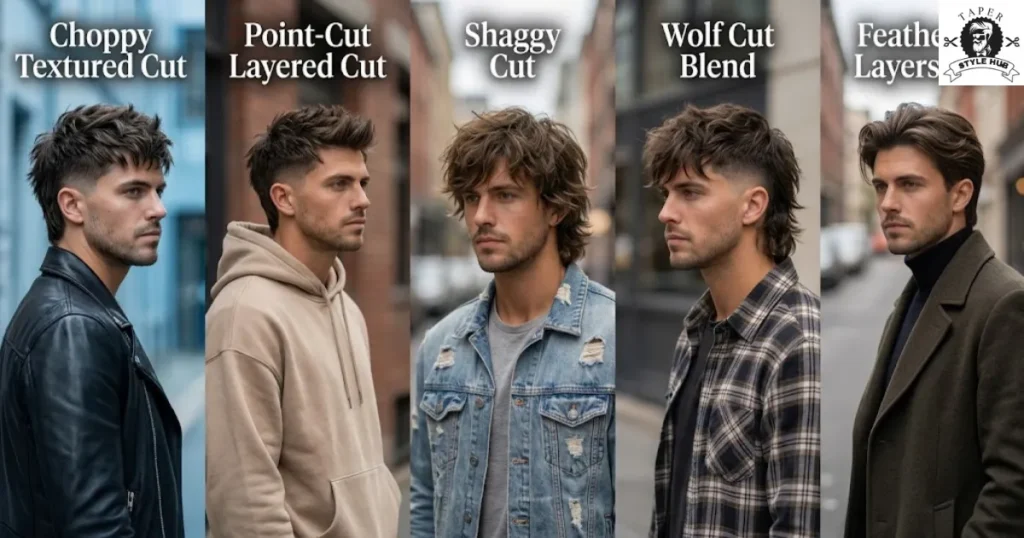
Texture-led versions use scissors, razors, and layering to create movement. They are ideal when you want a lived-in finish that still looks tidy around the temples and neckline.
“All The Types Shown Below Are Displayed In The Single Image Above☝️”
Choppy Textured Cut
Visible separation through the top, crown, and back creates a rough, energetic shape. Point cutting keeps the ends light without turning them thin or frizzy, so the haircut keeps its movement and healthy density.
Point-Cut Layered Cut
The barber snips vertically into the ends to remove bulk. This softens the outline and helps thick straight hair avoid forming a solid block, while the taper still keeps the temples clean and defined.
Shaggy Cut
Longer, uneven layers fall naturally around the crown and tail. This version suits thick or wavy hair and works best with a relaxed styling routine, because over-combing removes the messy character that defines the look.
Wolf Cut Blend
This style borrows heavy layering from the wolf cut while the taper adds precision at the temples. It feels softer and less geometric than a skin-finish mullet, which makes it popular with creative and casual dressers.
Feathered Layers Cut
Soft, graduated layers sweep away from the face and thin toward the ends. The look nods to the seventies but stays modern thanks to the clean taper, and a light hairspray keeps the movement in place.
Curly, Wavy, and Straight Hair Mid Taper Mullet Styles
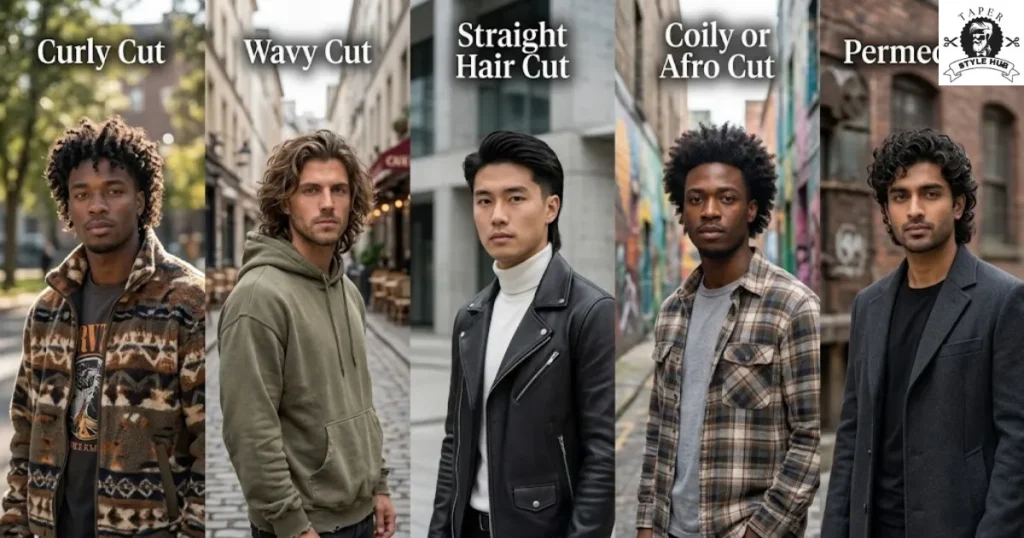
Hair texture changes how the layers are cut and how much weight must stay. Choose the version that respects your natural pattern instead of fighting it with heat and heavy product.
“All The Types Shown Below Are Displayed In The Single Image Above☝️”
Curly Cut
Curls add volume to the top and tail while the taper keeps the sides slim. Always agree on the dry length first, because curls shrink after cutting and a stretched measurement can mislead both you and the barber.
Wavy Cut
Waves create natural movement from the crown into the back. A medium-length tail gives the pattern enough room to form, so the haircut looks full and flowing even when you use very little styling product.
Straight Hair Cut
Straight hair shows every line, so the layers and taper must be precise. Light texture on the back prevents a flat, heavy finish, and a blow-dry at the crown adds the lift that straight strands usually lack.
Coily or Afro Cut
Coily hair can create height on top and a dense, rounded tail. The taper should protect the sections that support twists, coils, or longer natural growth, and moisture should stay a priority in every routine.
Permed Cut
A perm adds curl to straight hair for a retro edge. The taper keeps the sides neat so the curls become the main feature, and an experienced stylist can choose a curl pattern that matches your desired volume.
Fringe and Part Mid Taper Mullet Styles

The front of the haircut sets its personality. These versions change the fringe or part while the taper and tail stay consistent, so you can personalize the look without changing the whole structure.
“All The Types Shown Below Are Displayed In The Single Image Above☝️”
Textured Fringe Cut
A choppy fringe adds a strong front feature and balances a longer face. The hair behind it should connect into the crown instead of dropping off abruptly, which keeps the whole top section looking intentional.
Middle Part Cut
A centre part creates soft curtains that frame the face. It looks relaxed and symmetrical, and it works best on medium or long straight and wavy hair that has enough length to fall away from the forehead.
Side Part Cut
A side part brings structure and polish. It suits offices and formal events because the top looks tidy while the tail keeps its relaxed length, and a light pomade or cream holds the line without shine.
Curtain Cut
Curtain layers fall away from the forehead and blend into the tail. The look feels youthful and soft, and the taper stops the sides from looking bulky, especially on thick hair that tends to puff out.
Edgar Fringe Cut
A forward fringe sits above the brows with a sharp or broken edge. The line-up should follow the natural hairline so the cut grows out cleanly instead of showing an obviously pushed-back edge after two weeks.
Bold and Statement Mid Taper Mullet Styles
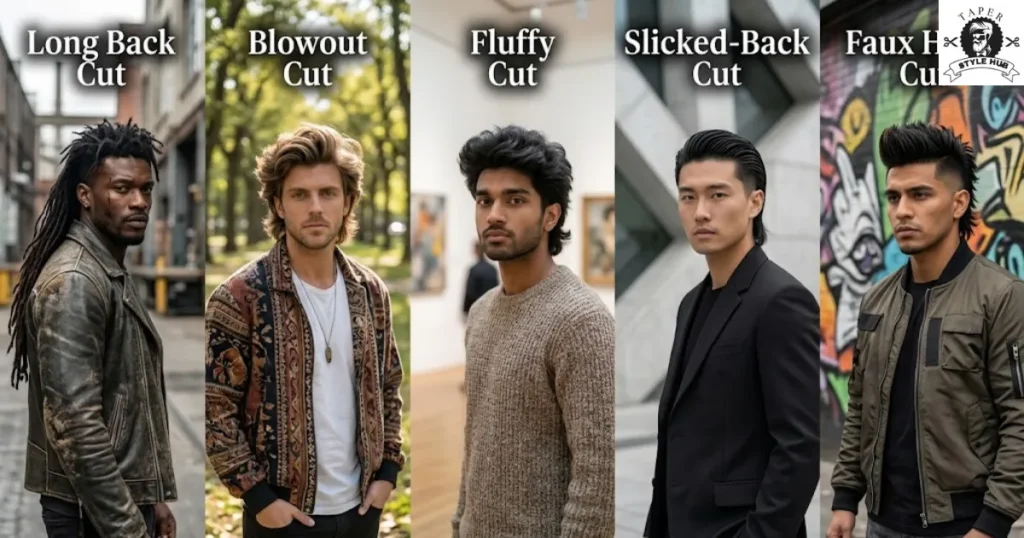
These versions focus on volume, length, and attitude. They need more daily styling and care, but they reward you with a standout silhouette that is impossible to miss from any angle.
“All The Types Shown Below Are Displayed In The Single Image Above☝️”
Long Back Cut
The tail reaches or passes the collar while the taper keeps the temples sharp. The contrast makes the length look intentional, but the ends need regular conditioning and the outline needs a clear plan before the cut begins.
Blowout Cut
A voluminous blow-dried top flows into a textured tail. Soft layers prevent the top from becoming a helmet and help the volume connect to the back, but the style needs more daily time and a heat protectant.
Fluffy Cut
Airy layers and light product create a soft, relaxed shape. The upper sides need enough weight, or the longer sections will look disconnected, so ask the barber to keep the taper focused on the temples only.
Slicked-Back Cut
Combing the top straight back creates a polished, formal look. The flowing tail then contrasts with the sleek front for a confident finish, and a medium-hold pomade on damp hair keeps everything controlled through the evening.
Faux Hawk Cut
The top is lifted into a central peak that tapers into the tail. It emphasises height and works best with thick, strong hair, while a texture powder at the roots helps the peak hold its shape all day.
Professional and Low-Maintenance Mid Taper Mullet Styles
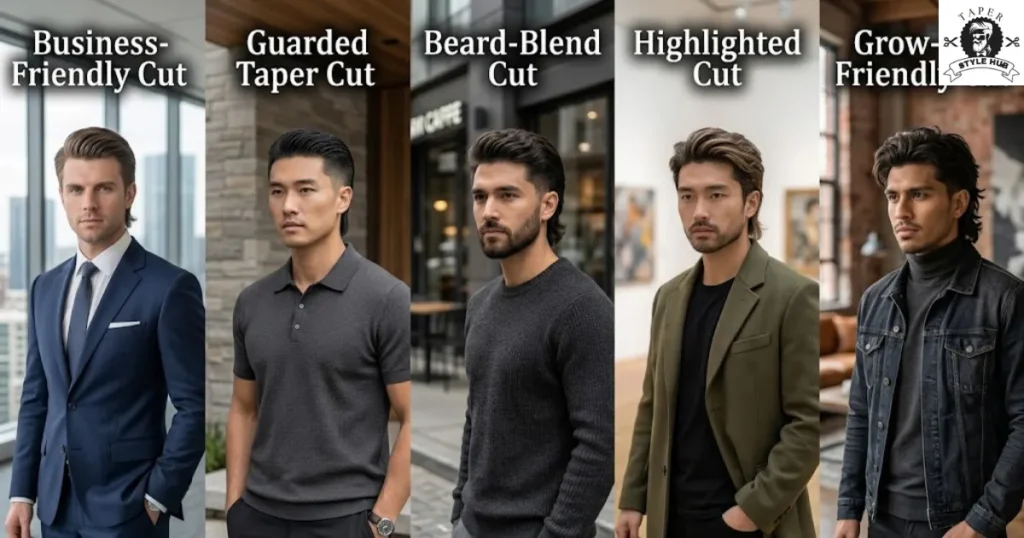
These options keep the shape wearable at work or school. They also forgive longer gaps between appointments, which makes them ideal if you want the mullet look without constant upkeep.
“All The Types Shown Below Are Displayed In The Single Image Above☝️”
Business-Friendly Cut
The back stops at the collar, the top stays neat, and the taper finishes at a 0.5 or number 1. The contrast stays visible without looking aggressive, so the haircut passes most office expectations easily.
Guarded Taper Cut
A longer guard finish leaves a soft shadow instead of bare skin. It grows out gently, reduces irritation for sensitive skin, and keeps the temples looking clean for much longer than a skin or zero finish.
Beard-Blend Cut
The sideburn taper connects smoothly to a short or medium beard. This creates one continuous line from hair to jaw, and matching the taper height to the beard fade makes the whole look feel connected.
Highlighted Cut
Fine, blended highlights add depth through the longer back. Soft colour grows out with less visible regrowth than bold stripes, and a toner or purple shampoo helps control brassiness between salon visits.
Grow-Out Friendly Cut
A soft taper and a broad, layered tail let you extend the length over several appointments without looking messy. Ask the barber to tidy the temples only and leave the crown and back untouched.
Best Mid Taper Mullet for Your Hair Type
Your hair type decides how long the tail should be and how much texture the barber should build in. Match the haircut to your texture first, then adjust the details.
| Hair Type | Recommended Version | Main Consideration |
|---|---|---|
| Fine straight | Short or textured cut | Preserve density and avoid excess length |
| Thick straight | Classic, blowout, or long cut | Remove internal weight carefully |
| Wavy | Shaggy, fluffy, or medium cut | Protect the wave pattern |
| Curly | Curly or medium-to-long cut | Plan for shrinkage and moisture |
| Coily | Shaped afro, twists, or coils | Protect sections and hairline density |
Fine Hair
Fine hair looks stronger in a short or medium version. Excess length can turn stringy, so keep the perimeter solid and use light layers.
Thick Hair
Thick hair gives excellent structure but can become bulky. Selective weight removal and well-planned layers create movement without destroying fullness.
Wavy Hair
Waves naturally connect the top and back. A diffuser or an air-dry routine enhances the shape without heavy product.
Curly Hair
Curly hair needs enough dry length at the back. The cut may look much longer when stretched, so agree on where the curls should sit.
Coily Hair
Coily hair creates height and a strong tail silhouette. Moisture and section preservation matter most, so mention any twists or locs you are growing.
Choosing a Mid Taper Mullet by Face Shape
Face shape should guide proportions rather than decide whether you can wear the cut. Hair density, hairline, beard, and styling habits matter just as much.
| Face Shape | Suitable Direction | Helpful Adjustment |
|---|---|---|
| Oval | Most variations | Keep top and back balanced |
| Round | Textured top or blowout | Add height, avoid side width |
| Square | Curly, shaggy, or textured | Soft layers balance strong angles |
| Oblong | Fringe or middle part | Avoid extreme height |
| Heart | Textured fringe or waves | Keep some upper-side weight |
| Diamond | Curtains or curls | Retain width around the sides |
If you are unsure, bring photos of men with a similar face shape. Your barber can then adjust the mid taper mullet to suit your proportions, including crown height and tail width.
How to Ask Your Barber for a Mid Taper Mullet
The word mullet covers many shapes, so never ask for it without describing the front, sides, and back. Clear instructions prevent surprises.
Try a script like this: “I want a modern mullet with a taper starting at mid-temple. Keep weight above my ears, leave the back at my collar with soft layers, and finish the taper at 0.5.”
Adjust that script to your preferred version. It also helps to mention these details:
- The exact position where the tail should finish
- Whether the back should be broad, narrow, or shaggy
- How much length you want on the fringe and crown
- Whether you want a skin, zero, 0.5, or longer guard finish
- Whether your hair shrinks or develops bulk
- How much daily styling you will realistically do
- Whether you plan to grow the tail longer
Describing numbers helps. Name the guard you want at the bottom, the length on top in inches or centimetres, and the exact point where the tail should end.
Bring front, side, and back photos. A front-only image cannot show tail length, crown connection, or taper height.
How the Barber Should Shape Each Area
Each zone needs its own plan. Discuss these areas before the first clipper pass:
- Front: choose a short crop, fringe, part, or curtains
- Crown: bridge the top and tail without creating a shelf
- Upper sides: keep enough hair to connect with the top and back
- Back: define the outline and add layers
- Neckline: taper corners while keeping the central length
Mid Taper Mullet Guard Numbers and Finishes
Guard numbers tell the barber how much hair to leave. Lower numbers cut shorter, and the finish you pick controls contrast and grow-out.
| Finish | Appearance | Maintenance |
|---|---|---|
| Skin | Maximum contrast at the temples | Regrowth shows quickly |
| Zero | Very short and sharp | Frequent edge refreshes |
| 0.5 | Clean with slight coverage | Balanced everyday option |
| Number 1 | Softer and conservative | More forgiving grow-out |
| Longer guard | Subtle transition | Easiest grow-out |
A short mullet can look strong with skin or zero. A long, flowing version often suits a softer guarded finish instead.
Men prone to irritation or razor bumps should choose a 0.5, number 1, or longer guard because very short hair can curl back into the skin.
Ask your barber which guard sizes they plan to use. A quick question removes guesswork and helps you understand how short the taper will become.
Mid Taper Mullet vs Similar Haircuts
Several haircuts look alike from one angle. These comparisons explain the main differences so you can request the right shape.
Mid Taper Mullet vs Mid Fade Mullet
A taper concentrates the shortest blend around the temples, sideburns, and neckline. A mid fade removes more hair around the whole side and creates stronger separation from the back.
Mid Taper Mullet vs Low Taper Mullet
A low taper begins near the ears and creates a subtler transition. The mid version sits higher at the temples, controls more side bulk, and makes the blend more visible.
Mid Taper Mullet vs Burst Fade Mullet
A burst fade curves in a semicircle around the ear, while the taper follows a straighter band. The silhouettes overlap, so photos help communicate the exact shape.
Mid Taper Mullet vs Wolf Cut
A wolf cut relies on heavy shaggy layers and keeps more hair around the sides. The mullet creates clearer contrast between short sides and the long back.
Mid Taper Mullet vs Undercut Mullet
An undercut disconnects the sides from the top with a hard break. A taper blends gradually, so it looks softer and grows out more gracefully.
How to Style a Mid Taper Mullet at Home
Styling comes down to two goals. Straight hair needs lift and light hold, while wavy, curly, and coily hair needs moisture and definition.
Straight Hair Routine
Straight hair can fall flat at the crown, so the routine focuses on lift and controlled texture.
- Start with damp hair and apply a heat protectant.
- Add a light texture or volumizing product.
- Lift the crown with a vent brush.
- Direct the back downward or slightly outward.
- Finish with a small amount of matte paste.
Wavy Hair Routine
Waves need moisture and minimal disruption, so product should be light and the drying gentle.
- Apply mousse or styling cream to damp hair.
- Scrunch the waves without breaking their direction.
- Air-dry or diffuse on low airflow.
- Separate the ends with your fingers once dry.
Curly Hair Routine
Curls respond best to a simple routine that adds moisture and avoids unnecessary touching.
- Apply leave-in conditioner if your hair feels dry.
- Distribute curl cream without overloading the roots.
- Diffuse on low heat and avoid touching.
- Fluff the roots only after the hair is fully dry.
Coily Hair Routine
Coily hair needs hydration first, because dry sections lose definition and break more easily.
- Begin with moisturized hair.
- Apply a suitable leave-in product.
- Shape coils or twists gently with your fingers.
- Let the hair dry fully before picking.
Each routine takes only a few minutes once you know your texture.
Wash and Care Routine for a Mid Taper Mullet
The tail is the longest and oldest hair on your head, so it dries out before the sides do. Condition it more often than the shorter areas.
Most people only need to wash two or three times per week with a gentle shampoo. Oily scalps may need more, while dry or curly hair can wait longer.
Rinse thoroughly and avoid very hot water, because heat strips natural oils. Detangle gently, and use a wide-tooth comb on longer sections.
Limit heat styling where possible. When you do use a dryer, apply a heat protectant and keep the airflow on low or medium.
Best Products for a Mid Taper Mullet
Choose the lightest product that solves your styling problem. Heavy wax or pomade can flatten a shaggy or fluffy mid taper mullet, while very dry texture products may worsen frizz.
| Product | Best For | Result |
|---|---|---|
| Texture spray | Straight and wavy hair | Grip and natural movement |
| Matte paste | Short textured styles | Separation with low shine |
| Styling cream | Medium or dry hair | Flexible control and softness |
| Sea salt spray | Messy, tousled styles | Gritty, relaxed texture |
| Volumizing mousse | Fine hair and blowouts | Lightweight root lift |
| Curl cream | Curly mullets | Moisture and definition |
| Leave-in conditioner | Coily or long tails | Softness and easier control |
| Heat protectant | Blow-dried hair | Helps reduce heat damage |
Always apply product from the ends upward and keep it away from the roots unless you want extra lift. This prevents a heavy, greasy crown.
Mid Taper Mullet Maintenance and Grow-Out Tips
A mid taper mullet runs on two clocks. The taper needs refreshing more often than the overall shape needs resetting.
Refresh the Taper
A clean temple taper usually needs attention every two to four weeks. Guarded finishes look softer as they grow, while skin finishes show regrowth faster.
Reshape Without Losing Length
Book a full reshape every four to eight weeks. Ask the barber to remove split ends and balance layers without shortening the tail automatically.
Balance the Crown
As the haircut grows, the crown can become heavy and flatten the shape. Periodic layering restores movement without sacrificing the length at the back.
Care for the Ends
Longer sections rub against collars and clothing. Condition them regularly, wash only as often as your scalp needs, and trim damaged ends when necessary.
How to Grow It Longer
Keep the crown and tail untouched while the barber tidies the temples. Tell the barber you are growing a mullet, so the neckline is not cut short by habit.
How Much Does a Mid Taper Mullet Cost?
Most barber shops charge between thirty and fifty-five dollars for a mid taper mullet. Master barbers in large cities often charge more because the cut involves both clipper and scissor work.
Price depends on the barber’s experience, the amount of layering, and any colour or styling added. Budget for a refresh every few weeks, which usually costs less than a full cut.
A simple booking tip helps. Ask for a consultation before the cut, because a short conversation prevents expensive corrections later.
Common Problems and Quick Fixes for a Mid Taper Mullet
Most problems trace back to uneven weight, a routine that ignores your texture, or a taper that drifted from the brief. A light professional fix almost always beats starting over.
Flat Crown
A flat crown usually means too little length was left there. Ask for soft layers and use a lightweight cream at the roots.
Helmet-Like Sides
Bulk sitting in the taper zone creates a helmet shape. Ask the barber to blend or thin the area instead of shortening the length you want to keep.
Frizz and Dryness
Frizz usually comes from dryness or too much touching while the hair dries. Add a leave-in conditioner and let the hair dry undisturbed.
Taper Too High
If the blend sits above the temple, it can look like a full fade. Request a softer transition at the next visit and avoid raising it again.
Cowlicks and Growth Patterns in a Mid Taper Mullet
A strong cowlick or uneven hairline changes how the crown lies once the hair dries. Mention it before cutting starts so the barber can plan weight around it.
Cutting against the growth direction at the crown usually gives better control. A barber who understands your pattern can also keep the tail from twisting.
If your hair grows thin at the temples, keep the taper softer and avoid skin finishes. A guarded blend protects density and looks more natural.
Mid Taper Mullet Appointment Checklist
A short checklist keeps the consultation focused. Review these points before the clippers come out:
- Confirm the barber has seen all three reference photos
- Agree on taper height and bottom finish
- Point to where the tail should end
- Mention any cowlick or growth pattern
- Check the first guideline near the temple
Afterwards, check the front, both sides, and the back with a hand mirror. Then ask how to style the haircut and when to book the next visit.
Mid Taper Mullet for Students and Working Professionals
Students often want a bolder look, while professionals need something that survives meetings. A mid taper mullet can serve both groups when the tail length and taper finish are chosen carefully.
For school, choose a guarded finish and a collar-length tail. For work, keep the crown tidy and the neckline clean so the cut still looks polished.
Weekend styling can be looser. Add texture spray, push the fringe forward, and let the tail move naturally to change the mood without visiting the barber.
Seasonal Tips for Wearing a Mid Taper Mullet
In summer, the tapered sides keep your ears and neck cooler while the tail adds style. Use a light cream or sea salt spray, because heavy products feel sticky in heat.
In winter, longer tails can feel dry from hats and scarves. Switch to a richer leave-in conditioner and avoid washing with very hot water.
Humidity can make waves and curls frizzy. A small amount of anti-frizz cream on the ends keeps the shape neat all day.
Pros and Cons of a Mid Taper Mullet
Every haircut involves trade-offs. Here is a balanced view before you sit in the chair.
Pros
- Works with straight, wavy, curly, and coily hair
- Looks sharp and modern without extreme contrast
- Fits most face shapes
- Grows out more softly than many full fades
- Offers options from subtle to bold
Cons
- Needs a taper refresh every few weeks
- The tail looks scruffy if trims are skipped
- A poor blend can ruin the whole shape
- The back needs patience while it grows
- Some workplaces enforce strict dress codes
Can a Mid Taper Mullet Look Professional?
Yes, but proportions matter. A short or medium version with a guarded taper, tidy crown, and controlled tail can look modern without becoming extreme.
For a more conservative result, follow these simple rules:
- Keep the back at the upper neck or collar
- Choose a 0.5 or number 1 taper instead of skin
- Use soft layers rather than a narrow, dramatic tail
- Keep the top neat and moderately textured
- Refresh the neckline and temples regularly
School and workplace policies vary, so check any formal rules before choosing a skin finish or a long tail.
Common Mid Taper Mullet Mistakes to Avoid
Small errors can spoil a good haircut. Watch for these before and after your appointment:
- Not defining the back length clearly
- Taking the taper too high
- Leaving the tail without layers or an outline
- Cutting the crown too short
- Over-thinning the ends until they look frizzy
- Ignoring curl shrinkage
- Expanding the fade at every appointment
- Bringing a reference photo that shows only the front
Mid Taper Mullet Alternatives If This Cut Is Not Right
No haircut suits everyone. The best alternative depends on which feature did not work for you.
| If You Dislike | Try | Why It Helps |
|---|---|---|
| Too much contrast | Low taper mullet | Starts lower and keeps side weight |
| A straight fade line | Burst fade mullet | The curve adds shape around the ear |
| Losing side fullness | Soft mullet or wolf cut | Scissor layering keeps width |
| A long tail commitment | Textured crop or shag | Movement without mullet length |
Keep what worked, change what did not, and discuss the new version with your barber. A small adjustment is often better than abandoning the haircut entirely.
Final Thoughts on the Mid Taper Mullet
The mid taper mullet works because it combines precision with retained movement. The taper sharpens the temples and sideburns, while the crown and back preserve the length that gives the haircut its identity.
Decide the tail length first, then choose the front style, taper finish, and amount of upper-side coverage. Clear planning makes every other decision easier.
Bring photos from several angles, explain whether you are growing the back, and ask for regular refreshes. With the right proportions, the haircut stays modern, wearable, and confident.
Mid Taper Mullet FAQs
What is a mid taper mullet?
A mid taper mullet is a haircut with a taper starting at the middle temple and visible length through the back.
How long should my hair be?
Aim for three to four inches on top and enough length at the back to reach the upper neck or collar.
How often should I trim it?
Refresh the taper every two to four weeks and reshape the full cut every four to eight weeks.
Is a mid taper mullet suitable for work?
Yes, a short or medium version with a guarded taper and tidy neckline suits most workplaces.
Does it work on curly hair?
Yes, curls add volume to the top and tail, but the barber must plan for shrinkage.

I’m M Ahmad Ansari, founder and content creator at Taper Style Hub. With 3+ years of experience researching taper haircuts, hairstyles, grooming, and men’s style, I create practical, accurate, and easy-to-understand content. My goal is to provide readers with trustworthy information, useful tips, and inspiring ideas for choosing and styling the perfect taper haircut.
3 Comments