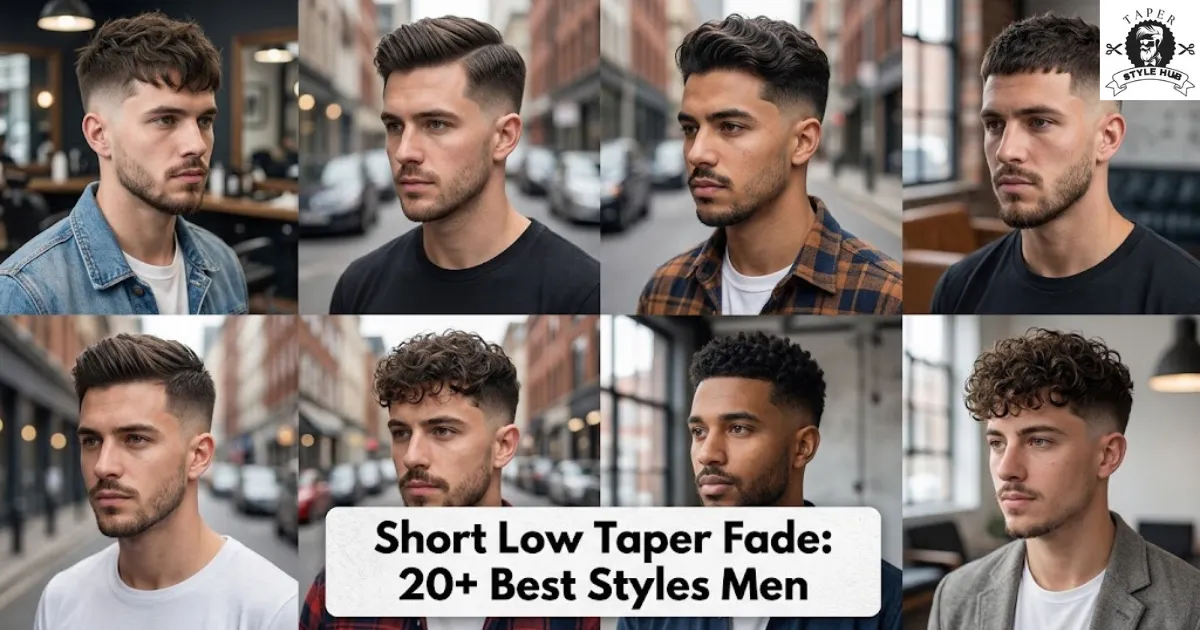
Short Low Taper Fade: 20+ Best Styles Men
A short low taper fade is one of the easiest men’s haircuts to wear. The top stays compact while the sides shorten gently around the ears and neckline, giving you a clean, modern shape without a harsh high-fade contrast.
This guide covers 20 styles grouped by hair type and top length, plus face shapes, barber scripts, products, and upkeep. Whether your hair is straight, curly, thick, or thinning, you will find a cut that fits your routine.
👉 Also Read: Low Taper Fade Curly Hair Men
Everything You Need to Know About the Short Low Taper Fade
Before picking a style, it helps to understand how this cut works. The short low taper fade comes down to three decisions: how short the top is, how low the taper starts, and how much skin shows at the edges.
👉 Also Read: Low Taper Fade Haircut
What Is a Short Low Taper Fade?
A short low taper fade shortens the hair gradually behind and around the ears, along the sideburns, and down the nape. The blend starts low on the head, so the sides keep most of their natural shape.
The word low describes where the taper begins, not how short your hair is overall. You can wear a very short buzz on top or a longer textured crop, and both still count as a low taper.
Three zones work together. The top holds your style, the blending zone creates the gradual transition, and the neckline finishes the cut at the nape and around the ears.
👉 Also Read: Low Taper Fluffy Fringe
Why the Short Low Taper Fade Is So Popular
Barbers recommend the short low taper fade because it balances sharp and soft. It looks tidy at work, at school, and at the gym, and it rarely feels like a high-effort haircut.
- Clean around the ears and neckline
- Easy to style in under two minutes
- Suits casual, professional, and formal settings
- Works with straight, wavy, curly, and coily hair
- Grows out more gracefully than a high fade
- Can be softened to a shadow or sharpened to skin
👉 Also Read: Messy Fringe Low Taper
How a Short Low Taper Fade Compares to Other Fades
The main difference is where the blend starts and how much contrast it creates. A lower start means more side hair and a softer finish than any other fade height.
| Haircut | Where the blend starts | Overall look | Maintenance |
|---|---|---|---|
| Short low taper fade | Just above the ears and nape | Subtle and clean | Moderate |
| Mid taper fade | Around the temples | More noticeable | Moderate to high |
| High fade | Near the upper sides | Bold and sharp | High |
| Skin fade | Any height, down to bare skin | Maximum contrast | High |
| Drop fade | Curves down behind the ear | Defined and shaped | Moderate to high |
If you want a haircut that looks fresh without making the fade the main feature, the short low taper fade is the safer choice.
👉 Also Read: Low Taper Fade Boys
Short Low Taper Fade vs Low Fade: The Difference Most Men Miss
People use these terms interchangeably, but barbers read them differently. A taper keeps some length at the edges, while a fade blends down to very short stubble or bare skin.
A short low taper fade sits between the two. The barber blends low and gradually, and you decide whether the neckline ends in skin, shadow, or a soft natural edge.
If you want visible skin, say so clearly. If you prefer a softer edge, ask for a low taper and tell your barber to leave some length at the bottom.
👉 Also Read: Low Taper Buzz Cut
Understanding Taper Heights: Low, Mid, and High
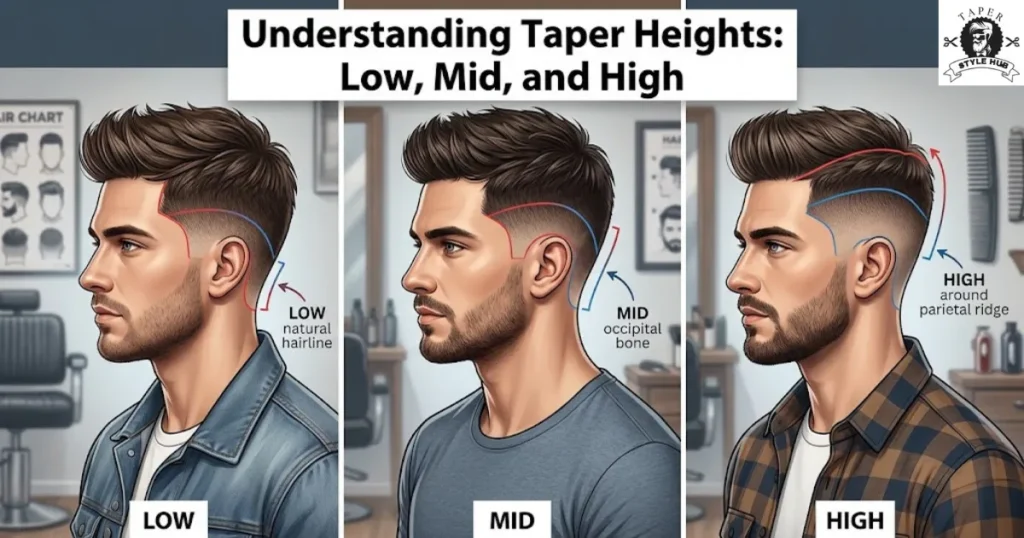
Taper height is the biggest choice you will make in the chair. Think of the head as a building, where each fade height starts on a different floor.
A low taper starts on the ground floor, just above the ear. A mid taper begins around the temple, and a high taper climbs toward the upper sides and shows far more skin.
Because the taper sits low, the top and upper sides stay full. That keeps the silhouette soft, which is why most barbers suggest it first to anyone trying a fade for the first time.
👉 Also Read: Low Taper Fade Black Men
Taper and Fade Terms Every Client Should Know
Barbers and clients often use the same words differently. Learning a few terms makes your request clearer and your haircut far more predictable.
| Term | What it means |
|---|---|
| Taper | Hair gets gradually shorter and usually keeps some length |
| Fade | Hair blends down to very short stubble or bare skin |
| Blend | A smooth transition with no visible line |
| Lineup | A sharp edge cut along the hairline |
| Guard number | The clipper attachment that sets the hair length |
| Shadow | A faint layer of stubble left at the shortest point |
| Edge-up | A crisp outline around the hairline and temples |
Using these words with confidence helps your barber understand the finish you want before any hair is cut.
👉 Also Read: Low Taper Mullet
How a Low Taper Compares to an Undercut
An undercut disconnects the sides from the top, while a taper blends the two together. That blend is what makes a low taper look softer and more natural.
Undercuts create a bold, edgy contrast and show obvious regrowth. A low taper grows out gently, so it suits men who cannot visit the barber every two weeks.
👉 Also Read: Blonde Low Taper Fade
The 20 Best Short Low Taper Fade Styles
The fade controls the sides, but the top sets the personality. To keep things simple, these 20 short low taper fade styles are grouped by hair type and top length so you can jump to your own section.
👉 Also Read: Low Taper Fade Fluffy Hair
Short Low Taper Fade Styles for Straight Hair
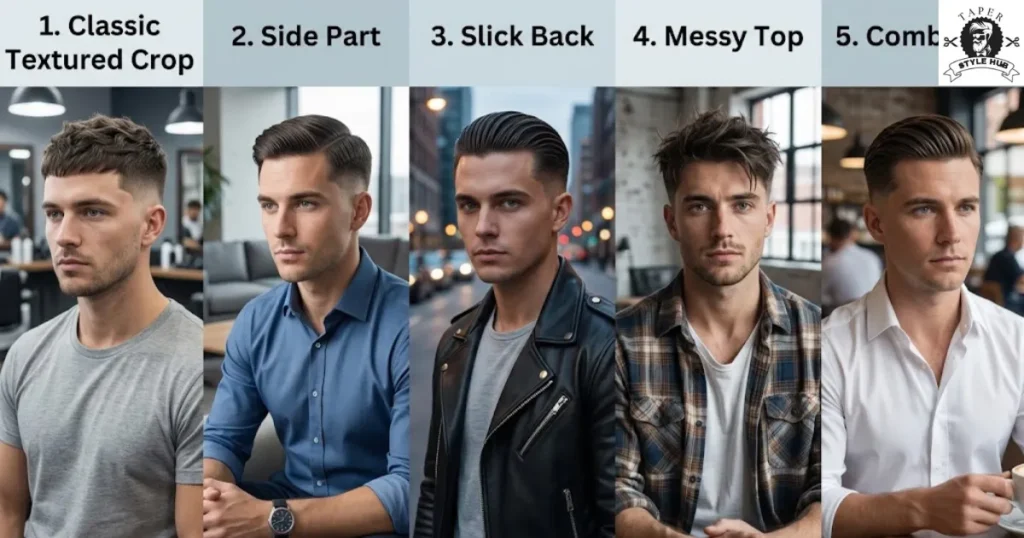
Straight hair shows every line, so the blend needs to be clean. These five options give straight hair texture and movement without making the top look flat.
“All The Types Shown Below Are Displayed In The Single Image Above☝️”
1. Classic Textured Crop
Keep the top short with point-cut texture and direct it slightly forward. The low taper keeps the ears and neckline clean while the choppy top adds movement. Matte clay or a light styling cream finishes it.
2. Side Part
A short side part gives the haircut a polished look. Keep enough length on top to create a natural part without bulk, and let the low taper clean the temples. Light pomade works well for hold.
3. Slick Back
The slick back works when the top is long enough to move backward. Keep the taper compact so the sides keep some natural shape, then comb the hair back with a matte pomade for a modern finish.
4. Messy Top
This relaxed option suits men who dislike a perfectly structured cut. Use your fingers instead of a comb to create separation, and add matte paste or texture cream for casual, youthful movement.
5. Comb Over
A short comb over offers controlled volume without a long top. The low taper keeps the sides tidy, which makes this one of the most office-friendly choices in the whole list.
Short Low Taper Fade Styles for Wavy Hair

Wavy hair already creates movement, so you often need less product. A soft taper stops the sides from looking bulky and keeps the natural wave pattern in focus.
“All The Types Shown Below Are Displayed In The Single Image Above☝️”
6. Wavy Messy Top
Leave enough length for the natural wave pattern to show. A soft taper around the ears keeps the shape neat. Let the hair partly air dry before adding a little styling cream.
7. Wavy Textured Crop
The crop directs the waves toward the forehead while the taper gives the lower sides a cleaner outline. It delivers texture without a complicated routine, which suits busy mornings.
8. Brushed-Up Top
Brush the top upward while the hair is damp for a soft, airy lift. The tight sides make the top look fuller, and a light sea salt spray helps the shape hold without heat.
Short Low Taper Fade Styles for Curly Hair
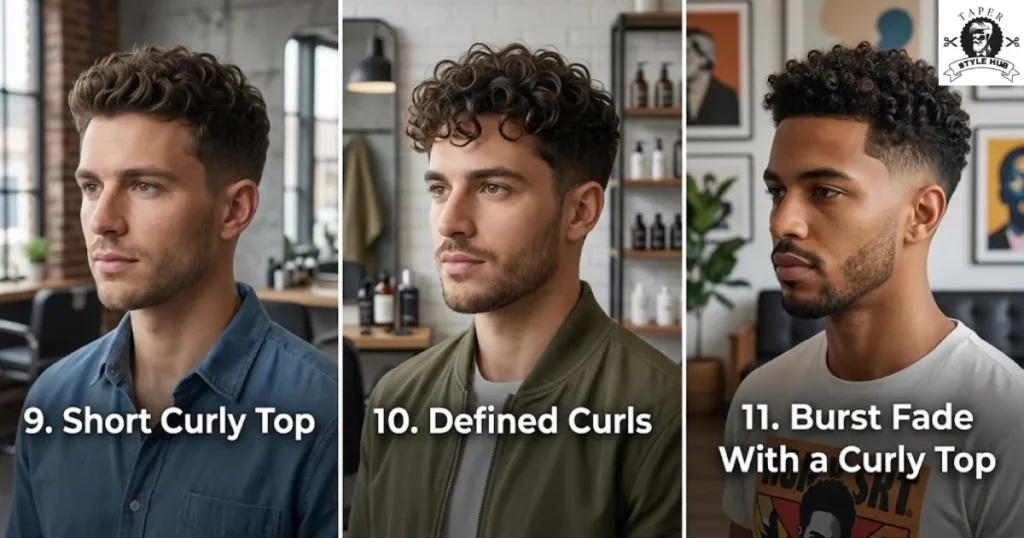
Curly hair needs a slightly different approach, because removing too much weight can change the curl shape. Leave extra length on top and let the taper do the tidying.
“All The Types Shown Below Are Displayed In The Single Image Above☝️”
9. Short Curly Top
Keep the curls short but visible, then taper only the lower sides and neckline. The curls provide natural volume while the taper adds definition. Remember that curls shrink as they dry.
10. Defined Curls
Defined curls need moisture and patience. Keep enough length for each curl to spiral, apply leave-in conditioner after washing, and finish with curl cream. Air dry or diffuse on low heat.
11. Burst Fade With a Curly Top
A burst fade curves around the ear instead of following a straight taper. It pairs well with a short curly top, but it differs from a standard low taper, so tell your barber which shape you want.
Short Low Taper Fade Styles for Coily Hair
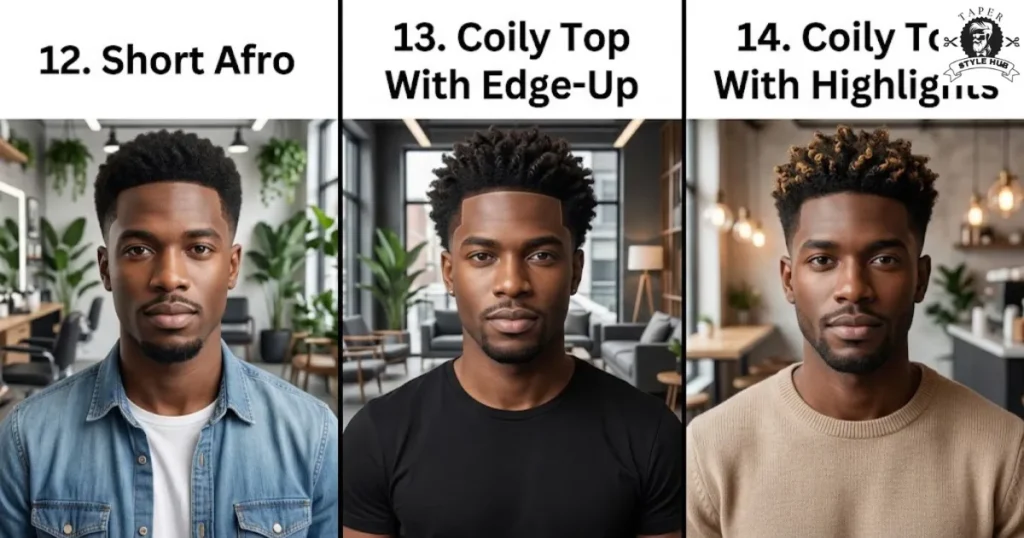
Coily hair shrinks the most, so the visible length is much shorter than the actual strand. Moisture matters, and the taper should respect the natural shape of the hair.
“All The Types Shown Below Are Displayed In The Single Image Above☝️”
12. Short Afro
A short afro with a low taper creates a strong outline and keeps natural texture on top. A crisp edge-up sharpens the hairline, and picking out the top adds fullness.
13. Coily Top With Edge-Up
Keep the coils defined on top while cleaning the temples and neckline. Avoid taking the taper too high if you want to keep the fuller side shape. Weekly edge-ups keep the hairline sharp.
14. Coily Top With Highlights
Subtle highlights add dimension to short coils. Keep the taper clean and let the color stay focused on top. Use products made for textured hair and follow proper color care.
Short Low Taper Fade With a Short Top
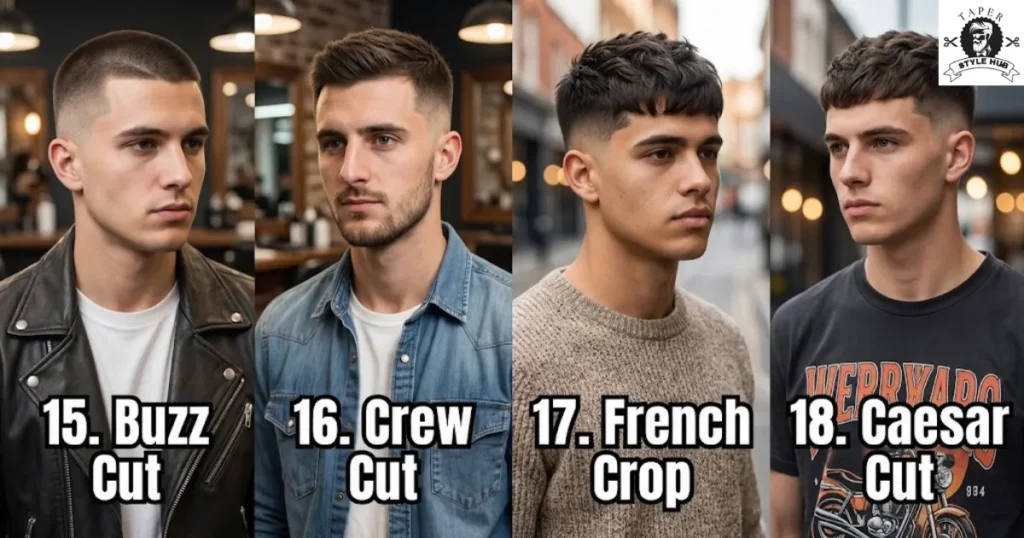
A short top means almost no daily styling. The crown and sides stay close, so the taper does most of the visual work in these four low-maintenance options.
“All The Types Shown Below Are Displayed In The Single Image Above☝️”
15. Buzz Cut
A buzz cut with a low taper is ideal if you want almost no styling. The top stays at a short guard length while the taper cleans the temples and neckline.
16. Crew Cut
A crew cut adds slightly more shape than a buzz cut. Keep the top short and controlled, then use the taper to clean the lower sides for a classic, professional result.
17. French Crop
A French crop has a short textured top and a forward fringe. The low taper creates contrast without removing too much hair from the sides, which keeps the look balanced.
18. Caesar Cut
The Caesar keeps the top short with a forward fringe that lies flat across the forehead. It is a practical choice for men who want a classic shape with a modern finish.
Short Low Taper Fade for Thick and Thinning Hair
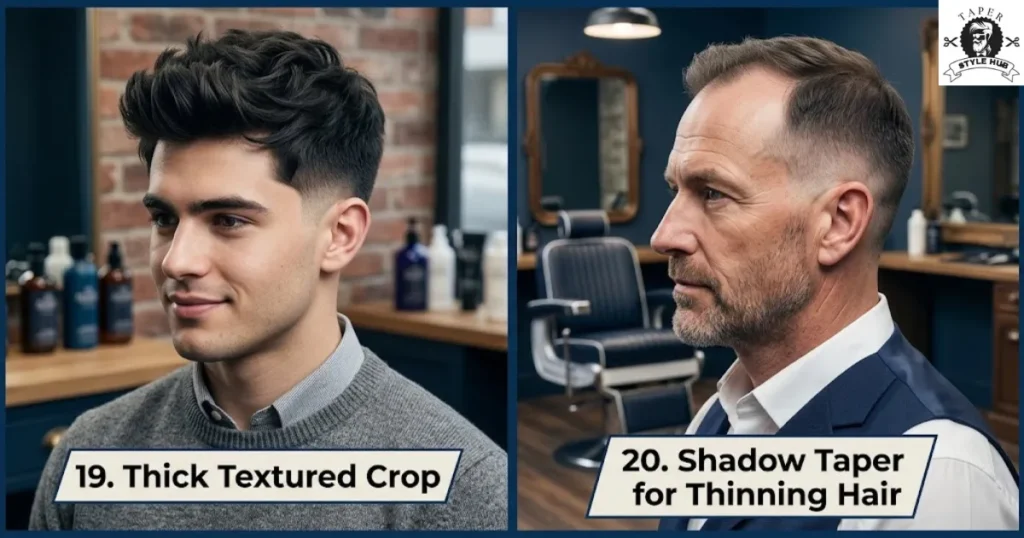
Thick hair holds shape well but can look heavy on the sides, while fine or thinning hair benefits from a softer transition instead of extreme contrast.
“All The Types Shown Below Are Displayed In The Single Image Above☝️”
19. Thick Textured Crop
Ask your barber to control the bulk while keeping enough density on top. Texture makes thick hair look lighter, and the taper reduces weight at the sides. Matte clay keeps everything controlled.
20. Shadow Taper for Thinning Hair
A shadow taper leaves a little visible hair at the shortest point instead of exposing bare skin. This creates a softer transition and makes the sides look fuller. Tell your barber about thinning before the cut.
How Top Length Changes the Look
The length you keep on top decides which styles are possible. Short tops need little effort, while slightly longer ones give you room to shape and direct the hair.
| Top length | Styles it allows | Styling effort |
|---|---|---|
| Very short | Buzz cut, crew cut | None to minimal |
| Short | Caesar cut, French crop | Low |
| Medium short | Textured crop, messy top | Low to moderate |
| Longer short | Side part, slick back, comb over | Moderate |
If you are unsure, start slightly longer. A barber can always cut more, but hair that is gone stays gone until it grows back.
Choosing Between Skin, Shadow, and Natural Finish
The finish at the bottom of the taper changes the whole mood of the haircut. You can pick one of three options depending on your hair and lifestyle.
| Finish | Look | Best for |
|---|---|---|
| Skin | Sharp, high contrast | Men who visit the barber often |
| Shadow | Soft, faint stubble | Fine or thinning hair and conservative settings |
| Natural | Gentle, slightly longer edge | Low-maintenance routines |
Shadow finishes are the safest choice for most people. They look clean, hide early regrowth, and avoid the stark contrast that bare skin creates.
Which Face Shape Suits a Short Low Taper Fade?
A short low taper fade suits almost every face shape, but the top should balance your proportions. The fade stays mostly the same, so the top length, fringe, and height do the real work.
| Face shape | Best top style | What to avoid |
|---|---|---|
| Oval | Almost any short style | Nothing specific |
| Round | Textured crop or quiff with height | Flat, wide tops |
| Square | Textured crop or crew cut | Hard parts and harsh skin edges |
| Oblong | Short top with a fringe | Tall, spiky height |
| Heart | French crop or textured fringe | Heavy volume on top |
| Diamond | Side part or textured top | Extreme skin contrast |
If you cannot identify your shape in the mirror, take a front-facing photo and trace your jaw and forehead. Then show it to your barber.
Does a Short Low Taper Fade Work for Every Hair Type?
Yes, with small changes. Straight hair shows the sharpest blend, wavy and curly hair soften it, and coily hair needs regular edge-ups. Thin hair does best with a softer shadow finish.
The short low taper fade adapts to your texture instead of fighting it. Your barber simply adjusts the top length, guard numbers, and neckline to match your density.
How Hair Texture and Density Change the Result
Two men can ask for the same cut and leave with slightly different looks. Hair texture, density, and growth direction all change how the taper and the top behave.
Dense hair holds a crisp shape but can look heavy on the sides. Fine hair looks fuller when the sides stay tight, and curly hair needs extra length to account for shrinkage.
Judge your hair when it is dry and unstyled. That gives you and your barber an honest starting point for choosing the top length and taper height.
Is a Short Low Taper Fade Right for All Ages?
Boys, teens, professionals, and older men all wear it well. Only the sharpness changes, since softer tapers suit conservative settings and cleaner skin finishes feel more modern.
| Age group | Best style | Finish |
|---|---|---|
| Boys | Soft top with a gentle taper | Shadow, no skin |
| Teens | Textured crop or lineup | Low fade to skin |
| Young adults | Textured crop, messy top, curly top | Low skin taper |
| Professionals | Crew cut, side part, comb over | Shadow taper |
| Mature men | Crew cut or shadow taper | Soft shadow blend |
How to Ask Your Barber for a Short Low Taper Fade
Do not just say give me a low taper. Explain how short the top should be, how low the taper starts, whether you want skin, shadow, or a guard finish, and which neckline shape you like.
Bring front, side, and back photos of the same cut. Barber vocabulary varies, so reference pictures remove most of the guesswork before the clippers start.
Exact Barber Scripts for Each Style
Use these word-for-word requests at your next appointment. Adjust the details to match your own hair and the finish you prefer.
| Style | What to say |
|---|---|
| Textured crop | “Short textured crop with a low taper at the temples and neckline. Keep the top textured and do not take the taper too high.” |
| Buzz cut | “Short buzz cut with a compact low taper around the sideburns and neckline.” |
| Curly top | “Keep my curls full on top and taper only the lower sides and neckline.” |
| Side part | “Leave enough length for a side part and give me a clean low taper around the temples.” |
| Thinning hair | “Shadow taper, no skin, with a soft blend and a natural neckline.” |
Phrases to Avoid in the Barber Chair
Vague requests cause most bad haircuts. Replace them with measurements, guard numbers, and clear placement so your barber knows exactly what you expect.
- “Just give me a fade” gives no height or finish
- “Make it look good” leaves every decision to the barber
- “Take a little off” means different things to different people
- “Like last time” fails when you see a new barber
- “Not too short” is subjective and cannot be measured
Sideburns, Temples, and Neckline Details
Small details separate a good taper from a great one. The sideburns, temples, and neckline frame the face, so each deserves a clear instruction.
Sideburn Length and Shape
Ask whether you want the sideburn blended into the taper or left slightly fuller. A rounded edge looks softer, while a squared edge feels sharper and more deliberate.
Neckline Shape
A tapered neckline fades naturally into the skin and grows out gracefully. A squared or blocked neckline looks crisp at first but shows regrowth sooner and needs more upkeep.
Clipper Guard Numbers for a Short Low Taper Fade
There is no single guard combination that fits every head. Treat this chart as a starting point for the conversation, because hair density and growth patterns change the final result.
| Area | Typical guard |
|---|---|
| Neckline and sideburns | 0 to 0.5 |
| Lower sides | 1 |
| Mid sides | 2 |
| Upper sides | 3 |
| Top | 4 or longer, or scissor cut |
The goal is a gradual step from one length to the next, never a sudden jump. That gradual change is what makes a short low taper fade look blended instead of choppy.
Can You Do a Short Low Taper Fade at Home?
You can maintain an existing taper at home, but creating the first blend is much harder. Beginners should let a barber set the shape, then use a trimmer for light neckline cleanup.
The first guideline pass decides where the entire gradient starts. One wrong guard at the wrong height can ruin the blend, so avoid experimenting before an important event.
Tools Barbers Use to Create the Blend
Knowing the tools helps you follow what your barber is doing and ask better questions. Each one has a specific job in building a clean gradient.
- Clippers with guards to step the length down gradually
- A detail trimmer for the neckline, sideburns, and lineup
- Thinning shears to remove bulk from thick hair
- Scissors for texture and point cutting on top
- A foil shaver for a skin-tight finish at the edges
- A mirror and bright light for checking every angle
A skilled barber also uses a comb constantly. The comb lifts the hair so the clippers can blend each section evenly. This habit is what keeps the gradient smooth from the neckline all the way up to the top.
How to Style a Short Low Taper Fade
Start with clean, slightly damp hair and use a pea-sized amount of product. Work it through the top with your fingers in the direction of the cut, then stop adding more.
A short low taper fade rarely needs heavy styling. Very short tops like a buzz cut may not need product at all.
Best Products for a Short Low Taper Fade
Choose product by hair type, not by the name of the haircut. The right formula gives hold without weight, which keeps short hair looking natural.
| Hair type | Useful product | Finish |
|---|---|---|
| Straight | Matte clay | Natural, low shine |
| Wavy | Sea salt spray or light cream | Soft and textured |
| Curly | Curl cream | Defined and moisturized |
| Coily | Moisturizing curl product or gel | Defined with medium shine |
| Thick | Matte paste or clay | Controlled volume |
| Fine or thinning | Lightweight fiber paste | Fuller look without weight |
| Side part or slick back | Water-based pomade | Sleek and polished |
Daily Styling Routine for a Short Low Taper Fade
The whole routine takes under two minutes once you know your hair. Follow the same order each morning for consistent results.
- Wash with a gentle shampoo two or three times a week.
- Towel-dry until the hair is slightly damp.
- Warm a pea-sized amount of product between your palms.
- Finger-style the top in the direction of the cut.
- Use a blow dryer briefly only if you need lift.
- Tidy the neckline with a trimmer if it feels uneven.
How Often to Maintain a Short Low Taper Fade
Most men refresh the cut every two to four weeks. Skin finishes need visits closer to two weeks, while shadow tapers and softer edges last longer before regrowth shows.
| Style | Touch-up window |
|---|---|
| Buzz cut with low taper | 3 to 4 weeks |
| Crew cut with low taper | 2 to 3 weeks |
| Textured crop with low taper | 2 to 3 weeks |
| Slick back with low taper | 3 to 4 weeks |
| Curly top with low taper | 3 to 4 weeks |
Between visits, you can clean the neckline with a trimmer. Leave the blended area to your barber, because self-fading usually removes more than you intended.
How a Short Low Taper Fade Grows Out
Because the taper sits low, the blend softens gradually instead of showing a harsh line. It stays wearable long after the sharpest stage has passed.
- Week one: sharp and freshly blended
- Week two: still clean and neat
- Week three: the taper begins to soften
- Week four: a good time for a refresh
- Week five and beyond: the sides look noticeably fuller
Your timeline depends on growth speed and the shortest length your barber used.
Scalp and Hair Care Between Barber Visits
Healthy hair and scalp make any haircut look better. A short cut shows everything, including dryness, flaking, and product buildup, so a simple routine pays off.
- Use a gentle sulfate-free shampoo two or three times a week
- Condition curly and coily hair to keep it soft and defined
- Moisturize the scalp if it feels tight or dry
- Rinse out product fully so buildup does not flatten the top
- Sleep on a satin pillowcase to reduce friction and frizz
Washing too often strips natural oils, so listen to your scalp. Most short styles look best with a lighter touch.
Everyday Situations Where This Haircut Shines
One of the best things about a low taper is how well it fits real life. It adapts to your day without needing a different style for every occasion.
- At the gym: sweat-friendly and easy to rinse and reset
- At the office: neat, professional, and low drama
- At school: simple, tidy, and easy for teens to manage
- At a wedding: polished with a slick back or side part
- On a date: clean edges with a relaxed textured top
Short Low Taper Fade for Professional Workplaces
Worried the cut is too edgy for the office? It is not. A short low taper fade looks tidy and does not draw attention to itself, which is why it suits interviews and formal settings.
Choose a crew cut, side part, or comb over, and keep the lineup soft. Save dramatic temple designs for weekends if your workplace is strict.
Short Low Taper Fade for Cowlicks and Receding Hairlines
Cowlicks and uneven hairlines affect how the top sits. Work with the growth pattern instead of fighting it, and ask your barber to leave a little extra length around the crown.
If your hairline is receding, ask for a softer blend near the temples instead of a hard edge. A short low taper fade handles this well because the taper starts low.
How Much Does a Short Low Taper Fade Cost?
Prices depend on your city, the barber’s experience, and the type of shop. A reasonable planning range in the United States is roughly $25 to $70 or more per visit.
| City type | Typical cost per visit |
|---|---|
| Major city | $45 to $70 |
| Large city | $35 to $55 |
| Mid-size city | $30 to $45 |
| Small town | $25 to $40 |
Always check your barber’s current prices before booking, and consider a loyalty plan if you visit every few weeks.
Beard Styles That Pair With a Short Low Taper Fade
A beard connects naturally to this cut. Ask your barber whether the sideburn should blend directly into the beard line for the cleanest transition from taper to facial hair.
- Short stubble for a casual, effortless look
- Short boxed beard for a balanced finish
- Full beard for strong contrast with a skin taper
- Goatee or mustache for a distinctive shape
- Clean shaven to show the fade line fully
Summer and Winter Care for a Short Taper
Seasons change how short hair behaves. In summer, sweat and sun affect the scalp, while winter brings dryness and hat hair that can flatten the top.
In summer, use lighter products and protect the exposed scalp with sunscreen. In winter, moisturize more often and reshape the top with your fingers after removing a hat.
Low Taper Fade Trends to Watch in 2026
Current short styles lean toward matte finishes and textured tops instead of high shine. Men want haircuts that look effortless and still hold their shape through a busy day.
Soft tapers, forward fringes, and natural curls are all popular right now. They share one idea: clean edges with a relaxed, lived-in top that needs very little product.
Celebrity Inspiration for a Short Low Taper Fade
Celebrity hairstyles change often, so use photos as inspiration rather than assuming one exact haircut. Identify the details you like, such as a low temple taper, textured top, or clean neckline.
Show those details to your barber alongside photos of your own hair. That approach works better than copying one person’s cut.
Why the Short Low Taper Fade Became an Internet Meme
The low taper fade spread online through viral videos where people asked barbers for it and got surprising results. The humor reached millions and introduced the term to a much wider audience.
The haircut has since outgrown the joke. The short low taper fade is now a flexible base for many short men’s styles.
Habits That Make the Cut Last Longer
A few small habits keep the blend looking fresh between visits. None of them take more than a minute, and together they add several days to the life of the haircut.
- Sleep on a clean pillowcase to avoid flattening the top
- Use a small amount of product instead of layering more
- Trim only the neckline and leave the blend alone
- Rinse the scalp well so product buildup stays away
Consistency matters more than effort. A short routine repeated every day beats an elaborate one you skip.
Common Myths About the Low Taper
Several myths make men hesitate before asking for this cut. Clearing them up helps you choose with confidence.
- Myth: it only works on straight hair. Reality: every texture can wear it.
- Myth: it needs constant touch-ups. Reality: the low start grows out gracefully.
- Myth: it is too casual for work. Reality: it suits most offices.
- Myth: you need long hair on top. Reality: a very short top works well.
The truth is that this haircut adapts to your hair, your schedule, and your style.
Common Short Low Taper Fade Mistakes to Avoid
Even a good cut can go wrong when communication or styling slips. These are the most common problems.
- Starting the taper too high, which turns it into a mid fade
- Skipping the consultation and the reference photos
- Using too much product, which hides the clean shape
- Waiting too long between visits
- Choosing a top style that fights your hair texture
How to Choose the Right Barber for a Taper
A taper rewards skill, so the barber matters as much as the style. Look for someone who blends smoothly and listens carefully before picking up the clippers.
- Check recent photos of their fades and tapers
- Read reviews that mention blending and consistency
- Notice whether they ask questions before cutting
- Choose a shop that lets you view the back in a mirror
Once you find a barber you trust, stay with them. Familiarity makes every future appointment faster and more accurate.
How to Prepare for Your Barber Appointment
A little preparation makes the appointment smoother and the result closer to what you imagined. Spend five minutes on these steps before you leave home.
- Save front, side, and back reference photos.
- Decide how low the taper should start.
- Choose skin, shadow, or a natural finish.
- Measure your preferred top length in inches.
- Mention cowlicks, thinning areas, or a receding hairline.
Book your next visit before you leave the chair. A steady schedule keeps the blend clean and avoids awkward grow-out weeks.
Quick Checklist Before You Leave the Chair
Check the haircut from every angle before you pay. It is far easier to fix a small issue now than to return later.
- The taper looks even on both sides
- The neckline matches the shape you asked for
- The blend has no visible lines or gaps
- The top length matches your reference photo
Speak up politely if anything feels off. Good barbers welcome feedback and will happily adjust the details.
Final Thoughts on the Short Low Taper Fade
This haircut works because it stays subtle. The fade sits low, the top stays neat, and regrowth shows slowly. Pick a top style that fits your face shape and hair texture, and the cut looks intentional every day.
Before your next visit, save a reference photo, note where the taper should start, and describe your top length in inches. Clear details lead to a cut you will be happy to wear for weeks.
Frequently Asked Questions About the Short Low Taper Fade
How long does a short low taper fade last?
A short low taper fade stays fresh for about two to four weeks. Skin finishes soften sooner, while shadow tapers last longer.
Does a short low taper fade work on very short hair?
Yes. It works well with buzz cuts, crew cuts, and Caesar cuts because the taper adds shape without needing length.
What is the difference between a low taper fade and a mid taper fade?
A low taper starts near the ears and neckline, while a mid taper rises to the temples and creates more contrast.
Is a short low taper fade good for thinning hair?
Yes. A soft shadow taper avoids stark contrast with the scalp and makes thinner areas look less noticeable.
Can women get a short low taper fade?
Yes. It adapts well to pixie cuts and short crops, with the barber adjusting the shape to the hairline.

I’m M Ahmad Ansari, founder and content creator at Taper Style Hub. With 3+ years of experience researching taper haircuts, hairstyles, grooming, and men’s style, I create practical, accurate, and easy-to-understand content. My goal is to provide readers with trustworthy information, useful tips, and inspiring ideas for choosing and styling the perfect taper haircut.



3 Comments