
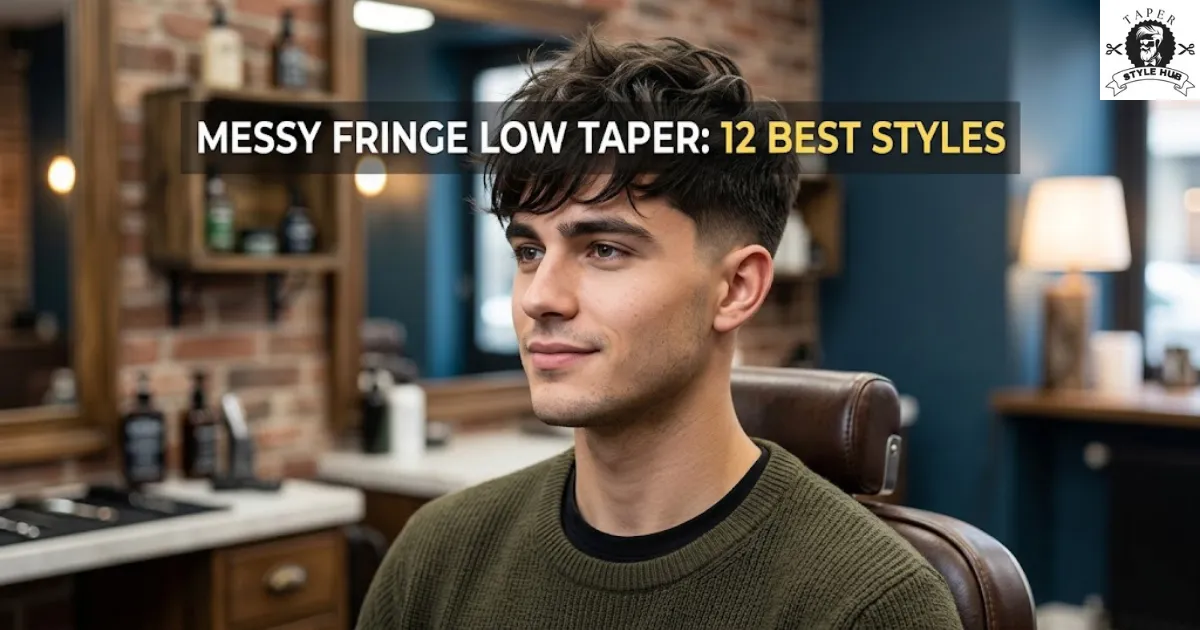
Messy Fringe Low Taper: 12 Best Styles
The messy fringe low taper is the haircut that looks like you woke up with great hair and never had to try. It pairs a choppy, lived-in fringe with a clean, subtle fade around the ears and neckline.
This guide covers what the cut actually is, twelve ways to wear it, what to tell your barber, and how to style it at home. Bring a photo from this list to your next appointment and you are set.
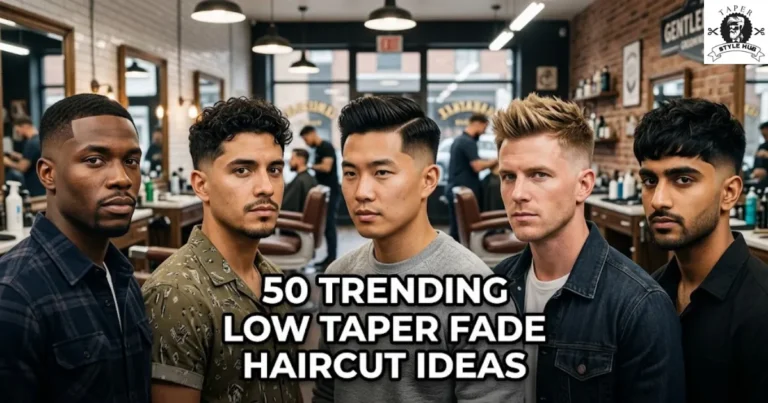
👉 Also Read: Low Taper Fade Boys
Messy Fringe Low Taper: The Complete Guide for Men
Few cuts balance sharp and relaxed as well as a messy fringe low taper. The sides stay quiet and neat, while the top keeps all the movement, texture and personality.
It works on straight, wavy and curly hair, and it suits almost every face shape. That flexibility is the main reason barbers book it so often right now.
👉 Also Read: Low Taper Fade Buzz Cut
Why the Messy Fringe Low Taper Is Trending in 2026
Ask any barber what is booked solid this year, and the messy fringe low taper comes up fast. It gives clients a clean look without the harsh contrast of a high skin fade.
It also fits real life. You can wear the same haircut to the office, the gym or dinner, and a small change in styling shifts the mood from casual to polished.
Here is why so many men keep asking for it:
- Low maintenance: most men style it in under five minutes with a little texture paste.
- Flexible: it works on short, medium or long hair on top.
- Subtle fade: the taper stays close to the ears, so it grows out gracefully.
- Photo friendly: it looks good from every angle, which helps it spread on Instagram and TikTok.
- Natural looking: it matches the move toward relaxed, lived-in hairstyles.
Search interest backs this up. Terms like textured fringe haircut, men’s haircut ideas and low taper fade keep climbing, which tells barbers exactly what clients want.
👉 Also Read: Taper Fade Black Male
What Is a Messy Fringe Low Taper?
A messy fringe low taper is a two-part haircut. The sides and back get a low taper, while the top keeps a longer, choppy fringe that falls forward in loose, uneven pieces.
The taper starts just above the ear and follows your natural hairline. The hair gets shorter as it moves down, but it never drops to bare skin, which keeps the look soft.
The fringe is cut with point cutting, thinning shears or razor work. That breaks up the weight and creates the broken, tousled finish that defines the style.
| Part of the Cut | What It Looks Like |
|---|---|
| Sides and back | A gradual low taper that stays close to the natural hairline |
| Top | Layered, textured and noticeably longer than the sides |
| Fringe | Short to medium, choppy pieces that fall forward |
| Finish | Matte, natural and slightly tousled |
Think of it like seasoning a dish. Too much fade and the cut looks harsh, while too little texture leaves the fringe flat. The messy fringe low taper balances both.
👉 Also Read: Low Taper Buzz Cut
Cutting Techniques Behind a Messy Fringe Low Taper

The messy look is not an accident. It comes from specific cutting techniques that remove bulk and build movement, so knowing the names helps you ask for the right thing.
👉 Also Read: Low Taper Fade Black Men
Point Cutting
Point cutting means the barber snips into the ends of the hair at an angle instead of cutting straight across. This creates soft, broken edges rather than a blunt line.
It is the most common method for a choppy fringe. It works on almost every hair type, which makes it a safe request.
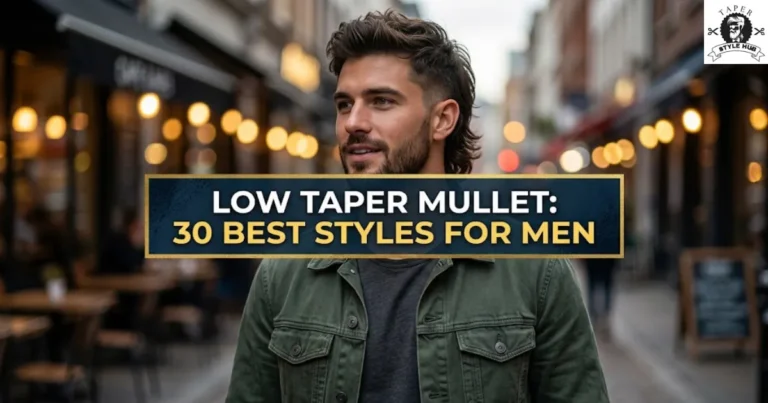
👉 Also Read: Low Taper Mullet
Razor Cutting
A razor slices through the hair and leaves thinner, wispier ends. The result looks lighter and more tousled, especially on straight or thick hair.
Razor work can cause frizz on very curly or dry hair. If your hair is curly, ask your barber to use scissors instead.
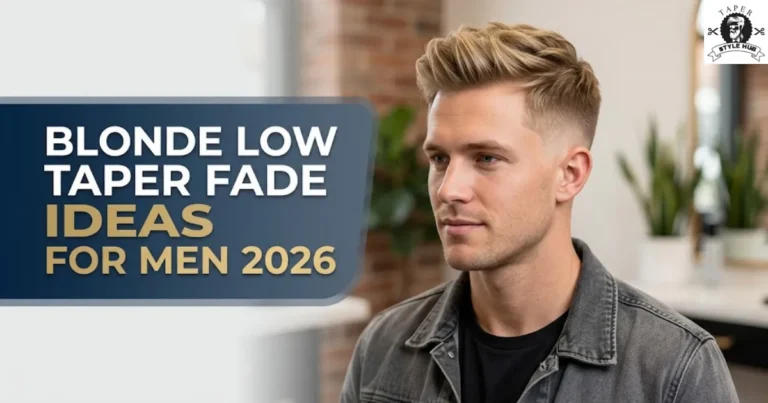
👉 Also Read: Blonde Low Taper Fade
Thinning Shears and Slicing
Thinning shears remove weight from inside the hair without shortening the visible length. Slicing does something similar by cutting channels through the top.
Both help dense hair lie flatter and move more freely. A good barber uses them sparingly, so the fringe keeps enough body.
👉 Also Read: Low Taper Fade Fluffy Hair
Messy Fringe Low Taper vs Textured Fringe and Textured Crop
These three names get mixed up all the time. They share short sides and a textured top, but each one reads differently once it is styled.
A textured fringe focuses on shaped, layered pieces up front. A textured crop is shorter and tighter, usually with a blunt line across the forehead.
A messy fringe low taper leans looser. The pieces are choppier, the finish is more tousled, and the low taper keeps everything from looking unplanned.
👉 Also Read: Low Taper Buzz
Where the Texture Lives in a Messy Fringe Low Taper
Here is a detail many guides skip. The fringe edge usually sits slightly heavier, while the real separation lives in the mid-section and crown behind it.
That contrast between a weighted front edge and a loose, layered interior is what makes the cut look intentional. Push texture into the fringe itself and it just looks grown out.
Messy Fringe Low Taper vs Mid Taper Fade
Choosing between a low and mid taper changes how the whole haircut reads. Both work with a messy fringe, so it comes down to how much contrast you want.
A low taper begins near the ear and neckline. A mid taper starts around the temple, so the contrast is stronger and the fade line sits higher.
| Feature | Low Taper | Mid Taper |
|---|---|---|
| Starting point | Near the ear and nape | Around the temple |
| Contrast | Soft and subtle | Medium and sharper |
| Grow out | Very clean | Needs touch-ups sooner |
| Best for | Office and daily wear | Trend-forward looks |
The low version is the safer pick. It keeps the sides neat without drawing attention, and it lets the whole cut stay fresh for longer between visits.
The mid version is a step up in drama. It makes the top look fuller by contrast, but you will need a trim every three to four weeks.
12 Best Messy Fringe Low Taper Styles
There is no single way to wear this cut. To keep things simple, the twelve styles below are grouped into three categories: hair texture, length and statement looks.
Pick the category that matches your hair first, then choose the style that fits your lifestyle. Every style pairs the same quiet low taper with a different kind of fringe.
Messy Fringe Low Taper Styles by Hair Texture
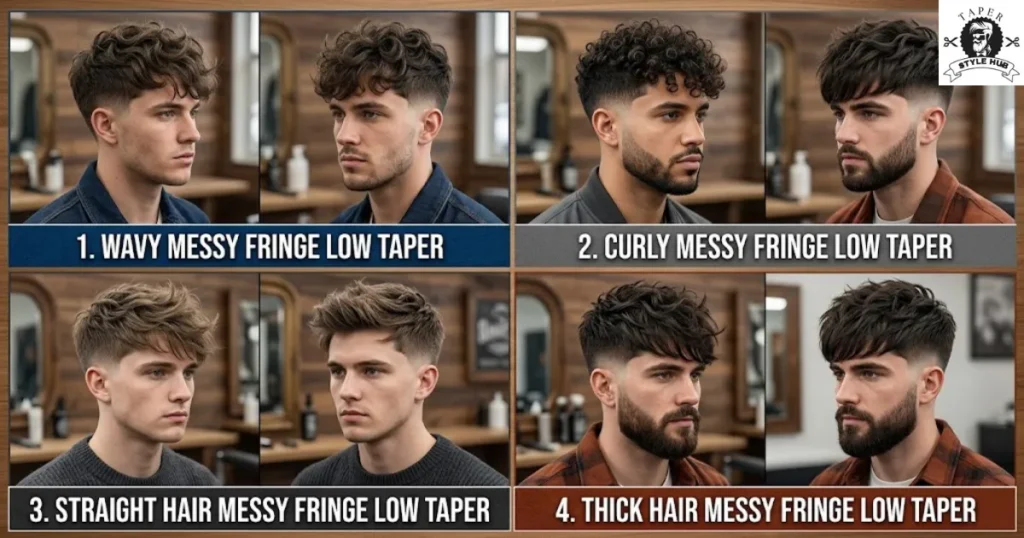
Your natural texture decides how much work the styling needs. These four styles work with your hair instead of against it.
1. Wavy Messy Fringe Low Taper
Natural waves already carry built-in texture, so this style leans into them. Your barber trims the top so the waves bunch up and fall across the forehead.
Scrunch in sea salt spray or a lightweight mousse and let it air dry. Avoid brushing once it is dry, or the waves turn frizzy.
Best for: fine to medium waves, oval and square faces, and men who like a style that dries on its own.
2. Curly Messy Fringe Low Taper
Curls and a low taper are a natural match. The tapered sides keep the shape tidy, while the curls on top stay bouncy and defined.
Keep the top around three to four inches long and ask for a dry cut. A light curl cream on damp hair finishes the job.
Best for: type 3 and type 4 curls, round and oval faces, and anyone tired of curls looking too wide.
3. Straight Hair Messy Fringe Low Taper
Straight hair can look flat, so texture does the heavy lifting here. Point cutting and thinning shears break up the line and add visual weight to the fringe.
A matte clay adds grip without shine. A texture powder at the roots gives extra lift when the hair feels limp.
Best for: straight, medium to thick hair, square and round faces, and men who want instant grip.
4. Thick Hair Messy Fringe Low Taper
Thick, strong hair holds a heavy messy fringe beautifully, but it can feel bulky without thinning. Ask your barber to remove weight from the inside of the top.
The low taper keeps the sides slim and balanced. A strong matte clay and a quick blow dry give lift that lasts all day.
Best for: dense, strong hair, oval and round faces, and anyone who fights bulk around the crown.
Messy Fringe Low Taper Styles by Length
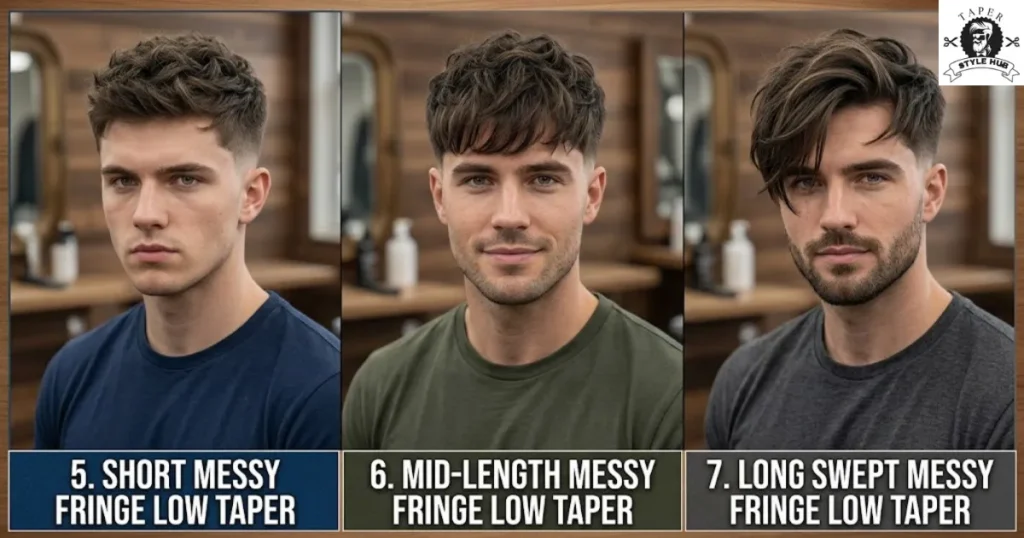
Length changes how much styling freedom you get. Short cuts are quick, while longer tops give you more ways to wear the fringe each morning.
5. Short Messy Fringe Low Taper
This is the lowest maintenance version on the list. The top stays around two to three inches, with light texture and a clean taper below.
A dab of matte paste is all you need. It also grows out gracefully, so you can stretch the time between haircuts.
Best for: busy mornings, work-friendly looks, and men trying a textured cut for the first time.
6. Mid-Length Messy Fringe Low Taper
If you want more hair to play with, this is the one. The top sits around four to six inches, so you can sweep it sideways or push it forward.
The low taper keeps the sides short enough to avoid a shaggy shape. A light cream gives a natural finish without stiffness.
Best for: wavy or straight hair, most face shapes, and men growing out a shorter cut.
7. Long Swept Messy Fringe Low Taper
This version keeps extra length on top and lets it fall across the forehead in loose pieces. It feels relaxed, almost surfer-style, while the taper keeps it tidy.
Blow dry the fringe sideways first to set direction. Finish with a little wax fiber so the ends separate without turning greasy.
Best for: fine to medium hair, oval and heart-shaped faces, and creative or relaxed dress codes.
Statement Messy Fringe Low Taper Styles

These five styles add a clear twist to the basic cut. Choose one when you want the haircut to say a little more about you.
8. Blowout Messy Fringe Low Taper
The blowout adds height and volume to the front. A round brush lifts the roots and pushes the fringe up and forward for a full, dramatic shape.
Apply volumizing mousse to damp hair before drying. The low taper keeps the sides slim so the volume stands out even more.
Best for: thick or medium hair, long and oval faces, and men who enjoy a few extra minutes of styling.
9. Fluffy Messy Fringe Low Taper
Think of this as the softer cousin of the classic messy look. Instead of sharp, choppy pieces, you get rounded, airy volume that feels friendly and approachable.
Keep the product light, because heavy clay weighs it down. Fine hair benefits most since the style creates the illusion of extra density.
Best for: fine to medium hair, oval and heart-shaped faces, and younger guys after a soft look.
10. French Crop Messy Fringe Low Taper
The French crop keeps a short, blunt fringe across the forehead. Adding messy texture on top makes it feel less stiff and much more current.
It reads polished enough for interviews and offices. It also helps hide a receding hairline by drawing the eye forward.
Best for: thick hair, receding hairlines, long faces, and office settings that prefer a neat outline.
11. Mullet Messy Fringe Low Taper
The modern mullet is softer and more controlled than the old version. The fringe stays choppy up front, the sides get a low taper, and the back builds in length.
Ask for a gentle length at the nape instead of a big contrast. It makes a statement without going fully extreme.
Best for: wavy and curly hair, confident dressers, and men who want to be noticed without going extreme.
12. Messy Fringe Low Taper With Beard
A beard changes the whole picture. The fringe softens the top half of the face, while a groomed beard balances the jawline and the taper connects both.
Ask your barber to match the beard fade with the haircut taper. That small detail separates a put-together look from a mismatched one.
Best for: round and oval faces, and men who want a rugged but tidy overall look.
Hair Density and Hair Type: What Works Best
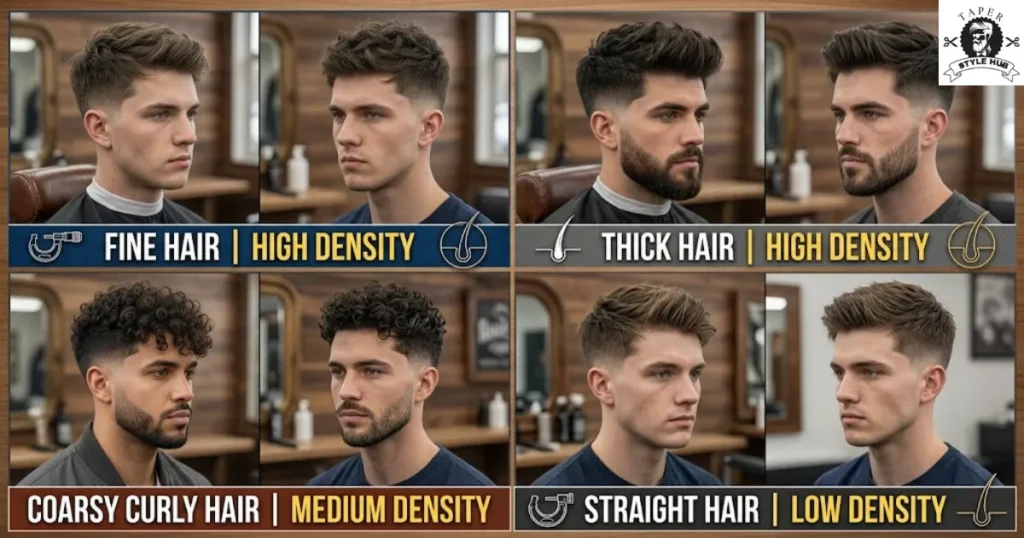
Two men can ask for the same cut and walk out with very different results. Hair density and strand thickness change how the fringe falls and how long the style holds.
Fine hair looks best with light layers and volume. Heavy products drag it down, so keep clay to a minimum and rely on mousse or sea salt spray.
Medium hair is the easiest to work with. It holds a messy shape well and responds to almost any product.
Thick hair needs thinning and a moisture step before styling. Without it, the fringe can puff out and lose its choppy definition.
Fringe Length Guide
Fringe length does more to change the look than almost any other detail. A half inch can shift the whole feel of the cut.
A short fringe sits mid-forehead and feels neat and modern. A medium fringe lands just above the brow and suits most faces.
A long fringe reaches the eyebrows or lower and gives a relaxed, shaggy feel. It needs more product control, especially in windy weather.
Messy Fringe Low Taper From Different Angles
A good haircut has to hold up from every direction, not just the mirror selfie angle. Checking both views helps you talk to your barber with confidence.
Front View of a Messy Fringe Low Taper
From the front, the fringe is the star. It should sit around the eyebrows, with choppy, broken pieces that frame the forehead instead of one flat curtain.
The temples should look clean, with a light taper that follows the hairline. Good balance means volume on top and slim, quiet sides.
Back View and Tapered Finish
The back view is where the real craftsmanship shows. The hair should shorten smoothly from the crown down to the nape, with no harsh lines or patchy spots.
Ask your barber to check this angle with a mirror before you leave. A natural neckline grows out better, while a squared one looks sharper right after the cut.
What to Expect During the Barber Visit
This haircut usually takes thirty to forty-five minutes in the chair. The taper goes quickly, but the texture work needs patience.
Your barber will probably cut the top dry so they can see how each piece falls. That is a good sign, not a shortcut.
Before you leave, shake your head, run your fingers through the fringe and check the neckline. A great cut should still look good after a little movement.
What to Tell Your Barber for a Messy Fringe Low Taper
Being specific upfront gets you a better result. Most bad haircuts come from vague requests, not bad barbers.
- Taper type and height: say “low taper” clearly, and mention whether you want skin or a longer finish at the neckline.
- Fringe position: tell them if you want it at the brow or mid-forehead, and bring a photo.
- Length on top: ask in inches, such as two to three for short or four to six for mid-length.
- Texture technique: request point cutting or razor work for a choppy, separated finish.
- Daily routine: mention how much time you want to spend styling each morning.
Saying “just trim it” will not produce this look. The texture comes from deliberate cutting, so describe the finish you want.
How to Style a Messy Fringe Low Taper
Styling is simple once you know the basics. You only need a few products and a few minutes, and the goal is texture, not shine.
Basic Styling Routine
Follow these steps for a reliable everyday finish:
- Wash your hair and towel dry until it is damp.
- Apply a pre-styler such as sea salt spray or mousse.
- Blow dry the top, pushing the hair forward.
- Warm a pea-sized amount of matte clay or paste in your palms.
- Rake it through with your fingers and pull a few strands forward.
Work most of the product near the roots for lift and less toward the ends. Twist a few tips for extra definition.
Styling Straight, Wavy and Curly Hair
Each hair type needs a slightly different approach. Use this quick guide to match your prep and product.
| Hair Type | Best Prep | Best Product | Finish |
|---|---|---|---|
| Straight | Blow dry with root lift | Texture powder and matte clay | Matte and piecey |
| Wavy | Scrunch and air dry | Sea salt spray or light cream | Soft and natural |
| Curly | Apply to damp hair and diffuse | Curl cream or gel | Defined and bouncy |
Do not overload your hair. Start small and add more only if needed, because curly hair especially needs moisture and handles heavy waxes poorly.
Messy Fringe Low Taper vs Other Popular Fades

The taper is only one way to finish the sides. Comparing it with other fades shows why so many men settle on the low version.
Skin Fade and High Fade
A skin fade drops all the way to bare skin, and a high fade starts near the temples. Both create sharp contrast, but regrowth shows within two to three weeks.
They also demand a shorter, tighter fringe to keep the proportions right. A heavy, hanging fringe on top of a high fade can look disconnected.
Drop Fade and Burst Fade
A drop fade curves down behind the ear, while a burst fade circles the ear in a rounded shape. Both add a design element to the back of the head.
They look great with longer, messier tops. The trade-off is more frequent upkeep and a bolder overall statement than a quiet taper.
Best Products for a Messy Fringe Low Taper
The right product does half the work. This style needs grip and flexibility, not a stiff, shiny hold.
Matte clay is the most versatile choice because it gives separation and a dry finish. Texture paste feels lighter and suits fine or medium hair.
Wax fiber adds movement and works well for longer tops. Sea salt spray builds a texture base, and hairspray locks everything in when you need all-day hold.
Choosing the Right Messy Fringe Low Taper for Your Face Shape
The best haircut flatters your face. A good barber adjusts the fringe length and top volume to suit your shape.
| Face Shape | Best Version | Why It Works |
|---|---|---|
| Oval | Almost any style | A balanced shape suits everything |
| Round | Longer top with volume | Adds height and slims the face |
| Square | Messy or side-swept fringe | Softens strong angles |
| Long | Blowout or French crop | Shortens the look of the face |
| Heart | Fluffy or mid-length fringe | Balances a wider forehead |
Hair type matters too. Thick hair handles heavy texture well, while fine hair looks better with volume and light layers.
Who Might Want a Different Cut?
This cut is flexible, but it is not perfect for everyone. Very coarse, tightly coiled hair may need a different cutting approach to keep the fringe defined.
Men who dislike styling altogether may find the texture hard to maintain. If you want something that needs no product, a shorter classic cut may suit you better.
Strict dress codes can also be a factor. In very conservative workplaces, a smoother, tidier fringe is a safer choice.
The Evolution of the Messy Fringe Low Taper
Tapered cuts have been around for decades. Classic barbershops used them for clean, short styles in the 1950s and 60s, with neat, combed tops.
In the 2010s, skin fades and high contrast cuts took over. Around the early 2020s, men started asking for softer, more natural looks.
Today, the messy fringe low taper sits between those two worlds. It keeps the cleanliness of a fade and adds the ease of a lived-in top.
Best Occasions to Wear This Cut
One of the biggest strengths of this haircut is how easily it moves between settings. A few small styling changes are enough to adjust the mood.
For the office, use a little less texture and sweep the fringe slightly to one side. A smoother finish reads professional without losing the relaxed shape.
For weekends, add sea salt spray and rough dry the top. The extra grit makes the whole cut look looser and more casual.
For formal events, use a light pomade or cream and direct the fringe neatly. The low taper already keeps the sides sharp, so the cut dresses up easily.
Dealing With a Receding Hairline or Thinning Crown
A forward fringe is one of the best tools for softening a receding hairline. The choppy pieces cover the temples and draw attention away from the corners.
Keep the sides short but not skin-close, because stark contrast can make the hairline stand out. A low taper is gentler than a high fade for this reason.
If the crown is thinning, ask for a bit more length there. A texture powder at the roots adds visible density without weighing the hair down.
Maintenance Tips for a Messy Fringe Low Taper
A low taper needs regular care to stay clean, but it grows out better than most fades. Most men need a trim every four to six weeks.
- Book regular trims: keep the neckline and taper fresh.
- Wash smart: shampoo two or three times a week, since overwashing dries out your hair.
- Condition well: this keeps curly and wavy hair soft and defined.
- Protect from heat: use a heat spray before blow drying.
- Remove buildup: too much product makes the fringe look flat and dull.
Between visits, trim stray fringe pieces at home to buy an extra week. Go slowly, because textured cuts forgive small mistakes only up to a point.
Grow-Out Guide: Staying Sharp Between Haircuts
Every haircut goes through an awkward phase, and a low taper handles it better than most. Because the fade is subtle, regrowth blends in instead of showing a hard line.
Around week three, the fringe begins to sit lower on the forehead. Push it sideways or back with a little paste to keep it neat.
By week five, the neckline starts to fuzz. A quick clean-up with a trimmer can buy you another week, but leave the taper itself to your barber.
Styling in Humid or Windy Weather
Weather can undo a style in minutes, but a few habits keep the fringe in place. Humidity makes hair expand, while wind scatters loose pieces.
In humid weather, use a matte clay with a light hairspray finish. Avoid creams, because they attract moisture and can make the fringe fall flat.
On windy days, a slightly stronger hold helps. Work product into the roots as well as the ends so the whole fringe moves together.
Keeping Messy From Becoming Unkempt
There is a fine line between deliberate texture and a haircut that simply needs a trim. The difference usually comes down to clean edges around the fringe.
Keep the neckline tidy, the sideburns even and the taper blended. When those details stay sharp, the loose top looks like a choice.
Also pay attention to product. A matte finish looks natural, while shine and heavy wax can make messy hair look greasy instead of stylish.
Tools and Accessories Worth Having
You do not need a bathroom full of gadgets to style this cut. A short list of reliable tools covers almost everything.
A good blow dryer with a nozzle gives you control over direction and lift. A diffuser attachment is helpful for curly and wavy hair.
A wide-tooth comb or just your fingers keeps the texture intact. A small pair of trimmers handles neckline touch-ups between appointments.
Night Routine and Hair Health
Healthy hair holds texture better than damaged hair. A few simple habits keep the fringe looking fuller and easier to style the next morning.
Rinse out product before bed so buildup does not clog the scalp. A silk or satin pillowcase also reduces frizz and flattened sections.
Use a conditioner once or twice a week, especially if you blow dry often. Moisture keeps the ends from splitting and looking dull.
Common Mistakes With a Messy Fringe Low Taper
Even a great cut can fall flat with a few avoidable errors. Most of them come down to product and timing.
Using too much clay is the biggest one. It turns messy into greasy and hides the texture your barber worked to build.
Waiting too long between trims is another. Once the taper grows out, the cut loses its shape and starts to look shaggy instead of intentional.
Quick Styling Cheat Sheet
Keep this short list in mind on busy mornings. It covers the habits that make the biggest difference.
- Style on damp hair, not soaking wet or fully dry.
- Use less product than you think you need, then add more slowly.
- Focus on the roots for lift and the tips for definition.
- Let the fringe fall forward before you shape it.
- Finish with a light mist of hairspray only if you need extra hold.
Final Checklist Before You Book
A little preparation makes the appointment smoother and the result closer to your photo. Run through this list before you sit in the chair.
- Save two or three reference photos that show the front, side and back.
- Know your hair type and how it behaves when it dries.
- Decide how much styling time you really have each morning.
- Choose a taper height and say it clearly.
- Ask what products your barber would use to recreate the finish.
Good communication matters as much as skill. When you and your barber describe the same picture, the haircut almost always turns out right.
Messy Fringe Low Taper FAQs
What is a messy fringe low taper?
It is a haircut with a low taper on the sides and a choppy, textured fringe on top.
Is a low taper better than a mid taper for a messy fringe?
A low taper is softer and easier to maintain, while a mid taper gives more contrast.
Can curly hair get a messy fringe low taper?
Yes. The taper keeps the sides neat while the curls stay full and defined on top.
How often should I trim a messy fringe low taper?
Most men need a trim every four to six weeks to keep the taper and neckline clean.
What product works best for a messy fringe?
Matte clay or paste suits most hair types. Use curl cream for curls and sea salt spray for extra texture.

I’m M Ahmad Ansari, founder and content creator at Taper Style Hub. With 3+ years of experience researching taper haircuts, hairstyles, grooming, and men’s style, I create practical, accurate, and easy-to-understand content. My goal is to provide readers with trustworthy information, useful tips, and inspiring ideas for choosing and styling the perfect taper haircut.



5 Comments