Taper Mid Fade: 40 Best Styles (Men 2026)
The taper mid fade is one of the most flexible men’s haircuts you can ask for in 2026. It sits between a soft low taper and a bold high taper, so it gives you clean edges without taking too much hair off the sides.
It works with straight, wavy, curly and coily hair, and it suits almost every face shape. This guide explains what the cut is, how it differs from similar fades, how to ask for it, and which 40 styles are worth showing your barber.
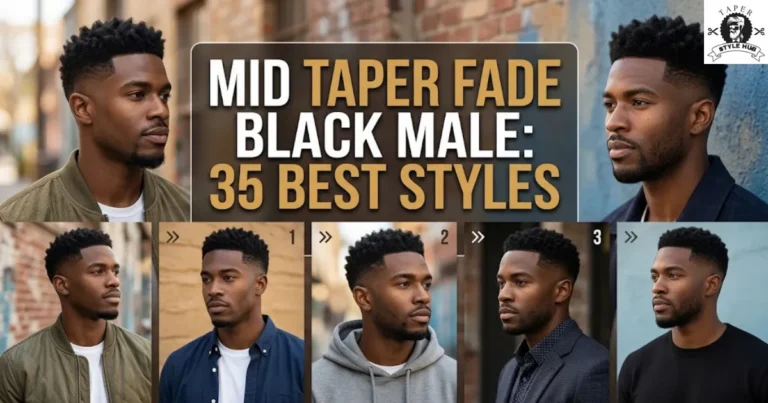
👉 Also Read: Mid Taper Fade Black Male
Taper Mid Fade Haircut Guide: Everything You Need Before You Book
Before you pick a style, it helps to understand the cut itself. The sections below cover placement, terminology, comparisons, hair types, face shapes, products and upkeep, so you can walk into the chair with a clear plan.
Use the headings as a map. Skip straight to the style categories if you are browsing for ideas, or read the barber sections first if an appointment is coming up.
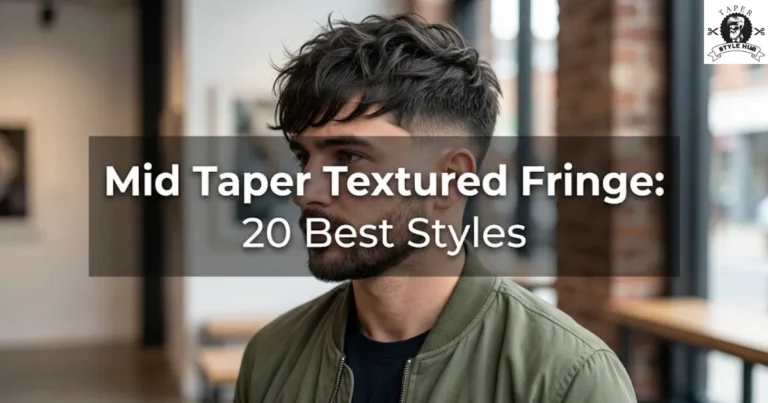
👉 Also Read: Mid Taper Textured Fringe
What Is a Taper Mid Fade Haircut?
A taper mid fade is a haircut where the sides and neckline gradually get shorter, starting around the middle of the temple. The hair blends down through the sideburns and around the ear until it reaches the nape.
The top stays long enough to style however you like. That separation is why one taper can carry a crop, a quiff, curls or a longer fringe without changing the shape of the sides.
Barbers describe it as the balanced middle option. It shows more contrast than a low taper, yet it feels softer than a high taper that rises close to the crown.
The name describes a technique rather than a single hairstyle. Because the top is a separate decision, two men can ask for the same taper and walk out with completely different looks.
👉 Also Read: Medium Taper Fade Haircut
Who Should Get This Cut?
Almost anyone can wear this cut, which explains its steady popularity. It suits office workers who want a neat outline, students who need something easy, and creative professionals who like a sharper edge.
It also helps men with thick hair, because the taper removes bulk from the sides. If your hair is fine, a slightly softer finish keeps the top looking fuller by comparison.
It suits teens and men in their sixties alike, because the top can be adjusted for any age. Older men often prefer shorter, softer finishes, while younger clients tend to try fringes and volume.
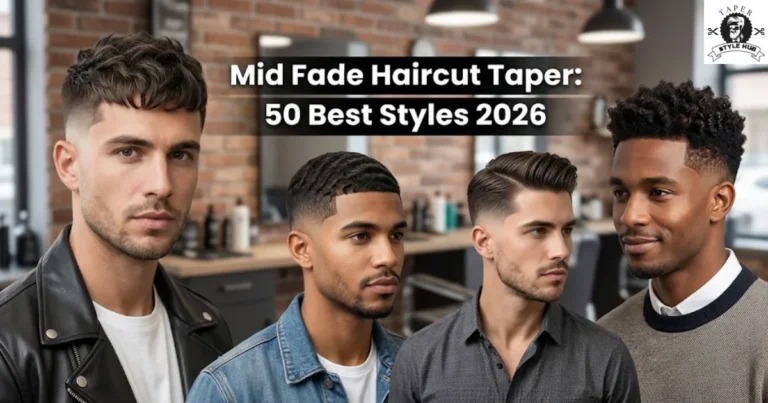
👉 Also Read: Mid Fade Haircut Taper
Taper Mid Fade vs Mid Taper vs Medium Taper
Barbershops use several names for similar work. You may hear mid taper, medium taper, mid fade taper or taper mid fade, and in many shops these terms point to the same general cut.
The difference usually comes down to how far the shortening travels. A taper keeps some length at the edges, while a fade tends to go shorter, often down to bare skin.
Because naming is not standardized, a reference photo works better than a label. Point to the exact spot where you want the blend to start and confirm the shortest length before the clippers come out.
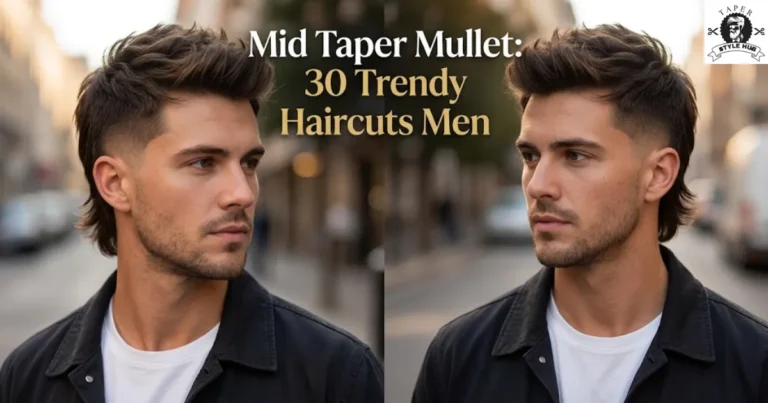
👉 Also Read: Mid Taper Mullet
Where the Taper Mid Fade Sits on the Fade Spectrum
Think of taper height as a ladder. Each rung changes how much hair stays on the sides and how sharp the contrast looks against the top.
| Taper Height | Where It Starts | Contrast | Typical Upkeep |
|---|---|---|---|
| Low taper | Just above the ear | Subtle | Every 3 to 4 weeks |
| Mid taper | Around the temple | Balanced | Every 2 to 3 weeks |
| High taper | Near the crown | Strong | Every 1 to 2 weeks |
Upkeep ranges are rough guides. Hair growth speed, the shortest length you choose and how crisp you like your edges all change the schedule.
👉Also Read: Taper Mid
Key Characteristics of a Taper Mid Fade
A well-cut version has a few signs you can check in the mirror before you leave the shop.
- The blend begins near the temple, roughly at eyebrow level.
- Sideburns and the nape taper smoothly, with no harsh lines or visible shelf.
- The neckline is tapered, rounded or squared, depending on your preference.
- Skin exposure is moderate, more than a low taper and less than a high fade.
- The top length is flexible, from a buzz cut to several inches of texture.
👉 Also Read: Mid Taper Fade Black Male Short Hair
Guard Numbers and Finish Options
The shortest point of the blend changes the whole mood of the cut. Three choices matter most, and each one affects how the haircut grows out.
Shadow Finish
A shadow finish stops just short of bare scalp, leaving a soft dusting of hair. It looks subtle, grows out gently and suits conservative settings.
Skin Finish
A skin finish clips down to visible scalp for maximum contrast. It looks crisp on day one, but it needs more frequent visits to stay sharp.
Line Up or Natural Hairline
A line up uses a trimmer to cut a straight border at the forehead and temples. A natural hairline follows your own growth edge, which looks softer and needs fewer touch-ups.
What Does a Taper Mid Fade Look Like?
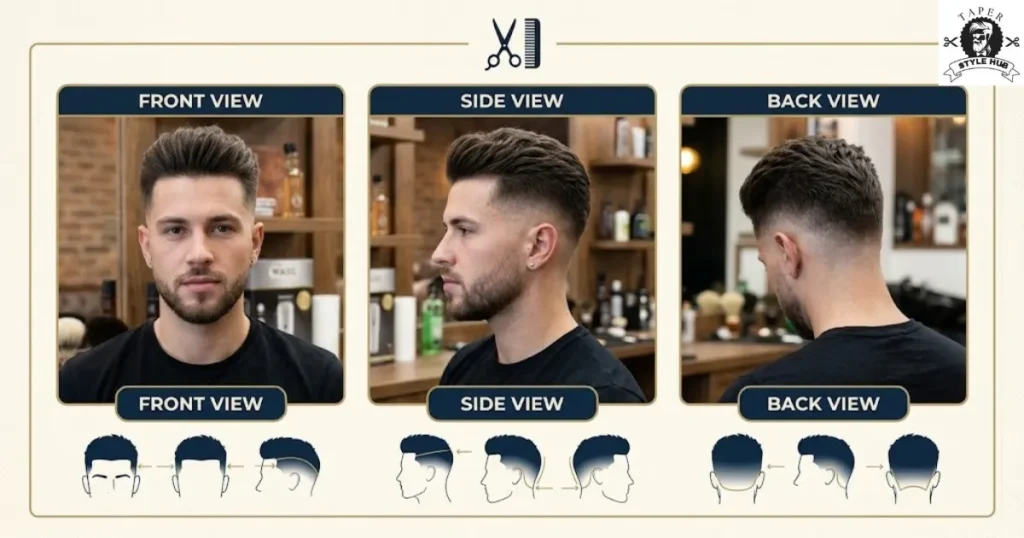
The cut looks different depending on where you stand. Checking each angle helps you describe it clearly to your barber.
“All The Types Shown Below Are Displayed In The Single Image Above☝️”
Front View
From the front you notice the hairline first. It should look crisp, with clean temples that frame the face and a top style that carries most of the personality.
Side Profile
The side view shows the gradient best. Hair gets shorter as it moves toward the ear, and the sideburn melts into the taper instead of sitting apart as a separate block.
Back View
At the back, the taper follows the curve of the skull and finishes at the neckline. A proper cut leaves no heavy weight line, and the crown keeps its length.
360-Degree Summary
Picture an invisible line at temple height wrapping around your head. Everything above it stays long, while everything below it gradually tapers shorter toward the nape.
How a Barber Cuts a Taper Mid Fade
Understanding the process helps you judge the result. Most barbers work in sections, starting at the bottom of the head and moving upward toward the temple line.
Clippers fitted with progressively longer guards create the gradient, and a lever adjustment smooths the transition. Many barbers then use the clipper-over-comb method to blend the top into the sides without a visible line.
Scissors and a trimmer finish the job. The barber cleans the sideburns, shapes the neckline and checks the blend from several angles, often with a handheld mirror.
Taper Mid Fade vs Other Fade Haircuts
Most confusion comes from comparing neighbors. The table below separates the closest relatives, and the notes underneath explain each difference in plain terms.
| Haircut | Main Difference | Best For |
|---|---|---|
| Low taper fade | Starts just above the ear for a subtle look | Conservative workplaces |
| High taper fade | Starts near the crown for strong contrast | Bold, modern looks |
| Mid fade | Shortens a wider band across the sides and back | Sharper contrast |
| Skin fade | Always reaches bare skin at the bottom | Maximum crispness |
| Drop fade | Curves down behind the ear | Added shape and dimension |
| Burst fade | Arcs around the ear in a semicircle | Mohawks and faux hawks |
Versus a Low Taper Fade
A low taper stays close to the ear and neckline, so it looks quieter. The mid version rises to the temple and adds visible definition.
Versus a High Taper Fade
A high taper removes more hair from the upper sides and draws attention to the top. The mid height keeps more side weight and feels easier to wear every day.
Versus a Mid Fade
A mid fade usually runs one continuous gradient across the sides and back. A taper keeps the blend more localized around the sideburns and neckline, so more bulk survives.
Versus a Skin, Drop or Burst Fade
These variations change the finish or the curve rather than the height. A skin fade goes to bare skin, a drop fade bends behind the ear, and a burst fade fans around it.
Versus a Temple Fade or Classic Taper
A temple fade focuses only on the temple area, so it covers less ground than a full taper. Some shops use the names interchangeably, which is another reason to show photos.
A classic taper skips the fade-style blurring and leaves a longer, softer transition. It suits anyone who wants less contrast and a more traditional look.
40 Best Taper Mid Fade Styles for Men in 2026
The top decides how the haircut reads from day to day. We grouped the styles into eight categories, so you can jump to the group that matches your hair type and routine.
Classic and Professional Taper Mid Fade Styles
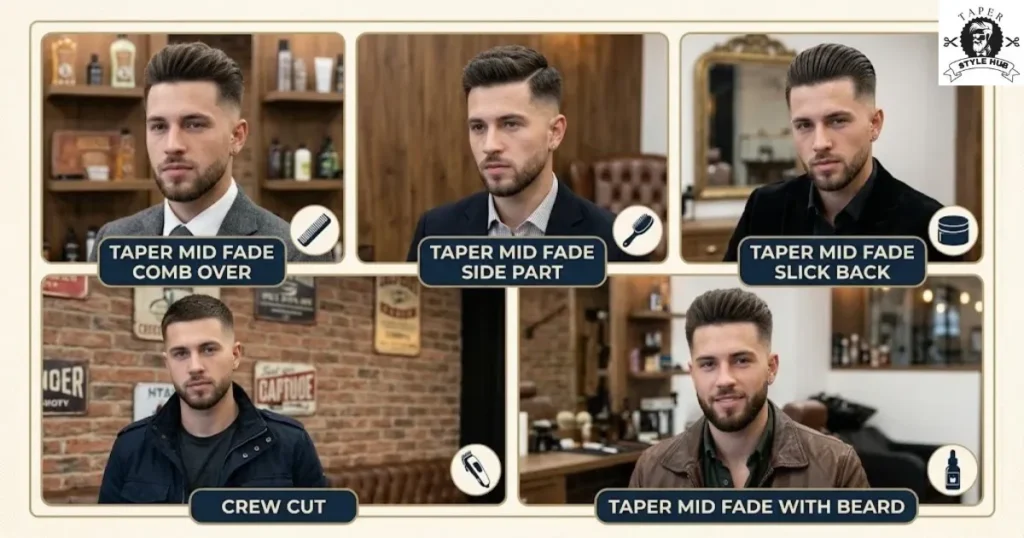
These cuts suit offices, interviews and formal events. They keep the shape polished while the taper handles the edges.
“All The Types Shown Below Are Displayed In The Single Image Above☝️”
Taper Mid Fade Comb Over
Longer hair sweeps to one side with a clean part, while the tapered sides stay sharp. Best for straight to wavy hair. Use light pomade and a comb for a neat, timeless finish.
Taper Mid Fade Side Part
A defined part gives the cut a traditional barbershop feel without looking stiff. It works well with straight or slightly wavy hair, a medium-hold cream and a quick blow-dry.
Taper Mid Fade Slick Back
Hair is brushed straight back with a little shine for a smooth, businesslike look. Blow-dry upward at the roots first, then comb through pomade for control that lasts.
Crew Cut
A slightly longer top with a forward sweep pairs neatly with tapered edges. It needs only a comb and a pinch of product, which makes it ideal for busy mornings.
Taper Mid Fade with Beard
The sideburn blends into the beard line for one continuous shape. Ask your barber to soften the transition instead of cutting a hard line, and keep the top relatively low.
Short and Low-Maintenance Taper Mid Fade Styles
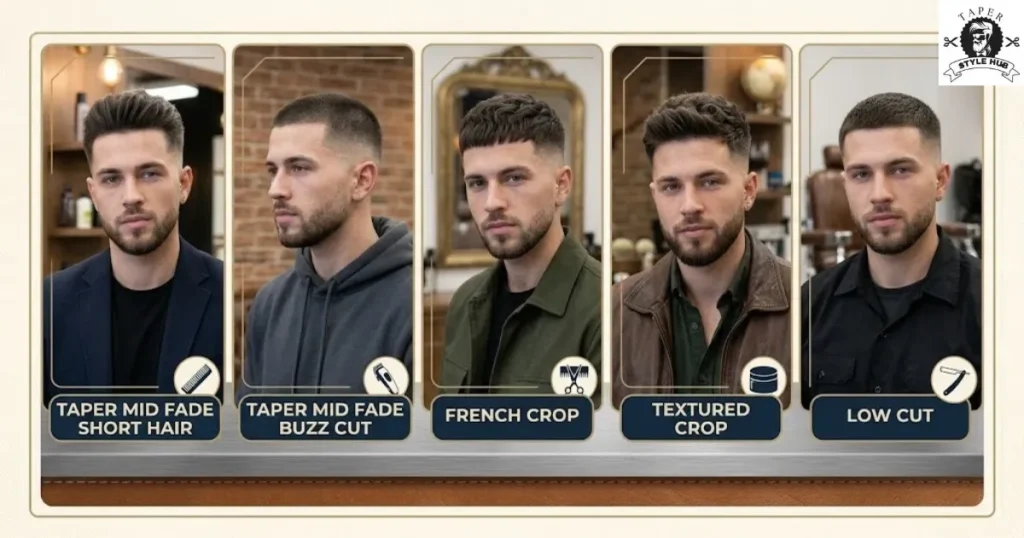
Short tops save time in the morning. These styles suit busy schedules, hot climates and active lifestyles.
“All The Types Shown Below Are Displayed In The Single Image Above☝️”
Taper Mid Fade Short Hair
One to two inches on top keeps styling almost effortless. The taper supplies the sharp outline, so a little light cream is all you need to define the texture.
Taper Mid Fade Buzz Cut
A tight, even buzz on top meets clean tapered sides. It looks bold and simple, and it works well on thinning hair because nothing needs hiding.
French Crop
A short textured top with a blunt forward fringe sits above a neat taper. It is easy to style, and it flatters men with a receding hairline.
Textured Crop
Choppy layers add movement without much length. Work a matte clay through dry hair with your fingers for a relaxed, modern finish that never looks overdone.
Low Cut
A short, thick, lightly tousled top keeps things natural. The taper around the ears and neckline adds structure, which suits the gym, the office and everything between.
Voluminous and Lifted Taper Mid Fade Styles
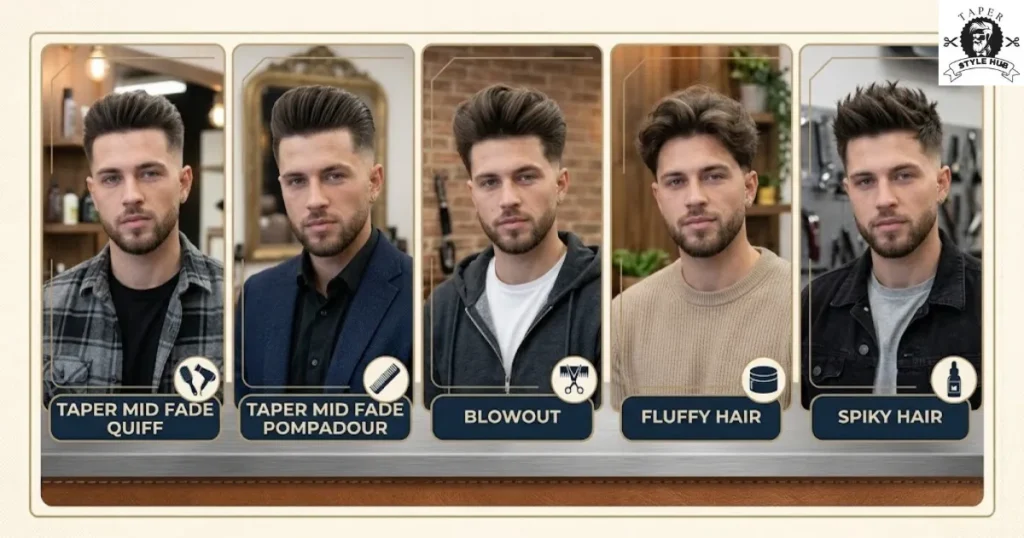
Height on top creates strong contrast against tapered sides. These styles need a blow dryer and a little patience.
“All The Types Shown Below Are Displayed In The Single Image Above☝️”
Taper Mid Fade Quiff
Extra length at the front is lifted up and back for a confident shape. Volumizing mousse and a round brush help it hold, and a flexible paste finishes the look.
Taper Mid Fade Pompadour
Tall, swept-back hair creates a dramatic silhouette. A firm pomade and the neat taper beneath keep the whole look controlled, even when the top reaches serious height.
Blowout
Thick, airy hair is dried upward and outward for bold volume. Sea salt spray before blow-drying adds lift, while the taper stops the sides from looking bulky.
Fluffy Hair
A soft, bouncy top with neat sides looks relaxed yet deliberate. Dry it with your fingers and finish with a texture-boosting cream to keep the fluff light.
Spiky Hair
Short textured spikes add a playful edge. Twist small sections with paste and keep the product light, so the style stays natural while the tapered sides stay tidy.
Fringe and Forward-Styled Styles
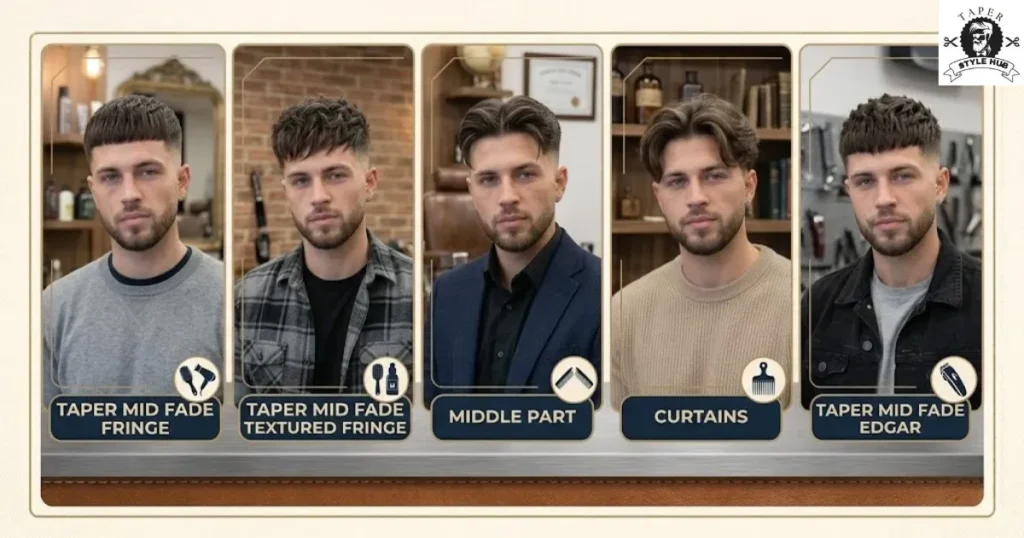
Forward hair softens the forehead and gives the cut a youthful, artistic feel. Texture matters more than length here.
“All The Types Shown Below Are Displayed In The Single Image Above☝️”
Taper Mid Fade Fringe
Longer front hair falls across the forehead while the sides stay tidy. Blow-dry it forward and finish with a light cream so the movement looks effortless.
Taper Mid Fade Textured Fringe
A choppy, point-cut fringe adds movement and volume. Texture powder on dry hair builds the messy finish without extra weight, and the taper keeps the outline neat.
Middle Part
The hair splits down the center and falls evenly on both sides. It suits straight to wavy hair with enough length to hang naturally past the forehead.
Curtains
Longer front pieces frame the face in a relaxed, center-parted shape. Keep the taper localized so you do not lose the length that makes curtains work.
Taper Mid Fade Edgar
A blunt, straight-across fringe contrasts sharply with tight tapered sides. It works best on thick, straight hair and rewards frequent touch-ups.
Curly and Wavy Taper Mid Fade Styles
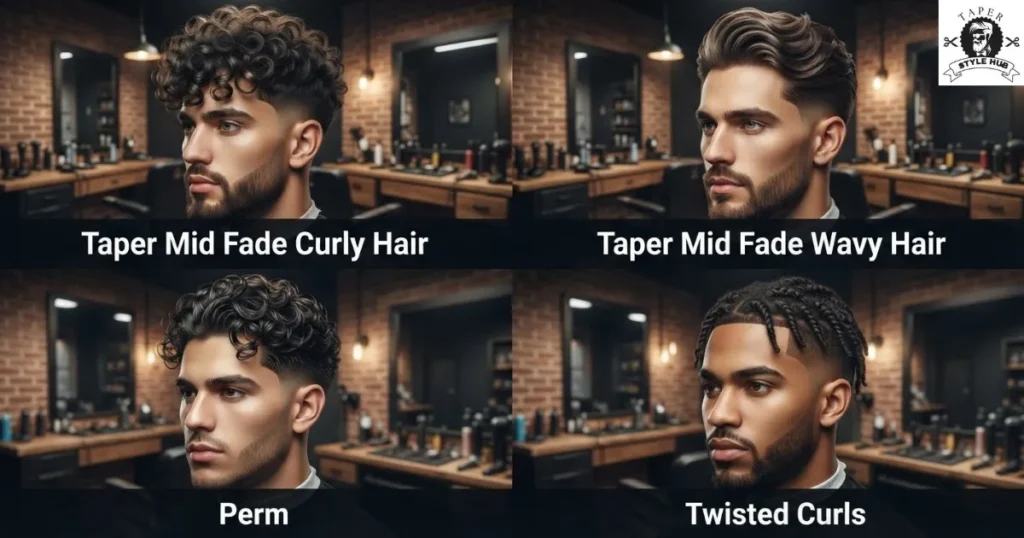
Texture adds natural volume on top, and the taper removes bulk from the sides. Moisture and gentle drying keep the pattern defined.
“All The Types Shown Below Are Displayed In The Single Image Above☝️”
Taper Mid Fade Curly Hair
Natural curls stay full on top while the taper cleans the temples and neckline. Apply curl cream to damp hair and let it dry undisturbed to limit frizz.
Taper Mid Fade Wavy Hair
Soft waves create movement without much effort. Scrunch lightweight texture cream through damp hair, then avoid brushing once it dries so the pattern stays intact.
Perm
Soft permed curls bring volume to straight hair, a look popular in Korean-inspired styling. A diffuser keeps the bounce defined, and the taper keeps the shape controlled.
Twisted Curls
Defined twists on top contrast with crisp tapered sides. Keep the curls hydrated with leave-in conditioner between washes, and refresh them with a water-based spray.
Afro-Textured and Protective Taper Mid Fade Styles
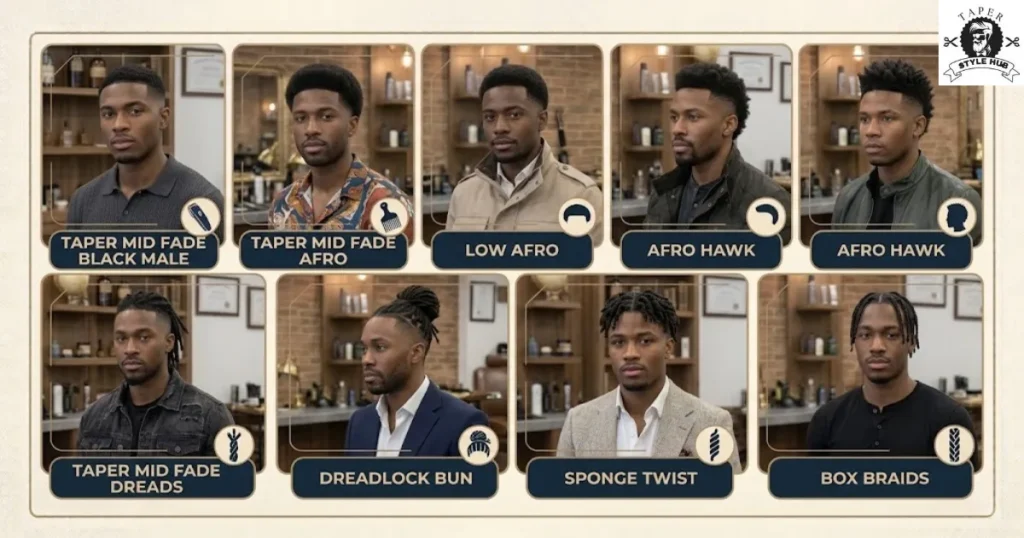
A mid taper frames coils, locs and braids with clean edges. The key is protecting moisture while the perimeter stays sharp.
“All The Types Shown Below Are Displayed In The Single Image Above☝️”
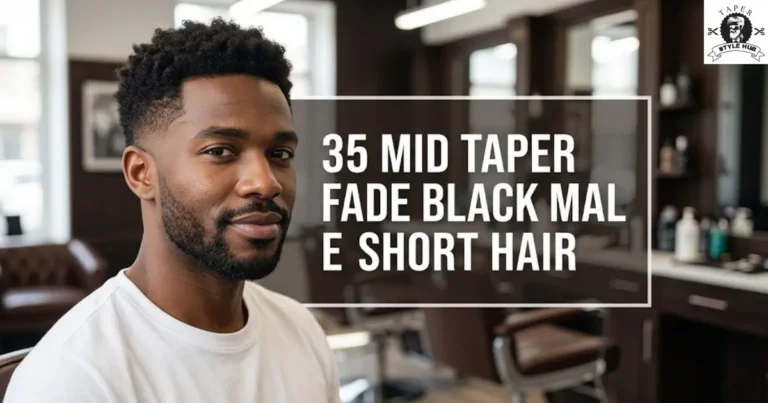
Taper Mid Fade Black Male
Sharp linework and a clean taper highlight natural coils and tight curls. Lightweight cream on damp hair keeps definition without stiffness, and regular visits keep the edges crisp.
Taper Mid Fade Afro
A rounded afro on top contrasts with a crisp taper below, which also reduces bulk at the sides. Lift the shape with a pick and moisturize often.
Low Afro
A shorter afro creates a compact, structured shape suited to work and school. Regular trims preserve the clean outline, and a light cream adds definition.
Afro Hawk
Height runs down the center while the tapered sides emphasize it. Define the strip with curl cream to keep the shape upright and bold.
Taper Mid Fade Dreads
Locs hang on top while the perimeter stays neat. Set the no-cut boundary with your barber, so the taper never thins the loc bases.
Dreadlock Bun
Locs gathered into a bun keep everything tidy and practical. A snag-free tie protects the roots from breakage, and the taper adds a polished border.
Sponge Twist
Tight coils form on top using a curl sponge and twist cream. The taper sharpens the outline and makes the pattern stand out.
Box Braids
Neat braids on top pair with a clean taper for a modern protective style. Refresh the edges every few weeks while the braids stay in.
Long Hair and Mullet Styles
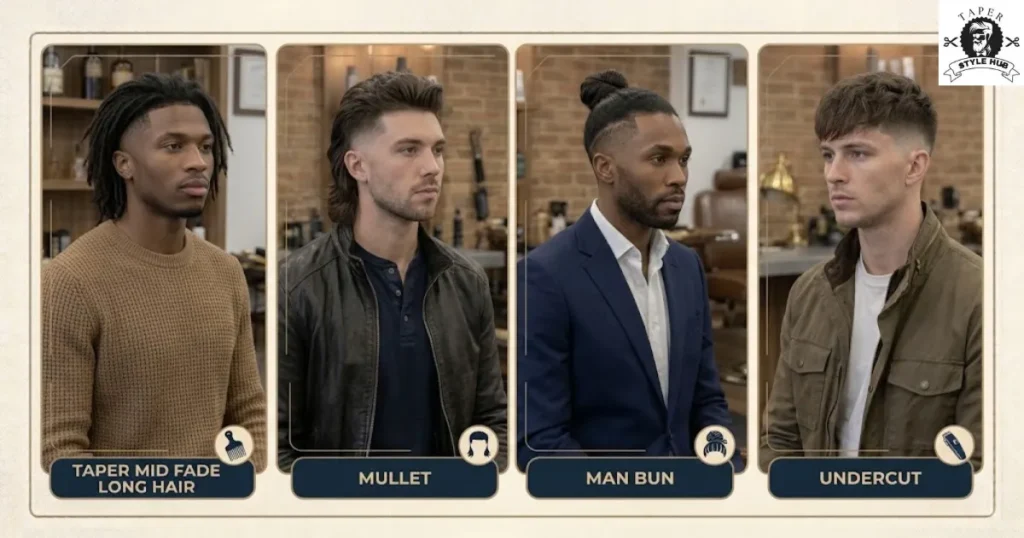
Length on top looks intentional when the sides stay neat. A taper keeps the perimeter clean without forcing you to cut everything short.
“All The Types Shown Below Are Displayed In The Single Image Above☝️”
Taper Mid Fade Long Hair
Flowing layers on top contrast with sleek tapered sides. It lets you keep length without the overgrown look, and finger styling keeps the flow natural.
Mullet
Short, tapered sides meet longer hair at the crown and back. The taper tidies the temples while the mullet keeps its edge and personality.
Man Bun
Long hair tied back sits above a subtle taper for a tidy finish. A smoothing cream helps control flyaways before you tie it.
Undercut
Tight sides and long hair on top create a strong contrast. The taper softens the transition, so the undercut looks less harsh and grows out evenly.
Custom Details and Cultural Favorites
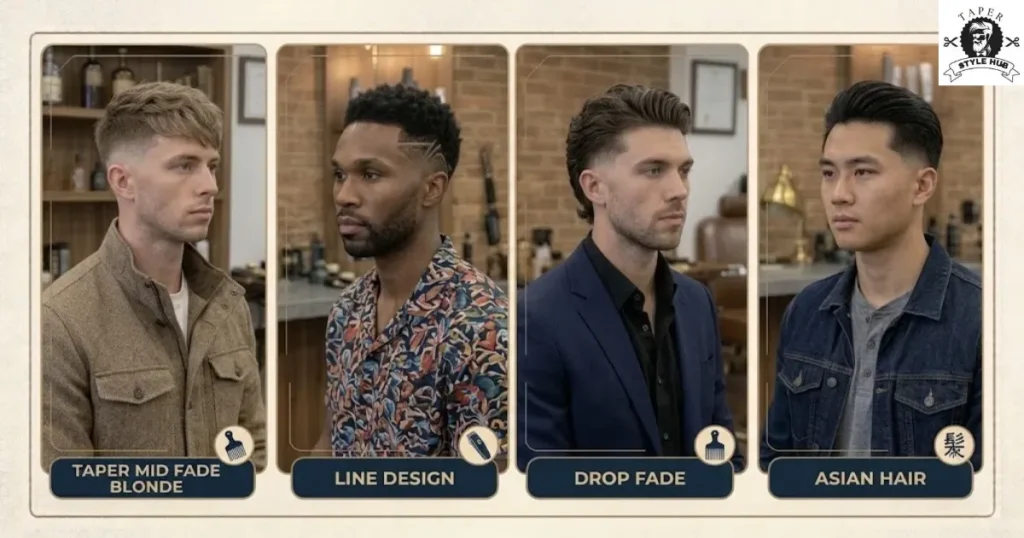
Small details can make a standard cut feel personal. These variations add color, design or a regional twist.
“All The Types Shown Below Are Displayed In The Single Image Above☝️”
Taper Mid Fade Blonde
Bleached or natural blonde hair makes the gradient pop. Purple shampoo keeps brassy tones under control between salon visits, and gentle drying protects the color.
Taper Mid Fade Line Design
A shaved line or small pattern in the faded area creates a custom look. Start simple and expect more frequent touch-ups.
Taper Mid Fade Drop
The fade curves down behind the ear to follow your head shape. Tell your barber how low the drop should fall at the back.
Asian Hair
Thick, straight hair holds a taper beautifully. A textured top or soft fringe keeps it modern with minimal product.
Whichever style you pick, the taper stays the same and only the top changes. You can experiment across visits without relearning how to ask for the sides.
Quick Decision Guide: Choosing Your Style
If you still cannot decide, this table pairs common hair types with top styles and finishes. Use it as a conversation starter with your barber.
| Hair Type | Top Style to Try | Finish to Ask For |
|---|---|---|
| Straight | Textured crop, side part, French crop | Shadow or skin |
| Wavy | Quiff, middle part, fringe | Shadow |
| Curly | Curly top, blowout, twisted curls | Shadow |
| Coily | Afro, twists, locs, sponge twist | Shadow or skin |
| Thick | Crew cut, pompadour, slick back | Skin or shadow |
| Fine | Quiff, textured crop, short top | Shadow |
Density, growth direction and lifestyle matter as much as texture. A good barber will adjust these suggestions to fit your head.
Which Face Shape Suits a Taper Mid Fade Best?
This cut works on most face shapes because the top style does the balancing. The tapered sides add structure, while the length or height on top decides how the face reads.
- Oval faces: almost any variation works, so try crops, quiffs or longer textures.
- Round faces: add height with a quiff, pompadour or spiky top so the sides look slimmer.
- Square faces: a comb over, side part or textured crop complements the strong jawline.
- Heart-shaped faces: keep volume toward the crown and use a textured fringe to balance the forehead.
- Diamond faces: soft texture, fringes or side parts calm prominent cheekbones.
- Oblong faces: skip tall styles and choose a fringe or relaxed horizontal texture.
- Triangle faces: build volume on top with a quiff or blowout to balance a wider jaw.
Treat these as starting points rather than strict rules. Describe the effect you want, such as narrower, fuller or more angular, and let your barber adjust the height and length.
Taper Mid Fade for Different Hair Types
Hair texture changes how the blend looks, how the top behaves and how fast the edges grow out. Choosing a version that respects your natural pattern saves styling time.
Straight Hair
Straight hair shows every line, so precise blending matters. Add texture on top with matte clay so the style does not fall flat.
Wavy Hair
Waves add natural movement that pairs well with a taper. Sea salt spray and light cream enhance the pattern without weighing it down.
Curly and Coily Hair
Curls and coils benefit from the bulk removed at the sides, which keeps the head shape balanced. Leave enough top length for the pattern to form, and prioritize moisture.
Thick Hair
Dense hair can look heavy at the sides. A taper removes that weight and creates a cleaner silhouette, while firm clay controls the top.
Fine or Thin Hair
Fine hair needs a gentler approach. Leave slightly more length around the sides and add texture powder at the roots for fullness.
Taper Mid Fade for Work, School and Active Lifestyles
Your daily routine should shape the finish you choose. A cut that looks perfect in a salon photo can feel fussy if you only have ten minutes each morning.
For office jobs, a shadow finish with a side part or comb over reads polished and conservative. Most dress codes accept it without question.
Students often prefer a short crop or a textured fringe, which needs little styling and survives a rushed morning. Check school grooming rules before choosing a skin finish or a design.
Athletes and gym regulars like a buzz cut or low cut, since sweat and helmets flatten longer styles. The taper keeps the outline tidy even after a hard session.
Barber Terms Worth Knowing Before You Book
Learning a few barbershop words makes your request sharper. The terms below come up in almost every consultation.
- Taper: a gradual shortening that leaves some length at the edges.
- Fade: a blend that usually shortens further, often to bare skin.
- Shadow: a very short finish that stops just before bare scalp.
- Line up: a crisp edge cut at the hairline and temples.
- Shelf: a visible weight line where the blend fails to connect.
- Weight: the bulk of hair that remains through the sides.
How to Ask Your Barber for a Taper Mid Fade
Clear communication prevents most haircut disappointments. Vague requests like clean me up leave too much to guesswork, so bring specifics and photos.
- Say where the taper should start, such as the temple at eyebrow level.
- Choose a shortest length: skin, shadow or a clipper guard number.
- State the top length in inches and name the style you want.
- Pick a neckline: tapered, rounded or squared.
- Decide whether you want a sharp line up or a natural hairline.
- Show reference photos from the front, side and back.
- Ask for feedback on what suits your growth pattern.
A simple script works well. Try saying: I would like a taper mid fade starting at my temples, a shadow finish, three inches on top and a natural neckline.
How to Style a Taper Mid Fade at Home
Daily styling depends mostly on the top, not the taper. A short routine gives consistent results once you know your hair.
- Start with clean, towel-dried hair and apply a pre-styler such as sea salt spray.
- Blow-dry with your fingers or a brush, lifting at the roots for volume.
- Apply a small amount of product that matches the finish you want.
- Shape the top, then set it with a light-hold hairspray.
A few simple tools help. A blow dryer with a nozzle, a wide-tooth comb and a small round brush cover almost every style in this guide.
Start with less product than you think you need. You can always add more, but removing excess is much harder.
What to Expect at the Barbershop
A taper usually takes longer than a basic trim because the blending needs patience. Plan for at least half an hour, and longer if you add a beard trim or a design.
Prices vary by city and shop, so ask what the service includes before booking. Some shops charge extra for beard work, hot towels or a razor finish.
Arrive with clean, dry hair if possible, and keep your reference photos ready on your phone. Good preparation shortens the consultation and reduces misunderstandings.
Regulars often alternate between a full haircut and a quick edge tidy. This approach keeps the outline crisp while saving time and money.
Creative Ways to Rock a Taper Mid Fade
A good cut becomes memorable with small changes. These ideas keep the same taper while giving you a fresh look.
- Add a hard part: a shaved line beside your part adds sharp detail.
- Match your beard: blend the beard into the taper for one continuous outline.
- Play with color: bleached tips, natural blonde or deep black dye change the mood.
- Swap the top: switch between a quiff, fringe and slick back while keeping the same sides.
- Add a pattern: small lines or shapes in the faded area create a custom touch.
Try one change at a time. That way you learn what suits your hair before committing to something bold.
Best Hair Products for a Taper Mid Fade
Choose products by finish and hair type rather than by brand. The list below matches the most common needs.
- Texture clay: strong hold with a matte finish for crops and fringes.
- Molding paste: flexible control for quiffs and messy styles.
- Pomade: shine and structure for slick backs and side parts.
- Texture powder: instant root lift for fine or flat hair.
- Sea salt spray: grip and beachy texture before styling.
- Styling cream: light hold and frizz control for waves and curls.
- Curl cream and leave-in conditioner: definition and moisture for curls and coils.
- Clarifying shampoo: removes product buildup every week or two.
- Hydrating conditioner: keeps strands soft and manageable.
How to Maintain a Taper Mid Fade
The edges lose their crispness first, so most men book a visit every two to four weeks. Softer finishes can stretch longer, while skin finishes need more frequent touch-ups.
Book again when the sideburns or neckline start to look fuzzy instead of deliberate. That visual cue is more reliable than counting days.
Between visits, you can tidy the back of the neck with clean clippers. Avoid rebuilding the blend yourself, because a new guideline can raise the fade and leave visible banding.
Consider booking your next visit before leaving the chair. That habit keeps the schedule consistent and avoids last-minute emergencies before events.
Shampoo regularly, condition when needed and keep your scalp healthy. Healthy hair holds a taper better than dry, brittle strands.
How a Taper Mid Fade Grows Out
In the first week, the edges look crisp and the blend looks smooth. By week two, the sideburns and nape begin to soften, though most people still look neat.
Around week three or four, the transition loses definition and the neckline looks fuzzy. That is the moment most men book a tidy.
A shadow finish grows out more gently than a skin finish, which shows regrowth quickly. Choose based on how often you are willing to visit.
Hair and Scalp Care Between Haircuts
Healthy hair and a calm scalp make any taper look better. Wash with a gentle shampoo two to four times a week, depending on how oily your scalp gets.
Curly and coily hair usually prefers fewer washes and more moisture. A leave-in conditioner and a light oil seal in hydration without leaving residue.
When more skin shows at the sides, sunscreen matters. Apply it to newly exposed areas in summer, and moisturize the nape if it feels tight or dry.
Finally, clean your brushes and combs regularly. Old product builds up quickly and can dull the finish you worked to create.
Summer and Winter Styling Tips
Summer favors shorter tops and lighter products, because heat and humidity make heavy pomades feel sticky. A buzz cut or low cut keeps you cool.
Rain and humidity affect curls and waves most. A light leave-in conditioner before you leave the house helps the pattern resist frizz.
Winter allows more length and richer textures. Hats can flatten volume, so a quick spritz of sea salt spray revives the shape once you take them off.
Edge Cases: Receding Hairlines, Cowlicks and Sensitive Skin
Not every head behaves the same way. Temple recession, thin crowns and nape cowlicks can change how the blend sits, so a quick consultation before cutting helps.
With a receding hairline, ask for a softer outline instead of a sharp line up. Pushing the edge back can make recession look more obvious.
A nape cowlick can lift the neckline unevenly. Your barber may leave extra length there or choose a rounded finish that grows out neatly.
Common Taper Mid Fade Mistakes to Avoid
A few easy mistakes cause most bad results. Knowing them helps you spot trouble before the barber finishes.
- Asking for a fade when you wanted a taper, which removes more hair than planned.
- Bringing only one photo, which hides the neckline and the back.
- Skipping the shortest-length conversation, so the finish surprises you.
- Cutting the taper too high on thinning hair, which can reveal scalp.
- Ignoring skin sensitivity at the nape, where close shaves can irritate.
If you are prone to razor bumps or ingrown hairs, ask for a shadow finish instead of a skin-level shave at the nape. Avoid clipping over irritated skin, and keep your tools clean.
Final Thoughts on the Taper Mid Fade
The taper mid fade earns its popularity because it balances contrast and subtlety. It adapts to your hair type, face shape and routine without demanding a dramatic change.
Decide the placement, shortest length and top style before you book, bring photos from three angles, and plan regular touch-ups. With clear communication and the right products, the cut stays sharp and easy to wear.
Whether you pick a short crop, a textured fringe or a full afro, the same principles apply. Know your target, communicate clearly and respect the grow-out cycle, and your barber can deliver the look you pictured.
Bookmark this guide and bring it to your next appointment. A clear plan turns a routine haircut into a result you will enjoy.
Taper Mid Fade FAQs
What is the difference between a mid taper and a mid fade?
A mid taper keeps more length at the edges and blends mainly around the sideburns and neckline. A mid fade shortens a wider band and can reach bare skin.
How often should I get a touch-up?
Most men book every two to four weeks. Skin finishes need visits sooner, while softer shadow finishes grow out more gracefully.
Does a taper mid fade work with curly hair?
Yes. It removes bulk from the sides and keeps the curls defined on top. Use curl cream and a diffuser for the best results.
Is it suitable for work or formal events?
Absolutely. Paired with a side part or slick back, it looks polished enough for offices and still relaxed for weekends.
What should I tell my barber?
Name the taper start point, shortest length, top length and neckline. Bring front, side and back reference photos.

I’m M Ahmad Ansari, founder and content creator at Taper Style Hub. With 3+ years of experience researching taper haircuts, hairstyles, grooming, and men’s style, I create practical, accurate, and easy-to-understand content. My goal is to provide readers with trustworthy information, useful tips, and inspiring ideas for choosing and styling the perfect taper haircut.
One Comment