
Low Taper Mullet: 30 Best Styles for Men
The low taper mullet is the cleanest way to wear a mullet without looking like you borrowed a haircut from the eighties. Short, softly tapered sides meet a longer back, and the result feels bold but tidy. If you have been curious about this cut, you are in the right place.
This guide explains what the cut is, shows 30 styles sorted into clear categories, and tells you exactly what to say to your barber. You will also learn how to style it at home and keep it sharp between visits. Everything here is written for real men with real hair.
👉 Also Read: Blonde Low Taper Fade
Low Taper Mullet Guide: Styles, Cuts and Care Explained

A good haircut starts with understanding the shape before you pick a variation. Once you know how the taper, the top, and the tail work together, every style in this guide becomes easier to choose. Think of this section as your foundation for the rest of the article.
👉 Also Read: Taper Fade Fluffy Hair
What Is a Low Taper Mullet Haircut?
A low taper mullet keeps the hair longer at the back while the sides and neckline shorten gradually. The taper begins low, near the sideburns and the nape, so the sides keep their natural shape instead of turning into a bare skin fade. That is what makes the cut feel soft.
The top can be textured, fringed, curly, or swept back, which is why barbers enjoy working with it. The longer back gives the cut its mullet identity, while the low taper keeps the outline neat and intentional. It looks planned rather than accidental.
Here is what defines the haircut from top to bottom:
- Sides: short and softly tapered around the ears.
- Top: textured, layered, or fringed, depending on your hair.
- Back: longer than the sides, from a tidy tail to a dramatic length.
- Neckline: natural, rounded, or squared for a cleaner finish.
👉 Also Read: Low Taper Buzz
How a Low Taper Mullet Differs From Other Mullet Haircuts
Several mullet variations sound alike, and barbers often use the names loosely. The real difference is where the shortening begins and how much skin shows. A taper leaves visible hair at the edges, while a fade usually takes the sides down to skin.
| Feature | Low Taper Mullet | Low Fade Mullet | Burst Fade Mullet |
|---|---|---|---|
| Side contrast | Soft | Medium to high | High around the ear |
| Skin showing | Minimal | Noticeable | Can be noticeable |
| Grow-out | Easy | Moderate | Moderate |
| Overall look | Natural and subtle | Clean and sharp | Bold and defined |
| Best for | Everyday and workplace looks | Sharper styles | Statement looks |
A modern mullet is a shape, while a taper is a technique used inside that shape. So a modern mullet can have a low taper, a fade, or no taper at all. Choosing the low taper mullet simply means you want the gentlest version of the contrast.
Why the Low Taper Mullet Is Trending in 2026

Men want haircuts that show personality without causing trouble at work or school. This cut delivers that balance, because the front and sides look neat while the back carries the attitude. It is a rare style that feels both relaxed and put together.
Social media has also pushed the trend forward. Barbers share short videos of the taper blending into the tail, and clients walk in with saved photos. Because the grow-out is graceful, more men feel comfortable trying it for the first time.
Another reason for the boom is practicality. Men no longer have to choose between a neat office look and an expressive weekend style, because one haircut can deliver both. With a few product changes, the same mullet can look polished on Monday and relaxed on Saturday night.
Barbers also appreciate how forgiving the shape is. Small cutting differences are easy to blend, and the grow-out never looks patchy, so clients keep coming back with confidence.
30 Best Low Taper Mullet Styles for Men in 2026
Instead of throwing 30 styles at you in one long list, we have sorted them into six categories. Each category solves a different problem, such as your hair texture, your fringe, or your comfort level. Read the one that matches your situation, then screenshot your favorites for the barber.
Classic and Everyday Low Taper Mullet Styles

These five styles are the safest starting points. They work for most hair types, need little daily effort, and look good in almost any setting. If this is your first mullet, begin here.
“All The Types Shown Below Are Displayed In The Single Image Above☝️”
1. Classic Low Taper Mullet
The classic low taper mullet has short tapered sides, a textured top, and a medium-length back. It is balanced, easy to maintain, and instantly recognizable. Ask your barber to keep the transition gradual around the sideburns, and you will get a clean first mullet. It also works with almost any product, so you can change the finish daily without touching the cut.
2. Short Low Taper Mullet
In this version the back stays only slightly longer than the top. It gives you the mullet shape without obvious length, which makes it ideal for formal settings. It is also the easiest way to test the look, because a short tail grows out quickly if you change your mind. Many men start here, then ask for extra length at the next visit once they feel comfortable.
3. Medium-Length Low Taper Mullet
The tail reaches the collar, which is the sweet spot for most men. It is long enough to read as a mullet and short enough to stay neat. If you are unsure how much length to ask for, this is the safest choice. It also gives you room to experiment, since you can shorten or lengthen the tail later without starting over.
4. Long-Tail Low Taper Mullet
Here the tail passes the collar and moves toward the shoulders, creating the most dramatic version. The low taper keeps the sides clean so the length looks deliberate. Expect to condition the ends often, because the longest hair is also the driest. Plan for patience too, because growing the tail takes months and the in-between stage can feel awkward.
5. Business Mullet Taper
This version softens everything for the office. The top is neat, the sides are tidy, and the tail sits at the collar with soft layers. Many men call it the quiet mullet, because coworkers notice the style but rarely object to it. It is a dependable pick for interviews, client meetings, and any room where a neat look matters.
Hair Texture Styles for the Low Taper Mullet

Your natural texture changes how this haircut behaves every single day. Working with your hair instead of against it saves styling time and prevents frustration. These five styles are built around the way different hair types fall and move.
“All The Types Shown Below Are Displayed In The Single Image Above☝️”
6. Straight Hair Low Taper Mullet
Straight hair shows clean lines and a sleek tail, but it can look flat without help. Ask for soft layers on top and through the back to add shape. A little sea salt spray gives the strands enough grip to hold their movement. Use a texturizing spray on damp hair, and the tail will keep a pleasant wave instead of hanging limp.
7. Wavy Hair Low Taper Mullet
Wavy hair is the easiest texture for this cut. The natural bend creates separation in the layers, so the style looks lived in with almost no product. A touch of curl cream and air drying is usually all you need. Because waves hide small cutting flaws, this version is also forgiving if your barber is new to mullets.
8. Curly and Coily Mullet Taper
Curls and coils build their own volume across the top and tail, while the taper keeps the sides controlled. Leave extra length at the back, because curly hair shrinks as it dries. Ask your barber to check the shape when the hair is dry. A leave-in conditioner keeps the curls soft, and a satin pillowcase protects the pattern while you sleep.
9. Thick Hair Low Taper Mullet
Thick hair holds the shape well, but the tail can flare out and look heavy. Barbers solve this with thinning shears or point cutting to remove bulk without losing length. The result sits closer to the head and moves better. It also dries more slowly, so allow extra time or use a diffuser to speed up the process.
10. Fine Hair Low Taper Mullet
Fine hair needs a controlled tail and shorter layers so the back looks fuller instead of wispy. Keep the product light, because heavy waxes flatten the crown. A lightweight paste or volumizing mousse builds the density you want. If your hairline is thinning, a slightly shorter top can make the whole shape look denser and healthier.
Fringe and Part Styles for the Low Taper Mullet

The front of the haircut frames your face, so small changes here make a big difference. A fringe or part can soften a strong forehead, balance a long face, or simply change the mood. These five options cover the most popular front styles.
“All The Types Shown Below Are Displayed In The Single Image Above☝️”
11. Low Taper Mullet With Short Fringe
A short fringe across the forehead adds a casual, youthful feel. It works well on straight and wavy hair that falls forward naturally. Keep the cut slightly uneven so the front looks soft rather than blunt. Trim it every few weeks, because a fringe that creeps into your eyes quickly stops looking stylish.
12. Curtain Fringe Mullet Taper
The fringe splits in the middle and falls to each side, framing the face. It gives the cut a relaxed, retro mood without extra effort. This style needs enough top length to part naturally, so grow the front first. Style it with a blow dryer and your fingers, and let the ends curl gently away from the face.
13. Side-Parted Low Taper Mullet
A defined side part adds structure and a polished finish. It is a smart pick for offices and formal events, since the tidy front balances the longer tail. A light pomade keeps the part crisp throughout the day. Comb the part while the hair is damp so it learns the direction, then dry it in place.
14. Middle-Part Mullet Taper
A center part opens up the face and follows the natural fall of the hair. It suits fine to medium hair best, while thick hair may need thinning to avoid an awkward split. The look feels 1990s without being a costume. Dry the top flat with a brush first, then finish with your fingers so the part stays natural.
15. Slick-Back Low Taper Mullet
The top is combed straight back, and the tail follows in one smooth line. It looks sharp for dinners and events, and the taper keeps the sides neat. Use a light-hold pomade so the finish stays flexible instead of stiff. It looks especially good with a trimmed beard, because both elements share the same clean, polished direction.
Texture and Finish Styles for the Low Taper Mullet

Texture decides whether your mullet looks polished or effortless. These five finishes change the personality of the same basic cut. Pick the one that matches the amount of time you want to spend each morning.
“All The Types Shown Below Are Displayed In The Single Image Above☝️”
16. Textured Low Taper Mullet
Choppy layers on top add movement and break up the shape. The barber uses point cutting so sections separate instead of lying flat. Work a little matte paste through dry hair, then leave it alone. Think of it as controlled chaos, where the layers do the work and the product only supports them.
17. Messy Mullet Taper
This messy-on-purpose finish uses uneven layers and a loose crown. It works best when the top has enough length to create separation. Avoid too much product, because greasy hair ruins the relaxed effect. The best part is the low effort, since you can shake it dry and head out the door.
18. Layered Low Taper Mullet
Layers through the back stop the tail from looking heavy or boxy. This is especially helpful for thick hair that tends to stack. The layers also make the cut grow out more evenly. Ask for the layers to start below the crown, so the top keeps its weight while the back loses bulk.
19. Fluffy Low Taper Mullet
Blow drying the top with a round brush builds soft, airy volume. The fluffy finish feels youthful and approachable. A light mousse at the roots helps the volume last through the day. Skip heavy gels with this finish, because they weigh the airy texture down and flatten the volume.
20. Shaggy Mullet Taper
Heavy layering throughout gives a rock-inspired shape with plenty of attitude. It works best on wavy hair with enough density to support the layers. The low taper keeps the sides from getting too wild. Regular conditioning matters here, since layered ends can dry out and turn frizzy if they are ignored.
Taper and Fade Variations of the Low Taper Mullet

Not every taper is the same, and small changes in height or shape alter the whole profile. These five variations let you adjust the contrast without losing the mullet shape. Use them when you want slightly more or less edge.
“All The Types Shown Below Are Displayed In The Single Image Above☝️”
21. Low Taper Fade Mullet
Here the sides drop to very short hair near the bottom, creating a crisper edge. It stays close to the ear, so the effect is still subtle. Make sure the barber connects the top and back smoothly. Remember that this version needs more frequent cleanups, because the shorter hair grows out visibly within weeks.
22. Mid Taper Mullet
A mid taper starts around the temple, showing more of the side and creating a sharper outline. It adds height, so it suits round faces better than long ones. Expect trims slightly more often than with a low taper. Tell your barber where the temple line should start, since small differences change the profile a lot.
23. Burst Fade Detail Mullet
A subtle burst curve wraps around the ear while the rest of the side stays soft. It adds definition without making the whole profile severe. This is a good compromise if you like the burst fade but want an easier grow-out. Ask to see the curve in a mirror before the barber finishes, so you can approve the shape.
24. Disconnected Low Taper Mullet
The tail separates clearly from the sides instead of blending in. This creates stronger contrast and a more deliberate mullet look. Choose it only if you enjoy bold shapes and keep up with regular trims. Bring a back-view photo, because this look depends on the exact gap between the sides and the tail.
25. Tapered Sideburn Mullet
The sideburns narrow to a clean point instead of ending bluntly. It is a small detail, yet it makes the whole outline look intentional. Barbers recommend it for men who want a sharper edge without a fade. It also frames the ears neatly, which helps if you wear glasses or like to tuck your hair back.
Bold and Personal Low Taper Mullet Styles
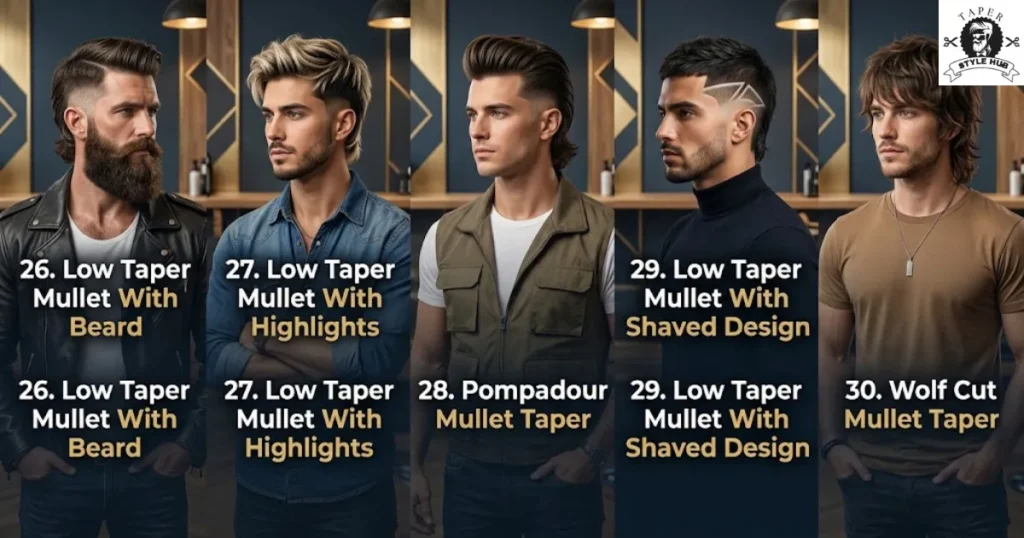
These final five styles are for men who want the haircut to say something about them. They combine the low taper with beards, color, and creative details. Each one needs a little more planning with your barber.
“All The Types Shown Below Are Displayed In The Single Image Above☝️”
26. Low Taper Mullet With Beard
A trimmed beard balances the length at the back and adds definition to the jaw. Ask the barber to blend the sideburns into the beard so everything looks connected. Match the beard density to the taper for a cohesive result. Keep the beard trimmed every week or two, because overgrown facial hair can overpower the tapered sides.
27. Low Taper Mullet With Highlights
Lighter strands add dimension and show off the layers. Blonde and caramel tones look great on dark hair. Bleaching needs extra care, so add a leave-in conditioner to protect the tail. Toned shampoo helps blonde shades stay fresh, and a deep conditioner repairs the dryness that lightening can cause.
28. Pompadour Mullet Taper
The front is lifted and swept up for height while the tail stays long. It is a bold combination that needs a strong-hold product and a blow dryer. The taper keeps the sides tidy so the volume stands out. Blow dry the front upward with a round brush, then lock the shape with a small amount of firm pomade.
29. Low Taper Mullet With Shaved Design
A small line or pattern shaved into the tapered side adds personality. Keep it simple, because the taper leaves less room for detail than a skin fade. Refresh it often so the lines stay crisp. Choose a design that suits your hairline, and ask your barber to sketch it first with a trimmer.
30. Wolf Cut Mullet Taper
This hybrid blends heavy wolf cut layers with a clean low taper. You lose the defined shelf at the back and gain a fuller, continuous flow. It suits medium-length hair and men who like a shaggier finish. Ask for the layers to be cut dry, so the barber can see how each section falls.
How Long Should Your Hair Be Before You Get This Cut?
Most barbers want at least two to three inches on top and enough length at the back to form a visible tail. If your hair is very short right now, grow the back for eight to twelve weeks while keeping the sides neat. That patience gives the barber enough material to shape a proper mullet.
Hair grows about half an inch each month on average, so a three-inch tail takes roughly six months from a buzz cut. A shorter tail appears much sooner, which is why many men start with a compact version. Ask your barber to check your length during a quick consultation before booking the full cut.
Tools Barbers Use to Create the Taper
Understanding the tools helps you follow what your barber is doing and ask better questions. Each one has a specific job in shaping the soft transition and the textured tail. Here are the main tools you will see in the chair.
- Clippers with guards: build the gradual taper from the nape up toward the ears.
- Trimmers: sharpen the neckline, sideburns, and any shaved design.
- Thinning shears: remove bulk from thick hair without cutting length.
- Point cutting: adds choppy texture to the top and the ends.
- Razor: softens the tips for a lighter, wispy finish.
Skilled barbers often blend these tools in one appointment. They might use clippers for the taper, shears for the top, and a razor to finish the tail. If your hair is thick or curly, mention it early so the barber can plan the order.
Best Low Taper Mullet for Your Face Shape
Face shape affects how balanced the haircut looks, although it should never be a strict rule. Use the table below as a starting point, then ask your barber to adjust the height and fringe. A good barber will translate these ideas into your exact proportions.
| Face Shape | Recommended Adjustments |
|---|---|
| Oval | Most variations work, so experiment freely. |
| Round | Add height at the crown and keep the sides tight. |
| Square | Choose soft layers and a textured fringe to soften the jaw. |
| Oblong | Use a fuller fringe and avoid extra height on top. |
| Heart | Pick a side-swept or curtain fringe with a fuller tail. |
| Diamond | Keep the sides fuller and soften the cheekbones with a fringe. |
The rule is simple: counterbalance whatever proportion already dominates. Long face, skip the extra top height. Round face, avoid width at the sides.
Quick Hair Type Cheat Sheet
If you only remember one thing from this guide, remember to match the layers to your texture. This cheat sheet shows the basic adjustments barbers make for each hair type. Screenshot it and show it at your next appointment.
| Hair Type | Layer Approach | Key Product |
|---|---|---|
| Straight | Shorter layers for lift | Sea salt spray |
| Wavy | Medium layers for movement | Light curl cream |
| Curly | Longer layers for shape | Curl cream or gel |
| Thick | Thinned layers to cut bulk | Matte clay |
| Fine | Blunt tail with light layers | Volumizing mousse |
What to Tell Your Barber for a Low Taper Mullet
Barbers use different terms, so clear instructions matter more than the name of the cut. Bring a reference photo and be ready to explain a few points. This simple checklist removes the guesswork from your appointment.
- Say low taper on the sides and nape, and mention that you want to keep some length around the ears.
- Pick a starting guard, such as a number two or three at the shortest point.
- Describe the top, including whether you want a fringe, layers, or a textured crop.
- Give the tail length with landmarks, such as to the collar or just below the ears.
- Choose a neckline that is natural, rounded, or squared.
- Ask for point cutting or razoring if you want a softer finish.
- Mention your hair type and how much time you spend styling.
Here is a script you can borrow: I want a low taper mullet with the taper starting just above my ears. Keep the side bulk, blend it smoothly into the back, and leave the tail at collar length with soft layers. A clear request like this saves awkward corrections mid-cut.
How to Style a Low Taper Mullet at Home
Most versions need only a few minutes and a small amount of product. The goal is to support your natural texture, not to fight it. Start light and add more only if the hair needs it.
- Start with towel-dried hair and add sea salt spray or curl cream.
- Blow dry the top on medium heat while lifting the roots with your fingers.
- Work a pea-sized amount of matte paste or clay through the top.
- Push the fringe or front section in your preferred direction.
- Leave the tail natural, and use a little cream to control frizz.
Curly and coily hair prefers a different routine. Apply curl cream to damp hair, scrunch upward, and let it air dry or use a diffuser. Avoid brushing finished curls, because it separates the strands and creates frizz.
Best Hair Products for a Low Taper Mullet
You do not need a shelf full of products to look good. Choose one or two that match your texture and the finish you want. The table below shows what each product does best.
| Product | Best Use |
|---|---|
| Matte clay or paste | Defines texture without shine |
| Sea salt spray | Adds grip and natural wave |
| Curl cream or gel | Keeps curls defined and reduces frizz |
| Light pomade | Works for slick-back and side-part styles |
| Volumizing mousse | Builds fullness at the crown |
| Leave-in conditioner | Protects the dry ends of the tail |
| Heat protectant | Reduces damage from blow drying |
Avoid heavy waxes on fine hair, since they flatten the shape. If the back looks bulky or the top refuses to sit, ask your barber to adjust the cut before adding more product.
Seasonal Styling Tips for Your Mullet
Weather changes how your hair behaves, so a small seasonal tweak keeps the style looking right. In humid summers, a lightweight cream controls frizz without weighing the tail down. A quick spritz of sea salt spray also helps the layers hold their shape.
Winter air dries the hair, so add a leave-in conditioner and use less heat. Hats can flatten the crown, so shake the hair out and refresh it with a little paste. These habits keep the mullet healthy all year.
Low Taper Mullet Maintenance and Care Tips
The taper needs regular attention to stay clean, while the longer sections are very forgiving. Most men visit the barber every four to six weeks for a quick refresh. If you love crisp edges, go closer to four weeks.
- Trim the taper every 3 to 5 weeks to keep the neckline and sideburns sharp.
- Trim the tail every 6 to 10 weeks to remove split ends.
- Wash according to your scalp type, since oily scalps need more frequent washing.
- Condition the lengths and ends, especially on curly or wavy hair.
- Sleep on a silk or satin pillowcase to reduce friction and frizz.
A weekly deep conditioner keeps the tail soft and healthy. Use a heat protectant whenever you blow dry, and keep the dryer moving. These small habits protect the length that makes the style special.
How to Grow Out the Mullet Gracefully
Every haircut eventually grows out, and the mullet is more forgiving than most. The key is to keep the sides and neckline tidy while the rest of the hair relaxes. A clean outline makes the longer hair look intentional instead of neglected.
Book a cleanup every six to eight weeks and ask the barber to refresh only the edges. Keep the tail conditioned, and trim the split ends lightly so the length stays healthy. Within a few months you can decide whether to go longer or return to a shorter shape.
Is a Low Taper Mullet Right for Work and Everyday Life?
In most workplaces, yes. The soft taper and controlled sides look neater than many other mullet styles. A shorter tail and a side part make it even more conservative if your dress code is strict.
Picture a graphic designer who wants a fresh look but has client calls every day. He asks for a short version with a clean neckline, and nobody blinks. That is the goal: a cut that feels personal without causing friction.
Where to Find Haircut Inspiration
Good reference photos make every consultation easier. Search barbershop pages, short video clips, and hair forums for examples that match your texture and length. Save at least three angles, because a front view alone hides the tail and the neckline.
Try to choose models whose hair looks similar to yours in thickness and curl pattern. A style that looks perfect on straight hair may behave very differently on curls. Showing a realistic example helps your barber promise only what your hair can deliver.
Tips for First-Time Mullet Wearers
Trying a new haircut can feel risky, but a few smart choices lower the stress. These tips help you test the look without regret. Follow them and your first mullet will feel comfortable from day one.
- Start with a medium tail, because it is easy to adjust later.
- Book a longer appointment so the barber is not rushed.
- Bring front, side, and back photos of the exact look you want.
- Take a photo of your own hair first, so you can compare results.
- Give yourself two weeks to adjust before judging the cut.
Confidence matters as much as the cut. Wear the style with a relaxed attitude, and it will look like your own idea instead of a trend you copied.
Common Low Taper Mullet Mistakes to Avoid
Most bad mullets come from a few repeated mistakes. Knowing them before you sit in the chair helps you avoid regret and a long grow-out. Keep this list in mind during your next appointment.
- Starting the taper too high, which turns the cut into a mid or high taper.
- Cutting the tail too short, since length cannot be added back.
- Ignoring hair texture, because a cut made for straight hair may fail on curls.
- Skipping layers, which makes the shape look heavy or boxy.
- Using too much product, which weighs the hair down and hides texture.
- Delaying trims, because the taper loses definition quickly.
Taper or Fade: Which Fits Your Lifestyle?
A taper shortens the hair gradually and leaves some length at the bottom, so it looks natural from day one to week six. A fade goes down to skin or close to it, which looks crisp at first but softens quickly. Your schedule should guide the choice.
If you visit the barber every few weeks and love sharp edges, a fade version suits you well. If you prefer longer gaps between appointments, the taper is kinder to your calendar and your wallet. Either way, the longer tail stays the star of the show.
Pros and Cons of a Low Taper Mullet
Every haircut has trade-offs, and this one is no different. Look at both sides before you commit, especially if you have a strict workplace or a busy morning routine. The table keeps the comparison simple.
| Pros | Cons |
|---|---|
| Softer and more versatile than a high-contrast fade | Needs regular trims to keep the taper clean |
| Works across many hair types | Awkward grow-out phase if you change your mind |
| Suitable for professional and casual settings | Fine hair may need a shorter, fuller tail |
| Many styling options | Needs a barber familiar with mullet shapes |
| Natural grow-out compared with skin fades | Tail needs extra conditioning |
Final Thoughts on the Low Taper Mullet
The low taper mullet balances the bold shape of a mullet with the clean finish of a soft taper. It adapts to straight, wavy, curly, and coily hair, and the 30 styles above range from conservative to experimental.
For the best result, bring a reference photo and be specific about taper height, top length, tail length, and neckline. Use products suited to your hair, trim the sides every few weeks, and condition the tail. Choose the version that fits your hair, face, and lifestyle.
Low Taper Mullet FAQs
Is a low taper mullet suitable for all hair types?
Yes, it works on straight, wavy, curly, and coily hair. A barber adjusts the layers and tail length to match your texture.
How often should I trim a low taper mullet?
Trim the sides every 3 to 5 weeks and the tail every 6 to 10 weeks. Quick neckline cleanups in between keep the outline sharp.
How long should the back be for a low taper mullet?
A common starting point is the base of the neck or collar length. Go shorter for formal settings and longer for a bolder look.
Can I style a low taper mullet at home?
Yes, most styles need only a towel dry, a little product, and a blow dryer. Leave the cutting to your barber.
Should I choose a low, mid, or high taper?
Choose low for a subtle look, mid for more contrast, and high for a bold finish. Low is the easiest option for a first mullet.

I’m M Ahmad Ansari, founder and content creator at Taper Style Hub. With 3+ years of experience researching taper haircuts, hairstyles, grooming, and men’s style, I create practical, accurate, and easy-to-understand content. My goal is to provide readers with trustworthy information, useful tips, and inspiring ideas for choosing and styling the perfect taper haircut.




6 Comments