
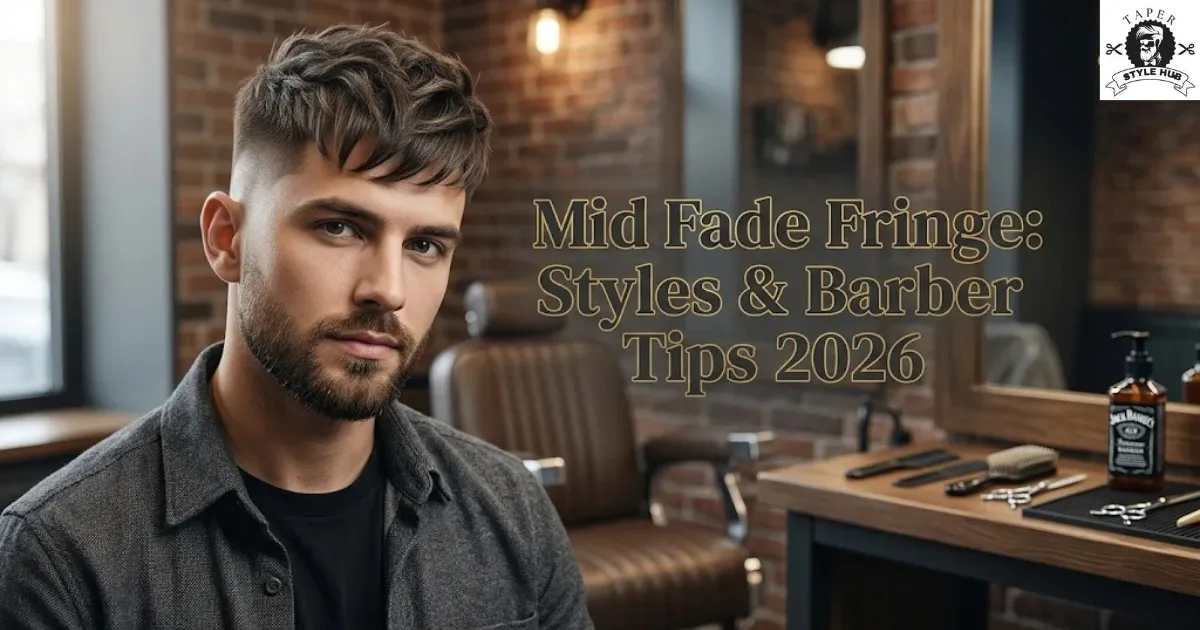
Mid Fade Fringe: Styles & Barber Tips 2026
A mid fade fringe is the kind of haircut that makes a barber’s job look easy and a client’s morning routine even easier. The sides stay clean and faded around the temple line, while the front falls forward with real movement and character.
That balance explains why the mid fade fringe keeps climbing barbershop request lists in 2026. It works at the office, it works on weekends, and it works on straight, wavy, and curly hair when the barber cuts it correctly.
This guide covers everything in one place: what the cut is, 25 styles sorted into clear categories, hair type and face shape matches, barber phrases, guard numbers, styling steps, products, maintenance, cost, and the mistakes that ruin it.
👉 Also Read: Mid Fade Haircut For Straight Hair
What Is a Mid Fade Fringe Haircut?
A mid fade fringe combines two haircut ideas into one clean shape. The sides and back are faded at mid height, and the top stays long enough to fall across the forehead as a fringe.
The fade starts around the temple and ear line, then shortens gradually toward the neckline. It sits between a low fade, which stays near the ears, and a high fade, which begins high on the head.
On top, barbers usually leave two to four inches so the fringe can move naturally. Hair that is too short stands up stiffly, while longer hair gives you room to style it forward, sideways, or upward.
Think of it as a frame and a picture. The fade is the frame that keeps everything neat, and the fringe is the picture that shows your personality.
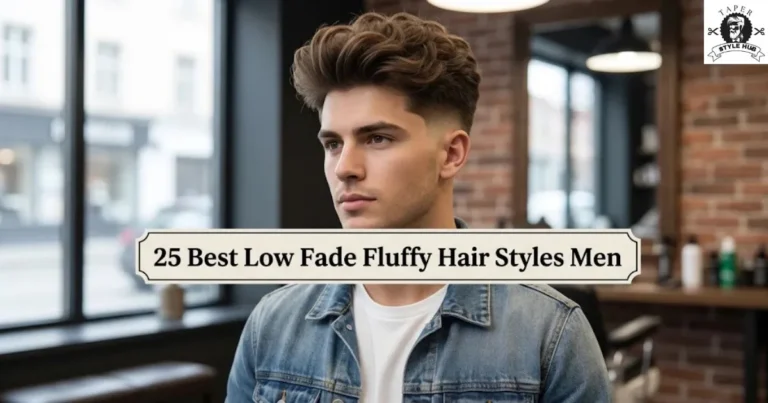
👉 Also Read: Low Fade Fluffy Hair
The Three Parts of a Mid Fade Fringe Haircut
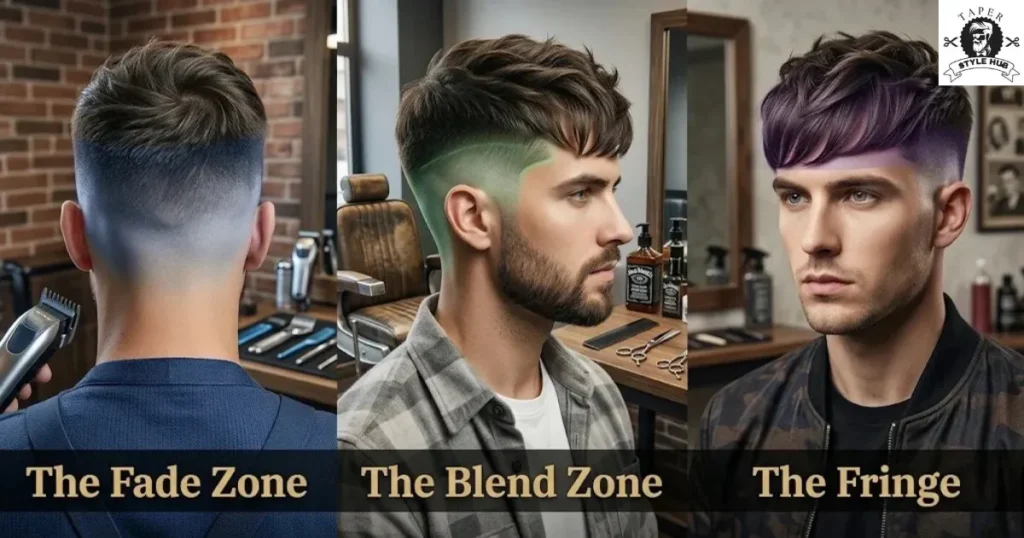
“All The Types Shown Below Are Displayed In The Single Image Above☝️”
Every good cut is built from three connected zones, and each zone has its own job. Understanding them makes it much easier to explain what you want to your barber.
👉 Also Read: Mid Fade Textured Top
The Fade Zone
The fade zone covers the sides and back of the head. It controls how sharp the haircut looks and how quickly it grows out between visits.
At mid height, the fade begins near the temple. That placement gives a clean outline without pulling too much attention away from the hair on top.
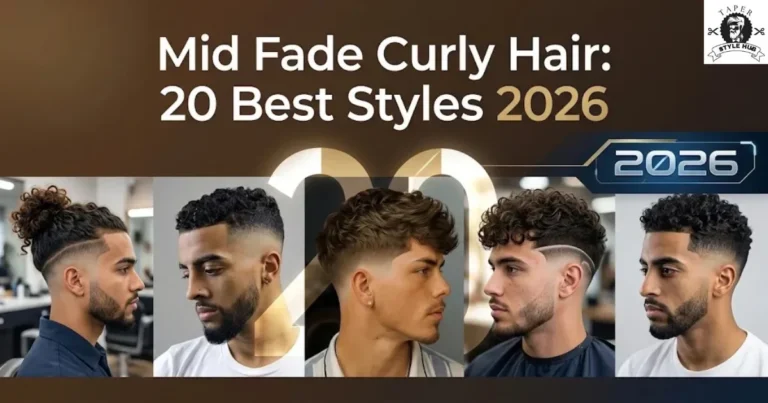
👉 Also Read: Mid Fade Curly Hair
The Blend Zone
The blend zone connects the faded sides to the longer top. When it is done well, you cannot tell where the clippers stopped and the scissors started.
A harsh line here makes the whole haircut look disconnected. Always ask your barber to blend upward instead of cutting a hard shelf.
👉 Also Read: Curly Hair With Fade
The Fringe
The fringe is the front section that sits near the eyebrows. Its length, texture, and direction decide the mood of the entire haircut.
A fringe cut with scissors or point cutting looks natural and light. A fringe cut with a clipper guard looks flat, heavy, and unfinished.
👉 Also Read: Military High Fade
Mid Fade Fringe vs Mid Taper Fringe: What Is the Difference?
People use fade and taper as if they mean the same thing, but barbers treat them differently. A fade usually shortens the hair down to skin or very close to it, while a taper keeps visible length at the hairline.
With a fringe, many barbers lean toward the softer option because it frames the face gently. Still, a true mid fade creates cleaner contrast, which some men prefer for a sharper finish.
| Feature | Mid Fade | Mid Taper |
|---|---|---|
| Starting point | Around the temple | Around the temple |
| Shortest length | Skin or very close | Short but visible hair |
| Contrast | Bold and crisp | Soft and natural |
| Grow-out | Loses shape faster | Grows out gently |
| Best for | Sharp, modern looks | Office and daily wear |
If you want a cut that still looks tidy after four weeks, ask for a softer blend. If you like a crisp edge and do not mind frequent visits, choose the full fade.
👉 Also Read: Skin Fade Crew
Mid Fade vs Low Fade vs High Fade With a Fringe
Fade height changes how the fringe is seen. A higher fade pulls attention to the sides, while a lower fade keeps the focus near the neckline.
| Fade Height | Starts At | Effect on the Fringe |
|---|---|---|
| Low fade | Just above the ear | Subtle and understated |
| Mid fade | Around the temple | Balanced frame for the fringe |
| High fade | Above the temple | Bold contrast and sharper edge |
The middle height works best because it gives clean structure without competing with the hair on top. That is the main reason a mid fade fringe feels balanced rather than extreme.
A Short History of the Fringe Haircut
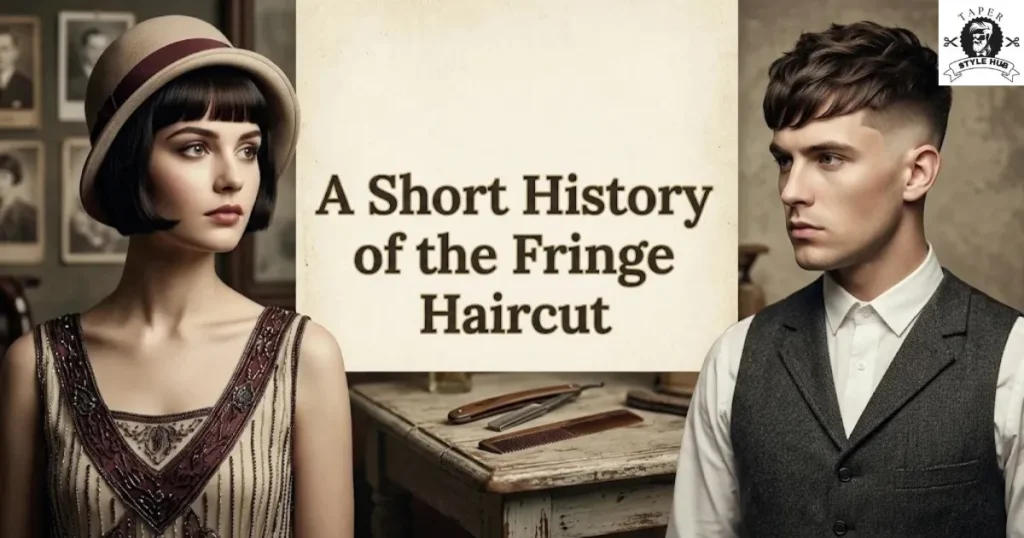
Fringes are not new. The mop-top styles of the 1960s made hair falling over the forehead famous, and the look has returned in many forms ever since.
What changed recently is the sides. Instead of leaving the whole head shaggy, modern barbers pair the fringe with a fade, which gives the old shape a sharper and more current finish.
That combination is why the mid fade fringe feels both familiar and fresh. It borrows a classic idea and updates it with precise barbering.
Why the Mid Fade Fringe Is So Popular in 2026
Several practical reasons keep this haircut near the top of barbershop requests. It looks good, but it also solves everyday problems.
- Low effort styling: a fringe air dries well and needs very little product.
- Wide compatibility: it adapts to hair texture, density, and face shape.
- Work and weekend balance: neat sides read as polished, while the top adds personality.
- Social media appeal: textured fringes and blowouts photograph well, so barbers see more requests every year.
- Easy customization: fade height and fringe length can be adjusted for each client.
It also fits the move toward natural-looking hair. Men want cuts that look good on day one and still look decent on day twenty.
25 Mid Fade Fringe Styles to Try
Instead of throwing every option at you at once, these 25 styles are grouped into five categories. Pick the category that matches your priority, then choose the version that fits.
Mid Fade Fringe Styles by Fringe Length
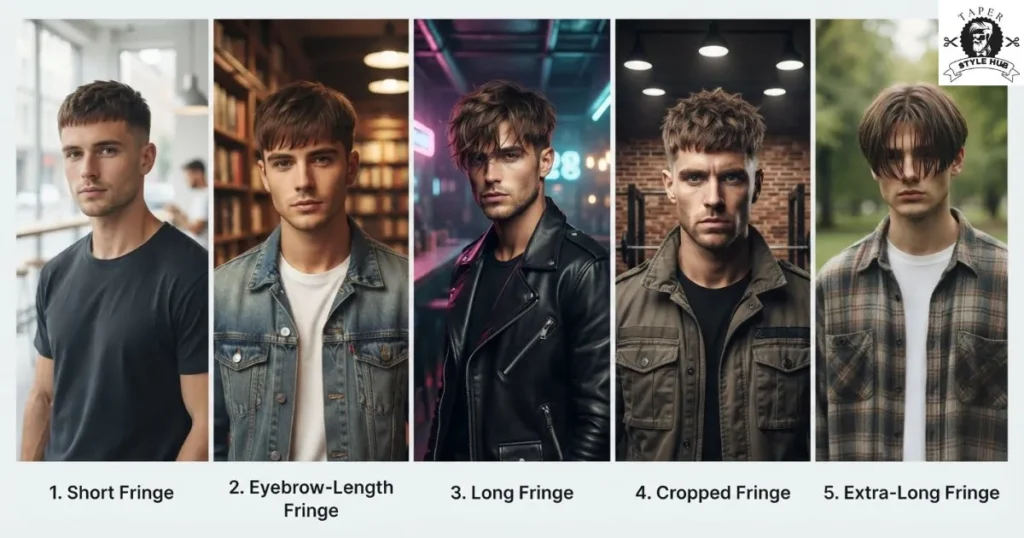
Length is the first decision, because it controls how much styling time the haircut needs.
“All The Types Shown Below Are Displayed In The Single Image Above☝️”
1. Short Fringe
This version sits about an inch above the brow and needs almost no styling. It is the easiest option and suits fine to medium hair.
2. Eyebrow-Length Fringe
It lands right at the brow line, the classic balance of style and control. Most barbers suggest it as the starting point.
3. Long Fringe
A long fringe falls past the brow and gives you the widest styling range. It needs regular trims so it does not drop into your eyes.
4. Cropped Fringe
The top stays short and textured, so the fringe reads more like a crop. It is a sharp, low-effort choice for busy mornings.
5. Extra-Long Fringe
This one reaches the cheekbone and is usually pushed to one side. It suits thick or wavy hair and men who love bold shapes.
Mid Fade Fringe Styles by Hair Type
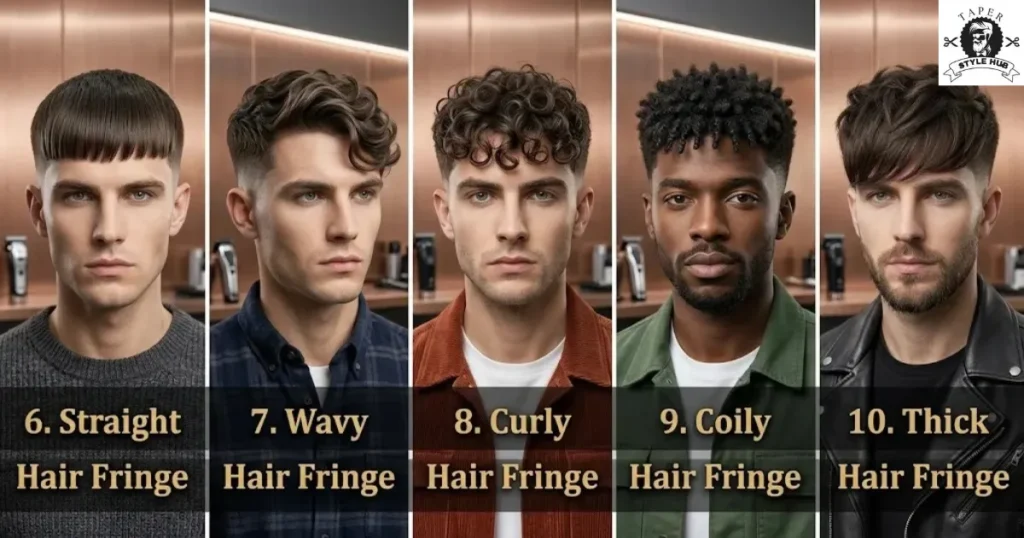
Hair texture shapes the final result more than any product, so these styles start with what your hair already does.
“All The Types Shown Below Are Displayed In The Single Image Above☝️”
6. Straight Hair Fringe
Straight hair gives a sleek fringe, but it can fall flat. Ask for point cutting and add a little texture powder for separation.
7. Wavy Hair Fringe
Waves add natural movement, so this version needs the least daily effort. Keep at least three inches so the pattern shows.
8. Curly Hair Fringe
Curls bring volume and bounce. Leave extra length because curls shrink as they dry, and use curl cream to control frizz.
9. Coily Hair Fringe
Coily texture creates a dense, rounded top that pairs beautifully with a crisp fade. Moisture and a gentle hand matter most here.
10. Thick Hair Fringe
Thick hair needs weight removed so the fringe falls forward instead of puffing out. Ask for layering and careful texturizing.
Mid Fade Fringe Styles by Styling Direction
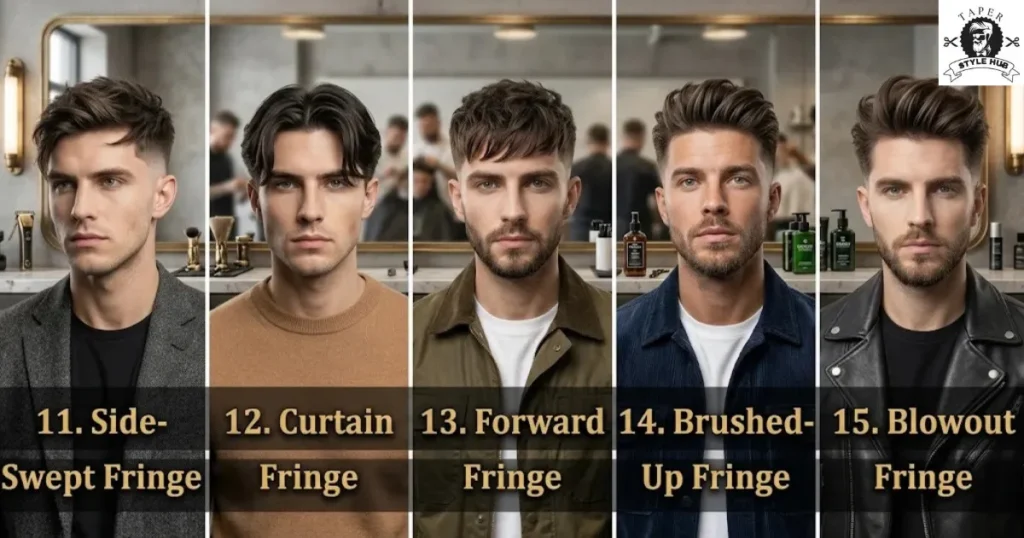
Direction decides how the fringe frames your face, and each direction asks for a slightly different cut.
“All The Types Shown Below Are Displayed In The Single Image Above☝️”
11. Side-Swept Fringe
Combed diagonally across the forehead, it looks polished and works well in an office. Blow dry away from the part and set it with flexible paste.
12. Curtain Fringe
Parted in the middle and falling to both sides, it frames the face softly with a slightly retro feel. It suits straight and wavy hair best.
13. Forward Fringe
This one falls straight across the forehead for a clean, youthful shape. It needs an even line and careful point cutting to avoid looking blunt.
14. Brushed-Up Fringe
The front lifts upward instead of forward. It adds height, which helps round faces, and it needs only a light blow dry.
15. Blowout Fringe
Dried up and forward with a round brush for lift and volume. It fills out thin areas and creates a fuller overall shape.
Mid Fade Fringe Styles by Texture and Finish
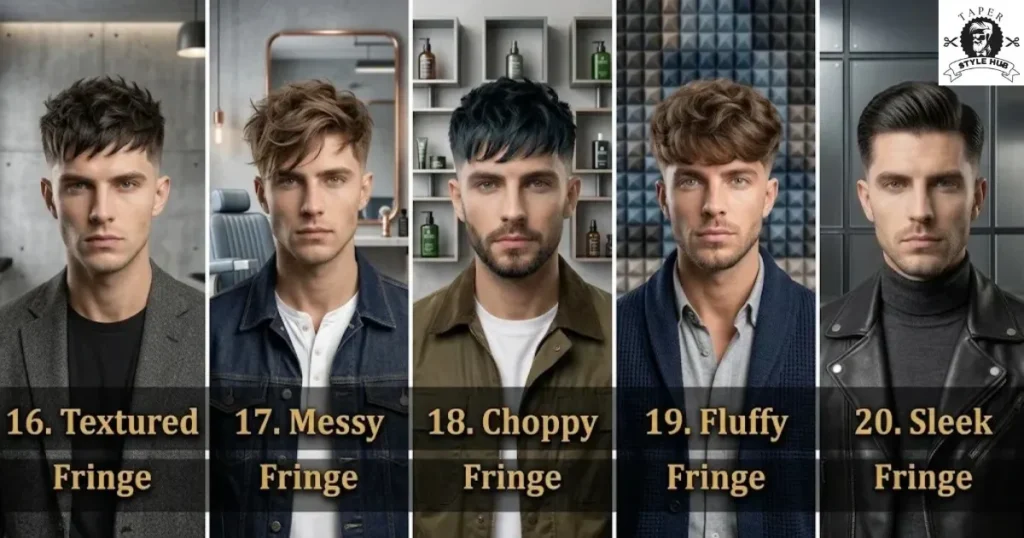
Finish is the mood of the haircut, from relaxed and messy to sleek and controlled.
“All The Types Shown Below Are Displayed In The Single Image Above☝️”
16. Textured Fringe
Layered ends create visible separation and movement. A matte clay keeps the pieces defined without any shine.
17. Messy Fringe
Loose, tousled, and deliberately undone. It looks best on hair that already has some natural movement.
18. Choppy Fringe
The barber point cuts the front into uneven, feathered ends. It feels edgy and pairs well with a rougher styling routine.
19. Fluffy Fringe
Built around softness and volume, with a light, airy finish. A volumizing mousse at the roots helps it last through the day.
20. Sleek Fringe
Smooth and combed into place with a light pomade. It suits formal settings and straight hair that already lies flat.
Mid Fade Fringe Styles With Trending Twists
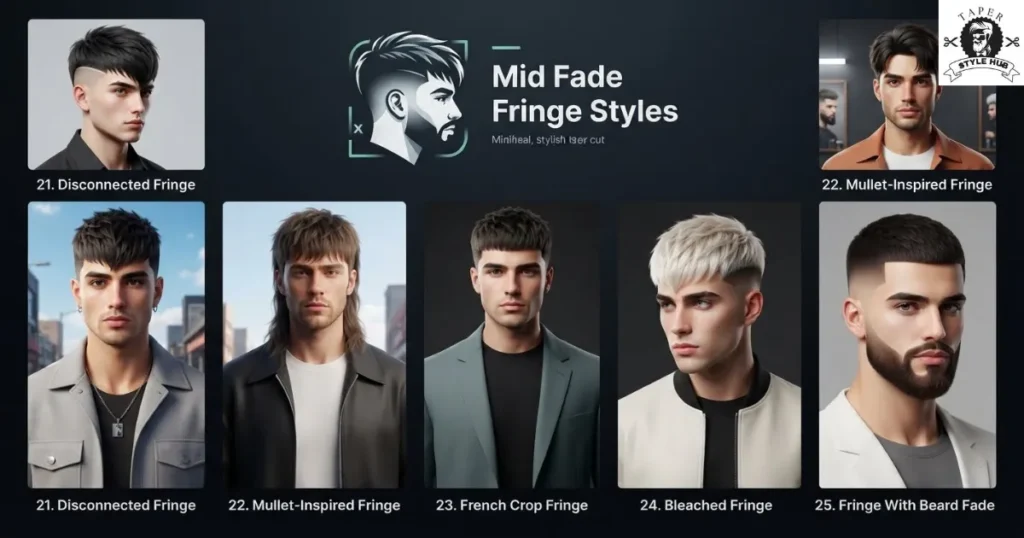
These final five add a fashion detail on top of the basic shape, so they suit men who like to stand out.
“All The Types Shown Below Are Displayed In The Single Image Above☝️”
21. Disconnected Fringe
A visible line separates the top from the sides for a bold, high-contrast effect. It suits thick hair and confident styling.
22. Mullet-Inspired Fringe
The fringe stays up front while the back keeps a little extra length. It feels playful and modern, and younger clients love it.
23. French Crop Fringe
A shorter, blunt-leaning fringe sits over a textured top. It is neat, simple, and easy to maintain.
24. Bleached Fringe
Lightened hair makes the texture and the fade stand out sharply. It needs extra conditioning because bleached hair dries out faster.
25. Fringe With Beard Fade
The fade flows into a trimmed beard so the sides and jawline look connected. It strengthens the jaw and completes the full look.
Quick Comparison of Popular Mid Fade Fringe Styles
If you are still deciding, this table compares six popular choices side by side. Use it as a shortcut before you walk into the barbershop.
| Style | Best Face Shape | Best Hair Type | Upkeep |
|---|---|---|---|
| Short fringe | Oval, round | Fine to medium | Low |
| Curtain fringe | Oval, long | Medium to thick | Medium |
| Side-swept fringe | Square, oval | Straight to wavy | Medium |
| Choppy fringe | Round, oval | Medium to thick | Medium |
| Blowout fringe | Oval, long | Medium to thick | High |
| Wavy fringe | Any shape | Wavy | Low |
Notice that upkeep rises with length and volume. A short fringe forgives a busy week, while a blowout rewards daily attention.
None of these choices is permanent. Hair grows back, so treat your first haircut of this kind as an experiment and adjust at the next visit.
How to Choose a Mid Fade Fringe for Your Hair Type
Hair type changes how a fringe behaves more than almost anything else. The same length looks completely different on fine, thick, wavy, or curly hair.
| Hair Type | Best Fringe Length | Key Tip |
|---|---|---|
| Fine | About two inches | Use texture powder and skip heavy pomade |
| Thick | Two to three inches | Ask for weight removal and point cutting |
| Wavy | Three inches or more | Keep enough length so the waves show |
| Curly | Three to four inches | Leave extra length because curls shrink |
| Coily | Three to four inches | Focus on moisture and gentle shaping |
Fine hair loses shape fast, so a shorter fringe holds better. Point cutting the ends fakes a little thickness without adding bulk.
Thick hair needs weight removed, not just length trimmed. Without that step, the fringe pushes down instead of forward.
Wavy and curly hair already bring texture, so the job is controlling volume. The faded sides stop the shape from puffing outward.
Which Face Shape Suits a Mid Fade Fringe?
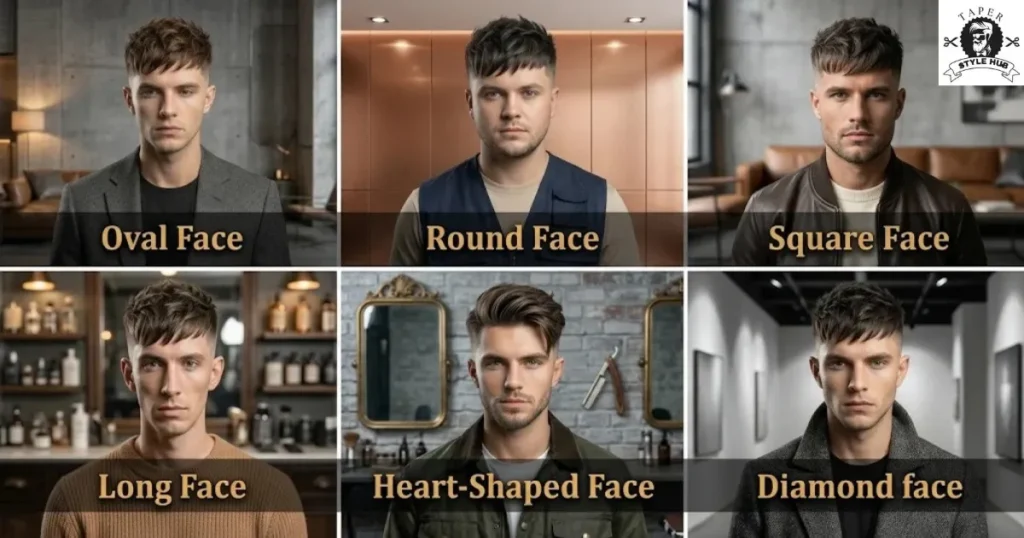
Almost every face shape can wear this haircut, but small adjustments make it far more flattering.
“All The Types Shown Below Are Displayed In The Single Image Above☝️”
Oval Face
Oval faces are balanced, so nearly any fringe works. A curtain or side-swept version looks especially natural.
Round Face
Add height and avoid a heavy, blunt fringe. A choppy or blowout fringe lifts the top and makes the face look longer.
Square Face
A softer, side-swept or textured fringe balances a strong jawline. The faded sides keep the shape clean without adding width.
Long Face
Choose a fuller, forward fringe to shorten the look of the forehead. Avoid adding too much height on top.
Heart-Shaped Face
A side-swept fringe balances a wider forehead and a narrow chin. Keep it slightly longer to soften the temples.
Diamond Face
A choppy or textured fringe adds width at the forehead to balance prominent cheekbones.
How Hair Color Changes the Look of a Mid Fade Fringe
Color affects how much texture and contrast people notice. Dark hair shows a crisp fade and sharp lines, while lighter shades blur the blend slightly.
Bleached or highlighted tops make a choppy fringe stand out. Gray hair is often coarser, so it may need a little extra cream to stay smooth.
Mid Fade Fringe Styles by Age Group
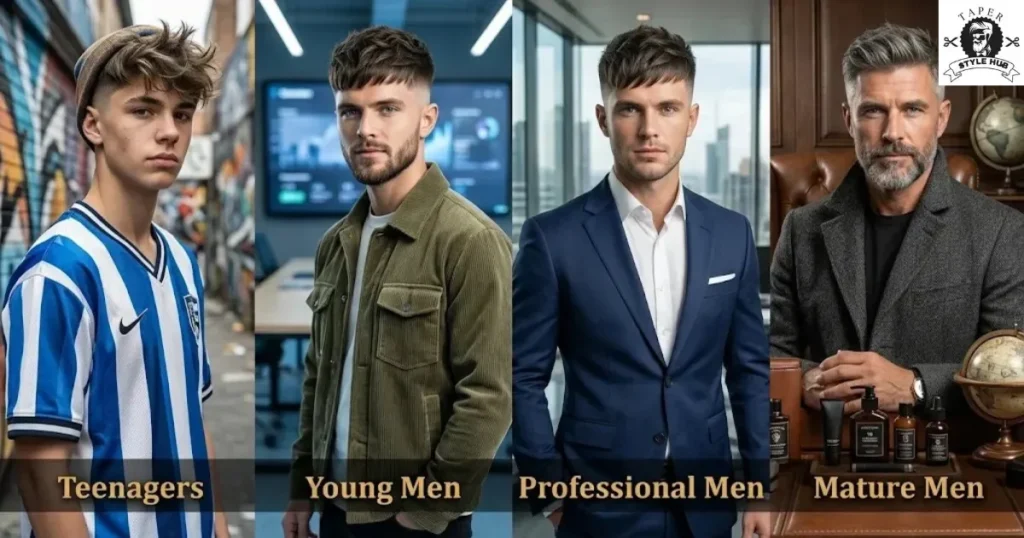
Age and lifestyle often decide how bold a fringe can be, so here is a quick guide for each stage.
“All The Types Shown Below Are Displayed In The Single Image Above☝️”
Teenagers
Teens usually prefer textured, messy, and blowout fringes because they are trendy and forgiving. Check school rules before asking for very short sides.
Young Men
Men in their twenties and thirties can try any variation. Choppy, curly, and wavy fringes suit active social lives and casual workplaces.
Professional Men
Side-swept and short fringes look neat in an office. Keep the fade subtle and finish with a light, matte product.
Mature Men
Men over forty can wear a shorter, cleaner version with a soft side sweep. It keeps the look modern without feeling like you are trying too hard.
Does a Mid Fade Fringe Make You Look Younger or Older?
It usually makes you look younger, especially when the fringe is textured and relaxed. The fringe softens the forehead and adds a modern, youthful shape.
A neat fade keeps the overall look polished, so it never feels childish. If you want a more formal impression, choose a side-swept fringe with a tidy fade.
Mid Fade Fringe for Thinning Hair and Receding Hairlines
A forward fringe can cover the temples and create the impression of more density. That is why many men with a receding hairline choose this haircut.
Keep the fringe slightly longer and use texture powder for lift. Avoid heavy pomade, which can make thin hair look flat and sparse.
How to Prepare for Your First Mid Fade Fringe Haircut
A little preparation makes the first appointment far smoother. Start by letting the top grow to at least three inches so the barber has enough length to shape.
Save two or three photos that match your hair type, and note what you like about each one. Wash your hair before you go, because clean hair is easier to cut and judge.
Finally, think about your daily routine. If you will not style your hair every morning, tell the barber so the fringe is cut to suit that reality.
How to Ask Your Barber for a Mid Fade Fringe
A clear request prevents most haircut disappointments. These phrases give your barber exact targets instead of guesses.
- “I want a mid fade on the sides and back, starting around the temple.”
- “Please leave about three inches on top for a textured fringe.”
- “Point cut the fringe for a soft edge.”
- “Blend the fade smoothly into the top with no hard line.”
- “Cut the fringe with scissors, not clippers.”
- “Keep the neckline natural, not squared off.”
Barber Terms Worth Knowing
Point cutting means the barber angles the scissors into the ends to soften them. A line up is the sharp outline shaped around the hairline and temples.
Blending describes the smooth transition between two lengths. Broken texture means uneven, choppy ends made with scissors or a razor.
Bring a Reference Photo
A photo removes most of the guesswork. Choose one that matches your hair type, because a style that works on thick hair may not work on yours.
Why Fringe Direction Matters Before the First Cut
Straight-down and side-swept fringes are not the same haircut with different styling. They need different length distribution from the very first snip.
A straight fringe is cut level across the front. A side-swept fringe needs more length on one side, built gradually so it grows out without looking lopsided.
Tell your barber the direction before the cut starts. Asking for a sweep afterward usually means styling around a shape that was never built for it.
Guard Numbers and Length Guide for a Mid Fade Fringe
Guard numbers vary by clipper brand, so ask your barber to show the setting before cutting. Start conservative, because shorter can always be done at the next visit.
| Guard | Length | Typical Use |
|---|---|---|
| #0.5 to #1 | About 3 mm | Bottom of the fade |
| #2 | About 6 mm | Softer finish at the sides |
| #3 | About 10 mm | Middle of the blend |
| #4 | About 13 mm | Blend into the temple |
The fringe itself is never cut with a guard. Ask your barber to use scissors or point cutting for a natural edge.
Common Mid Fade Fringe Mistakes to Avoid
Small errors can ruin an otherwise good haircut. Watch for these eight.
- Cutting the fringe too short: you cannot add length back, so ask for extra and trim later.
- Guard-cutting the fringe: clippers leave a flat, even line instead of soft texture.
- Skipping heat protection: repeated blow drying dries the ends and creates frizz.
- Choosing too high a fade: it can make the fringe look thin and disconnected.
- Waiting too long between trims: the fringe loses its shape before the sides do.
- Using heavy wax: thick products weigh the hair down and remove movement.
- Ignoring hair texture: straight, wavy, and curly hair each need different handling.
- Skipping the reference photo: without visuals, the barber may misread the style.
How to Style a Mid Fade Fringe at Home
This routine takes about five minutes once you learn the order of steps.
- Wash with shampoo and add conditioner to the ends if your hair is dry.
- Towel dry until the hair is damp, not soaking wet.
- Spray a heat protectant if you plan to use a blow dryer.
- Blow dry the fringe forward and slightly down with a round brush or your fingers.
- Warm a pea-sized amount of product between your palms.
- Work it through from the back toward the front, finishing with the fringe.
- Shape the pieces with your fingers instead of a comb.
- Add a light mist of hairspray if you need extra hold.
The rule that matters most is simple. Product should roughen the texture, not flatten it.
Daily Styling Tips for Every Mid Fade Fringe Look
One haircut can look completely different depending on how you style it. These quick tips match the technique to the finish you want.
For Messy and Textured Looks
Apply sea salt spray to damp hair, then rough up the fringe with your fingertips. Finish with a pinch of matte clay on the ends only.
For Sleek and Side-Swept Looks
Comb a light pomade through damp hair in the direction you want the fringe to fall. Let it dry that way so it learns the shape.
For Curly and Wavy Looks
Scrunch curl cream into damp hair and avoid touching it while it dries. A diffuser keeps the pattern defined instead of frizzy.
For Blowout and Fluffy Looks
Dry the fringe upward and forward with a round brush, working from the roots. Cool air at the end helps lock the volume in place.
Best Products for a Mid Fade Fringe
Different textures and finishes call for different products. This table makes the choice easier.
| Product | Best For | Finish |
|---|---|---|
| Matte clay | Straight or thick hair | Textured and matte |
| Texture powder | Fine hair that needs lift | Dry and natural |
| Sea salt spray | Adding grip and volume | Beachy and light |
| Curl cream | Wavy and curly hair | Defined and soft |
| Light pomade | Sleek, combed styles | Controlled with some shine |
| Heat protectant | Anyone using a blow dryer | Invisible protection |
Use less than you think you need, because you can always add more. A heavy hand is the fastest way to flatten a good fringe.
Hair Care Routine for a Healthy Mid Fade Fringe
A fringe only looks good when the hair underneath it is healthy. Dry, damaged ends turn frizzy fast and ruin the texture you paid for.
Use a mild shampoo two or three times a week and add conditioner to the ends. Daily washing strips natural oils and leaves the fringe harder to control.
Deep condition once a week if your hair is dry, curly, or thick. Use a clarifying shampoo once a month to remove product buildup that weighs the fringe down.
Keep the scalp clean and moisturized as well. A healthy scalp matters even more when so much detail work happens around the hairline.
Mid Fade Fringe Maintenance and Grow-Out Timeline
This cut does not lose its shape all at once. The fringe softens first, usually within two weeks, because it grows into your eyeline faster than the sides fade out.
By week three, the fade starts to soften at the edges. By week four, most men notice both changes together, which is the real signal that it is time for a trim.
Book a visit every three to four weeks to keep the outline crisp. Wash two or three times a week with a mild shampoo, since daily washing strips natural oils.
A silk or satin pillowcase reduces friction overnight, so the fringe wakes up less messy. A quick neckline cleanup at home can buy a few extra days.
Weather and Season Tips for a Mid Fade Fringe
Humidity makes fringes puff up, while cold, dry air creates static. A little planning keeps your hair under control all year.
In summer, use a lighter product and wash after heavy sweating. Sun and chlorine dry out the ends, so a leave-in conditioner helps.
In winter, hats flatten the fringe and static makes it fly away. Add a drop of light cream to the ends and reshape with your fingers after taking the hat off.
How to Grow Out a Mid Fade Fringe Without the Awkward Stage
Growing out a fringe is mostly a matter of patience and good planning. Keep the sides tidy while the top catches up.
Book short fade touch-ups every few weeks, but ask your barber to leave the top alone. Clean sides make the growing fringe look intentional.
Use a light styling cream to push the front to one side during the in-between weeks. Within two or three months, you will have the length for a longer style.
Can You Cut a Mid Fade Fringe Yourself?
Technically yes, but it is risky. Blending a fade takes practice, and one wrong pass with the clippers cannot be undone.
The fringe is even trickier, because a straight cut across the front looks blunt and uneven. Most mistakes happen when people cut the fringe while the hair is wet.
A safer plan is to see a barber for the fade and handle only small touch-ups at home. A quick neckline cleanup is usually the limit.
How Much Does a Mid Fade Fringe Cost?
Prices change with location, salon type, and barber experience, so treat these numbers as a rough US guide.
| Barbershop Type | Typical Price |
|---|---|
| Local barbershop | $15 to $30 |
| Professional barber or salon | $30 to $70 |
Some shops add a small fee for the extra scissor work a fringe needs. Styling products and extra services can raise the final bill.
How to Find the Right Barber for a Mid Fade Fringe
Not every barber is equally skilled with scissors, and a fringe depends on scissor work more than clipper work. Look for someone who shows textured, blended cuts in their portfolio.
Check social media pages for photos of fringes, not just fades. A strong fade with a flat, blunt fringe is a warning sign.
Book a short consultation before the first cut. A good barber will ask about your hair type, daily routine, and face shape before picking up the clippers.
Mid Fade Fringe for School, Work, and Special Occasions
One advantage of this haircut is that it adjusts to your calendar. Small styling changes move it from casual to formal in minutes.
| Occasion | Styling Approach |
|---|---|
| School | Short or textured fringe with a soft blend |
| Office | Side-swept fringe with a light matte finish |
| Weekend | Messy, finger-styled texture with sea salt spray |
| Wedding or event | Sleek or blowout fringe with light hairspray |
If your workplace has a strict dress code, ask for a slightly tighter fringe and a clean line up. That small adjustment keeps the cut polished in client-facing roles.
How Long Does a Mid Fade Fringe Appointment Take?
Expect about thirty to forty-five minutes for a mid fade fringe, depending on the barber and your hair density. A careful blend and scissor work take longer than a simple clipper cut.
Arrive with clean hair and a reference photo. That saves time and gives the barber a clear starting point.
Tools Every Mid Fade Fringe Owner Needs at Home
You do not need a big collection of gadgets. A few simple tools make daily styling faster and more reliable.
- Blow dryer: choose one with adjustable heat and a cool setting.
- Round brush: it adds lift and direction to the fringe.
- Wide-tooth comb: it separates curls and waves without breaking the texture.
- Diffuser attachment: it keeps waves and curls defined while drying.
- Travel-size product: a small tub of clay or paste lets you restyle during the day.
Mid Fade Fringe Pros and Cons
Every hairstyle has trade-offs, so it helps to see both sides before you commit.
| Pros | Cons |
|---|---|
| Stylish and modern look | Fringe needs daily styling |
| Works with most hair types | Needs a trim every three to four weeks |
| Sides stay low maintenance | Depends on the barber’s texture work |
| Flexible between casual and formal | Tough on very fine hair without product |
| Flatters most face shapes | Weather and humidity affect the fringe |
Who Should Skip the Mid Fade Fringe?
This haircut is versatile, but it is not perfect for everyone. Knowing the limits saves you from a cut you will regret.
Very fine hair without daily styling can look flat and sparse. A strong cowlick at the front hairline can push the fringe in a stubborn direction.
Strict short-hair rules at school, in the military, or at some workplaces also rule it out. In those cases, a shorter crop is the smarter choice.
Common Myths About Fringe Haircuts
Fringes collect more myths than almost any other haircut. A few of the most common ones deserve a quick correction before you book your appointment.
Myth one says a fringe only suits young men. In reality, a shorter and neater version looks sharp at any age.
Myth two says a fringe needs hours of styling. Most versions need five minutes and a small amount of product.
Myth three says a fringe hides a big forehead badly. A well-cut fringe actually balances the proportions of the face.
Myth four says a fade makes hair thinner. A fade only changes the sides, and the top keeps its full density.
Myth five says you need perfect hair to wear one. Good cutting technique matters far more than natural hair, and the right product does the rest for you every single morning.
Alternatives to the Mid Fade Fringe
If this haircut is not quite right, these options offer a similar modern feel.
- Low taper fade textured crop: a shorter, lower-effort version with less length on top.
- Classic scissor cut with tapered sides: a softer, old-school finish without a fade.
- Undercut with textured fringe: a harder line between the top and the sides.
- High fade with a fringe: more contrast and a bolder personality.
Mid Fade Fringe Trends to Watch
Barbers are leaning toward softer blends and more natural texture. Instead of razor-sharp lines everywhere, the focus is on movement and a lived-in finish.
Longer fringes, mullet-inspired backs, and lighter colors are also gaining attention. Whatever trend you follow, a clean fade underneath keeps the look balanced.
Final Thoughts on the Mid Fade Fringe
The mid fade fringe works because it balances structure and personality. The fade keeps the sides tidy, and the fringe lets you change your look with a few simple styling moves.
Choose a version that fits your hair type and face shape, ask for point cutting, and keep up with regular trims. Bring a photo, be specific about length, and your next haircut should land exactly where you want it.
Frequently Asked Questions About the Mid Fade Fringe
What is a mid fade fringe?
It is a haircut with sides faded at mid height and a longer top styled forward as a fringe.
How long should hair be for a mid fade fringe?
Aim for two to four inches on top. Curly hair needs a little extra length because it shrinks when it dries.
How often should I trim a mid fade fringe?
Book a trim every three to four weeks. The fringe loses its shape before the sides do.
Does a mid fade fringe work with curly hair?
Yes. Leave more length, ask for light layering, and use curl cream to keep the pattern defined.
What product is best for a mid fade fringe?
Matte clay or texture powder suits most hair. Use sea salt spray for grip and curl cream for waves.

I’m M Ahmad Ansari, founder and content creator at Taper Style Hub. With 3+ years of experience researching taper haircuts, hairstyles, grooming, and men’s style, I create practical, accurate, and easy-to-understand content. My goal is to provide readers with trustworthy information, useful tips, and inspiring ideas for choosing and styling the perfect taper haircut.

2 Comments