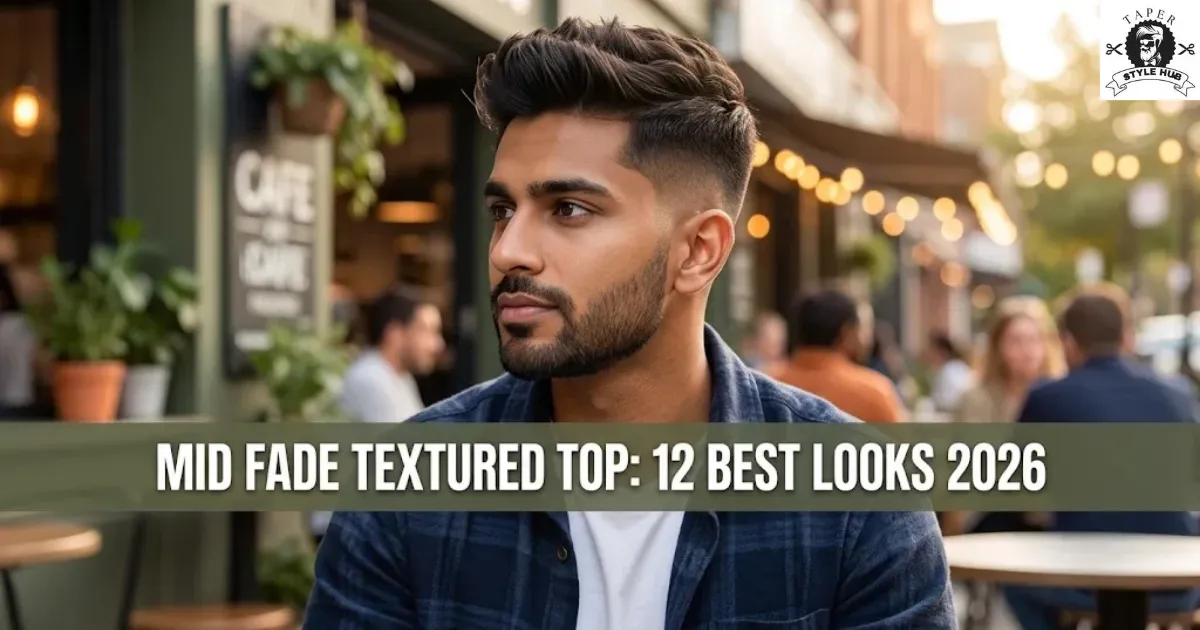
Mid Fade Textured Top: 12 Best Looks 2026
A mid fade textured top is one of the most requested men’s haircuts right now, and the reason is simple. It pairs a clean, gradual fade with a choppy, layered crown that moves naturally.
The result sits between sharp and relaxed. The sides stay neat and defined, while the top keeps enough movement to look modern without demanding a complicated daily routine.
This guide explains what defines the cut, twelve popular variations grouped into clear categories, face shape matches, barber instructions, styling steps, product choices, and maintenance habits that keep the shape fresh.
👉 Also Read: Mid Fade Curly Hair
What Is a Mid Fade Textured Top Haircut?
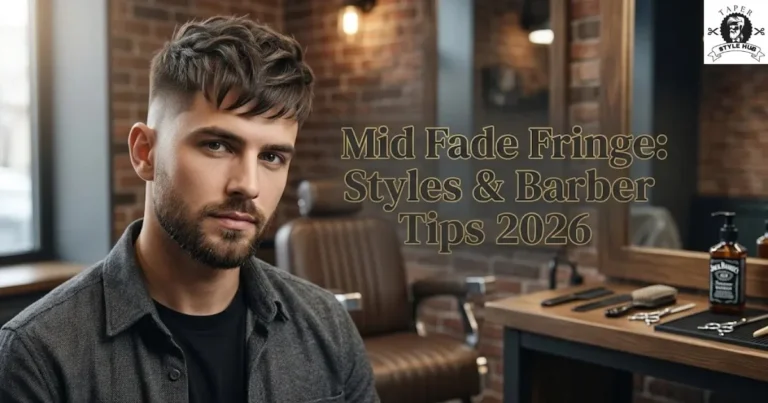
A mid fade textured top combines a fade that begins around the middle of the sides with uneven layers across the crown. The fade creates contrast, while the texture adds separation and natural movement.
The hair on the sides gradually shortens from the upper section toward the lower hairline. The top stays noticeably longer, and the fringe usually falls forward in a short, choppy, or softly broken shape.
Most barbers build the style with point cutting or razor work. These techniques remove bulk from inside the hair, which creates visible layers instead of one heavy, flat block of length.
👉 Also Read: Curly Hair With Fade
Key Characteristics of a Mid Fade Textured Top
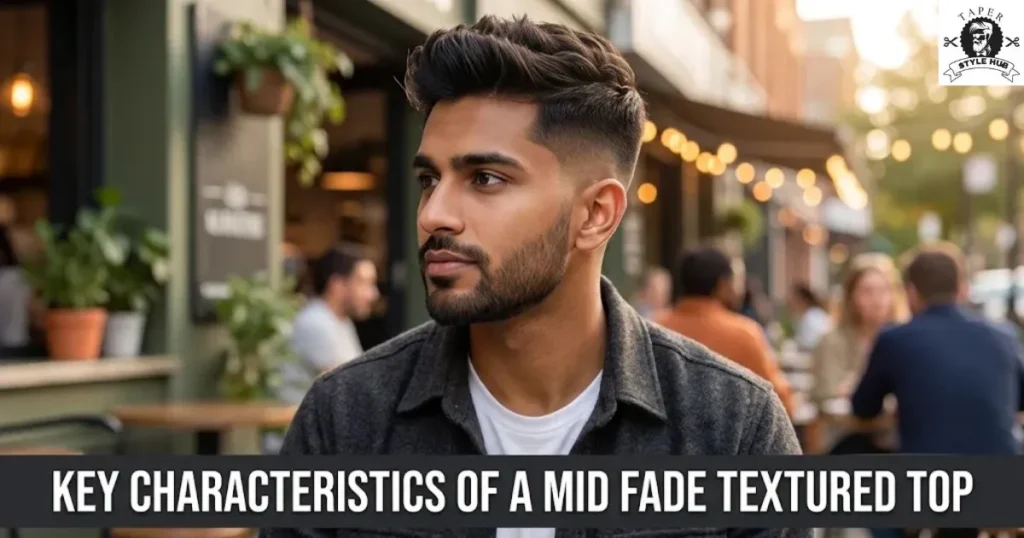
Every well-executed version shares a few details. Learning them helps you judge a cut quickly and describe it clearly to your barber.
- Textured layers across the crown and mid-section
- A forward-facing or slightly irregular fringe
- A fade positioned around the middle of the sides
- A neat neckline and a clean side profile
- Styling that ranges from natural to strongly defined
The best results come from balance. Excessive bulk above a very close fade can look more dramatic than planned, so the barber should match fade height to top volume.
👉 Also Read: Military High Fade
Mid Fade vs Low Fade vs High Fade
Fade height changes the whole feel of the haircut. A mid fade starts between the temples and the ears, which makes it the most balanced option for everyday wear.
| Fade Type | Starting Point | Contrast Level | Best For |
|---|---|---|---|
| Low Fade | Just above the ears | Subtle | Conservative, low-maintenance looks |
| Mid Fade | Around the temples | Balanced | Most hair types and face shapes |
| High Fade | Near the crown | Strong | Bold, high-contrast styles |
A low fade feels softer and more classic, while a high fade looks sharper and needs more frequent trims. The mid version offers clear contrast without extreme upkeep.
If you are unsure, start with the mid option. It is easier to go higher or lower at the next visit than to rebuild a fade that started in the wrong place.
👉 Also Read: Skin Fade Crew
Why Choose a Mid Fade Textured Top?
This cut offers a useful mix of definition and flexibility. The fade keeps the sides tidy, while the textured crown creates a relaxed finish that still looks intentional.
It suits several hair types, although the barber may adjust the layering technique. Straight hair needs more deliberate texturing, while wavy or curly hair already carries natural movement.
It also works with different fringe lengths. A shorter front looks compact and sharp, while a longer fringe gives more coverage across the forehead.
Another advantage is low product demand. When the cut is shaped correctly, your natural texture provides most of the visual interest, so a mid fade textured top rarely needs heavy styling.
Versatility also saves time. Because the layers do most of the styling work, daily routines usually take under five minutes, even for a mid fade textured top with a longer fringe.
👉 Also Read: Curly French Crop
How a Barber Builds a Mid Fade Textured Top
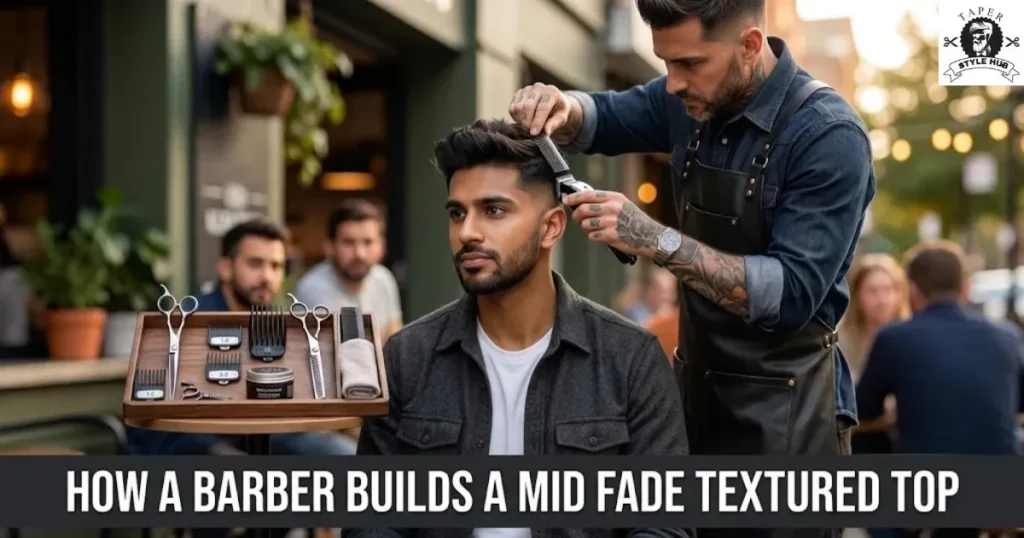
Understanding the process helps you spot quality work. A skilled barber builds the cut in stages, starting with the sides and finishing with the crown.
First, the barber sets the fade line around the middle of the sides. Clippers with graduated guards then blend the length downward toward the neckline.
Next, the top is sectioned and cut with scissors. Point cutting and razor work remove weight inside the layers, which gives the crown its choppy separation.
Finally, the barber refines the fringe, cleans the neckline, and checks the blend from several angles. A hand mirror makes this last review much easier.
Key Terms Behind a Mid Fade Textured Top
A few barbering terms appear in almost every consultation. Knowing them keeps the conversation precise and prevents mixed signals about the finished look.
- Texturizing: removing weight inside the hair to create separation
- Point cutting: snipping into the ends to make a broken, piecey edge
- Layering: cutting different lengths so the top moves and lifts
- Cropping: keeping the top short with the fringe falling forward
- Blending: smoothing the shift from short sides to the longer crown
Texturizing and layering are not the same thing. Layering changes length, while texturizing changes weight, and a good mid fade textured top usually needs both.
12 Types of Mid Fade Textured Top Haircuts
Instead of reading twelve unrelated styles, it helps to group them by what drives the look. The four categories below cover the fringe, the fade, the hair type, and the finish.
Fringe-Based Mid Fade Textured Top Styles
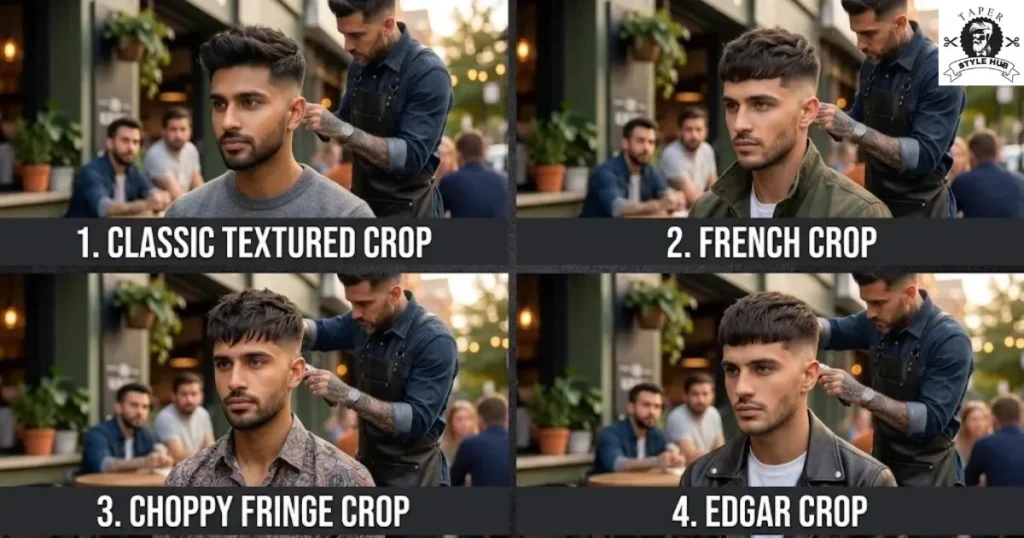
These styles change the front of the haircut. The fringe decides how structured or relaxed the whole look feels.
“All The Types Shown Below Are Displayed In The Single Image Above☝️”
1. Classic Textured Crop
The classic version uses a short top, a forward fringe, and a balanced mid fade. It is a clean starting point for anyone who wants a contemporary cut without extreme styling.
It works for the office and the weekend alike. A small amount of matte clay is usually enough to keep the layers separated.
2. French Crop
The French crop uses a blunter, heavier fringe that cuts straight across the forehead. The top stays textured, but the horizontal line gives a sharper, more structured finish.
The blunt front also draws attention away from a receding hairline. Keep the texture behind the fringe, not inside it.
3. Choppy Fringe Crop
A choppy fringe creates distinct sections along the forehead. It looks casual and pairs naturally with a textured crown and a clean mid fade.
Leave enough length so the front never looks thin or sparse. Thin, overly sliced ends make the fringe look weak instead of intentional.
4. Edgar Crop
The Edgar crop is a harder, more geometric French crop with a very sharp fringe line. It is often paired with a skin fade or a tight taper for matching precision.
Maintenance is non-negotiable here. The sharp line softens fast, so plan a trim every two to three weeks.
Fade-Based Mid Fade Textured Top Styles
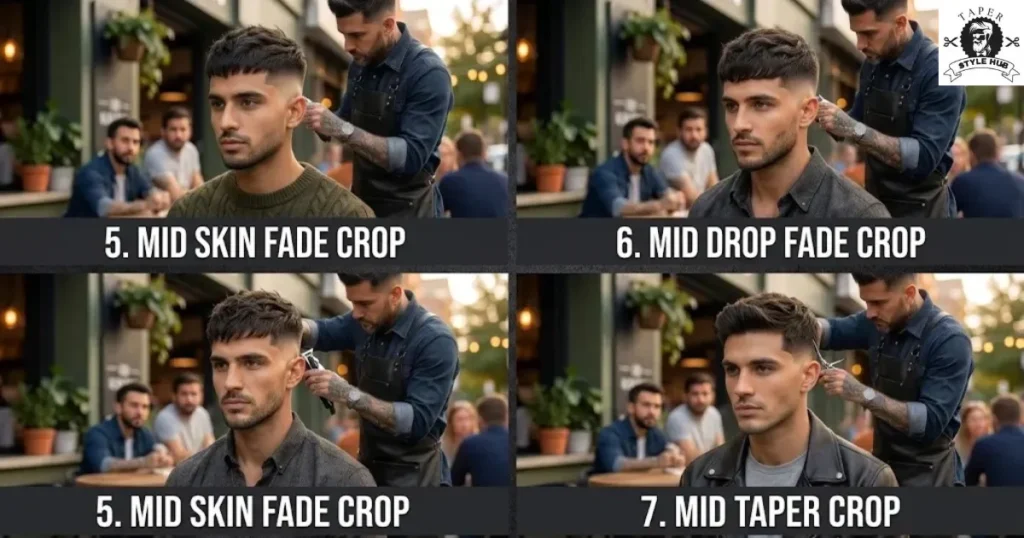
These styles change how the sides blend. The fade type controls contrast, upkeep, and how quickly the cut softens.
“All The Types Shown Below Are Displayed In The Single Image Above☝️”
5. Mid Skin Fade Crop
This version takes the fade down to bare skin near the bottom. It creates sharper contrast than a traditional blend and flatters thick hair by removing visual bulk from the sides.
Regrowth softens the outline within two to three weeks. Expect more frequent barber visits than with other variations.
6. Mid Drop Fade Crop
The drop fade curves down and around the ear instead of running straight across. The curve adds contour at the back, which suits rounder head shapes especially well.
It looks different enough to be interesting without reading as a loud statement cut. The fringe and crown stay textured as usual.
7. Mid Taper Crop
A taper reduces length gradually without reaching bare skin. The grow-out phase looks intentional rather than overgrown, which makes this option friendly for conservative workplaces.
It is also the lowest-maintenance choice in this category. Many men can stretch the time between trims by a week or more.
Hair Type Mid Fade Textured Top Styles
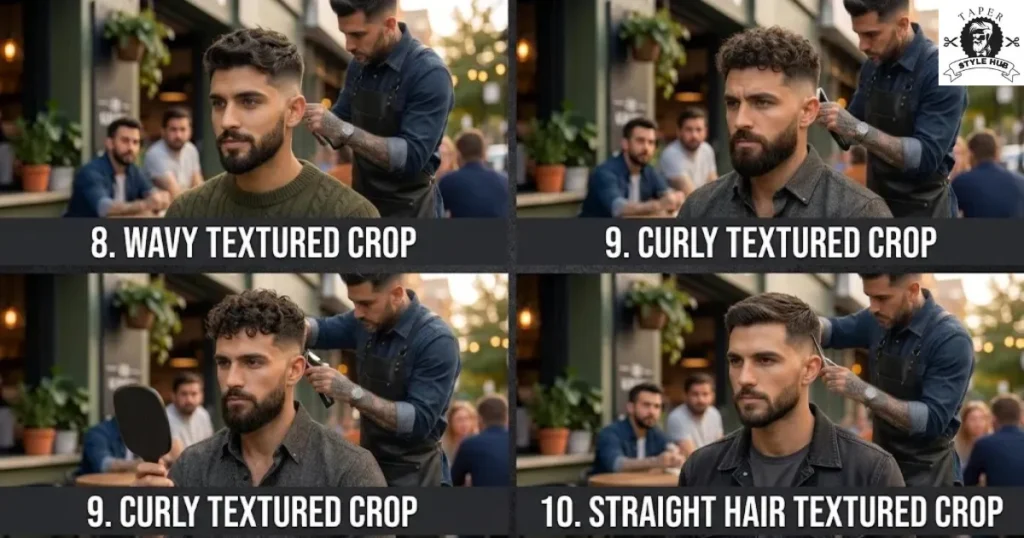
Your natural pattern should guide the cut. Working with the hair, not against it, gives the most reliable result.
“All The Types Shown Below Are Displayed In The Single Image Above☝️”
8. Wavy Textured Crop
Wavy hair brings built-in variation across the top. The fringe can follow the wave pattern, so the cut looks styled even on a lazy morning.
A lightweight styling cream reduces frizz without flattening movement. A taper or low blend often suits waves better than a harsh skin fade.
9. Curly Textured Crop
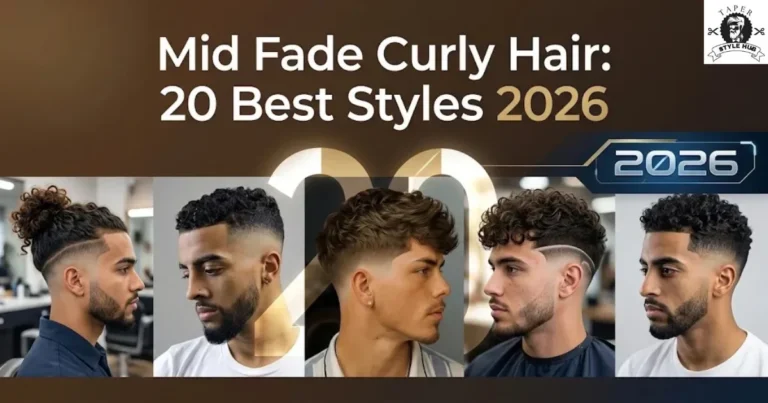
Curly hair adds volume and definition to the crown. The barber should cut with the natural curl pattern and account for shrinkage when deciding how short to take the top.
A curl cream keeps definition without stiffness. Avoid cutting curls too short while wet, since they spring up as they dry.
10. Straight Hair Textured Crop
Straight hair needs more deliberate texturing to avoid looking flat. Point cutting and a little texture powder at the roots create the separation that waves provide naturally.
A blow dryer adds direction and lift. Use moderate heat and finish with a matte paste for a dry, modern look.
Finish-Based Mid Fade Textured Top Styles
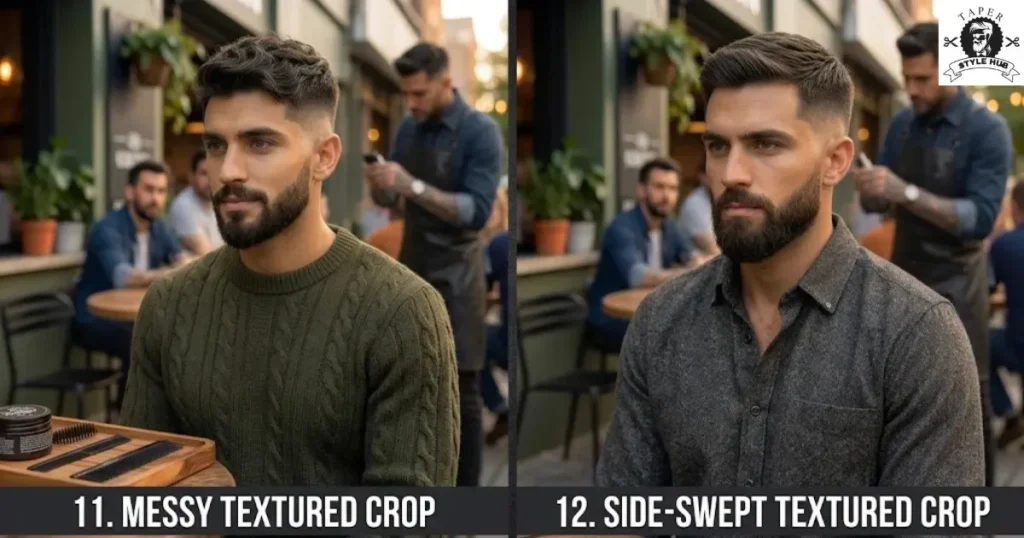
These styles change the final look through length and direction. They suit different moods, from relaxed weekends to formal settings.
“All The Types Shown Below Are Displayed In The Single Image Above☝️”
11. Messy Textured Crop
The messy version favors irregular sections and a lived-in finish. Arrange the top with your fingers instead of a comb, and add a small amount of matte paste to separate strands.
Light hands matter here. Overworking the hair makes the look stiff instead of effortless.
12. Side-Swept Textured Crop
Most crops move forward, but this one sweeps to the side for a more polished look. It reads professional while keeping the texture on top.
Blow dry in the direction of the sweep before applying product. The heat sets the direction, and the product simply locks it in.
Add-Ons That Sharpen a Mid Fade Textured Top
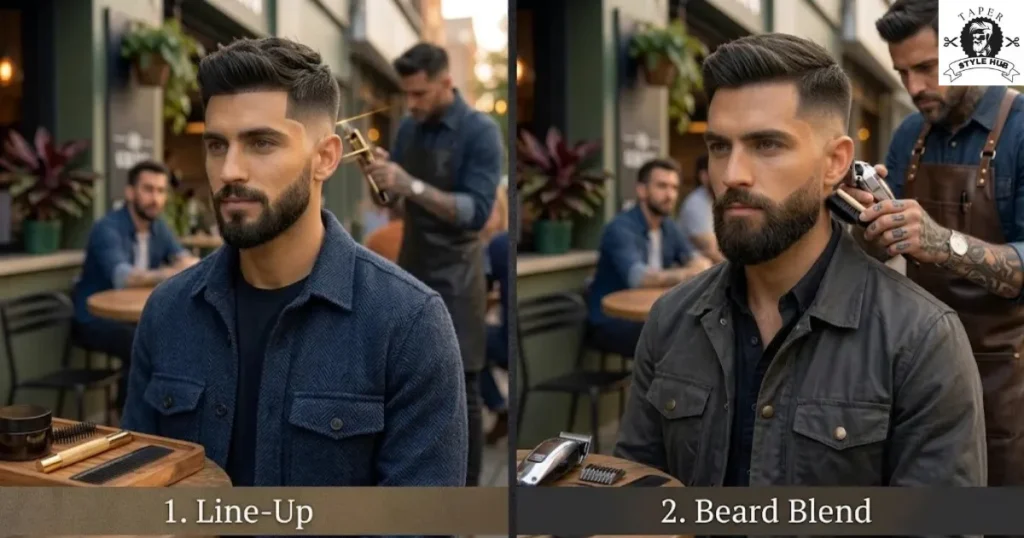
Small details can change the whole finish. A line-up and a beard blend are the two most common upgrades.
“All The Types Shown Below Are Displayed In The Single Image Above☝️”
Line-Up
A line-up adds defined edges around the forehead and temples. It creates a sharper, more structured frame for the fringe.
Keep the outline consistent with your natural hairline and forehead shape. An overly straight or pushed-back line looks harsh and ages poorly.
Beard Blend
A beard adds definition around the jaw and balances the faded sides. Both short stubble and a fuller beard work well with the cut.
Ask the barber to blend the sideburn area into the beard naturally. This keeps the transition smooth from the temple down to the jaw.
Mid Fade Textured Top for Office and Casual Wear
One reason this haircut stays popular is its range. A mid fade textured top can look polished in a meeting and relaxed on a weekend with only small changes.
For work, keep the fringe slightly longer, choose a taper, and use a light cream for a soft finish. A side sweep also adds a professional edge.
For casual days, let the crown stay loose and messy. Add a matte paste, rough dry the top, and skip the comb for a lived-in finish.
Best Mid Fade Textured Top for Your Face Shape
Face shape affects how the fringe, fade height, and crown volume read in the mirror. Use the table below as a starting point, then adjust with your barber.
| Face Shape | Best Approach |
|---|---|
| Oval | Flexible, so experiment with fringe shape |
| Round | Add height on top and keep the sides tight |
| Square | Choose a choppy fringe to soften a strong jaw |
| Long | Use a forward fringe and avoid excess height |
| Heart-Shaped | Keep a softer fringe and controlled side volume |
A mid fade textured top can complement a defined jaw and forehead. Photographs usually communicate the right proportions better than haircut terminology alone.
Mid Fade Textured Top for Different Hair Types
Hair density and thickness change how much texturing the cut can handle. Two men can ask for the same style and still need different technique.
Thick Hair
Controlled layering removes excess bulk and makes styling easier. A skin fade also strips visual weight from the sides, so the top becomes the focus.
Fine or Thin Hair
Avoid over-thinning the crown. A carefully shaped top and texture powder at the roots create the appearance of fullness without adding weight.
Whatever your density, ask the barber to check the mid fade textured top while your hair is dry. Dry cutting shows exactly how the layers will fall once you style them.
How to Choose the Right Mid Fade Textured Top
Start with your hair type, then think about lifestyle. Thick hair benefits from a skin fade, while fine hair usually looks better with a softer taper.
Next, consider upkeep. If you dislike frequent barber visits, choose a taper with a longer fringe. If you enjoy a razor-sharp look, a skin fade crop fits better.
Finally, match the fringe to your face shape and hairline. A blunt line suits a receding hairline, while a choppy front softens a strong jaw.
What to Tell Your Barber
Clear communication prevents most haircut disappointments. Explain that you want a mid fade textured top, then describe the details that shape the final result.
- Specify a short, choppy, or longer fringe
- Say how much texture you want on top
- State whether you prefer a traditional fade or a skin fade
- Mention if your hair is straight, wavy, or curly
- Ask for point cutting or razor work for separation
- Point out any cowlicks before cutting begins
- Bring a photo reference of the exact look
Give measurements for the top. A short crop usually sits near 1.5 to 2 inches, while a medium-length version sits near 2.5 to 3.5 inches.
How to Style a Mid Fade Textured Top
Styling is simple once the cut is right. Start with clean hair, then remove excess moisture before applying any product.
- Towel dry and blow dry the top forward
- Warm a small amount of matte paste or clay in your palms
- Work it through the hair with your fingers from back to front
- Create separation between individual sections
- Shape the fringe and avoid flattening the crown
Use moderate heat and a heat protectant if you blow dry often. Quick, light styling looks more natural than an overworked, heavy finish.
Straight Hair Routine
Blow dry the top forward and slightly up, then add texture powder at the roots. Finish with a pinch of matte paste to separate the ends.
Wavy Hair Routine
Apply sea salt spray to damp hair and rough dry without a nozzle. Add a little styling cream once dry to define the waves.
Curly Hair Routine
Work curl cream through damp hair and let it air dry or diffuse it. Avoid brushing dry curls, because that creates frizz and breaks up definition.
Best Products for a Mid Fade Textured Top
Choose products by hair type rather than buying everything at once. A matte finish keeps the top looking dry, modern, and textured.
| Product | Best For | Finish |
|---|---|---|
| Matte Clay | Thick hair needing strong hold | Dry and defined |
| Matte Paste | Flexible control and easy restyling | Natural matte |
| Texture Powder | Fine hair and root lift | Light and airy |
| Sea Salt Spray | Wavy hair and loose texture | Beachy |
| Styling Cream | Frizz control and soft hold | Soft and natural |
| Curl Cream | Curly hair definition | Flexible |
Add a pomade only when you want a smoother, more controlled sweep. Heavy products can make the haircut look greasy or stiff.
Maintenance and Hair Care
A mid fade textured top needs regular trims to keep the transition clean. The fade softens first, while the top stays manageable for longer depending on length.
- Book a trim every two to four weeks for a sharp fade
- Tidy the fringe before it covers your eyes
- Use a suitable shampoo and conditioner
- Keep heavy products away from the scalp
- Save a photo for future barber visits
If you prefer a softer look, wait longer between visits and let the fade grow out naturally. A skin fade needs the most frequent upkeep.
How to Grow Out a Mid Fade Textured Top
Growing out the cut is easier than most men expect. The fade softens first, and the crown simply gains length and movement.
Between weeks four and six, the fringe may sit near the eyes. This is the point where many men book a trim or move toward a medium-length version.
To keep the grow-out neat, clean the neckline and tidy the sides only. Leave the top alone and let the layers settle into a longer, softer shape.
Common Mistakes to Avoid
Most problems come from a few repeat errors. Avoiding them protects both the shape of the cut and the time you spend styling it.
- Choosing a fade that is too high, which adds more contrast than intended
- Over-texturing fine hair, which removes fullness
- Using heavy products that make the top greasy or stiff
- Cutting curly hair too short while wet, since shrinkage changes proportions
- Ignoring the fringe until it becomes difficult to manage
- Expecting the fade to stay sharp for weeks without trimming
Final Thoughts on the Mid Fade Textured Top
The mid fade textured top combines a contemporary crown with a clearly defined side profile. Its appearance can range from soft and natural to sharp and high-contrast.
Choose the fade height carefully, keep enough texture on top, and tell your barber exactly how you want the fringe to sit. With a suitable cut and simple upkeep, this style delivers a modern look without a complicated routine.
Save a few reference photos, book regular trims, and adjust your products as the seasons change. Small habits like these keep the haircut looking deliberate from the first week to the last.
Mid Fade Textured Top FAQs
Is a mid fade suitable for a textured crop?
Yes. The fade provides contrast, while the textured top adds movement and definition.
Does this haircut work with thick hair?
Yes. Controlled layering reduces excess bulk and makes the style easier to manage.
Can men with thin hair get this style?
Yes, but the barber should avoid excessive thinning. A carefully shaped top creates the look of fullness.
Is a skin fade necessary?
No. A regular mid fade looks clean without exposing the skin at the bottom.
How often should I get a trim?
A sharp fade needs attention every two to four weeks. A softer version can wait longer.

I’m M Ahmad Ansari, founder and content creator at Taper Style Hub. With 3+ years of experience researching taper haircuts, hairstyles, grooming, and men’s style, I create practical, accurate, and easy-to-understand content. My goal is to provide readers with trustworthy information, useful tips, and inspiring ideas for choosing and styling the perfect taper haircut.

4 Comments