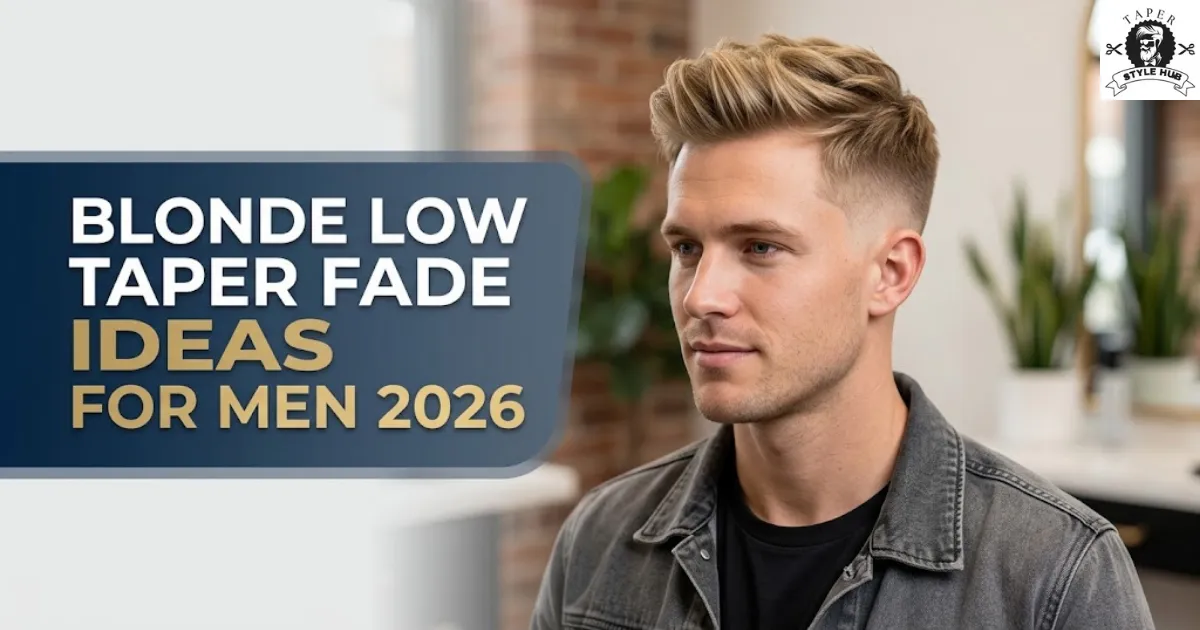
Blonde Low Taper Fade Ideas For Men 2026
A blonde low taper fade pairs a soft, low-set blend around the sideburns and neckline with a bright blonde top. The fade stays close to the natural hairline, so the length, texture, and color on top do most of the styling work. It is one of the cleanest ways to wear light hair without looking overdone.
This guide explains what a blonde low taper fade is, how blonde changes the way a fade looks, and which styles suit your hair texture and face shape. You will also find barber wording, daily styling steps, color care, bleaching risks, and alternatives, so you can walk into the chair with a clear plan.
👉 Also Read: Taper Fade Fluffy Hair
What Is a Blonde Low Taper Fade Haircut?
A blonde low taper fade shortens the hair gradually, starting low near the sideburns and the nape of the neck. Everything above that line keeps more length and weight. The blonde can be natural, highlighted, or fully bleached, and the color works separately from the structure of the haircut.
Barbers build the blend by moving through clipper guards, from the shortest length at the neckline to longer guards higher up. They then soften each step with the taper lever or a comb. Because the work stays low, the finish can be a soft shadow instead of bare skin.
That makes the blonde low taper fade easy to wear at school, at work, and on weekends. It looks tidy without feeling aggressive, and it leaves plenty of room to change the top. You can keep it short, grow it out slowly, or switch between styles as your mood changes.
👉 Also Read: Low Taper Buzz
Who Should Choose a Blonde Low Taper Fade?
The blonde low taper fade suits men who want a polished outline without committing to a dramatic fade. It works for teenagers, college students, and office workers alike. If you want something noticeable but still tidy, this cut gives you both.
It also works well for anyone trying blonde for the first time. The low taper keeps the sides subtle, so the color becomes the main feature. You can test the shade for a few weeks and adjust before moving to something bolder.
Men who dislike frequent barber visits may prefer a longer top with a soft taper. Men who enjoy a sharp, fresh look can pair a short crop with tighter blending. Either way, the blonde low taper fade adapts to your routine.
👉 Also Read: Hispanic Long Hair Taper Fade
Blonde Low Taper Fade at a Glance
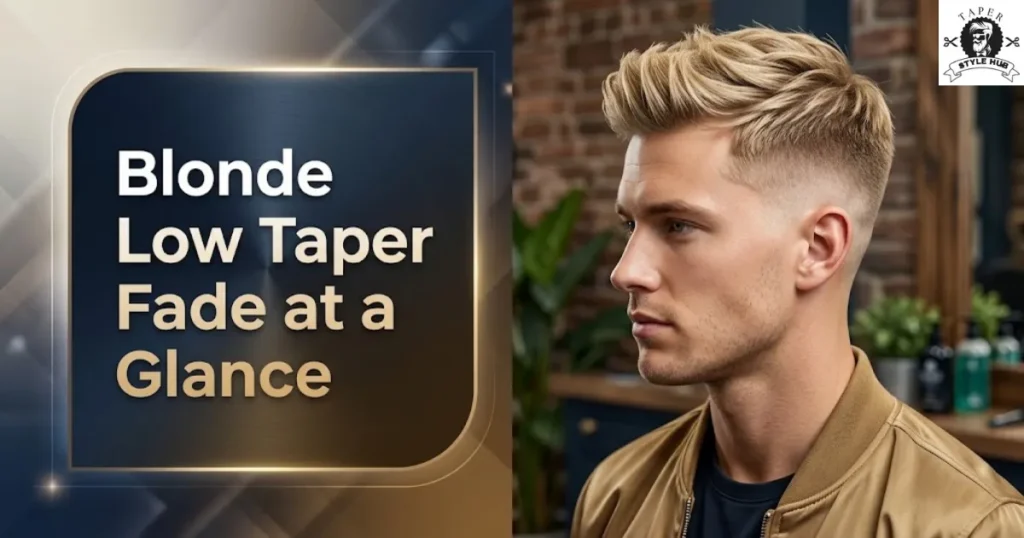
If you only have a minute, these are the main points to remember before you book an appointment. Each one is covered in more detail further down the page.
- Fade placement: low, around the sideburns and the nape.
- Top section: length and texture do most of the styling work.
- Finish: a soft shadow often reads better than bare skin on pale hair.
- Hair types: straight, wavy, curly, and coily hair can all wear it.
- Upkeep: the cut and the color follow two separate schedules.
👉Also Read: Textured Fringe With a Taper Fade
Blonde Low Taper Fade vs Low Fade vs Skin Fade
People often use these three names as if they mean the same thing, but they describe different things. A low taper usually affects a narrow band around the sideburns and nape. A low fade covers a wider area at the same height, while skin describes how short the finish gets.
| Haircut | Starting point | Area affected | Typical finish |
|---|---|---|---|
| Low taper | Low, near sideburns and nape | Narrow band | Shadow or soft blend |
| Low fade | Low on the sides | Wider area around the head | Shadow or skin |
| Skin fade | Low, mid, or high | Depends on placement | Bare scalp at the shortest point |
Barbers use these labels differently from one region to another. A reference photo explains the result you want far better than a name alone. Showing a picture of a blonde low taper fade removes most of the guesswork before the clippers even turn on.
👉 Also Read: Taper Fade Kids
Why Blonde Hair Changes the Look of a Blonde Low Taper Fade
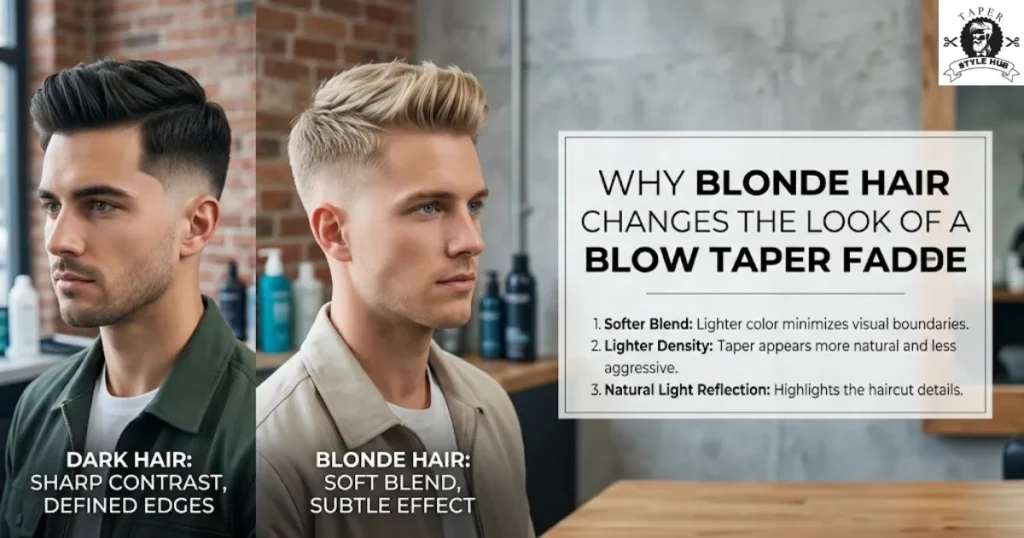
Blonde does not change how the haircut is built, but it changes how visible the fade looks. Light strands create less contrast against skin than dark hair does. That one difference affects which finish, shade, and top length will look sharp on you.
👉 Also Read: Taper Fade Black Men
Contrast Against Skin and Roots
Fully lightened or platinum hair blends softly into the skin, so a shadow finish often keeps definition without looking patchy as it grows out. A bare skin fade can look washed out on very pale hair. Many barbers suggest starting with a soft taper first.
Darker roots can add visual separation between the fade and the blonde above it. This is why a shadow root blonde top often looks deliberate even when the cut is a few weeks old. The roots act like a built-in outline for the taper.
👉 Also Read: Taper Fade Long Top
Density and Tone
Fine or low-density hair shows less contrast than thick, coarse hair at the same guard length. Tell your barber about your density before the first pass. They can adjust the guard height so the blend still looks full and even.
Tone matters as well, because warm and cool blondes catch light in different ways. Ash and platinum shades look crisp under bright light. Golden and honey shades look softer and slightly lower in contrast, which helps hide small clipper marks.
👉 Also Read: Taper Fade with Long Hair
Does a Blonde Low Taper Fade Suit Your Hair?
Most men can wear some version of this cut. The real decision depends on top length, texture, density, hairline shape, and how much styling and color upkeep you are willing to take on each week.
Best Hair Textures for a Blonde Low Taper Fade
Every texture can carry the cut, but each one needs a different top length and a different product. Use this list as a starting point when you plan your next appointment.
- Straight hair: relies on the fringe or crop shape for movement, so cutting angle matters more than product.
- Wavy hair: pairs well with a slightly longer top that shows natural movement without heavy styling.
- Curly hair: needs the cut planned around shrinkage, because curls sit shorter when dry than when wet.
- Coily hair: benefits from careful edge definition and moisture, since dryness shows quickly on a short, faded perimeter.
- Fine hair: looks best with less bulk on top, because heavy lengths can fall flat.
- Thick hair: supports more volume and a wider range of top styles.
Face Shape, Density, and Hairline
Face shape and hairline never make a cut off-limits. They are proportions to talk through with your barber. Top height, fringe direction, and side bulk can all be adjusted to balance your features.
| Feature | Styles worth considering |
|---|---|
| Round face | Quiff or extra height on top |
| Long face | Fringe or a lower-volume crop |
| Square face | Textured fringe, side part, or soft messy top |
| Receding hairline | Short fringe or a crop that follows the hairline |
| Thick, dense hair | Layered top with a blended taper |
| Fine hair | Short textured top with lightweight product |
Treat these suggestions for a blonde low taper fade as starting points, not strict rules. Your crown pattern and the way your hair falls naturally matter just as much. A good barber will adapt the guard heights and top length during the consultation.
Best Blonde Shades for a Blonde Low Taper Fade
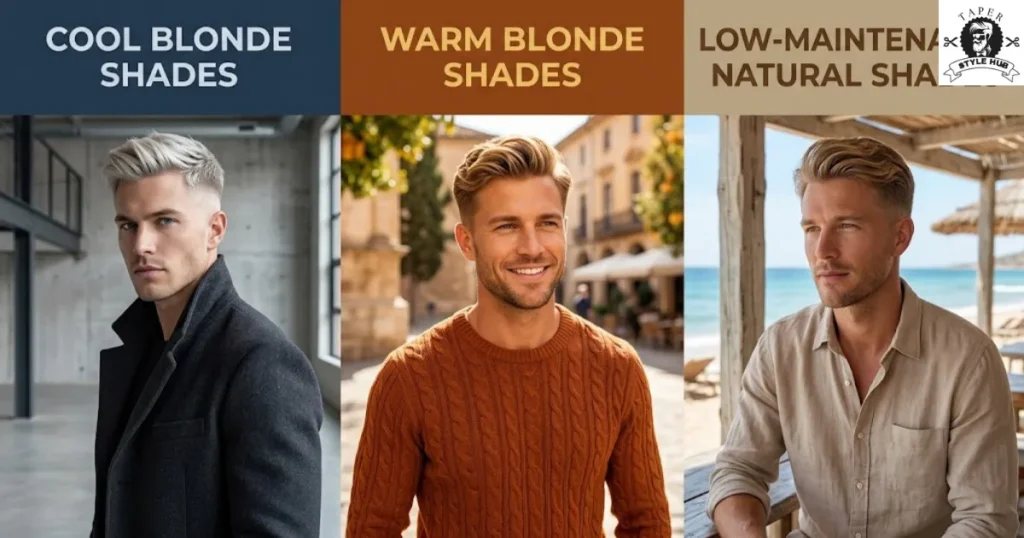
Choosing the right shade is just as important as choosing the right style. blonde low taper fade shades fall into three broad groups, and each group comes with its own contrast level and upkeep demand.
Cool Blonde Shades
Platinum and ash blonde sit at the cooler end of the range. Platinum gives the strongest contrast against a low taper, especially when natural roots show underneath. Ash carries grey undertones that cancel brassiness and suit men with cooler skin tones.
Cool shades demand the most care on a blonde low taper fade. They need regular toning and purple shampoo to stay icy, and they usually take more than one lightening session. Plan for the cost and the time before you commit to this route.
Warm Blonde Shades
Golden and honey blonde lean toward amber and sun-lightened tones. They look natural on medium and warmer skin and soften the blend line, so clipper marks are less obvious. This makes them a forgiving partner for a fresh taper.
Warm shades also fade more gently as they grow out. You will notice less of a harsh line between the new roots and the colored lengths. That keeps salon visits less frequent than they would be with platinum.
Low-Maintenance Natural Shades
Dirty blonde and dark blonde are the easiest entry points. They need little or no bleaching and grow out gracefully. A shadow root blonde top works in a similar way, because the dark roots look intentional instead of neglected.
These shades suit men who want the look without a heavy routine. They are also a safe first step if you have never lightened your hair before. You can always go lighter later once you know how your hair responds.
Best Blonde Low Taper Fade Styles by Category
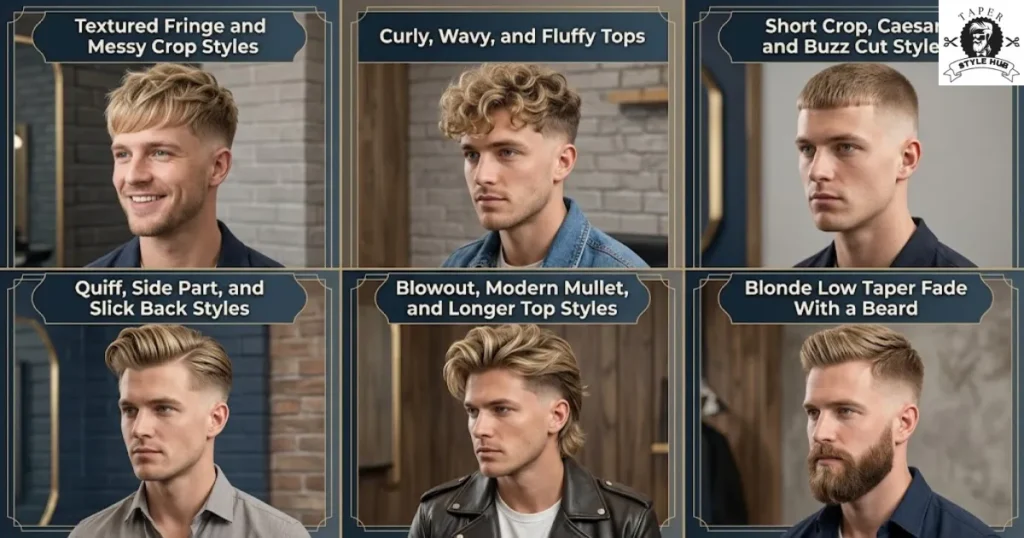
Instead of ranking fifteen blonde low taper fade looks, it is easier to group them by how the top is cut and styled. Each category below shares a similar texture demand and upkeep level, so you can narrow down the right family before choosing a single style.
Textured Fringe and Messy Crop Styles
This family works around a forward-styled fringe that adds movement while the low taper stays quiet underneath. The textured fringe uses choppy, point-cut pieces and a matte finish. The messy crop keeps the sides short and the top deliberately tousled.
The ash-blonde choppy crop is the cooler version of the same idea. It looks sharp but understated and works with casual or smart-casual clothes. Ask your barber for separated, piecey layers instead of one flat, uniform length.
Curly, Wavy, and Fluffy Tops
These styles keep natural volume and movement on top, and the low taper frames them instead of competing with them. The curly top lets the curls stay untouched while the sides are cleaned up. The wavy top uses loose, flowing layers that follow your natural pattern.
The fluffy top is built with a round brush or diffuser and a lightweight mousse. It adds airy volume without making the sides look wide. All three styles need enough length on top for the curl or wave pattern to show.
Short Crop, Caesar, and Buzz Cut Styles
These are the lowest-maintenance options, trading daily styling time for more visible head shape and hairline. The French crop keeps a short, textured fringe with tight sides. The Caesar cut is uniformly short with a straight, forward fringe.
The blonde buzz cut is the shortest version, where the fade becomes the main detail. Because there is less hair to blend into, even clipper work and clean roots matter more here than with longer styles. Expect trims every two to three weeks.
Quiff, Side Part, and Slick Back Styles
This group suits men who want a cleaner, more directional finish. The textured quiff needs enough top length to lift and push back, usually with a matte or medium-hold product. The side part uses a defined parting line and a light cream for a controlled look.
The slick back uses more product and often a comb for a polished, high-shine result. It is the most product-dependent of the three and the least forgiving on fine or damaged hair. Dry the hair in the intended direction first for the best hold.
Blowout, Modern Mullet, and Longer Top Styles
These styles keep the most length and bulk on top, so the taper becomes a supporting detail. The blowout pairs a rounded, voluminous top with a subtle fade at the sides. The modern mullet keeps more length at the back and crown than at the sides.
The longer swept top preserves length across the whole head and uses the taper mainly to clean up the sides. These cuts need fewer haircuts but more daily drying and styling. They reward men who enjoy spending time on their hair.
Blonde Low Taper Fade With a Beard
A beard adds another line to blend, so the fade should connect smoothly with the sideburns. Ask your barber to graduate the beard into the taper so there is no hard step between them. The light top then draws attention to the jawline.
Keep the beard trimmed to match the tightness of the fade. Use a little beard oil daily and line up the edges weekly. A blonde low taper fade with a beard looks best when both parts share the same level of neatness.
Blonde Low Taper Fade for Work, School, and Special Events

A blonde low taper fade fits most dress codes because the neckline and sideburns stay clean. Choose a natural or shadow root shade for conservative offices and keep the top at a manageable length. A side part or short crop looks especially professional.
For school and college, a textured fringe or messy crop keeps the look relaxed and quick to style. These cuts forgive a rushed morning and need very little product. Younger wearers should confirm the color plan with a parent or colorist first.
For weddings, parties, and nights out, a quiff, slick back, or blowout gives the look a more polished finish. Platinum and ash shades photograph well under bright lights. A fresh blonde low taper fade a few days before the event keeps the outline crisp.
How to Ask Your Barber for a Blonde Low Taper Fade
Describe the fade placement, the top length, and the color plan as three separate pieces of information. Then ask the barber to repeat the plan before cutting begins. Being specific about where the taper starts prevents the most common mismatch between the request and the result.
Reference Photos to Bring
A single front photo leaves the fade height and top shape open to interpretation. Bring a small set of images that show every angle of the cut you want.
- A front view to show the fringe or top shape.
- A side view to show the low taper and the blend.
- A back view to show the neckline.
- A close-up of the blonde shade, if you plan to change color.
Choose photos of people with similar texture and density to yours. A curly reference will not translate directly onto straight hair. Avoid heavily filtered or AI-generated images, because they can misrepresent tone and fade contrast.
What Exactly Should You Say?
Keep your wording simple and cover three points: how low the fade starts, how much length stays on top, and whether the blonde is already done. A short script like the one below works for most barbershops and salons.
“I would like a low taper around the sideburns and neckline, finished as a soft shadow, with length and texture kept on top. The blonde is already done, so we are just cutting today.”
Before the clippers start, confirm the neckline shape, whether squared, rounded, or tapered. Ask if the barber sees anything in your growth pattern that would change the plan. This takes thirty seconds and saves weeks of regret.
How to Style and Maintain a Blonde Low Taper Fade

Upkeep covers three separate things: the shape of the haircut, the daily styling routine for your chosen top, and the condition of the blonde. They do not run on the same schedule, so treating them separately makes the routine more predictable.
The Fastest Daily Styling Routine
Most blonde low taper fade styles can be finished in under five minutes. Adjust the product to match your texture and the look you chose.
- Wash lightly or refresh the hair with water.
- Towel-dry gently so the hair stays slightly damp.
- Work a small amount of product through the hair.
- Dry in the direction you want the style to sit.
- Shape with your fingers or a comb and finish with a light hold.
Lightened hair is more porous and prone to dryness, so keep heat low where you can. The American Academy of Dermatology advises using low or medium heat with a heat protectant and limiting how often hot tools touch the hair.
Best Products for Each Texture
The right product keeps the blonde looking bright instead of greasy. Pick lightweight formulas first, because heavy products can darken pale hair and make it look oily.
- Matte clay: strong hold with no shine, best for crops and textured fringes.
- Texture powder: quick root lift for fine or thin hair.
- Sea salt spray: adds grit and a lived-in finish to messy tops.
- Curl cream: defines curls and reduces frizz on soaking-wet hair.
- Volumizing mousse: builds body for fluffy and blowout styles.
- Pomade or wax: gives a controlled finish for side parts and slick backs.
- Heat protectant: shields lightened strands from the blow dryer.
Washing and Daily Habits
Washing every day strips moisture from lightened hair, so two or three washes a week is usually enough. On the off days, rinse with water and style as normal. A silk pillowcase can also reduce friction and frizz overnight.
Apply conditioner from mid-length to the ends, since those are the oldest and driest parts. Detangle gently with a wide-tooth comb. These small habits help a blonde low taper fade look healthy between salon visits.
How Often to Refresh the Cut and Color
There is no single interval that suits everyone. The taper needs attention when the neckline grows out, while the color needs attention when roots show or the blonde turns warm. These are general starting points only.
| Maintenance | General starting point |
|---|---|
| Low taper touch-up | Every 2 to 4 weeks, depending on sharpness |
| Short crop or buzz trim | Every 2 to 3 weeks |
| Longer top trim | Every 6 to 10 weeks |
| Toner refresh | Every 4 to 6 weeks if brass appears |
| Full color service | When root regrowth becomes visible |
Haircut and color visits do not need to happen together. Many men refresh the taper more often than the color. Signs the fade needs work include a blurred line and a grown-out neckline, while yellow tones signal that the color needs help.
How a Blonde Low Taper Fade Grows Out
Hair grows roughly half an inch a month, and the edges show it first. A blonde low taper fade blurs at the nape and sideburns after about three weeks. That is why many men book a quick touch-up before the shape fully drops out.
Light hair hides this regrowth better than dark hair does, which is one real benefit of blonde. A shadow finish also grows out more softly than a skin fade. You can often stretch the appointment by a week without anyone noticing.
Root regrowth tells a separate story. Dark roots under a blonde top may look intentional for a few weeks, but a wide band eventually calls for color. Book the haircut and the color on different days if that suits your budget.
How to Keep Blonde Hair Bright Without Over-Toning
Purple shampoo reduces unwanted yellow tones because violet sits opposite yellow on the color wheel. It tones the hair but does not repair damage or replace conditioner. Follow the directions on the bottle, since overuse can leave a cool, grey-looking cast.
- Use color-safe shampoo and a moisture-focused conditioner.
- Use purple shampoo once or twice a week, not every wash.
- Rinse with cool water to help the cuticle stay closed.
- Apply a weekly mask to protect lightened lengths.
- Wear a hat in strong sun, because sunlight fades blonde quickly.
Toner sits on the surface and fades with every wash, so it never lasts as long as bleach. A colorist can refresh it in a short visit. Ask about bond-building treatments if the ends feel brittle after lightening.
Risks and Common Mistakes With a Blonde Low Taper Fade
A poor haircut can be fixed with a follow-up visit. Bleaching carries bigger and less reversible risks, mainly fiber damage and skin irritation. That is why color deserves more caution than simply asking for a fade.
What to Know Before Bleaching
Bleach weakens hair structurally, and dye or lightening products can irritate skin or trigger allergic reactions. Lab studies of bleached hair have documented damage to the cuticle and cortex, along with protein loss that grows with bleaching severity.
- Do a patch test on the inner elbow or behind the ear, as the FDA recommends.
- Tell your colorist about past dye, henna, relaxers, or box color.
- Ask whether your target shade is realistic in one session.
- Stop the treatment if you feel strong burning or irritation.
- Book a professional assessment for a first bleach or major lightening.
A patch test lowers the uncertainty but does not guarantee a smooth full application. Existing damage and overlapping bleach on processed hair both raise the risk of breakage. A qualified colorist can judge your hair before starting.
Haircut and Color Mistakes to Avoid
Most problems are easy to prevent with clear communication and realistic expectations. The table below lists the most common issues and a simple fix for each one.
| Mistake | Result | Prevention |
|---|---|---|
| Taper placed too high | Turns into a mid fade | Specify low placement and finish clearly |
| Unmatched reference photo | Barber cannot judge length | Bring unedited, texture-matched images |
| Too much side bulk removed | Style looks flat or too short | State how much bulk to keep |
| Expecting one-session platinum | Uneven tone and damage | Plan lightening over several sessions |
| Bleaching damaged hair | Breakage and patchy color | Get a professional assessment first |
Best Alternatives to a Blonde Low Taper Fade
If this cut does not match what you want, a few related styles offer different levels of contrast. Each can be paired with natural, highlighted, or bleached blonde, so the color advice above still applies.
| Cut | How it differs | Contrast |
|---|---|---|
| Low fade | Same height, wider shortened area | Moderate |
| Mid taper | Starts higher on the head | Stronger |
| Drop fade | Curves down behind the ear | Moderate, curved |
| Burst fade | Arcs around the ear, leaving the back longer | Focused at the ear |
| Scissor taper | Cut with scissors for a soft blend | Softest |
| Blonde undercut | Sharp separation between top and sides | Highest |
Choose based on how much contrast you want and how often you can visit a barber. Pair the name with a photo when you book, because labels vary by region.
Final Thoughts on the Blonde Low Taper Fade
The blonde low taper fade works because it stays flexible. You choose a top that fits your texture, decide between a soft shadow and a sharper finish, and settle whether the blonde stays natural, highlighted, or fully lightened. The haircut itself is simple, so the details are what make it look polished.
Save front, side, and rear reference photos, and describe the fade placement and top length clearly. If bleaching is part of the plan, treat it as its own decision with a patch test and a colorist’s advice. Refresh the cut and the color on their own schedules, and the look will stay sharp.
Take a photo of your haircut in daylight after each appointment. Compare it with a new photo at week three. This habit shows when the taper needs work and helps you describe your preferred shape to any barber.
Frequently Asked Questions About Blonde Low Taper Fade
Does a blonde low taper fade look good on naturally blonde hair?
Yes. The low fade keeps the sides clean while natural blonde shows off texture and shine on top.
Can you get a blonde low taper fade with bleached or platinum hair?
Yes, but pale hair shows less contrast. A shadow finish usually looks cleaner than bare skin.
Is a blonde low taper fade the same as a low fade?
No. A low taper affects a narrow band at the sideburns and nape, while a low fade covers more area.
Does a blonde low taper fade work with curly or coily hair?
Yes. Keep the curls longer on top and ask the barber to plan for shrinkage.
How often should you trim a blonde low taper fade?
Most men refresh the taper every two to four weeks. Color timing depends on root growth and tone.

I’m M Ahmad Ansari, founder and content creator at Taper Style Hub. With 3+ years of experience researching taper haircuts, hairstyles, grooming, and men’s style, I create practical, accurate, and easy-to-understand content. My goal is to provide readers with trustworthy information, useful tips, and inspiring ideas for choosing and styling the perfect taper haircut.



7 Comments