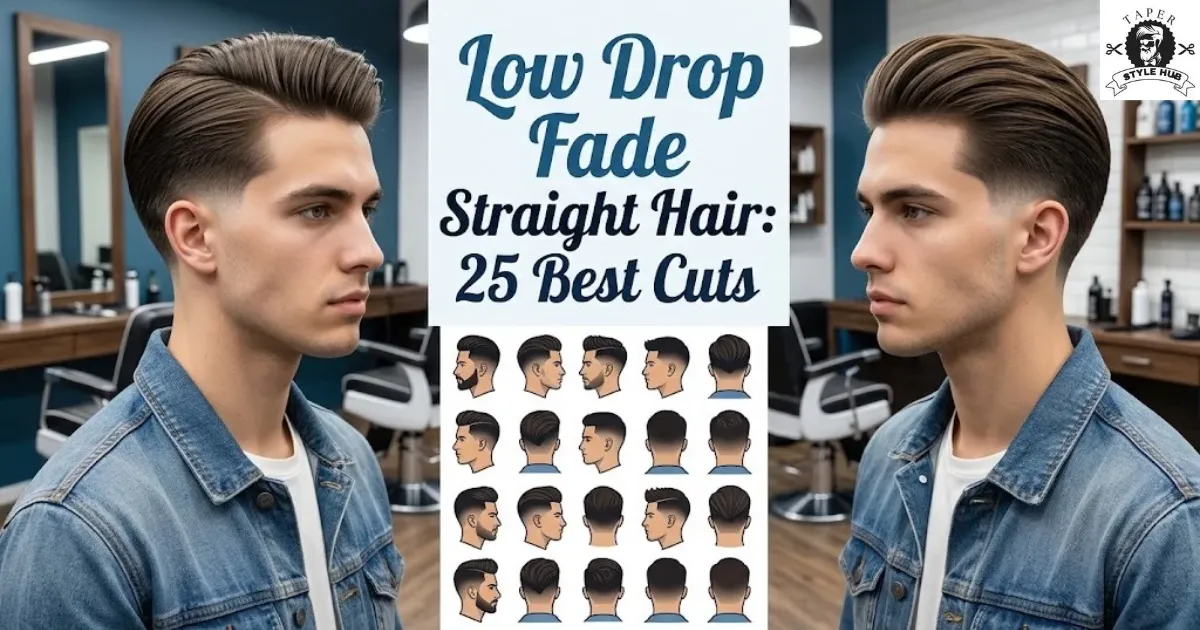
Low Drop Fade Straight Hair: 25 Best Cuts
A low drop fade straight hair cut starts low above the ear and curves down behind it. Straight strands lie flat against that curve, so every blend looks crisp. This guide shows you exactly what to ask for.
Most men walk into a barbershop, say “low fade,” and leave with something different from the photo. Straight hair makes this worse, because there is no curl to hide uneven lines. A clear plan fixes that.
Below you will find 25 styles sorted into five categories, plus guard numbers, a barber script, styling steps and a trim schedule. Read the sections that match your hair, then save a few photos for your next appointment.
👉 Also Read: Burst Fade Curly Hair
Low Drop Fade Straight Hair: The Complete Guide for Men
Think of this guide as a short course in the cut. We start with what the fade is, move into styles and face shapes, and finish with upkeep. Each part builds on the one before it.
👉 Also Read: High Burst Fade
What Is a Low Drop Fade Straight Hair Cut?
A low drop fade straight hair cut shortens the sides gradually, starting just above the ear. Unlike a level fade line, the guideline dips as it travels back. It bottoms out near the occipital bone, the ridge at the lower back of your skull.
The word drop describes the shape of the line, not how short the base is. You can finish the sides at bare skin, light stubble or a guarded length. You and your barber decide that part together.
On top, straight hair stays longer and sits above the blend. That length can be a short crop, a side part or a full slick back. The fade simply frames whatever you choose.
👉 Also Read: Mid Burst Fade
How the Drop Curve Sits Behind the Ear
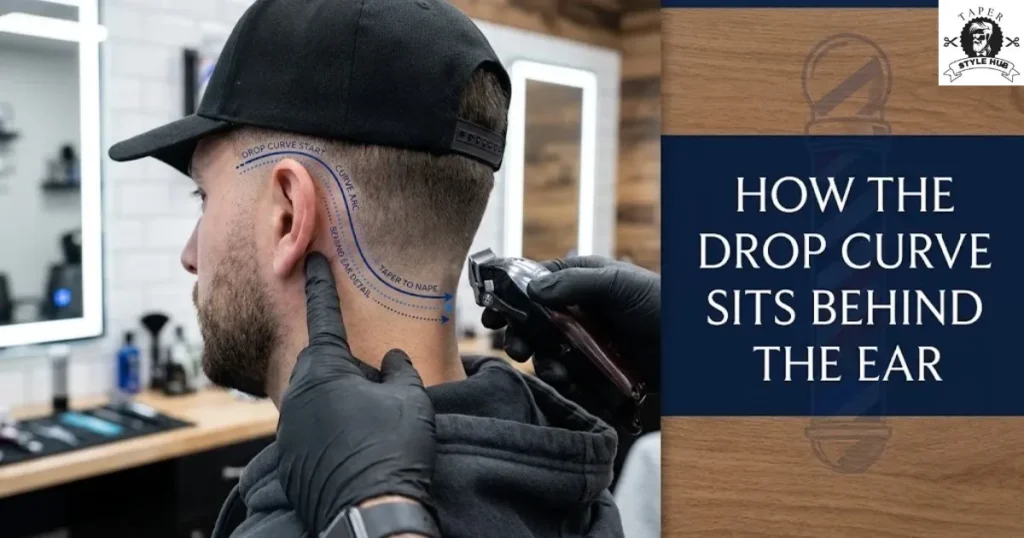
Your skull is not a cylinder. A level fade line cuts across that shape, while a drop follows it. The curve starts near the temple, slides below the ear and settles toward the nape.
A deeper drop exposes more of the lower back of the head. A shallower drop stays close to a standard low fade. Most barbers start shallow, then go deeper once you have seen the result.
Because straight hair has no wave to break the line, the curve is easy to read from behind. That is why a hand mirror matters at the end of the cut.
👉 Also Read: Low Burst Fade
Why Low Drop Fade Straight Hair Works So Well
Straight hair grows in one direction and lies flat. That gives the barber a predictable surface to blend, so the transition from short to long looks smooth instead of patchy.
Parts look sharper too, and slicked styles stay in place. You also spend fewer minutes at the mirror because the hair already cooperates with the cut.
There is one catch. Straight hair can fall flat on top, especially if it is fine. Most of the styles below solve this with texture, extra length or a quick blow-dry.
👉 Also Read: Burst Fade Straight Hair
Low Drop Fade Straight Hair vs Low Taper vs Burst Fade
These three cuts get mixed up all the time. A taper trims mainly around the hairline and nape. A burst fade fans out around the ear. A drop fade curves downward behind it.
| Cut | Defining shape | Back of the head | Overall look |
|---|---|---|---|
| Low drop fade | Line curves down behind the ear | Short, lowest near the occipital bone | Contoured and modern |
| Low taper | Gentle trim at hairline and nape | Mostly full above the neckline | Soft and conservative |
| Burst fade | Rounded arc around the ear | Length kept at the back | Bold and mohawk-like |
Shop vocabulary varies from one barber to the next. When in doubt, bring a photo of the back and side, because pictures remove the guesswork.
👉 Also Read: Burst Fade Design
Low, Mid and High Heights Explained
Height decides how much contrast you get. These heights are relative to your head, not fixed measurements, so pick by how bold you want the sides to look against the top.
| Height | Where it starts | Contrast | Upkeep |
|---|---|---|---|
| Low | Just above the ear | Subtle | Grows out gracefully |
| Mid | Around the temple | Moderate | Average |
| High | At or above the temple | Strong | Shows regrowth fastest |
A low version keeps fullness on the sides and suits office settings. That is why a low drop fade straight hair cut is the safest choice for first timers.
👉 Also Read: Taper Mullet 40 Modern Types For Men
Key Terms Every Client Should Know
A little vocabulary makes the barber conversation much easier. These terms come up constantly, and knowing them helps you describe the exact blend you want.
- Guideline: the first line the barber cuts, which sets the height and curve of the fade.
- Occipital bone: the ridge at the lower back of the skull where a drop usually bottoms out.
- Taper lever: the clipper control that adjusts blade length for soft blending.
- Scissor over comb: a technique for blending longer hair by cutting over a comb.
- Point cutting: snipping into the ends to remove weight and add texture.
- Line up: a crisp outline around the hairline and temples.
- Shadow fade: a soft stubble finish instead of bare skin.
Skin, Shadow and Guarded Bases
The base is the shortest length at the bottom of the fade. It changes the mood of the whole cut, so decide it before anything else.
A skin base goes to bare scalp and gives the sharpest contrast. It looks fantastic on straight hair, but regrowth shows within days. Expect visits every ten to fourteen days.
A shadow base leaves soft stubble and feels more natural. A guarded base, such as a #1 or #2, keeps more hair and grows out the most gracefully. Most office workers do best with one of these two.
25 Types of Low Drop Fade Straight Hair by Category
Instead of reading 25 separate cuts, think in five groups. Each group shares a mood, a top length and a styling effort. Find your group first, then pick the style inside it.
Classic and Professional Low Drop Fade Straight Hair Styles

These five cuts suit offices, interviews and family events. They keep the top neat, the part clear and the product light. If you want a cut nobody questions, start in this group.
“All The Types Shown Below Are Displayed In The Single Image Above☝️”
Classic Low Drop Fade Straight Hair
The top stays at a natural length of two to three inches. The sides drop softly behind the ear. Add a dab of light cream and you are done. It is the easiest way to try the fade.
Best for first timers and anyone who dislikes fuss. Ask for a #1 or #2 base and a natural neckline. A trim every three weeks keeps the curve behind the ear looking deliberate.
Low Drop Fade Straight Hair With Side Part
A side part gives straight hair real structure. Comb it into place on damp hair, then set it with a medium hold pomade. Keep enough length above the ears so the part sits properly.
Part your hair where it naturally falls, usually left or right of center. Forcing a part against the growth pattern leaves gaps by lunchtime. A shaved hard part is optional.
Low Drop Fade Straight Hair With Comb Over
The comb over sweeps a longer top across the head on purpose. It needs a little more length than a side part. A light pomade keeps the sweep tidy through a long workday.
This one suits meetings and weddings alike. Use a wide tooth comb on damp hair, then a touch of pomade. Straight hair holds the sweep well, so heavy gel is unnecessary.
Low Drop Fade Straight Hair With Ivy League Cut
Picture a polished cousin of the crew cut. The top is short but long enough to part, usually around two to three inches. It looks sharp with a suit and needs very little product.
Because the top is shorter than a pompadour, it dries fast and rarely needs a dryer. Ask for the part to be combed to the side and the sides faded neatly behind the ears.
Low Drop Fade Straight Hair With Hard Part
A hard part adds a razor line to one side. On straight hair it looks crisp because no curl blurs the edge. Ask your barber to keep the line clean, then finish with a light pomade.
The line is cut in with a trimmer, usually about a finger width from the temple. Redo it every two weeks, because regrowth blurs that edge faster than any other part of the cut.
Short and Low Maintenance Low Drop Fade Straight Hair Styles

Short tops mean faster mornings. The fade does most of the design work, so blend quality matters more here. Any unevenness shows immediately, which makes a skilled barber important.
“All The Types Shown Below Are Displayed In The Single Image Above☝️”
Low Drop Fade Straight Hair With Buzz Cut
The top stays close to one length, so the fade becomes the main feature. It suits hot weather and busy mornings. Ask which guard the barber will use, since guard sizes vary by brand.
A single guard length on top, often a #2 or #3, keeps things even. Wash the scalp regularly, since a short top shows dryness. Sunscreen helps in summer.
Low Drop Fade Straight Hair With Crew Cut
A crew cut leaves the front slightly longer than the crown. It gives a structured shape with almost no morning effort. The drop curve stays clearly visible, so the neckline needs to be tidy.
Think of it as the grown up version of a buzz cut. The top stays about an inch long at the front. A bit of light paste lifts the front without looking styled.
Short Low Drop Fade Straight Hair
Keep the top between half an inch and an inch. Less contrast between top and sides makes the whole cut look clean and intentional. It also helps fine hair that cannot hold length.
This version grows out neatly, so you can stretch visits a little. Because there is so little hair on top, the fade line becomes the whole story. Keep it crisp and symmetrical.
Low Drop Fade Straight Hair With French Crop
A French crop pairs a short, textured top with a fringe cut straight across. The fade frames it neatly. It works well on straight hair that wants a little shape without daily styling.
Barbers usually cut the fringe straight across, then add texture with scissors. Style it with matte clay pushed forward. It is a smart pick if your forehead is wide or your hairline is high.
Low Drop Fade Straight Hair With Caesar Cut
The Caesar cut is short, with a straight fringe across the forehead. Straight hair lies flat, so it almost styles itself. The short fringe also softens a receding hairline.
Keep the fringe about a finger length so it sits neatly. A drop of light paste is plenty. If your hair is thick, ask for a little thinning so the fringe lies flat.
Textured and Fringe Low Drop Fade Straight Hair Styles

Straight hair can look lifeless when left alone. These styles add movement through point cutting, forward fringes and texture. They suit men who like a relaxed finish rather than a polished one.
“All The Types Shown Below Are Displayed In The Single Image Above☝️”
Low Drop Fade Straight Hair With Textured Crop
Ask for point cutting on top to create uneven ends that prop each other up. Rub a pea-sized amount of matte clay through dry hair. The result stops flat hair from collapsing.
Aim for a top length of roughly one and a quarter to two inches. Fine hair needs enough weight to avoid collapsing. Dry it with your fingers, then break it up with clay.
Low Drop Fade Straight Hair With Textured Fringe
Hair that falls forward naturally works well here. The fade controls the sides while the front stays soft and uneven. A little matte paste stops the fringe from clumping together.
Ask the barber to cut the front at uneven lengths so it looks soft instead of blunt. Fine straight hair benefits most here because the fringe can hide a thin hairline.
Low Drop Fade Straight Hair With Edgar Cut
The Edgar cut uses a blunt, straight fringe with sharply faded sides. Straight hair shows every edge, so the line must be precise. It is a bold look for men who like clean geometry.
The Edgar cut is popular with younger men and often paired with a sharp line up. Keep the fringe about one finger high. A steady, experienced barber makes all the difference.
Messy Low Drop Fade Straight Hair
The top looks relaxed and slightly undone, while the fade keeps it from looking sloppy. Skip the comb. Work some matte clay through with your hands, then leave it alone.
This style forgives bad hair days, which is its biggest advantage. Use a sea salt spray for grip on slippery hair. Ruffle it as it dries and avoid combing afterward.
Low Drop Fade Straight Hair With Middle Part
Straight hair falls evenly on both sides of a middle part. The fade stops the sides looking heavy or overgrown. Keep the length around ear level for a curtain effect and finish with light cream.
The middle part suits oval and square faces best. Dry the hair forward first, then split it down the center. Light cream stops the curtains from separating into flat panels.
Volume and Long Top Low Drop Fade Straight Hair Styles

Longer tops need more care, but they give you room to play. These styles lift, sweep or flow, and the fade keeps the outline tidy. Expect a few extra minutes with a dryer.
“All The Types Shown Below Are Displayed In The Single Image Above☝️”
Low Drop Fade Straight Hair With Quiff
A quiff lifts the front up and back off the forehead. It needs real length at the front. Flat straight hair almost always needs a blow-dry to hold the height.
Dry the front upward at low heat, lifting the roots against their natural fall. Set the shape with a small amount of pomade. Skip the quiff if you do not want a daily routine.
Low Drop Fade Straight Hair With Pompadour
The pompadour pushes volume forward and upward. That gives the face definition and makes the cut feel bold. It needs thicker straight hair, since fine strands struggle to hold height.
Plan on four inches or more at the front, and tell your barber you want volume. Blow-dry upward, then lock it in with firm pomade. The faded sides make the height look even bigger.
Low Drop Fade Straight Hair With Slick Back
Straight hair already wants to move backward, so a slick back feels natural. Blow-dry the top back first, then smooth in a light pomade. Medium to thick hair works best.
Comb the top straight back with no part, working from the front to the crown. Medium hold pomade gives sheen without stiffness. The drop curve then shows cleanly behind the ears.
Low Drop Fade Straight Hair With Blowout
A blowout is a favorite for flat hair. Spray sea salt on damp strands, then dry them upward with your fingers or a brush. The fade keeps the sides neat while the top gains body.
The blowout works best on hair that is two to four inches long. Lift the roots with a round brush. Finish with a light spray, and avoid heavy products that weigh the volume down.
Long Low Drop Fade Straight Hair
Longer hair on top with faded sides creates a strong, modern contrast. It suits men who like length but want a tidy outline. Blow-drying backward adds body when hair sits flat.
Expect five inches or more on top. Ask the barber to add light layers so the length does not look stringy. A little styling cream keeps flyaways under control.
Bold and Personalized Low Drop Fade Straight Hair Styles

Some men want more than a neat cut. These styles add a long back, a sharp undercut, a beard blend or a design. They need a confident barber and regular maintenance.
“All The Types Shown Below Are Displayed In The Single Image Above☝️”
Low Drop Fade Straight Hair With Mullet
The sides stay short and faded while the back keeps length. Straight hair can look stringy at the back without layers, so ask for light layering. A texture spray keeps the shape loose.
Choose a mullet length that reaches the collar. The fade behind the ear creates a clean separation from the longer back. Trim the back every six weeks to keep the shape modern.
Low Drop Fade Straight Hair With Undercut
An undercut separates the longer top from the sides with a clear contrast. The fade softens that edge just enough. It looks sharp with a slicked or swept top.
Your barber will usually disconnect the top from the sides. Keep the top long enough to sweep. Because the contrast is strong, regrowth shows quickly, so plan on short gaps between visits.
Low Drop Fade Straight Hair With Beard
The fade can blend smoothly into a beard, creating one continuous gradient. Ask your barber to match the sideburn height to the beard line. It looks rugged yet polished.
Keep the beard trimmed to match the sides, with a clean neckline below the jaw. Moisturize the beard daily. A sharp blend between the sideburn and the fade finishes the look.
Blonde Low Drop Fade Straight Hair
Lighter hair reduces the visible contrast between skin and strands, which hides tiny blend errors. It also shows product buildup less. A purple shampoo helps prevent brassiness.
Bleached strands can dry out, so use conditioner and avoid very hot tools. Light hair looks great with a soft skin finish. Book a toner session every few weeks.
Low Drop Fade Straight Hair With Design
A thin line or pattern can be etched into the faded section. Keep it subtle if you need a professional look. Always ask to see the design drawn on paper first.
Keep the design to a single thin line or a small pattern at first. It fades as hair regrows, so expect to refresh it every ten days. Skip it for strict dress code settings.
Matching Low Drop Fade Straight Hair to Your Hair Type
Thickness and density change the result as much as the cut itself. The word straight describes strand shape only. Fine and thick hair behave very differently under clippers.
| Hair type | Best picks | Smart tip |
|---|---|---|
| Fine | Textured crop, fringe, side part | Use light products, since heavy ones flatten fine hair fast |
| Thick | Slick back, pompadour, messy top | The fade removes bulk from the sides |
| Flat | Blowout, textured crop | Blow-dry against the natural fall for lift |
| Coarse | Crew cut, buzz cut | Take the fade high enough to clear the widest part of the head |
The right low drop fade straight hair style for fine strands is rarely the right one for coarse strands, so match the cut to your hair first.
Fine and Low Density Straight Hair
Fine hair tends to cling to the head. Keep a compact crop with enough length to hold its shape, and ask the barber not to strip out too much bulk. Judge scalp visibility with dry hair.
Thick and Coarse Straight Hair
Thick strands stand away from the scalp at the sides and crown. A drop fade removes most of that problem hair. Point cutting on top reduces weight without leaving short, spiky roots.
Choosing Low Drop Fade Straight Hair by Face Shape
Face shape fine-tunes which style looks best. Use this as a starting point and let your barber adjust it to your head.
| Face shape | Styles that work | Why |
|---|---|---|
| Oval | Almost anything | Balanced proportions suit most cuts |
| Round | Pompadour, textured crop, blowout | Height on top elongates the face |
| Square | Side part, slick back, Ivy League | Clean lines echo a strong jaw |
| Long | Fringe, middle part, Caesar cut | Softer, wider styles avoid adding height |
Your hairline matters too. If the corners are receding, choose a short textured fringe or a Caesar cut. Ask for a clean fade at the temples so the hairline looks tidy.
Special Cases: Cowlicks and Dense South Asian Hair

These situations need a little extra planning. A good barber will check them before the clippers come out.
“All The Types Shown Below Are Displayed In The Single Image Above☝️”
Nape Cowlicks
A cowlick is a spot where hair grows in a spiral. The lowest point of a drop fade often lands right where nape cowlicks sit. Ask the barber to check growth direction before setting the guideline.
Dense South Asian Hair
Many men have dark, thick, straight hair that sticks out at the sides. The fade removes that bulk. Ask for scissor-over-comb blending around the ears, and choose light cream, because heavy oils show as shine.
How to Talk to Your Barber About Low Drop Fade Straight Hair
Walking in and saying “drop fade” leaves too much open to interpretation. Give your barber five clear details before the clippers come out.
- Fade height: low, mid or high.
- Drop depth: how far the curve descends behind the ear.
- Shortest length: bare skin, stubble or a guarded base.
- Top shape: length in inches, plus the part or fringe.
- Finish: matte or polished, with a natural or squared-off neckline.
Here is a sample script you can adapt: “I’d like a low drop fade with a #1 base, dropping lower behind the ears. Leave two to three inches on top and keep the neckline natural.”
| Guard number | Approximate length left |
|---|---|
| #1 | 1/8 inch (3 mm) |
| #2 | 1/4 inch (6 mm) |
| #3 | 3/8 inch (10 mm) |
| #4 | 1/2 inch (13 mm) |
Guard sizes vary between clipper brands, so ask your barber to confirm lengths in millimetres or inches. Bring front, side and rear photos so everyone pictures the same cut.
How a Barber Builds the Drop Shape
Barbers order these steps differently, so treat this as a guide to what good work looks like.
- Consultation: height, drop depth and base length are agreed before cutting.
- Guideline: the line starts near the temple and slopes lower behind the ear.
- Blending: the barber steps through longer guards and softens each line with the taper lever.
- Connecting the top: the faded sides meet the longer hair without a hard ridge.
- Inspection: from the side, the fade should read as one smooth curve with no ledge.
Ask to see the back in a hand mirror before you leave. The curve behind the ear is hard to check on your own head, so book a professional instead of attempting it at home.
Tools Barbers Use for the Curve
Great results start with decent equipment. You do not need to buy any of it, but it helps to know what your barber is holding.
- Adjustable clippers for the main blend.
- Trimmers for outlines and the neckline.
- A foil shaver for a true skin finish.
- A fade comb to guide the clipper.
- Shears for shaping the top.
- A hand mirror to show you the back.
A barber who checks the curve with a mirror and a comb is usually careful. That attention is exactly what a drop fade needs.
Styling Low Drop Fade Straight Hair at Home
Only the hair above the fade needs styling, and the routine takes about five minutes.
- Start damp: pat the hair with a towel instead of rubbing it.
- Prep flat hair: spray a little sea salt for grip.
- Blow-dry: dry against the natural fall for lift, then set your direction.
- Add product: warm a pea-sized amount between your palms and work it from mid-length outward.
- Finish: use a comb for sleek looks or your fingers for texture.
Matte clay gives a natural finish, while light pomade adds control and shine. Skip thick waxes, because straight hair shows grease quickly. Rinse product out regularly so buildup does not blur your fade lines.
Best Products for Straight Hair
Straight hair shows grease quickly, so product choice matters more than quantity. Start small, then add more only if the hair refuses to cooperate.
| Product | Finish | Best for |
|---|---|---|
| Matte clay | Natural, no shine | Textured crops and messy styles |
| Light pomade | Soft shine | Side parts and slick backs |
| Sea salt spray | Grip and texture | Flat or fine hair |
| Styling cream | Soft and flexible | Long tops and middle parts |
| Matte paste | Light and workable | Fringes and French crops |
Wash product out a few times a week. Buildup dulls the fade lines and weighs the hair down, which defeats the whole point of a clean cut.
Seasonal and Lifestyle Choices
Summer favors shorter tops and lighter products, because sweat and humidity flatten straight hair quickly. A buzz cut or short crop keeps you cool and the fade stays visible.
In winter you can run longer on top and add a little cream for flexibility. Hats can flatten volume, so a fringe or textured crop recovers better than a quiff.
If you train often, choose a style that survives sweat and a towel. Gym regulars usually prefer a short crop or buzz cut. Wedding guests can step up to a comb over or slick back.
Work and School Dress Codes
Most workplaces accept a subtle fade without any trouble. A low version with a natural neckline is the safest bet. Skip designs and extreme contrast if your dress code is strict.
Schools vary more, so check the handbook before booking. Many allow fades as long as the top is neat and the sides are not shaved to bare skin. A guarded base usually passes.
Low Drop Fade Straight Hair for Boys and Teens
Younger clients love this cut because it looks sharp and needs little daily work. Ask for a guarded base rather than skin, and a top length that fits school rules. Parents will appreciate the easy upkeep.
Teenagers with fine straight hair often like a textured fringe or a short quiff. Keep products minimal and teach them to wash it out. A trim every three weeks is realistic.
Mistakes That Ruin Low Drop Fade Straight Hair
Most problems with low drop fade straight hair come down to a few repeat habits. Avoid these and your cut will look better for longer.
- Using too much product, which makes straight hair look heavy and flat.
- Letting the barber take the fade too high, so it stops being a low cut.
- Choosing heavy wax, which leaves straight hair looking greasy.
- Skipping the blow-dry, so air-dried hair lies lifeless.
- Asking vaguely for “just a fade,” which can mean five different cuts.
- Stretching the gap between trims until the blend loses its shape.
How Often to Trim Low Drop Fade Straight Hair
Hair grows roughly half an inch a month, so the blend softens within a few weeks. Your schedule depends on the base length and how fast your hair grows.
| Cut | Sharpest for | Book your next trim |
|---|---|---|
| Low drop fade, guarded base | 2 to 3 weeks | Every 3 to 4 weeks |
| Low drop fade, short top | 2 weeks | Every 2 to 3 weeks |
| Low drop fade, skin finish | About 10 days | Every 2 weeks |
Between visits, moisturize the faded skin near the nape, because collars and pillows can irritate it. Let your scalp set your shampoo schedule, and rebook once the neckline turns fuzzy.
Growing Out a Drop Fade Gracefully
Eventually you may want to grow the sides out. Do not stop visiting the barber entirely, because the shape will turn untidy before it turns long.
Ask for light shape ups every four to six weeks. The barber can keep the neckline and the area around the ears clean while the sides catch up with the top.
Expect an awkward phase around week eight. A little cream helps the sides lie flat. By week twelve, a classic taper or a longer cut usually takes over naturally.
Scalp Care Between Haircuts
A sharp fade needs a healthy scalp underneath. Straight hair tends to look oily faster, so wash it when it feels heavy rather than on a fixed schedule.
Use a gentle shampoo and rinse thoroughly. Moisturize the faded areas near the nape, since collars and pillowcases can irritate freshly cut skin.
Pat your hair dry rather than rubbing it. Rough towel drying makes the edges look fuzzy. If you notice persistent flaking or thinning, see a dermatologist.
Avoid scratching the freshly cut skin, and skip hot showers on the first day after the cut.
Cost and Booking Tips
Prices vary by city and shop, and skilled fade work often costs more than a basic cut. It is worth paying for a barber who does clean blends.
Book morning appointments when the barber is fresh, and schedule your next visit before you leave. Weekends fill up fast, so reserve early if you have an event.
Check reviews and portfolio photos for fade work specifically. Look at the back and side shots, since those show how well the drop curve was handled.
Final Thoughts on Low Drop Fade Straight Hair
A well planned low drop fade straight hair cut gives you a clean edge without much daily work. The formula stays simple: a tight blend, a top length you can style and light product.
Start with the classic or a side part if you are unsure. Bring photos, name your guard numbers and book your next trim before you leave the chair.
Remember that every head is different. A low drop fade straight hair cut works best when the barber adapts the curve to your skull, the top to your hair type and the routine to your lifestyle.
FAQs About Low Drop Fade Straight Hair
Is a low drop fade good for straight hair?
Yes. Straight hair lies flat against the curve, so the blend looks clean and natural. Pair it with texture if your hair falls flat on top.
What is the easiest style to maintain?
A buzz cut with a drop fade needs the least styling and grows out evenly. A classic cut with a natural top comes second.
Can thin straight hair pull off this fade?
Yes. A textured crop, soft fringe or side part adds the look of volume. Keep products light so they do not weigh hair down.
What works best for the office?
A side part, slick back or Ivy League cut. All three look professional without feeling boring.
How often do you need a trim?
Every two to three weeks keeps the curve sharp. A skin finish may need a visit every two weeks.

I’m M Ahmad Ansari, founder and content creator at Taper Style Hub. With 3+ years of experience researching taper haircuts, hairstyles, grooming, and men’s style, I create practical, accurate, and easy-to-understand content. My goal is to provide readers with trustworthy information, useful tips, and inspiring ideas for choosing and styling the perfect taper haircut.


4 Comments