
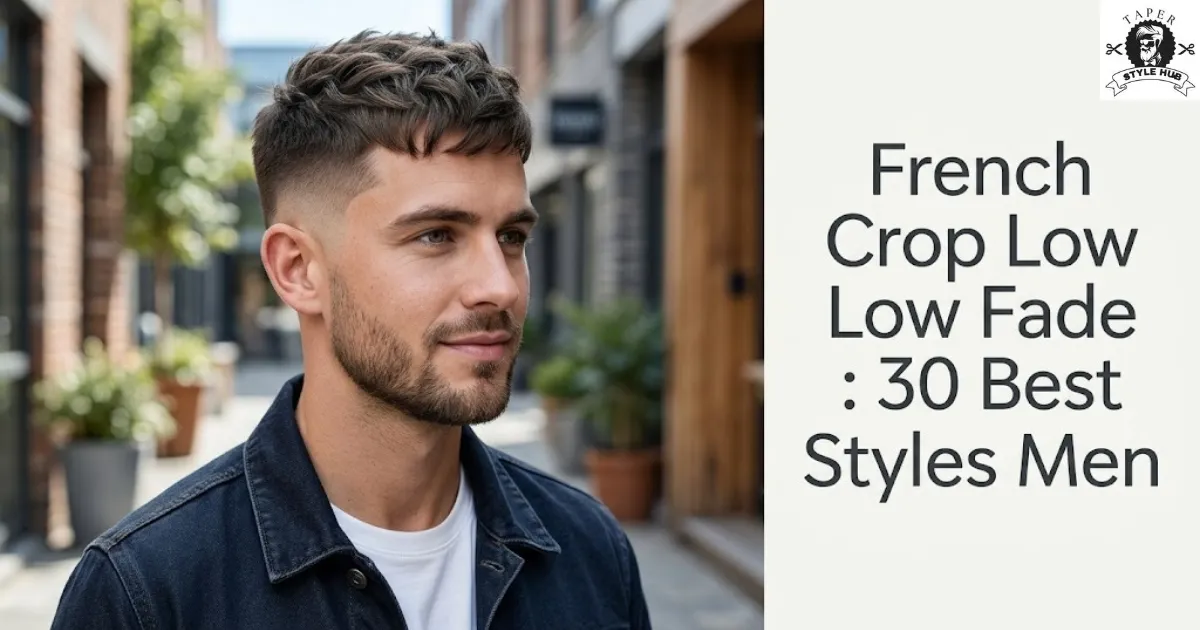
French Crop Low Fade: 30 Best Styles Men
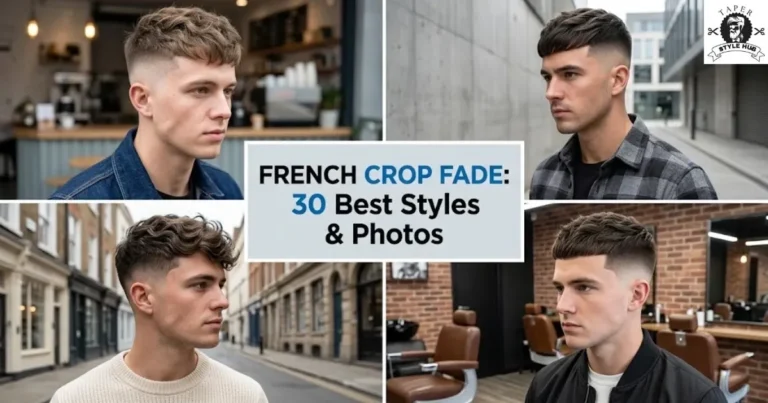
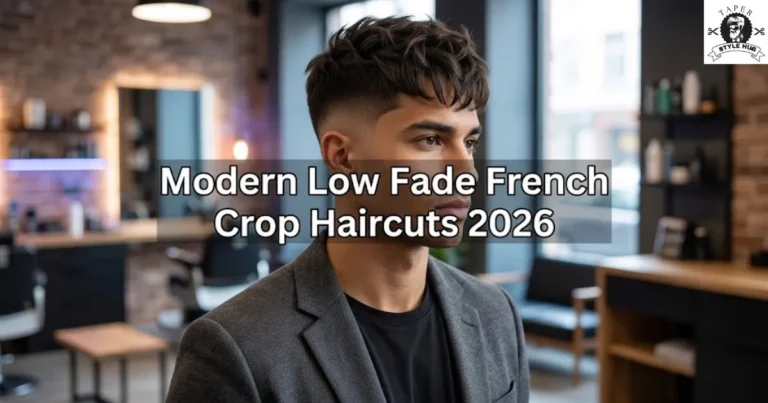
A French crop low fade pairs a short textured top and forward fringe with sides that blend down low around the ears. It looks clean at work, relaxed on weekends, and takes about five minutes to style.
This guide explains what the cut is, how it differs from a low taper, and how to get it right. You will find 30 styles sorted into clear categories, barber scripts, styling steps, and maintenance habits.
👉 Also Read: French Crop Fade
Everything Men Should Know About the French Crop Low Fade
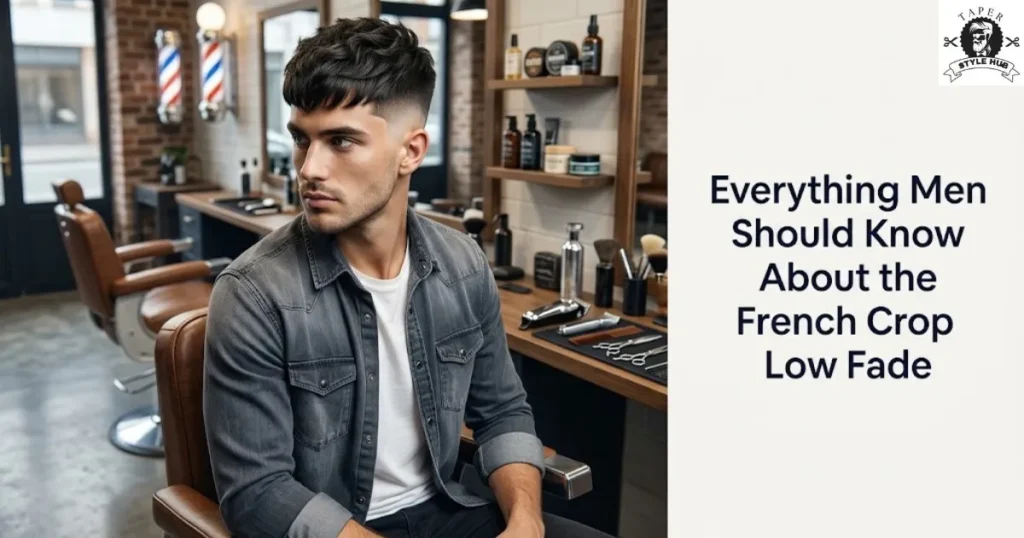
What Is a French Crop Low Fade?
A French crop is a short men’s haircut with a textured top and a fringe brushed forward across the forehead. The sides and back stay short, which gives the shape a tidy, structured outline.
A low fade controls the sides. The hair starts very short near the ears and neckline, then blends upward into longer hair without climbing high on the head.
Put the two together and you get a French crop low fade, a balanced cut with texture on top and clean, soft edges below. It suits offices, classrooms, gyms, and nights out equally well.
Barbers like it because it is simple to execute and easy to customize. Clients like it because it needs little product and grows out without turning shapeless.
These are the main features that define the cut:
- Short sides and back with a low blend
- Textured top that is easy to shape
- Forward fringe that sits above the eyebrows
- Clean neckline and tidy sideburns
- Flexible finish, from neat to deliberately messy
👉 Also Read: Drop Fade
French Crop Low Fade vs French Crop Low Taper
Many men mix up a low fade and a low taper. They look close, but they finish differently around the ears and neckline.
A taper shortens the hair gradually and usually leaves visible length at the edges. A fade goes much shorter, often down to the skin, and creates stronger contrast with the top.
| Feature | Low Fade | Low Taper |
|---|---|---|
| Shortest length | Skin or very short | Short but not skin |
| Overall look | Sharper and bolder | Softer and more natural |
| Grow-out | Loses shape sooner | Grows out more neatly |
| Best for | Modern, defined style | Office and everyday wear |
| Upkeep | Every 2 to 3 weeks | Every 3 to 5 weeks |
Choose a fade for a crisp finish and frequent visits. Choose a taper for a softer outline that ages well between trims. Many barbers blend both into a French crop low fade that feels sharp but never harsh.
👉 Also Read: Low Drop Fade
Why the French Crop Low Fade Is So Popular
The first reason is simplicity. A small amount of product and a few minutes with your fingers are enough to get the shape you want.
The second reason is flexibility. The cut works on straight, wavy, curly, thick, and fine hair, and the fringe length can change to suit your face.
The third reason is versatility. You can wear it with a suit, a hoodie, or a gym vest, and it still looks intentional. Here is a quick summary of why men keep asking for it:
- Low daily effort and quick styling
- Clean, fresh look in every setting
- Works on most hair types
- Helps soften a receding hairline
- Grows out better than a high fade
- Pairs well with a beard
👉 Also Read: Mid Drop Fade
Which Face Shapes and Hair Types Suit a French Crop Low Fade?
Almost every face shape can wear this cut, but small tweaks to the fringe and top make a big difference. Your barber can adjust length and texture to balance your features.
| Face or Hair Type | Best Adjustment |
|---|---|
| Round face | Keep height on top and tight sides |
| Square face | Use a softer, textured fringe |
| Long face | Keep the fringe forward and slightly longer |
| Oval face | Almost any version works |
| Thick hair | Ask for thinning to remove bulk |
| Fine hair | Use light layers and volume spray |
| Curly hair | Keep the top slightly longer to show curls |
Keep your own hair density in mind too. A cut that looks perfect on a friend may need a different texture on you, so ask your barber to adapt it.
👉 Also Read: Low Drop Fade Straight Hair
Fade and Taper Terms to Know Before Your Visit
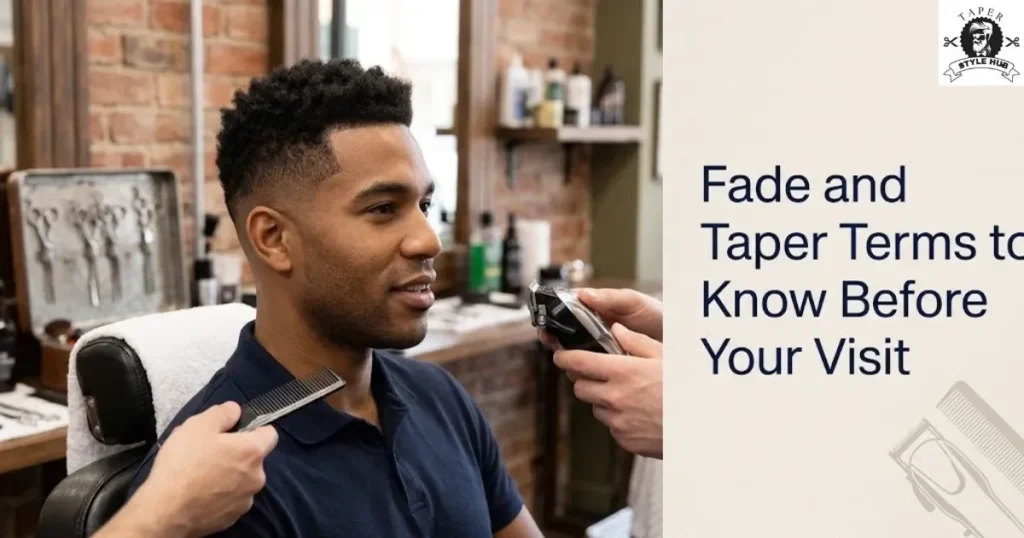
A few barbershop terms make the conversation easier. Knowing them helps you ask for exactly the blend you have in mind.
- Taper: hair shortens gradually toward the neckline without necessarily reaching skin
- Fade: hair blends from longer to very short, often down to skin
- Guard: the clipper attachment that sets the cut length
- Blend: the smooth transition between two different lengths
- Line up: a sharp edge cut along the hairline and temples
- Point cutting: snipping into the ends of the hair to add texture
- Fringe: the front section of hair that falls toward the forehead
Use two or three of these words, then show a photo. That combination removes almost all guesswork.
👉 Also Read: Burst Fade Curly Hair
Fade Height Guide for the French Crop
Fade height changes how bold the crop looks. A low blend stays near the ears, while higher versions climb toward the temples and crown.
| Fade Height | Starts Near | Overall Look |
|---|---|---|
| Low | Just above the ear | Subtle and professional |
| Mid | Around the temple | Balanced contrast |
| High | Near the crown | Bold and dramatic |
| Skin | Bare skin at the base | Sharp and high contrast |
Most men who want a modern but office-friendly result choose the low option. Mid and high versions suit those who want the crop to make a stronger statement.
If you are unsure, start low. You can always ask for a higher blend at your next visit, but you cannot add length back.
👉 Also Read: High Burst Fade
30 Best French Crop Low Fade Styles for Men
Below are 30 styles grouped into six categories. Each category covers a different decision, from fringe shape to hair type, so you can compare options without feeling overwhelmed.
Pick one idea, save a photo, and take it to your barber. Small details such as fringe length and fade start point matter more than the name of the style.
Classic and Textured French Crop Low Fade Styles

These five styles change the top section. They are the easiest place to start if you are new to the cut.
“All The Types Shown Below Are Displayed In The Single Image Above☝️”
Classic French Crop Low Fade
The original version has a short textured top, a blunt fringe, and a clean low blend around the ears. It looks polished without trying hard and works for almost every man.
Best for straight to slightly wavy hair. Rub a pea-sized amount of matte clay between your palms and brush the fringe forward with your fingers.
Textured French Crop Low Fade
Choppy layers add movement and stop the top from looking flat. The sides stay tidy, so the texture reads as relaxed instead of messy.
Best for fine to medium hair. Work a little sea salt spray through damp hair, then finish with clay for definition and grip.
Messy French Crop Low Fade
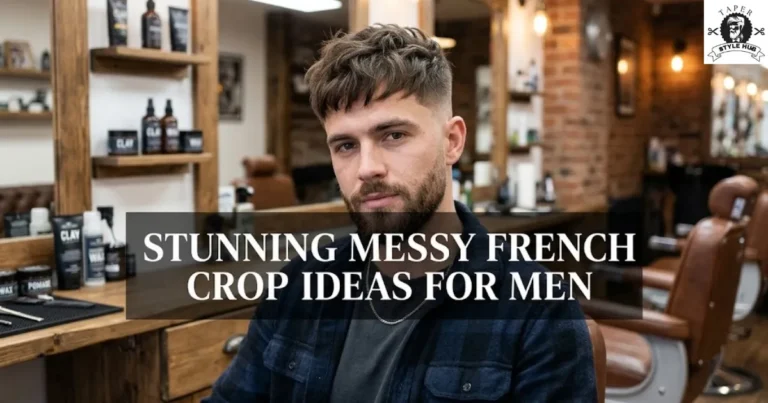
The top is left deliberately uneven, with the fringe falling in different directions. The low blend keeps the sides clean, so the whole cut still looks intentional.
Best for thick or wavy hair. Rub light paste between your palms and scrunch the top instead of combing it into shape.
Short French Crop Low Fade
Keep the top around one inch and let the fringe barely clear the forehead. It dries fast, needs almost no product, and suits gym lovers and busy schedules.
Best for fine or straight hair. A light cream is plenty, or you can skip product and let it air dry.
Long French Crop Low Fade
Leave extra length on top so the fringe reaches the eyebrows. You get more styling options while the low blend keeps the sides compact and clean.
Best for medium to thick hair. Book trims every three to four weeks so the extra length never overwhelms the shape.
Fringe-Focused French Crop Low Fade Styles
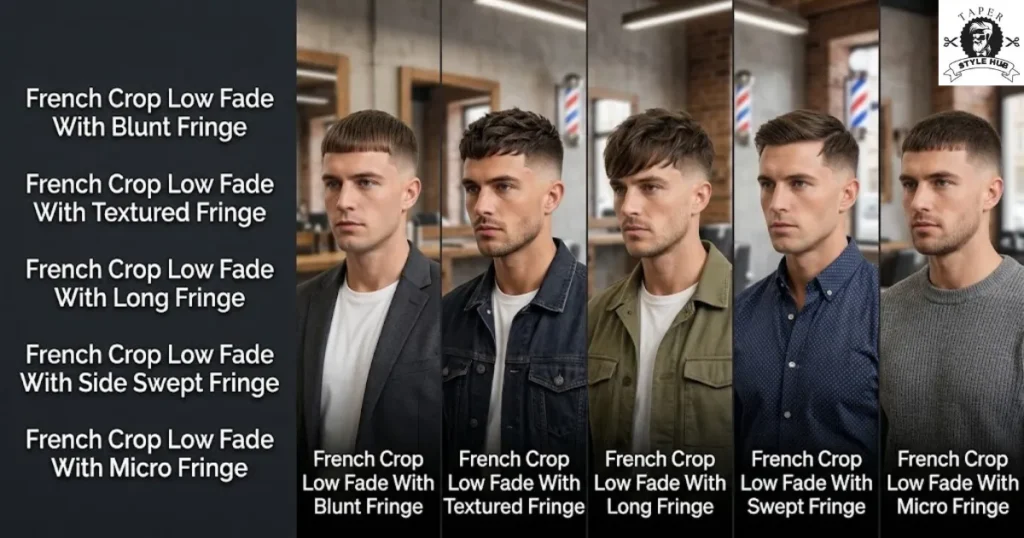
The fringe defines this haircut, so small changes here transform the whole look. These five options show how far you can push it.
“All The Types Shown Below Are Displayed In The Single Image Above☝️”
French Crop Low Fade With Blunt Fringe
A straight horizontal line across the forehead creates a bold, structured shape. It works best on straight, thick hair with a strong hairline.
Best for sharp, formal looks. Use a small amount of light pomade to keep the line crisp all day.
French Crop Low Fade With Textured Fringe
Uneven, broken ends give the front a softer and more casual edge. It looks natural on fine to medium hair and adds depth without stiffness.
Best for relaxed everyday wear. Texture powder at the roots adds lift without making the hair sticky.
French Crop Low Fade With Long Fringe
Let the front sit around two to three inches so it falls over the forehead. This gives a looser, younger feel while the sides stay short and neat.
Best for straight or wavy hair. Blow dry the fringe forward first, then shape it with a little cream.
French Crop Low Fade With Side Swept Fringe
Turn the fringe slightly to one side to soften the straight line. It suits men who find a strict forward fringe too severe for their face.
Best for oval and square faces. A blow dryer and light cream will hold the sweep without stiffness.
French Crop Low Fade With Micro Fringe
A very short fringe sits high on the forehead for an edgy, minimal look. It works especially well on thick, straight hair that stands up on its own.
Best for confident, low-effort styling. Ask your barber to cut it slightly uneven so it looks natural.
French Crop Low Fade Styles by Hair Type
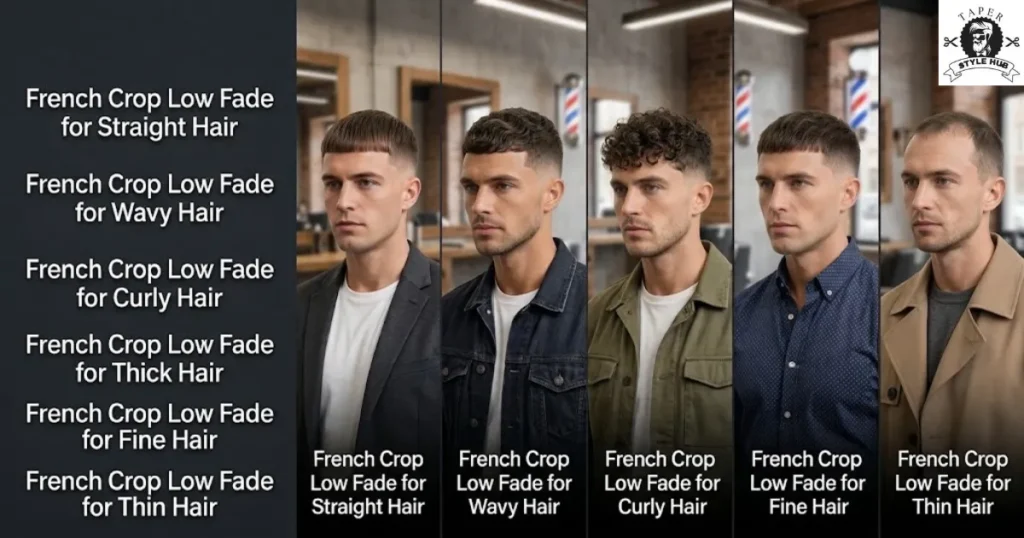
Hair texture changes how the crop behaves, so these six styles adapt the cut to your natural pattern instead of fighting it.
“All The Types Shown Below Are Displayed In The Single Image Above☝️”
French Crop Low Fade for Straight Hair
Straight strands show the crisp fringe line clearly and give the cut its cleanest silhouette. Ask for light texturizing on top so the hair does not fall flat.
A little matte clay adds the lift and grip that straight hair usually lacks. Work it in from the roots and finish by pushing the fringe forward.
French Crop Low Fade for Wavy Hair
Natural waves add built-in body and movement. The fringe bends softly instead of sitting rigid, and the low blend keeps everything neat around the ears.
Sea salt spray defines the pattern without weighing it down, so skip heavy gel. Scrunch it in lightly and let the waves dry in their natural direction.
French Crop Low Fade for Curly Hair
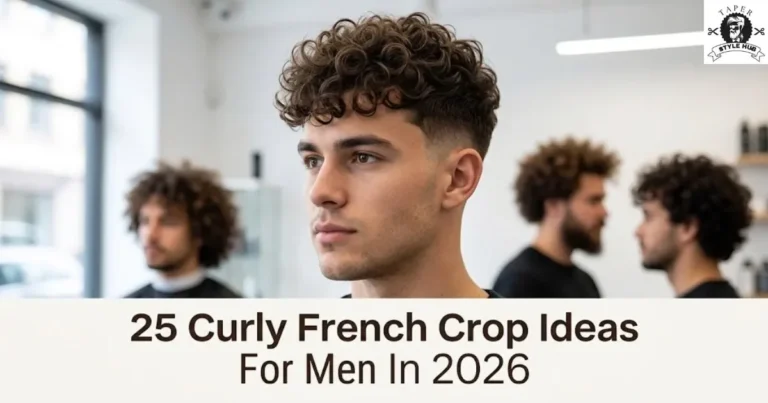
Curls bring volume and personality to the top. Keep the length around two to three inches so the curl pattern forms properly and the fringe stays full.
Apply curl cream to damp hair, then air dry or diffuse on low heat. Skip the comb and use your fingers.
French Crop Low Fade for Thick Hair
Thick hair can feel heavy, so ask for thinning or point cutting to remove weight. The fringe stays intact while the sides stay slim and tidy.
A firm pomade or wax helps hold the shape all day without puffing out. Warm it in your palms first so it spreads evenly through dense hair.
French Crop Low Fade for Fine Hair
Fine hair looks better with shorter length and light layers. Too much length makes strands look flat and stringy, while a low blend makes the top look thicker.
Volume powder or sea salt spray adds grip without the weight of heavy paste. Apply it at the roots, then lift the hair with your fingertips.
French Crop Low Fade for Thin Hair
Thin or low-density hair benefits from strategic layering and a forward fringe. The short top creates the appearance of fuller coverage and hides gaps.
Choose matte products, since shine can highlight thin areas. Use only a small amount and style the fringe forward with dry fingers.
French Crop Low Fade Styles for Face Shape and Hairline

Face shape and hairline deserve attention before you sit in the chair. These four styles solve the most common concerns.
“All The Types Shown Below Are Displayed In The Single Image Above☝️”
French Crop Low Fade for Round Faces
Keep extra height on top and tight sides to make the face look longer. A slightly longer, upward fringe works better than a flat one.
Avoid heavy width at the sides and ask for a textured top. This keeps the overall shape tall and balanced from every angle.
French Crop Low Fade for Square Faces
Strong jawlines pair well with a softer, textured fringe. The low blend keeps the sides clean without adding more hard angles to the face.
Skip very blunt fringe lines if your face is already very angular. A broken, textured edge keeps the look balanced and modern.
French Crop Low Fade for Receding Hairline
A short, textured fringe brushed forward covers the front and shifts attention to the sides. It is one of the most natural ways to soften a receding hairline.
Use matte products only, because shine highlights thinning areas. Keep the fringe short enough to stay light and textured.
French Crop Low Fade for a Big Forehead
The forward fringe shortens the visual height of a big forehead. Keep it slightly longer and textured so it falls naturally instead of looking cut off.
Ask your barber to leave a little extra length at the front. That small change keeps the fringe soft and the forehead balanced.
French Crop Low Fade Styles With Fade and Taper Twists

The fade itself can change shape, height, and finish. These five options keep the low blend while adding a distinct detail.
“All The Types Shown Below Are Displayed In The Single Image Above☝️”
French Crop Low Fade With Skin Fade
The sides drop all the way to bare skin near the bottom. You get high contrast with the textured top while the fade itself still stays low.
Best for sharp, modern looks. Plan a visit every two to three weeks because skin fades lose shape fast.
French Crop Low Fade With Low Taper
A taper keeps a little length at the edges, so the transition looks softer. It is the safest choice for offices and everyday wear.
Best for classic looks. It grows out neatly and can last up to five weeks between trims.
French Crop Low Fade With Burst Fade
A burst fade curves around the ear and leaves more length at the back. It adds a rounder, softer shape and suits men who like a hint of mullet.
Ask for a low burst to keep the look neat and balanced. A high burst can look too dramatic with a short crop on top.
French Crop Low Fade With Drop Fade
A drop fade dips behind the ear, following the curve of your head. It adds detail from the side and back without changing the front much.
Show a reference photo so your barber copies the arc correctly. The curve is hard to describe, and a picture removes the guesswork.
French Crop Low Fade With Shadow Fade
A shadow fade leaves a faint layer of stubble instead of bare skin. The blend looks smoky and soft, and it hides regrowth for longer.
It is a good middle ground between a taper and a skin fade. You keep softness near the top of the blend and sharpness near the bottom.
French Crop Low Fade Styles With Details and Color
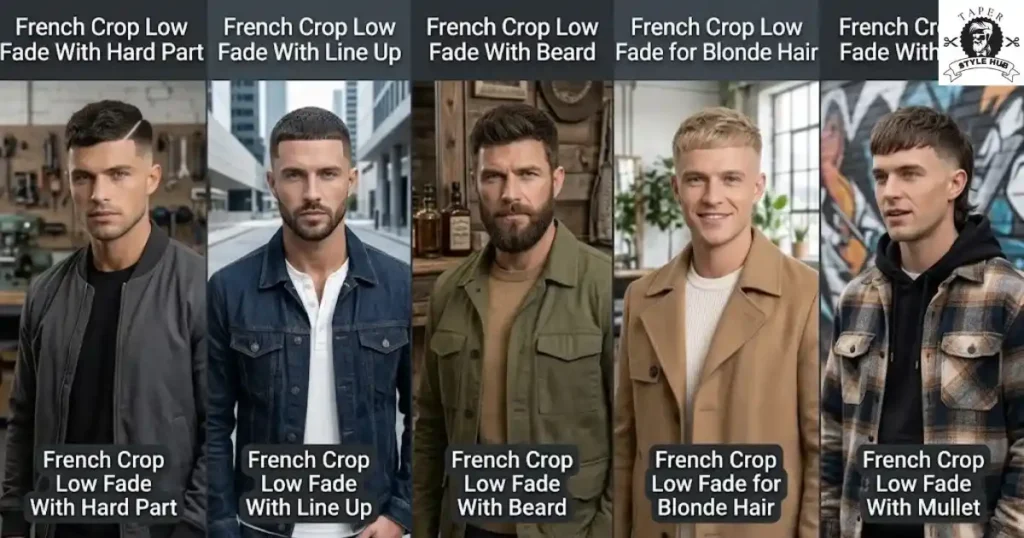
Small details turn a good haircut into your haircut. These five ideas add edge, contrast, or personality.
“All The Types Shown Below Are Displayed In The Single Image Above☝️”
French Crop Low Fade With Hard Part
A shaved line on one side separates the fringe from the fade. It adds a sharp, classic edge without needing a full design.
Refresh the line at every visit so it stays crisp and symmetrical. Ask which side the part sits on before the clippers come out.
French Crop Low Fade With Line Up
A crisp edge along the forehead and temples frames the face. It makes the cut look freshly done even a week after your appointment.
Ask for a natural line instead of a harsh one, and touch it up every two to three weeks.
French Crop Low Fade With Beard
A tidy beard and this cut make a sharp, grown-up pair. Ask your barber to match the beard fade with the taper on the sides for a seamless blend.
Trim the beard weekly and use a little oil to keep it soft. A clean cheek line helps the beard and the fade look connected.
French Crop Low Fade for Blonde Hair
Lighter strands catch the light and make the texture pop. Bleached or natural blonde both look fresh when paired with a clean low blend.
Use purple shampoo to keep brassy tones away and condition often. Bleach dries strands out, so a weekly deep conditioner helps.
French Crop Low Fade With Mullet
Short tapered sides and a cropped top meet a little extra length at the back. It is bold, trendy, and best for men who enjoy standing out.
Keep the back light and tidy to avoid a shaggy finish. Regular trims keep the contrast between the cropped top and the back.
Wearing the Crop at Different Ages
Teenagers like the cut because it feels current and needs almost no effort. A short top with a soft taper also keeps school grooming rules easy to meet.
Men in their twenties and thirties often push the texture and fringe further. A line up or a hard part adds personality without changing the base shape.
Men over forty tend to prefer a softer blend and a slightly longer fringe. That combination covers thinning areas and keeps the look professional.
Whatever your age, the same rule applies. Pick the version that fits your hair, your routine, and the setting where you spend most of your time.
How to Choose the Right Style for You
Thirty options can feel like a lot. Three simple questions will narrow the list quickly.
- What is your hair type? Start with the hair type category and ignore the rest.
- How much time do you have each morning? Short and textured styles need the least effort.
- How often will you visit the barber? Skin fades need more visits than tapers.
Then match one fringe style and one detail, such as a line up or beard blend. That gives you a clear request that any barber can follow.
Quick Cheat Sheet for Choosing a Style
Use this short list when you want an answer fast. Each line points you to the category that fits your main goal.
- Want the lowest effort: short styles from the classic category
- Want more movement: textured and messy versions
- Want a bolder look: skin fade, burst fade, or hard part
- Want to cover a receding hairline: textured fringe styles
- Want a softer finish: low taper blends
- Want something unique: mullet, blonde, or side swept variations
You can also mix two ideas, such as a textured fringe with a low taper. Barbers do this all the time, so do not be afraid to combine details.
How to Ask Your Barber for a French Crop Low Fade
A clear request prevents surprises. Barbers are not mind readers, so describe the top, the fringe, and the fade start point in plain words.
Discuss Fringe and Top Texture
Say whether you want the fringe blunt, soft, or choppy. Ask for point cutting if you want a natural look, or thinning if your hair is thick.
Show a Photo of Your Desired Style
Words only go so far. A photo shows fringe length, texture, and fade height instantly, which saves both of you time.
Specify the Length of the Top and Fade
Give numbers instead of vague words like short. Mention inches or guard sizes so your barber has a clear target to cut toward.
| Part of the Cut | What to Say |
|---|---|
| Top length | One to three inches, textured |
| Fringe | Just above the eyebrows, blunt or choppy |
| Fade start | About one inch above the ear |
| Shortest guard | Zero for skin, one or two for a softer blend |
| Finish | Clean line up if you want sharper edges |
Mention your hair type and any cowlick too. A good barber will adjust the cut around your natural growth pattern.
How to Style a French Crop Low Fade at Home
Styling takes less than five minutes once the cut is right. Follow these steps for a clean, textured finish.
- Start with clean, towel-dried hair that is slightly damp.
- Spray a little sea salt spray through the roots for grip.
- Blow dry the fringe forward using your fingers or a vent brush.
- Warm a pea-sized amount of clay or paste between your palms.
- Work it through from back to front and shape the fringe.
- Finish with a light hairspray if the weather is windy or humid.
Choose Products by Hair Type
Match the product to your hair instead of copying what looked good in a photo. Start with less than you think you need.
- Fine hair: sea salt spray and light clay
- Thick hair: firm pomade or wax
- Curly hair: curl cream or leave-in conditioner
- Wavy hair: light matte paste
- Straight hair: matte clay for lift
Create a Relaxed Messy Look
On lazy mornings, rough dry the hair and tousle it with a little paste. The low blend keeps the mess looking intentional.
Styling Tools That Make Daily Styling Easier
You do not need a bathroom full of gadgets. A few simple tools are enough to shape the fringe and add texture.
- Blow dryer: sets the fringe direction and adds light volume
- Vent brush: helps lift the roots while drying
- Wide-tooth comb: smooths product through the top without pulling
- Diffuser: keeps curls defined while drying on low heat
- Small trimmer: tidies the neckline between barber visits
Keep the settings gentle. Medium heat and a little product are usually all this haircut needs to look sharp.
How to Maintain a French Crop Low Fade Between Visits
A sharp cut loses its shape within a few weeks, so a simple routine matters more than expensive products.
- Visit your barber every three to four weeks
- Wash two to three times a week to protect natural oils
- Trim the neckline between visits with a clean trimmer
- Avoid heavy product every day to prevent buildup
- Use heat protection if you blow dry often
- Book the next appointment before leaving the chair
Fades grow out faster than tapers, so expect to book more often if you choose skin contrast.
Hair Care Habits That Keep the Crop Looking Healthy
A good cut needs healthy hair underneath. Short styles show dryness and buildup faster than longer ones, so small habits matter.
- Use a gentle shampoo that suits your scalp type
- Add conditioner to the lengths, not the scalp
- Use a clarifying shampoo once a week to remove buildup
- Moisturize curly and coily hair to prevent dryness
- Apply heat protectant before blow drying
Rinse out product fully before bed. Leftover clay can weigh down the fringe and dull your natural texture by the next morning.
What to Expect as the Cut Grows Out
Knowing how the cut ages helps you plan trims and avoid a messy phase.
- Week one: sharp edges and a clean blend
- Week two: the fade starts to soften
- Week three: the blend looks fuzzy and the fringe feels heavier
- Week four: time for a trim to restore the shape
A taper will look acceptable a little longer, while a skin fade shows regrowth quickly.
Signs Your Haircut Needs a Refresh
Most men wait too long between visits. These signs tell you it is time to book before the cut loses its shape.
- The fade looks fuzzy or blurred around the ears
- The fringe touches your eyebrows or falls into your eyes
- The neckline looks uneven or shaggy
- Your usual product no longer holds the shape
- Friends or coworkers say you look different
A quick tidy-up between full cuts can help too. Many barbers are happy to clean the neckline and sideburns when you ask.
Common Mistakes to Avoid With a French Crop Low Fade
Even a great haircut can go wrong. Most mistakes are easy to fix once you know what to watch for.
- Going too short on top so the fringe has no room to work
- Using too much product and making hair look greasy
- Skipping trims until the fade blurs
- Ignoring hair type when choosing styling products
- Choosing a fade height that does not suit your face
- Walking in without photos or clear instructions
Face shape deserves attention too. A square, blunt fringe can look severe on a very angular face, so a softer texture is often safer.
Who Should Try the French Crop Low Fade?
This cut fits a wide range of men. Students, professionals, athletes, and busy parents can all wear it without changing their routine.
- Straight hair: shows the crisp fringe shape
- Wavy hair: adds natural movement
- Curly hair: keeps curls tidy and defined
- Thin hair: adds coverage and visual density
- Busy schedule: needs very little styling time
- Office job: looks clean and professional
It may not suit you if you dislike regular trims or want very long hair. Otherwise, it is hard to go wrong.
Wearing This Cut at Work, the Gym, and Events
One reason this haircut lasts is that it adapts to every setting. A few small styling changes make it fit almost any day.
For the Office
Brush the fringe forward, use matte clay, and keep the line up clean. The low blend looks professional without being plain.
For the Gym
Go shorter on top and skip heavy products. Sweat will not ruin the shape because the cut holds itself.
For Weddings and Events
Add a crisp line up and a touch of pomade for control. A fresh trim a few days before keeps the edges sharp.
French Crop vs Caesar Cut vs Crew Cut
These short styles get confused often. The French crop usually has more length and texture on top with a distinct forward fringe.
A Caesar cut is shorter and more uniform with a very short horizontal fringe. A crew cut grows gradually longer toward the front and rarely has the same fringe.
If you want structure with a bit of movement, the crop is the better middle ground.
Why This Haircut Fits Modern Barbering
Modern barbering leans toward natural texture, softer blends, and less product. This haircut follows all three trends without feeling forced.
Barbers also like it because the pattern is repeatable. Clients get consistent results, and small tweaks keep it personal.
Social media helps too. The cut photographs well from every angle, so reference photos are easy to find and share.
Seasonal Care for Your Crop
Weather changes how the haircut behaves, so a small seasonal adjustment keeps it looking sharp all year.
Hot and Humid Weather
Humidity can add frizz and flatten texture. Use a lightweight cream or sea salt spray and avoid heavy pomades that melt and look greasy by midday.
Cold and Dry Weather
Dry air and hats can cause static and flatten the fringe. Add a little moisture, carry a small comb, and restyle with your fingers after taking a hat off.
Whatever the season, keep a travel-size product in your bag for quick fixes during the day. A touch of cream is usually enough.
How to Find a Barber Who Can Nail This Cut
Fades are a skill, and not every shop blends equally well. A little research saves you from a patchy result.
- Check recent photos of fades and crops on their page
- Read reviews that mention blending and consistency
- Ask a few quick questions before sitting down
- Notice whether they listen and repeat your request back
A good barber asks about your routine and hair type before picking up clippers. That conversation is usually a green flag.
Common Myths About the French Crop
Myth: It Only Works on Straight Hair
Wavy and curly textures often look even better because the crop shows off natural body. The key is leaving enough length on top for the pattern to form.
Myth: It Needs Lots of Product
Most versions need only a pea-sized amount of clay or paste. Heavy product usually makes the fringe look flat and greasy.
Myth: It Only Suits Young Men
The cut adapts through fringe length and blend height. Many older men wear it because it keeps the look neat and softens thinning areas.
Why Staying With One Barber Helps
A barber who knows your hair can reproduce the cut each time. They remember your fade start point, fringe length, and preferred texture.
That consistency saves you from repeating instructions and reduces the risk of a surprise result. If you switch shops, bring your old photos along.
Final Thoughts on the French Crop Low Fade
This cut earns its popularity honestly. It is sharp without trying too hard, flexible enough for almost any hair type, and simple enough to style without a cabinet full of products.
Whether you go classic, textured, or messy, the crop adapts to you instead of the other way around. Choose a category, test one detail, and adjust at each visit until the cut feels like yours.
Pick one of the 30 styles above, bring a clear photo, and use specific language with your barber. Add regular trims and a light product routine, and the cut will keep working for you every day.
Ready to try it? Save your favorite idea, book that appointment, and enjoy a haircut that looks good all month.
French Crop Low Fade FAQs
How long should my hair be for a French crop?
The top should be about one to three inches, with the front long enough to brush forward over the forehead.
Is the French crop good for thin hair?
Yes. The short textured top and forward fringe add coverage and make thinning areas less noticeable.
How often should I trim this cut?
Every three to four weeks keeps the fade clean and the fringe at the right length.
What products work best for a French crop?
Matte clay, texture paste, and sea salt spray give texture without making hair look greasy.
Can curly hair wear a French crop?
Yes. Keep the top two to three inches long and use curl cream to define the pattern.

I’m M Ahmad Ansari, founder and content creator at Taper Style Hub. With 3+ years of experience researching taper haircuts, hairstyles, grooming, and men’s style, I create practical, accurate, and easy-to-understand content. My goal is to provide readers with trustworthy information, useful tips, and inspiring ideas for choosing and styling the perfect taper haircut.

5 Comments