

Low Taper Fade Boys: 25 Best Kids’ Styles
Choosing a haircut for a child sounds simple until school rules, hair texture, age and morning routines all join the conversation. That is exactly why low taper fade boys haircuts have become one of the most requested cuts in barbershops this year.
The low taper fade boys cut keeps the shortest hair close to the ears, sideburns and neckline, while the top stays long enough to style however your son likes. It looks tidy without looking dramatic, so parents trust it and boys happily wear it.
This guide explains what the haircut is, how it differs from other fades, and 25 styles grouped by category. You will also find advice on hair type, face shape, school rules, barber scripts, home care and costs.
👉 Also Read: Low Taper Fade Buzz Cut
What Is a Low Taper Fade Boys Haircut?
A low taper fade boys haircut shortens the hair gradually around the lower sides, the area behind the ears and the neckline, while leaving much more length above. The blend is soft, so you never see a hard line between short and long hair.
The word low describes where the blend begins. Instead of climbing toward the temples, the transition stays just above the ears and follows the natural hairline at the back of the neck. That placement keeps the look clean, natural and age appropriate.
Because the sides stay fuller than they do in a high fade, the low taper fade boys cut grows out gracefully. Small unevenness is easy for a barber to correct at the next visit, which makes the style forgiving for busy families.
👉 Also Read: Taper Fade Black Male
Low Taper Fade Boys Cheat Sheet
Short on time? These four points cover everything a parent needs before walking into the barbershop.
- The blend starts low, just above the ears and along the neckline.
- The top is the part that changes the whole look.
- It clears most dress codes without shaved designs or skin-tight fades.
- Say the word low clearly, bring a photo and book a trim every few weeks.
👉 Also Read: Low Taper Buzz Cut
How a Barber Creates a Low Taper Fade Boys Cut
Most barbers follow a predictable sequence, although the exact guard numbers depend on density, texture and the contrast you want. Knowing the steps helps you describe what you expect.
- Set the length on top first, so the rest of the cut is built around it.
- Clean up the ears, sideburns and the back of the neck.
- Start the transition low, just above the ears.
- Blend the shorter hair upward with progressively longer guards or a clipper-over-comb technique.
- Check both sides for symmetry in the mirror.
- Finish the neckline and style the top.
A skilled barber also adjusts the blend to the shape of your son’s head, which is why two boys never leave with an identical result.
👉 Also Read: Low Taper Fade Black Men
Taper vs Fade: What Is the Difference?
A taper shortens hair gradually and usually leaves visible length even at the shortest point. A fade goes further, often reaching the skin, and the change between lengths is so smooth that it almost disappears.
A low taper fade sits between the two. It has the softness of a taper and the clean blend of a fade, so you get tidy edges without a shaved look. Many barbers use both words interchangeably, so a reference photo always helps.
👉 Also Read: Low Taper Mullet
Low Taper vs Low Fade: Is There a Difference?

Many parents search for both terms and wonder whether they mean the same thing. In practice they overlap heavily, because both start the blend low around the ears.
A low taper usually leaves a little more length at the bottom, while a low fade can run closer to the skin. Ask for a low taper fade boys style and say the shortest area should stay visible.
👉 Also Read: Blonde Low Taper Fade
Does the Fade Have to Reach the Skin?
No. You can request a shadow taper or a softer finish if you do not want the shortest area to look shaved. That wording protects your son from an accidental skin fade.
👉 Also Read: Low Taper Fade Fluffy Hair
Low Taper vs Mid Fade vs High Fade
The main difference is the height of the transition. A lower blend leaves more visual weight on the sides and creates a calmer overall shape.
| Feature | Low Taper Fade | Mid Fade | High Fade |
|---|---|---|---|
| Blend starts | Above the ears and neckline | Around temple height | At or above the temples |
| Contrast | Soft and subtle | Moderate | Strong and bold |
| Best for | School and younger boys | Boys wanting more edge | Style-focused teens |
| Regrowth | Slowest to show | Moderate | Fastest to show |
| Trim every | 3 to 4 weeks | 2 to 3 weeks | 2 weeks |
For most boys, especially those under a dress code, the low taper fade boys version is the safer starting point. You can always go higher next time, but you cannot glue length back on.
👉 Also Read: Low Taper Buzz
Why Low Taper Fade Boys Cuts Are So Popular in 2026
Several practical reasons explain why barbers keep hearing this request from parents and kids alike.
It Works With Almost Any Top
Curls, a fringe, a side part or a simple crop all sit comfortably above a low blend. The fade acts as a clean base, so the top can change with the season, the occasion or your son’s mood.
The Viral Meme Effect
The name itself got a boost from a viral 2024 internet meme that spread across TikTok. Social media made the phrase famous, but the haircut existed long before the trend.
Why Parents Love It
Parents like the tidy ears and neckline, the low upkeep and the flexibility. A low taper fade boys style looks polished without morning styling, and it grows out naturally instead of looking messy overnight.
Benefits of Low Taper Fade Boys Haircuts
Beyond looks, the cut solves several everyday problems for families. These are the benefits barbers mention most often.
- Tidy ears and neckline all week long.
- Enough length on top for styling or a natural finish.
- Works with straight, wavy, curly and coily hair.
- Softer than a high fade, so it feels age appropriate.
- Easy to correct, because the blend is gradual and low.
Low Taper Fade Boys vs Other Popular Kids Haircuts
Comparing options helps you decide whether this cut fits your child’s routine and your family’s expectations.
| Haircut | Overall Look | Maintenance | School Friendliness |
|---|---|---|---|
| Low taper fade | Soft and tidy | Low | Excellent |
| Classic scissor cut | Natural and traditional | Low to moderate | Excellent |
| Mid fade | Sharper contrast | Moderate | Depends on the school |
| High fade | Bold and dramatic | High | Check the policy first |
25 Low Taper Fade Boys Styles Grouped by Category

The sides stay almost identical in every version, so the top sets the personality. We grouped the 25 styles into five categories, so you can jump straight to the one that matches your son’s hair and routine.
Short and Low-Maintenance Styles

These low taper fade boys cuts suit active boys, hot weather and mornings with no time to spare. Each one needs little more than a comb.
“All The Types Shown Below Are Displayed In The Single Image Above☝️”
1. Buzz Cut Top
The top is clipped short and even, then blended into a soft low taper. It takes almost no effort and works well for sports. Ask for a gentle transition if the school is conservative.
2. Crew Cut
Slightly longer on top than on the sides, with a neat taper around the ears. It is a dependable choice for younger boys and rarely looks out of place anywhere.
3. Short Textured Crop
Choppy layers on top give natural movement without any real styling. A pinch of matte paste is enough. It flatters straight, wavy and thick hair equally well.
4. French Crop
A short, blunt fringe sits forward on the forehead above tidy tapered sides. It looks sharp, softens a high hairline and needs no daily combing.
5. Caesar Cut
Short, even hair is brushed forward into a straight fringe. Paired with a low taper, it creates a clean, classic outline that suits fine and straight hair.
Classic and Polished Styles
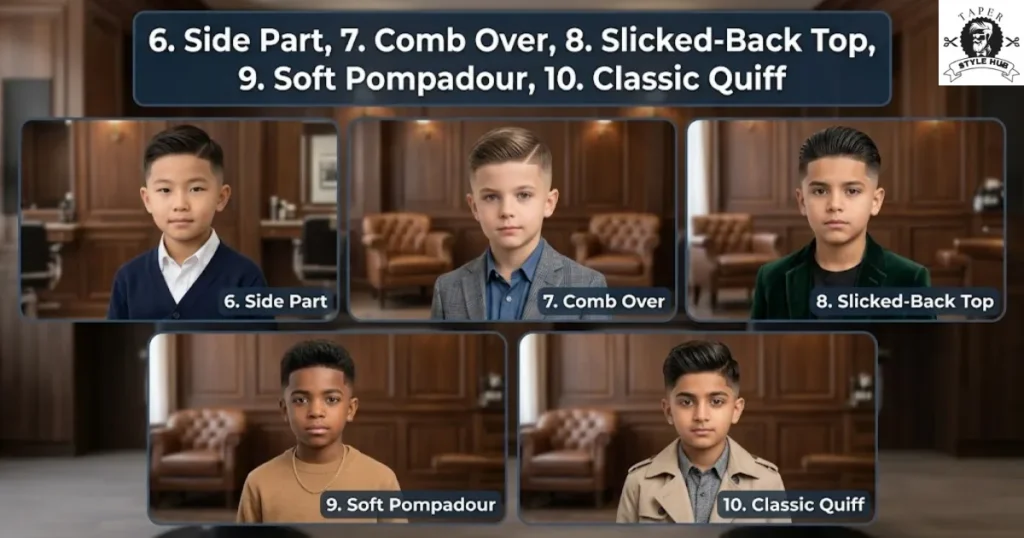
Choose these low taper fade boys styles for school photos, weddings and family events. They look smart, yet they relax into everyday wear after a quick wash.
“All The Types Shown Below Are Displayed In The Single Image Above☝️”
6. Side Part
A natural parting on one side with the hair combed across. Skip a harsh shaved part line if the school has strict rules. A light cream keeps everything in place.
7. Comb Over
Softer than a side part, the top is brushed to one side without a sharp line. It is a timeless look that suits boys from early school age through the teens.
8. Slicked-Back Top
Medium-length hair is brushed back with a light, water-based product. It works best on boys with enough density and gives a mature yet age-appropriate finish.
9. Soft Pompadour
Longer hair is lifted gently at the front and swept back. Keep it shorter and softer for younger boys. It suits older children who genuinely enjoy styling their hair.
10. Classic Quiff
A forward lift at the front with neat sides below. It adds height for rounder faces and looks polished with only a small amount of paste.
Textured and Messy Styles
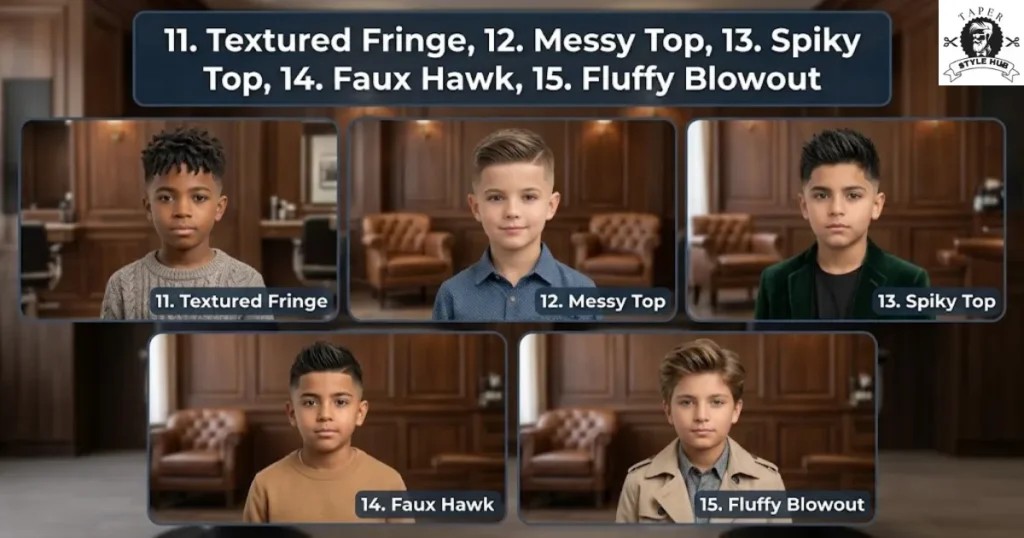
These relaxed low taper fade boys looks seem effortless because the clean sides frame the mess on top. They are especially popular with tweens and teens.
“All The Types Shown Below Are Displayed In The Single Image Above☝️”
11. Textured Fringe
A choppy fringe falls over the forehead while the low taper keeps the sides tight. Blow-dry it forward and finish with clay for a matte, touchable look.
12. Messy Top
Slightly longer hair is styled loosely with the fingers. It reads as intentional rather than untidy because the sides are clean. Perfect for weekends and relaxed schools.
13. Spiky Top
A playful option for younger boys. A small amount of paste or gel creates soft separation, so avoid making every strand stiff and shiny.
14. Faux Hawk
Hair in the centre is lifted forward or upward while the sides stay moderate. It adds personality without an extreme shaved contrast, though you should check school rules first.
15. Fluffy Blowout
Long, airy hair on top is dried upward for volume while the sides taper low. It suits fine hair that needs body and is hugely popular with teens.
Curly, Wavy and Afro-Textured Styles

Texture needs length, so these low taper fade boys cuts protect the curl pattern on top while the taper keeps the edges clean. Never judge the length while curls are wet, because they shrink as they dry.
“All The Types Shown Below Are Displayed In The Single Image Above☝️”
16. Curly Top
Natural curls stay full while the sides are tapered low. It is low effort and high impact, and it needs only a light curl cream.
17. Curly Fringe
Curls are cut to fall forward in a soft, rounded fringe. It frames the face nicely and works well for round and oval faces.
18. Wavy Flow
Medium-length waves are left natural and lightly textured with sea salt spray. The taper removes bulk around the ears, so the waves do not puff outward.
19. Afro Top
A rounded Afro keeps its full shape above a neat taper. The barber should account for shrinkage, density and growth direction. Moisture matters more than heavy product.
20. 360 Waves
Brushed wave patterns cover the top while a low taper keeps the edges tidy. This look needs consistent brushing and moisture, not just a good haircut.
21. Broccoli Cut
A full, rounded, textured top sits above a clean taper around the sides. It is popular with boys who have thick or curly hair and want a trend-led shape.
Trend-Led Styles for Older Boys
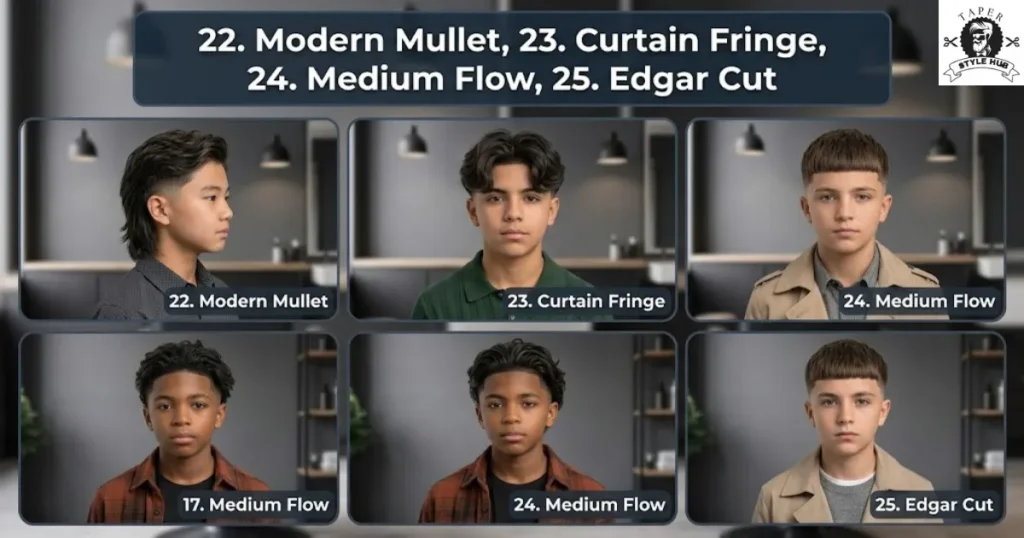
Teens often want more control over the final look. Because these low taper fade boys styles are bolder, check the school grooming policy before booking the appointment.
“All The Types Shown Below Are Displayed In The Single Image Above☝️”
22. Modern Mullet
Shorter at the front and sides, with extra length kept at the back. For children, keep the length difference subtle. It is trendy, but not every school allows it.
23. Curtain Fringe
A centre part lets the hair fall to each side like curtains. The low taper keeps the sides crisp, and the style suits straight or wavy hair.
24. Medium Flow
Longer hair on top is swept back or to the side, with a low taper underneath. It grows out well, giving teens room to experiment between trims.
25. Edgar Cut
A blunt, textured fringe sits above a crisp low taper around the ears. It is bold and structured, so confirm the school allows it before the appointment.
Not sure where to start? Pick the category that matches your son’s hair, then choose the top that needs the least daily effort. You can always move toward bolder options as his confidence grows.
Best Low Taper Fade Boys Style by Hair Type
A low taper fade boys cut barely changes between hair types. What changes is how much length you leave on top and which products you reach for each morning.
| Hair Type | Top Length | Best Products | Styling Tip |
|---|---|---|---|
| Straight | Short to medium | Light styling cream, matte pomade | Comb through slightly damp hair |
| Wavy | Medium, left natural | Texturizing cream, sea salt spray | Scrunch gently and air dry |
| Curly | Medium to full | Lightweight curl cream, leave-in conditioner | Separate curls with your fingers |
| Thick | Medium, lightly thinned | Medium-hold cream, light wax | Ask the barber to remove bulk |
| Fine | Slightly longer | Volumizing spray, mousse | Avoid cutting the top too short |
| Afro-textured | Medium to full | Moisturizing leave-in, scalp oil | Moisturize between haircuts |
For younger boys, keep the routine simple. A towel dry, a pea-sized amount of product and a light comb are usually all a finished look needs.
Straight and Fine Hair
Straight hair shows every line, so the blend needs to be clean and even. Fine hair benefits from extra length on top, which looks fuller without heavy products.
Wavy and Thick Hair
Wavy hair keeps its movement when the top stays slightly longer. Thick hair loses bulk at the sides, so the shape stays neat and the top becomes easier to manage.
Curly Hair
Curls need length at the crown, otherwise they lose shape and spring. Ask the barber to taper the sides but protect the curls above.
Low Taper Fade Boys Cuts for Afro-Textured Hair
Black boys and kids with coily hair look fantastic with a low taper, provided the barber understands texture. A few details make the difference between a good result and a great one.
Why Texture Matters
Tightly coiled hair shrinks, so the length you see wet is not the length you get dry. Tell the barber about density, curl pattern and growth direction before any cutting starts.
Soft Edges for Younger Kids
A very sharp edge-up can look severe on a small child. Ask for a natural hairline and a gentle taper, then sharpen the lines later as he grows older.
Keeping Coils Moisturized
Moisture and gentle detangling matter more than forcing the hair into an unfamiliar shape. A leave-in conditioner and a little scalp oil keep short sides comfortable and healthy.
Best Low Taper Fade by Age Group
Age should guide the contrast of a low taper fade boys haircut, the amount of styling and how long your child can comfortably sit in the chair.
| Age | Suggested Approach | Maintenance |
|---|---|---|
| Under 2 | Simple trim or very soft taper | Low |
| 2 to 5 | Soft taper with a natural top | Low |
| 5 to 7 | Textured or short styles | Low to moderate |
| 8 to 12 | Wide range of school-friendly tops | Moderate |
| 13 to 17 | Personalized, trend-led styles | Moderate to high |
Toddlers and Babies
A baby does not need a fade just because it is fashionable. For toddlers, ask for a very soft taper, shorter sessions and a barber who is patient with fidgeting.
Early School Age
Boys between five and eight can handle more variety. A textured crop, a short side part or a crew cut keeps mornings quick and school rules happy.
Older Kids and Teens
From about nine upward, boys want a say in the result. Let your son pick the top style, then confirm that the finished cut fits school requirements.
How a Low Taper Fade Boys Cut Looks From Every Angle
Checking the haircut from three directions helps you spot problems before leaving the chair.
- Front: a neat hairline and an even fringe or part.
- Side: a soft blend that begins just above the ear.
- Back: a natural, clean neckline with no hard step.
Which Face Shape Suits Low Taper Fade Boys?
Face shape is a guideline, not a rule. Small changes on top make a real difference to the overall balance.
- Round: add height or texture on top to lengthen the face.
- Oval: almost every top style works, so choose what he likes.
- Square: a softer comb over or medium textured top balances strong features.
- Long: avoid too much height and try a fringe or side part.
- Heart-shaped: a textured fringe softens a wider forehead.
A good barber also studies the hair growth pattern and head shape, then adjusts as the cut progresses.
Is a Low Taper Fade Boys Haircut School-Friendly?
In most cases yes, because the low taper fade boys blend looks neat and natural. Schools usually worry about bold elements such as shaved designs, bright colours or extreme contrast.
- Keep the transition low, near the ears and neckline.
- Skip shaved lines, patterns and logos.
- Choose a soft blend instead of a skin-tight fade.
- Keep the top at a manageable length.
- Use matte products rather than wet or spiky finishes.
Rules vary by district, so read the student handbook before booking. Never rely only on what another parent says their school allows.
How to Tell the Barber What You Want
Clear instructions prevent most low taper fade boys haircut disappointments. Combine the haircut name with details about placement, length and finish.
Try saying: “A low taper fade starting just above the ears, medium length on top with some texture, kept natural with no harsh lines.”
It also helps to ask a few questions before the clippers start:
- How short will the shortest area be?
- Will the taper reach the skin?
- How much length will remain on top?
- Will this style suit his natural texture?
- How soon should we return for a trim?
Bring a photo of the low taper fade boys style you like whenever possible. It will not be copied exactly, but it shows length, blend and mood better than words.
Barber Scripts for Common Situations
Borrow whichever line fits your son and adjust the details to match his hair.
- Conservative school: keep the taper low and soft, with enough length on top for school rules.
- Curly hair: keep the curls natural and taper only around the ears and neckline.
- Toddler: keep it very soft and comfortable, with no skin fade and no designs.
- Teen: blend the taper smoothly and leave the top long enough for a crop or fringe.
What Not to Say at the Barbershop
Vague instructions such as just make it look cool or do whatever you want invite surprises. Instead, point to a photo and name the length, placement and finish you expect.
Low Taper Fade Boys Haircut Checklist Before You Book
A few minutes of preparation saves a lot of stress later. Run through this list before you reserve the chair.
- Read the school handbook for hair rules.
- Save two or three reference photos.
- Decide how much length should stay on top.
- Choose a barber who cuts children often.
- Confirm the price and the appointment length.
- Avoid nap time and bedtime.
When a Low Taper Fade Boys Cut May Not Suit
No haircut suits every child. If your son strongly dislikes clippers, begin with scissor work and a longer taper. Boys with very sparse hair may prefer a slightly longer top.
If your child has scalp irritation, ask a doctor or pharmacist before trying new products.
Preparing Your Child for the First Fade
A calm child gets a better low taper fade boys haircut. A few small steps make the first visit far easier for everyone.
Simple Tips for Nervous Kids
Choose a quiet time of day, away from nap or bedtime. Let your child watch the barber for a minute and touch the clippers so the sound feels less strange.
When Clippers Feel Overwhelming
Some children dislike buzzing sounds or neck brushes. Tell the barber beforehand, ask for scissor work first and request short breaks. Never force a distressing haircut just to follow a trend.
Best Styling Products for Kids
Most low taper fade boys looks need very little product. Too much weighs the hair down and can irritate a young scalp.
- Light styling cream: soft hold for wavy and curly hair.
- Matte paste or clay: texture for crops and spiky tops.
- Water-based pomade: neat finish that washes out easily.
- Curl cream or leave-in: moisture for curly and coily hair.
- Scalp-friendly moisturizer: relief for dry winter skin.
Choose gentle formulas made for children, and wash everything out at bath time.
How to Style a Low Taper Fade Boys Look in Four Steps
Styling takes about two minutes once you know the routine. Follow these steps on slightly damp hair.
- Prep: towel dry the hair and add a little sea salt spray or light cream.
- Apply: warm a pea-sized amount of paste or pomade between your palms and work it through.
- Dry: use a blow dryer and your fingers to lift the roots and shape the fringe.
- Finish: add a touch of texture powder or oil to control frizz and refresh volume.
Products to Avoid for Kids
Skip anything heavy, strongly scented or hard to wash out. If the hair looks greasy or stiff, use less product instead of switching to a stronger one.
- Extra-strong hold gels that flake and dry the scalp.
- Heavy wax that builds up around the neckline.
- Adult routines that need repeated heat.
- Anything that irritates your child’s scalp.
How to Maintain a Low Taper Fade Boys Cut at Home
Good low taper fade boys maintenance does not mean cutting the hair yourself. The goal is to keep it clean, moisturized and styled for its texture.
- Brush or comb daily to keep the top tidy.
- Wash with a mild shampoo, less often for curly hair.
- Moisturize the scalp, because dry skin shows on short sides.
- Avoid DIY clipper blending, since uneven lines are hard to fix.
- Book the next trim before the neckline looks overgrown.
Simple neckline cleanup is fine for experienced parents. Recreating the full blend at home usually creates patches.
Aftercare for the First Week
The first few days after a fresh cut set the tone for how long it stays tidy. A little care goes a long way.
- Rinse away loose clippings at bath time.
- Moisturize the scalp if the skin feels dry or tight.
- Avoid scratching freshly cleaned edges.
- Style with a small amount of product only.
Signs It Is Time for a Barber Visit
Your calendar is not the only guide. Watch for these signals that the shape has started to slip.
- Hair is covering the ears again.
- The neckline looks overgrown.
- The taper has lost its clean blend.
- The top is hard to manage in the morning.
Low Taper Fade Boys Hairstyles by Season
Weather and activities can shape your choice, though they should never dictate it.
- Spring: textured crops and natural curls feel fresh as temperatures rise.
- Summer: shorter tops stay comfortable for sports and swimming.
- Fall: medium-length styles offer more room to experiment.
- Winter: a little extra length feels warmer and reduces constant trimming.
How Often Should Boys Get a Trim?
A low taper fade boys cut looks sharpest during the first week or two. After that, regrowth depends on hair type and how crisp you want the neckline.
| Hair Growth | Trim Frequency |
|---|---|
| Average | Every 3 to 4 weeks |
| Fast-growing or thick | Every 2 to 3 weeks |
| Curly | Every 2 to 3 weeks |
| Longer top styles | Can stretch slightly longer |
Time a visit a day or two before school photos or family events, so the blend has settled naturally.
How Long Does a Low Taper Fade Last?
A low taper fade boys cut looks freshest for the first one to two weeks. Most boys wear it comfortably for three to four weeks before the neckline needs attention.
Because the blend sits low, it fades gracefully instead of looking sharply grown out. That gradual change means fewer emergency visits for busy parents.
How Much Does a Kids Low Taper Fade Cost?
Prices for low taper fade boys haircuts vary by city, barber experience and extras. Many shops in the United States charge roughly $35 to $50 for a children’s fade, while basic kids’ cuts often cost less.
To save money, ask for a standard kids’ service, skip unnecessary designs and confirm the price first. Some barbers also offer sibling or package pricing. Ask whether the price also includes a neck shave, styling and a quick wash.
Common Mistakes to Avoid
Even a simple low taper fade boys cut can go wrong without a little planning. These slip-ups are common, and all of them are easy to dodge.
- Saying fade without saying low.
- Cutting the top too short on a first visit.
- Copying a style that does not match the hair type.
- Piling on heavy gel or wax.
- Expecting an exact match to an edited photo.
- Waiting more than six weeks between trims.
Father and Son Matching Ideas
Matching does not mean identical. Share the same basic concept and adapt the length to age and texture.
- Father with a textured top, son with a short crop.
- Father with curls, son with a curly taper.
- Father with a side part, son with a mini side part.
Final Thoughts on Low Taper Fade Boys Haircuts
The best children’s haircut is not the most dramatic one. It is the style that fits your child’s hair, age, school and routine.
A low taper fade gives boys room to customize the top without going extremely short. Check school rules, bring a photo, pick a patient barber and let your son help choose the final look.
Great haircuts also build confidence. When a boy feels comfortable in the chair and proud of the mirror, he is far more likely to keep the style neat between visits. That small win turns a routine appointment into a positive habit for years.
FAQs About Low Taper Fade Boys
Is a low taper fade good for boys?
Yes. It is versatile and age appropriate, working well for school, weekends and special occasions across most hair types.
What age can a boy get a low taper fade?
There is no strict minimum age. Comfort, hair growth and the ability to sit still matter more than a number.
Is a low taper fade allowed in school?
Usually yes, since a low taper fade boys cut looks tidy. Always check the handbook before adding shaved designs or a full skin fade.
How often should a boy get a trim?
Most boys need a trim every three to four weeks. Curly or fast-growing hair may need one every two to three weeks.
What should I tell my barber?
Ask for a low taper fade just above the ears, describe the top length and bring a reference photo.

I’m M Ahmad Ansari, founder and content creator at Taper Style Hub. With 3+ years of experience researching taper haircuts, hairstyles, grooming, and men’s style, I create practical, accurate, and easy-to-understand content. My goal is to provide readers with trustworthy information, useful tips, and inspiring ideas for choosing and styling the perfect taper haircut.


5 Comments